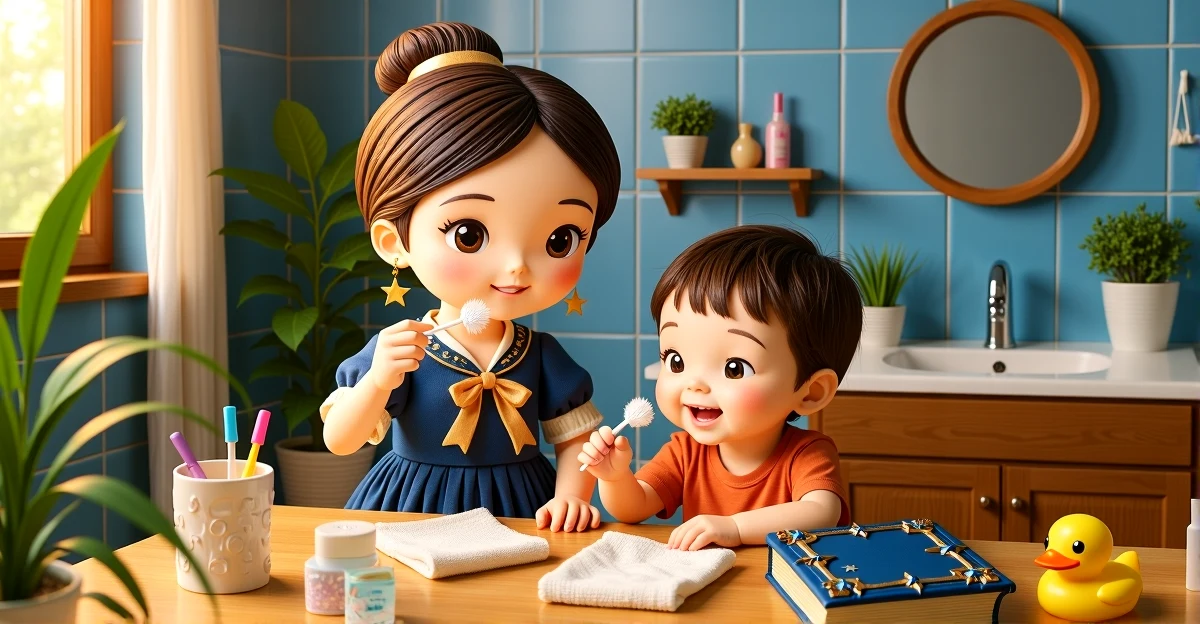
It's seven in the morning, and you're already exhausted. Your three-year-old has refused to brush their teeth for the third day in a row. Getting dressed has turned into a negotiation that would make a diplomat weary. And don't even get started on handwashing—every single time feels like a battle you didn't sign up for.
If this sounds familiar, I want you to know something really important: you are not alone. This is one of the MOST common challenges parents of three and four year olds face. And here's the beautiful truth that the Magic Book wants me to share with you today—this isn't about defiance. This isn't about your child being difficult. This is about something absolutely wonderful happening in your child's brain and heart.
In this guide, we'll explore why self-care resistance happens, what child development research tells us, and most importantly, gentle strategies that actually work. By the end, you'll understand that what feels like resistance is actually your child's brain practicing one of life's most important skills: independence.
Why Self-Care Resistance Happens: The Beautiful Truth
Your little one is discovering their independence. They're learning that they are their own person, with their own ideas, their own preferences, their own sense of timing. And that, my wonderful friend, is exactly what's supposed to be happening at this age.
Dr. Cynthia Frosch, a child development specialist at the University of North Texas, explains that within early childhood, toddlers' and preschoolers' growing autonomy and self-awareness creates new demands and opportunities for both parent and child. Did you catch that? New demands AND opportunities.
What feels like resistance is actually your child's brain practicing something incredibly important. They're learning to have their own thoughts, their own will, their own sense of agency in the world. And yes, that means sometimes they want to do things their way, on their timeline, with their choices.
The Developmental Milestone You're Witnessing
When a child says no to brushing their teeth or getting dressed, they're not rejecting the task itself. They're asserting their growing sense of self. They're saying, I am a person who has ideas about what happens to my body and when. This is actually a really healthy, important lesson for them to learn.
Research from the National Center for Biotechnology Information shows that by three years of age, children engage more in interactive play, master aggression, and learn cooperation and sharing skills. This developmental stage involves children learning to balance their growing independence with cooperative behavior—and that balance doesn't happen overnight.
What Research Tells Us About Self-Care and Independence
Here's what's fascinating about this developmental phase. Research consistently demonstrates that resistance to self-care tasks in three and four year olds represents a normal and important developmental phase. During this period, children experience rapid growth in autonomy and self-awareness, creating natural tension between their desire for independence and their need for parental support.
Developmental milestones indicate that preschoolers aged 3-4 are typically capable of dressing and undressing with minimal assistance, managing basic fasteners, and handling hygiene routines like handwashing and tooth brushing. However—and this is the key—their capacity to perform these tasks does not always align with their willingness to do so.
Within early childhood, toddlers' and preschoolers' growing autonomy and self-awareness creates new demands and opportunities for both parent and child.
— Dr. Cynthia A. Frosch, PhD, Child Development Specialist, University of North Texas
The Role of Attachment and Cooperation
Studies emphasize that secure parent-child attachment relationships, built on parental sensitivity and responsiveness, provide the foundation for cooperation during these daily routines. When parents respond with calm, clear expectations while validating their child's feelings, children develop both self-care competence and emotional regulation skills that serve them throughout life.
Think about it this way: imagine if someone suddenly appeared and started brushing YOUR teeth without asking, or picked out your clothes without your input. You'd probably resist too! Our little ones are learning that their bodies belong to them, that they get to have a say in what happens to them.
Gentle Strategies That Actually Work
So what can we do? How do we support their growing independence while still getting teeth brushed and clothes on? Here are research-backed strategies that honor your child's development while maintaining necessary routines:
1. Offer Choices Within Boundaries
This is the golden strategy. Not whether to brush teeth, but which toothbrush to use. Not whether to get dressed, but which shirt to wear. This gives them that sense of control they're craving while you maintain the boundary that self-care happens.
Occupational therapy specialists have discovered that creating structured routines with visual supports, like picture charts, helps children remember and anticipate self-care tasks. It gives them a sense of control and predictability. When children can see what's coming next, when they can participate in the routine rather than just being told what to do, everything shifts.
2. Make It Playful and Magical
The Magic Book reminds us that children learn through play and imagination. Can we brush the teeth like we're cleaning a magical castle? Can we wash hands like we're making sparkly bubbles? Can we get dressed like we're putting on superhero armor?
When we bring wonder and playfulness into these moments, resistance often melts away. You're not just brushing teeth—you're going on an adventure. You're not just getting dressed—you're transforming into your day-time self.
3. Give Them Time and Space to Try
Yes, it takes longer. Yes, the shirt might be on backwards at first. But when we allow them to practice these skills, when we support their attempts rather than just doing it for them, we're building their confidence and competence.
Janet Lansbury, a respected child development specialist, reminds us that clear, calm expectations without negotiation help children feel secure while building cooperation. This means we stay warm and connected, but we're also clear about what needs to happen. We can say, I see you want to keep playing. Teeth brushing happens after this book. You can choose which toothbrush.
4. Use Visual Supports and Routines
Research shows that structured routines paired with visual supports significantly reduce resistance by helping children anticipate and remember tasks. Create a simple picture chart showing the morning routine: wake up, use potty, wash hands, brush teeth, get dressed, eat breakfast.
Let your child help create the chart. Let them put stickers next to completed tasks. This transforms the routine from something done TO them into something they're actively participating IN.
5. Validate Their Feelings While Maintaining Boundaries
You can acknowledge their resistance while still moving forward: I hear that you don't want to brush teeth right now. Teeth brushing keeps our teeth healthy and strong. Would you like to brush them yourself, or would you like me to help?
This approach validates their autonomy while maintaining the necessary boundary. You're not dismissing their feelings, but you're also not letting those feelings derail the routine.
The Temporary Nature of This Phase
Here's something else that's really important: this phase is temporary. I know it doesn't feel that way when you're in the thick of it, when every single day feels like a negotiation. But the research shows us that this is a developmental stage.
As children's brains mature, as they develop more language skills, as they learn to balance their own desires with cooperation, these daily battles naturally ease. The goal isn't perfect compliance. The goal is raising children who know their own minds, who can advocate for themselves, who understand that their bodies belong to them.
And yes, that means they'll practice saying no sometimes. That means they'll test boundaries. That means they'll assert their preferences. And you know what? That's exactly what we want them to do. We want them to grow into adults who can set boundaries, who can say no when something doesn't feel right, who can make their own choices about their bodies and their lives.
A Story That Can Help: The Crystal Temple of Gentle Care
In The Book of Inara, we have a beautiful story that brings these concepts to life for your child in the most magical way:
The Crystal Temple of Gentle Care
Perfect for: Ages 4-5 (also wonderful for 3-4 year olds)
What makes it special: Kenji and Maeva discover a magical crystal cave where the crystals glow brighter when they practice gentle self-care. They learn that their bodies are precious temples deserving love and respect.
Key lesson: This story transforms self-care from a chore into something magical and special. When children hear this story, they start to see brushing teeth, washing hands, and getting dressed not as things they HAVE to do, but as ways they can take care of their precious bodies. It shifts the whole energy from resistance to respect.
How to use it: After you read this story with your child, you can create your own crystal glow ritual. You might say, Let's see if we can make your body glow bright like the crystals when we brush your teeth so gently! Or, I wonder if your hands will sparkle when we wash them with such care!
The Magic Book teaches us that when we make self-care feel special and important rather than mandatory and rushed, children naturally want to participate. They want to take care of their bodies when they understand that their bodies are worthy of that care.
Discover The Crystal Temple of Gentle Care in The Book of Inara
You're Doing Beautifully
So when your three or four year old refuses to brush their teeth this evening, take a deep breath. Remember that their brain is doing exactly what it's supposed to be doing. Offer them a choice. Make it playful. Stay calm and clear. And know that you're not just getting through a difficult moment—you're supporting their journey toward independence.
You're not failing if mornings are hard. You're not doing something wrong if your child resists. You're parenting a little human who is learning one of life's most important lessons: that they are their own person AND they're part of a family and community that has routines and expectations.
Your patience, your love, your commitment to understanding what's really happening in these moments—that's what matters. Not whether every tooth brushing goes smoothly. Not whether getting dressed happens without resistance. What matters is that you're showing up with love, with understanding, with the willingness to see your child's behavior as communication rather than defiance.
The Magic Book and I are always here for you. We have so many stories that can help with these daily moments, stories that show children the beauty of taking care of themselves, stories that honor their growing independence while teaching cooperation and care.
This phase will pass. Your child is learning and growing exactly as they should. And you, my wonderful friend, you're doing beautifully.
With love and starlight,
Inara
Related Articles
- Understanding Your Child's Growing Independence: Why Clothing Battles Are Actually Healthy Development
- Why Your Toddler Prefers Hands Over Utensils (And Why That's Beautiful)
- Why Morning Routines Feel Like Battles (And the Gentle Approach That Works)
- Why Your Child Won't Use the Bathroom at School (And How to Help)
- Why Your Preschooler Won't Sit at Meals (And How to Gently Help)
Show transcript
Hello, my wonderful friend! It's me, Inara, and I am SO happy you're here with me today!
You know, the Magic Book and I have been noticing something lately. So many parents are reaching out about daily self-care routines, those moments that happen every single day, like brushing teeth, washing hands, getting dressed. And I hear the exhaustion in your voices when you say, my child just refuses. They won't cooperate. Every morning is a battle, every evening is a struggle.
And I want you to know something really important right now. You are not alone in this. This is one of the MOST common challenges parents of three and four year olds face. And here's the beautiful truth that the Magic Book wants me to share with you today. This isn't about defiance. This isn't about your child being difficult. This is about something absolutely WONDERFUL happening in your child's brain and heart.
Your little one is discovering their independence. They're learning that they are their own person, with their own ideas, their own preferences, their own sense of timing. And that, my friend, is exactly what's supposed to be happening at this age!
Let me share what the research tells us, because this is so fascinating. Dr. Cynthia Frosch, a child development specialist at the University of North Texas, explains that within early childhood, toddlers and preschoolers growing autonomy and self-awareness creates new demands and opportunities for both parent and child. Did you catch that? New demands AND opportunities.
What feels like resistance is actually your child's brain practicing something incredibly important. They're learning to have their own thoughts, their own will, their own sense of agency in the world. And yes, that means sometimes they want to do things their way, on their timeline, with their choices.
The Magic Book showed me something beautiful about this. When a child says no to brushing their teeth or getting dressed, they're not rejecting the task itself. They're asserting their growing sense of self. They're saying, I am a person who has ideas about what happens to my body and when.
Now, I know what you might be thinking. That's wonderful, Inara, but we still need to brush teeth and get out the door in the morning! And you're absolutely right. The beautiful part is that we can honor their growing independence WHILE still maintaining the routines they need.
Here's what occupational therapy specialists have discovered. Creating structured routines with visual supports, like picture charts, helps children remember and anticipate self-care tasks. It gives them a sense of control and predictability. When children can see what's coming next, when they can participate in the routine rather than just being told what to do, everything shifts.
Think about it this way. Imagine if someone suddenly appeared and started brushing YOUR teeth without asking, or picked out your clothes without your input. You'd probably resist too! Our little ones are learning that their bodies belong to them, that they get to have a say in what happens to them. That's actually a really healthy, important lesson.
So what can we do? How do we support their growing independence while still getting teeth brushed and clothes on?
First, offer choices within the routine. Not whether to brush teeth, but which toothbrush to use. Not whether to get dressed, but which shirt to wear. This gives them that sense of control they're craving while you maintain the boundary that self-care happens.
Second, make it playful. The Magic Book reminds us that children learn through play and imagination. Can we brush the teeth like we're cleaning a magical castle? Can we wash hands like we're making sparkly bubbles? Can we get dressed like we're putting on superhero armor? When we bring wonder and playfulness into these moments, resistance often melts away.
Third, give them time and space to try things themselves. Yes, it takes longer. Yes, the shirt might be on backwards at first. But when we allow them to practice these skills, when we support their attempts rather than just doing it for them, we're building their confidence and competence.
Janet Lansbury, a respected child development specialist, reminds us that clear, calm expectations without negotiation help children feel secure while building cooperation. This means we stay warm and connected, but we're also clear about what needs to happen. We can say, I see you want to keep playing. Teeth brushing happens after this book. You can choose which toothbrush.
The research is so clear on this. When parents respond with calm, clear expectations while validating their child's feelings, children develop both self-care competence and emotional regulation skills that serve them throughout life.
Now, let me tell you about a story from the Magic Book that shows this so beautifully. It's called The Crystal Temple of Gentle Care, and it's about two friends, Kenji and Maeva, who discover a magical crystal cave. In this cave, the crystals glow brighter when they practice gentle self-care. They learn that their bodies are precious temples deserving love and respect.
What I love about this story is how it transforms self-care from a chore into something magical and special. When children hear this story, they start to see brushing teeth, washing hands, and getting dressed not as things they HAVE to do, but as ways they can take care of their precious bodies. It shifts the whole energy from resistance to respect.
After you read this story with your child, you can create your own crystal glow ritual. You might say, let's see if we can make your body glow bright like the crystals when we brush your teeth so gently! Or, I wonder if your hands will sparkle when we wash them with such care!
The Magic Book teaches us that when we make self-care feel special and important rather than mandatory and rushed, children naturally want to participate. They want to take care of their bodies when they understand that their bodies are worthy of that care.
Here's something else that's really important. This phase is temporary. I know it doesn't feel that way when you're in the thick of it, when every single day feels like a negotiation. But the research shows us that this is a developmental stage. As children's brains mature, as they develop more language skills, as they learn to balance their own desires with cooperation, these daily battles naturally ease.
In the meantime, be gentle with yourself. You're not failing if mornings are hard. You're not doing something wrong if your child resists. You're parenting a little human who is learning one of life's most important lessons, that they are their own person AND they're part of a family and community that has routines and expectations.
The Magic Book whispers this to me all the time. The goal isn't perfect compliance. The goal is raising children who know their own minds, who can advocate for themselves, who understand that their bodies belong to them. And yes, that means they'll practice saying no sometimes. That means they'll test boundaries. That means they'll assert their preferences.
And you know what? That's exactly what we want them to do. We want them to grow into adults who can set boundaries, who can say no when something doesn't feel right, who can make their own choices about their bodies and their lives.
So when your three or four year old refuses to brush their teeth this evening, take a deep breath. Remember that their brain is doing exactly what it's supposed to be doing. Offer them a choice. Make it playful. Stay calm and clear. And know that you're not just getting through a difficult moment. You're supporting their journey toward independence.
The Magic Book and I are always here for you, my friend. We have so many stories that can help with these daily moments, stories that show children the beauty of taking care of themselves, stories that honor their growing independence while teaching cooperation and care.
You're doing such beautiful work. Your patience, your love, your commitment to understanding what's really happening in these moments, that's what matters. Not whether every tooth brushing goes smoothly. Not whether getting dressed happens without resistance. What matters is that you're showing up with love, with understanding, with the willingness to see your child's behavior as communication rather than defiance.
Find The Crystal Temple of Gentle Care and so many other helpful stories in The Book of Inara. And remember, sweet friend, this phase will pass. Your child is learning and growing exactly as they should. And you, you're doing beautifully.
With love and starlight, Inara.