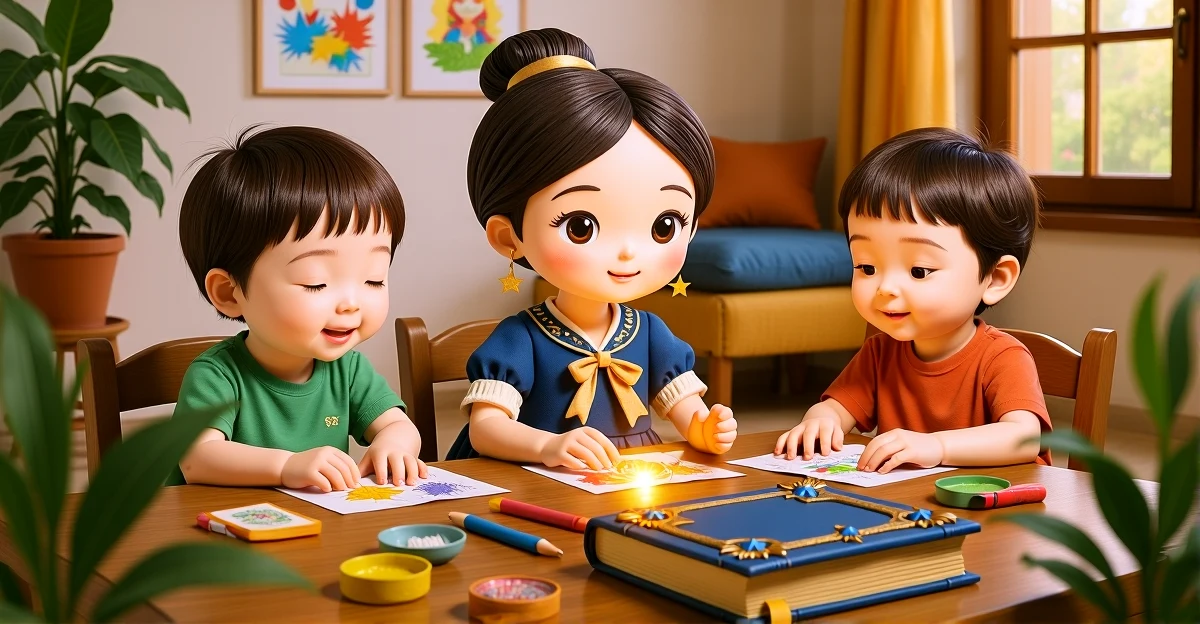

You watch as your kindergartener sits alone at the craft table, carefully arranging their materials while the other children work together on a group project. When the teacher suggests they join a team, your child shakes their head firmly. "I want to do it myself," they say. And you feel that familiar flutter of worry in your chest.
Is something wrong? Will they struggle to make friends? Are they missing out on important social skills? Should you be concerned?
Here's what I want you to know, my wonderful friend: If this is your child, you're not witnessing a problem. You're witnessing something absolutely BEAUTIFUL. Your child has mastered independence, and that's a HUGE developmental achievement. In this post, we'll explore why some children prefer solo work at ages five and six, what research tells us about cooperative play development, and gentle strategies to support your child's journey toward collaboration—all while honoring the incredible independence they've already built.
Why Your Child's Independence is Actually Wonderful
Let's start with the truth that might surprise you: when your five or six year old says "I want to do it myself" or "I don't want to work with the group," they're not being difficult. They're not antisocial. They're showing you they've developed strong self-confidence and the ability to pursue their own ideas independently.
Think about it for a moment. Just a few years ago, your little one needed you for everything—getting dressed, eating meals, playing with toys. And now? Now they have their own ideas, their own preferences, and the confidence to pursue them without constant support. That's not something to fix. That's something to celebrate!
This preference for solo work often indicates that your child has:
- Strong internal motivation: They know what they want to create and feel driven to bring their vision to life
- Confidence in their abilities: They trust themselves to complete tasks independently
- Clear sense of self: They understand their own preferences and aren't afraid to express them
- Focus and concentration: They can sustain attention on their own projects without needing external stimulation
These are WONDERFUL qualities that will serve your child throughout their life. The key is helping them add collaboration skills to this strong foundation of independence—not replacing one with the other.
What Research Says About Cooperative Play Development
Here's what's SO fascinating about child development: children don't just wake up one day knowing how to collaborate. They climb a beautiful staircase of social skills, and each step is essential.
Research shows that children develop social play skills in distinct stages:
The Stages of Play Development
Solitary Play (Birth to 2 years): Children play alone, focused entirely on their own exploration and discovery.
Parallel Play (2 to 3 years): Children play near other children but not with them, often mimicking what others do while maintaining their own separate activity.
Associative Play (3 to 4 years): Children begin to interact, sharing materials and talking to each other, but still pursuing their own individual goals.
Cooperative Play (4 to 6 years): Children work together toward a shared goal, taking turns, negotiating roles, and combining their ideas.
According to research published by the National Institutes of Health, cooperative play provides crucial benefits for child development, with studies proving that "cooperative-creative play enhances social-emotional competencies" during the critical five to six year age window. But here's the key insight: it ENHANCES these competencies. It doesn't create them from nothing.
"The microgenetic emergence of cooperative play occurs around six years old, representing the culmination of earlier social play stages."
— National Institutes of Health, 2022
Your child who prefers solo work at age five or six might still be building the confidence and social skills they need for that final step into true cooperation. And that's completely, beautifully normal. The National Center for Biotechnology Information notes that by age three, children begin learning "cooperation and sharing skills" through interactive play, with these abilities continuing to develop through age six and beyond.
Some children move through these stages quickly. Others take more time, building a stronger foundation at each level before moving to the next. Both paths are perfect.
Understanding the Confidence-Cooperation Connection
Here's something that changed how I think about this challenge: imagine trying to share your favorite idea when you're not even sure it's a good idea. Scary, right? You might hold back, stay quiet, or refuse to participate at all.
But when you KNOW your ideas have value, when you feel confident and secure in your own thinking, sharing becomes so much easier. You're not giving something up—you're contributing something valuable.
The same is true for children. Your child needs to feel secure in their own abilities before they can truly collaborate with others. They're learning "I can do this. I have good ideas. I'm capable." And once they truly believe that? THEN they'll be ready to bring those gifts to a group.
Research from educational journals demonstrates that "cooperative learning has measurable effects on group work behavior" in young primary school children, confirming that teamwork skills can be intentionally developed through supportive teaching strategies. But the foundation must be there first—and your child is building that foundation right now.
Gentle Strategies to Support Teamwork Development
So what can you do to support this beautiful transition from independence to collaboration? I'm so glad you asked! Here are research-backed strategies that honor your child's development while gently introducing cooperative skills:
1. Validate Their Independence
When your child says "I want to do it myself," honor that whenever it's safe and reasonable. Say something like, "I love seeing how capable you are! You've got this!" That validation builds the confidence they'll need for cooperation later. Don't treat their independence as a problem to solve—celebrate it as a strength to build upon.
2. Create Low-Pressure Collaborative Opportunities
The key word here is "low-pressure." Start with simple, playful activities where collaboration feels natural rather than forced:
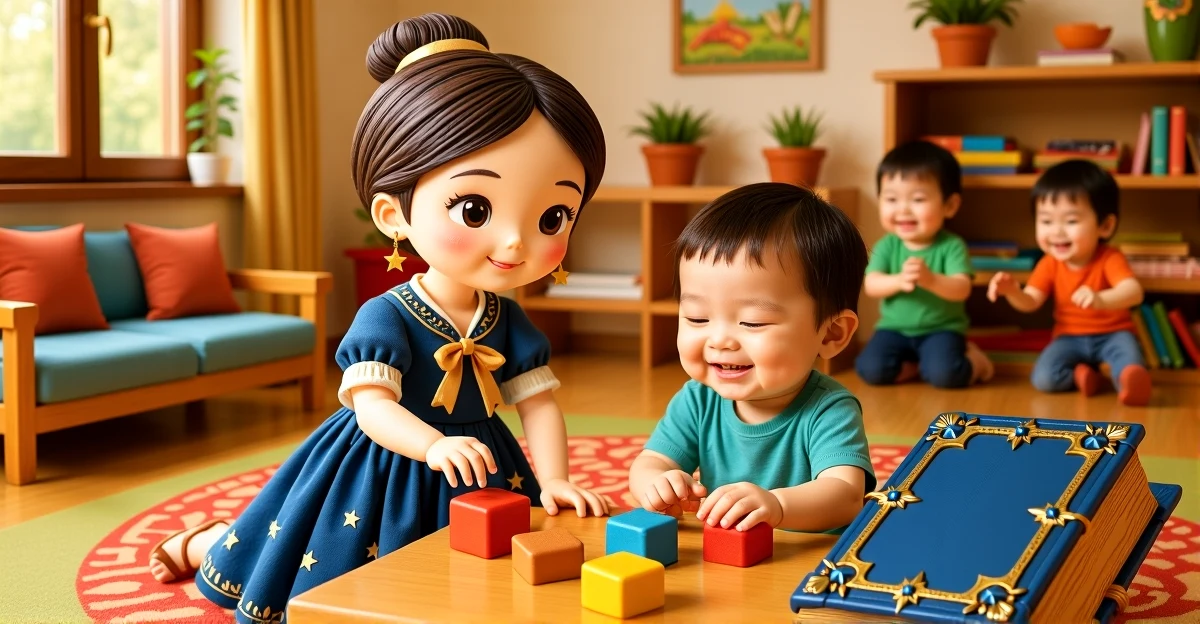
- Building together: Create a block tower where you each take turns adding blocks
- Cooking as a team: One person measures, the other pours
- Story creation: Take turns adding one sentence each to make up a story together
- Puzzle partnerships: Work on a puzzle together, each finding pieces for different sections
- Art collaborations: Create a drawing where you each add elements
If your child resists, that's okay! Just say, "No problem! We can try again another time," and honor their need for solo work. The goal is exposure, not pressure.
3. Use Stories as Gentle Teachers
This is where the magic happens! When children see characters working together in stories, they learn what cooperation looks like without the pressure of having to do it themselves right away. Stories create a safe space to explore new concepts and see the benefits of collaboration through someone else's experience.
4. Model Collaboration in Your Own Life
When you're working with your partner, a friend, or even your child on something, narrate what you're doing. You might say, "I'm so glad Daddy is helping me with this! My idea was to paint the fence blue, and his idea was to add a design. Together, we're making something even better than either of us imagined!"
Let your child see you:
- Asking for help when you need it
- Combining ideas with others
- Compromising and negotiating
- Celebrating what you create together
5. Never Force It
This is SO important. Forcing a child who isn't ready to collaborate will only create anxiety and resistance. Instead, think of yourself as a gardener. You're planting seeds of cooperation, watering them with gentle opportunities, and giving them time to grow. Some seeds sprout quickly. Others take longer. Both are perfect.
6. Focus on the Process, Not the Product
When your child does engage in cooperative activities, celebrate the collaboration itself rather than what they created. "I loved seeing how you and your sister took turns choosing colors!" is more powerful than "What a beautiful picture!" This helps them see that the experience of working together has its own value.
Stories That Can Help
In The Book of Inara, we have beautiful stories that bring these concepts to life for your child. Let me share one that's PERFECT for this challenge:
The Harmony Arcade Adventure
Perfect for: Ages 4-5 (and wonderful for 5-6 year olds too!)
What makes it special: This story follows Leo and Mia as they discover a magical arcade where the games create beautiful light patterns—but only when the players listen carefully to each other and work together. What I love about this story is how gentle it is. Leo and Mia don't start out as perfect teammates. They have to learn! They discover that when Leo talks over Mia, the lights dim. But when they truly listen to each other, when they take turns and share ideas, the whole arcade comes alive with the most beautiful colors.
Key lesson: Cooperation isn't about giving up your own ideas—it's about combining your ideas with someone else's to create something even more magical than you could make alone.
After reading together: You can create your own cooperative games at home where success depends on listening and working together, helping your child practice teamwork in a fun, low-pressure way. The story plants the seed; your follow-up activities help it grow.
You're Doing Beautifully
My wonderful friend, I can see how much you care about your child's development. The fact that you're here, reading this, seeking to understand—that tells me everything I need to know about the kind of parent you are.
Your child's preference for solo work right now doesn't predict their future. Some of the most collaborative, team-oriented adults started out as fiercely independent children. They just needed time to build their confidence first, and they needed parents who honored their process rather than rushing them.
The Magic Book whispers this truth: every child has their own timeline, their own rhythm, their own way of blooming. Your job isn't to rush them. It's to love them exactly where they are while gently showing them what's possible.
So if your child wants to work alone on their school project, honor that. If they resist group activities, don't panic. Instead, look for small, gentle ways to introduce collaboration. Share stories like The Harmony Arcade Adventure that show teamwork as something magical, not mandatory. Create playful opportunities at home. Model cooperation in your own life. And most importantly, trust your child's process.
They're not behind. They're not broken. They're exactly where they need to be, building the foundation of confidence they'll need for a lifetime of beautiful connections.
With love and starlight,
Inara
Related Articles
- Teaching Your Child Conflict Resolution Skills: A Gentle Guide for Ages 5-6
- Why Your Child Makes Friends But Cant Keep Them (And How to Help)
- Understanding Why Your Child Tests Boundaries (And How Gentle Guidance Builds Cooperation)
- Understanding Your Preschooler's Table Manners: A Gentle Guide for Ages 4-5
- Why Your Preschooler Won't Sit at Meals (And How to Gently Help)
Show transcript
Hello, my wonderful friend! It's me, Inara, and I am SO happy you're here today. You know, the Magic Book and I have been noticing something beautiful happening in homes all around the world. Parents are reaching out, asking about their children who prefer to work alone, who resist group projects, who want to do everything by themselves. And I want you to know something right from the start—if this is your child, you're not dealing with a problem. You're witnessing something absolutely WONDERFUL.
Let me tell you what the Magic Book taught me about this.
When your five or six year old says, I want to do it myself, or I don't want to work with the group, they're not being difficult. They're not antisocial. They're actually showing you something beautiful—they've mastered independence! And that, my friend, is a HUGE developmental achievement.
Think about it. Just a few years ago, your little one needed you for everything. And now? Now they have ideas, preferences, and the confidence to pursue them on their own. That's not something to fix—that's something to celebrate!
But I know what you might be thinking. You might be worried. What about teamwork? What about cooperation? What about getting along with others? And those are beautiful questions, my friend, because they show how much you care about your child's future.
Here's what research tells us, and it's SO fascinating. Children develop social skills in stages, like climbing a beautiful staircase made of starlight. First, they play alone—that's called solitary play. Then they play near other children but not with them—that's parallel play. Then they start to interact—that's associative play. And finally, around ages four to six, they begin true cooperative play, where they work together toward a shared goal.
Your child who wants to work alone? They might still be building the confidence they need for that final step. And that's completely, beautifully normal.
The National Institutes of Health published research showing that cooperative play enhances children's social-emotional competencies during this exact age window. But here's the key—it ENHANCES them. It doesn't create them from nothing. Your child needs to feel secure in their own abilities first before they can truly collaborate with others.
Think of it like this. Imagine trying to share your favorite toy when you're not even sure it's really yours. Scary, right? But when you KNOW it's yours, when you feel confident and secure, sharing becomes so much easier. The same is true for ideas, for work, for creative projects.
Your child is building that inner security right now. They're learning, I can do this. I have good ideas. I'm capable. And once they truly believe that? THEN they'll be ready to bring those gifts to a group.
So what can you do to support this beautiful transition? I'm so glad you asked!
First, validate their independence. When they say, I want to do it myself, honor that whenever it's safe and reasonable. Say something like, I love seeing how capable you are! You've got this! That validation builds the confidence they'll need for cooperation later.
Second, create low-pressure opportunities for collaboration. And this is where stories can be SO helpful! When children see characters working together in a story, they learn what cooperation looks like without the pressure of having to do it themselves right away.
Let me tell you about a story that shows this beautifully. It's called The Harmony Arcade Adventure, and it's about two friends, Leo and Mia, who discover something magical. They find an arcade where the games create beautiful light patterns, but only when the players listen carefully to each other and work together.
What I love about this story is how gentle it is. Leo and Mia don't start out as perfect teammates. They have to learn! They discover that when Leo talks over Mia, the lights dim. But when they truly listen to each other, when they take turns and share ideas, the whole arcade comes alive with the most beautiful colors.
Children watching this story learn something powerful—cooperation isn't about giving up your own ideas. It's about combining your ideas with someone else's to create something even more magical than you could make alone.
After you share this story with your child, you can create your own cooperative games at home. Maybe you build a block tower together, where you each take turns adding blocks. Maybe you make up a story together, where you each add one sentence. Maybe you cook together, where one person measures and the other person pours.
The key is keeping it playful and pressure-free. If your child resists, that's okay! Just say, No problem! We can try again another time. And then honor their need for solo work.
Third, help them see the benefits of teamwork through real-life examples. When you're working with your partner or a friend on something, narrate what you're doing. You might say, I'm so glad Daddy is helping me with this! My idea was to paint the fence blue, and his idea was to add a design. Together, we're making something even better than either of us imagined!
Fourth, and this is SO important—don't force it. Research from educational journals shows that cooperative learning has measurable effects on group work behavior, but only when children are developmentally ready and the environment feels safe. Forcing a child who isn't ready will only create anxiety and resistance.
Instead, think of yourself as a gardener. You're planting seeds of cooperation, watering them with gentle opportunities, and giving them time to grow. Some seeds sprout quickly. Others take longer. Both are perfect.
And finally, remember this. Your child's preference for solo work right now doesn't predict their future. Some of the most collaborative, team-oriented adults started out as fiercely independent children. They just needed time to build their confidence first.
The Magic Book whispers this truth—every child has their own timeline, their own rhythm, their own way of blooming. Your job isn't to rush them. It's to love them exactly where they are while gently showing them what's possible.
So if your child wants to work alone on their school project, honor that. If they resist group activities, don't panic. Instead, look for small, gentle ways to introduce collaboration. Read stories like The Harmony Arcade Adventure that show teamwork as something magical, not mandatory. Create playful opportunities at home. And most importantly, trust your child's process.
They're not behind. They're not broken. They're exactly where they need to be, building the foundation of confidence they'll need for a lifetime of beautiful connections.
You're doing such a wonderful job, my friend. I can see how much you care, how much you want the best for your child. And that love? That's the most important ingredient of all.
The Magic Book and I are always here for you, with stories and wisdom and so much love. Find The Harmony Arcade Adventure and other beautiful stories about friendship and cooperation in The Book of Inara. And remember—you've got this.
With love and starlight, Inara.