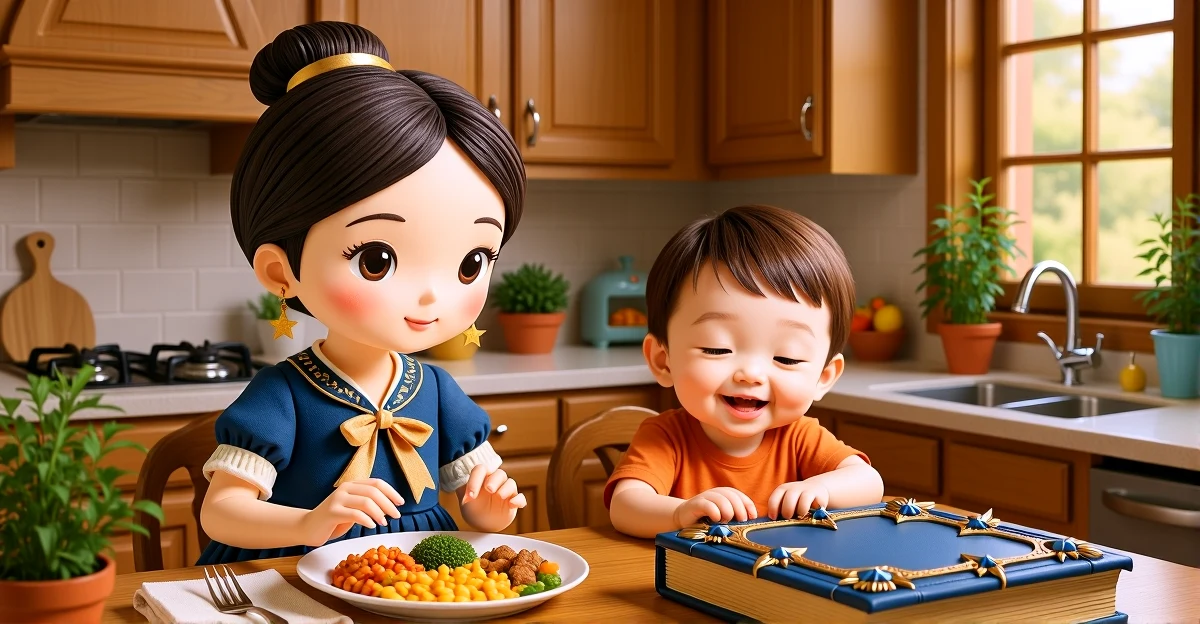

You've set out a beautiful meal. You've placed the perfect toddler-sized spoon right next to your little one's plate. And what happens? They push it away and dive in with their hands, squishing, exploring, and yes, making a glorious mess of everything.
If this sounds familiar, take a deep breath. You are not alone in this, and I want to tell you something important right away: what you're seeing isn't stubbornness or refusal to learn. What you're witnessing is your child's development unfolding exactly as it should.
In this guide, we'll explore why toddlers prefer their hands over utensils, what child development research tells us about this beautiful phase, and gentle strategies to support your child's journey from fingers to forks—without pressure, without power struggles, and with SO much more understanding.
Understanding Why Hands Come First
When your little one reaches for food with their hands instead of that spoon you're offering, they're actually doing something incredibly smart. They're using the tools they KNOW work. Their hands.
Think about it this way. Your child has been using their hands to explore the world since they were tiny. Hands are familiar. Hands are reliable. Hands let them feel the temperature of their food, the texture, the weight. And all of that sensory information? It's teaching their brain SO much about the world.
The Sensory Learning Connection
Every time your child squishes a banana between their fingers, they're learning about texture. Every time they pick up a piece of food and bring it to their mouth, they're practicing hand-eye coordination. Every single messy moment is building the neural pathways they'll need, not just for using utensils eventually, but for writing, for drawing, for so many fine motor skills.
The Raising Children Network emphasizes that "self-feeding is about more than nutrition—it strengthens finger and hand muscles, builds fine motor skills important for holding things and using utensils, and develops independence." That mess you're seeing? It's not chaos. It's exploration. It's learning.
What Child Development Research Shows
Here's something WONDERFUL that research has shown us: most children don't truly master using a spoon or fork until they're around eighteen months to two years old. Some take even longer, and that's perfectly normal. Between ages two and three, children are still developing those fine motor skills. Their little fingers are learning to grip, to coordinate, to control movements that seem simple to us but are actually quite complex.
"Letting kids feed themselves gives them the control that they should have at this age. They need to decide whether to eat, what they will eat, and how much to eat. That's how they learn to recognize the internal cues that tell them when they're hungry and when they're full."
— Dr. Mary L. Gavin, Nemours KidsHealth
Isn't that AMAZING? When we let our children choose their own way of eating—even if it's messy, even if it's with their hands—we're actually teaching them something profound. We're teaching them to trust their own bodies.
The Development Timeline
According to occupational therapy experts at NHS Greater Glasgow and Clyde, between ages two and three, children are actively developing their spoon feeding skills. But development happens at individual rates for each child. What looks like "refusal" is often simply a child who isn't quite ready yet, or who finds hands more efficient for their current skill level.
The messy, hands-on exploration of food through touching, squeezing, and yes, using fingers, is actually an essential part of how young children learn about textures, temperatures, and tastes. This isn't a phase to rush through—it's a phase to honor.
Why This Phase Matters More Than You Think
This journey your child is on—learning to use utensils, learning to feed themselves—it's not just about the mechanics of getting food from plate to mouth. It's about something much bigger. It's about independence. It's about autonomy. It's about your child discovering that they can do things on their own.
And that discovery? It's one of the most important discoveries of early childhood. When children learn that they have power over their own bodies, their own choices, their own actions, they're building self-confidence that will serve them for their entire lives.
Studies consistently show that when parents provide healthy food choices and allow children to decide what and how much to eat, children develop better self-regulation skills and a healthier relationship with food. The key is patience and practice—children learn by watching parents use utensils during family meals and through repeated opportunities to try themselves, without pressure or power struggles that can create negative associations with mealtimes.
Gentle Strategies to Support the Journey
So what can we do to support our little ones on this journey? How can we encourage utensil use without creating pressure or turning mealtimes into battlegrounds?
Here's what the research and my own wisdom from the Magic Book suggest:
1. Be Patient With the Process
Remember that this is a phase, a temporary stop on your child's developmental journey. They WILL learn to use utensils. There's no rush. Your child is exactly where they need to be right now.
2. Make It Playful, Not Pressured
Give your child their own spoon or fork to hold while you feed them with another one. Let them practice loading food onto the spoon, even if most of it falls off. Let them see that utensils can be fun tools to explore, not frustrating obstacles to overcome.
3. Eat Together as a Family
This is SO important. Children learn by watching. When they see you using your fork and spoon, when they see siblings or other family members eating, they're learning. They're thinking, "Oh, that's how it works!" They're building the mental map they'll need when their little hands are ready to try.
4. Offer Utensil-Friendly Foods
Start with foods that stick to spoons better than slippery foods. Thick yogurt, mashed potatoes, oatmeal—these are easier to manage. Success builds confidence, and confidence builds motivation.
5. Celebrate Every Tiny Step
Did your child hold the spoon for three seconds? WONDERFUL! Did they get one bite to their mouth, even if the next five missed? AMAZING! Every attempt is practice, and practice is how we learn.
6. Honor the Mess
I know mealtimes can feel overwhelming when food ends up everywhere. But that mess? It's not failure. It's exploration. It's your child's brain making connections. Lay down a mat, dress them in clothes you don't mind getting dirty, and let them explore. The easier you can make cleanup, the more you can relax into this phase.
A Story That Can Help
In The Book of Inara, we have a beautiful story that speaks directly to this moment in your child's life:
The Kangaroo Who Learned to Hop
Perfect for: Ages 2-3
What makes it special: This story beautifully illustrates that learning new skills takes practice and patience. Just as Young Kangaroo learns to hop with support from wise friend Wallaby, toddlers learn to use utensils through gentle practice and encouragement. The story validates that it's okay to struggle with new skills and emphasizes the importance of patience during the learning process.
Key lesson: When Young Kangaroo practices hopping with patience and support, children learn that new skills develop gradually and that it's normal to need time and practice to master them. Every try is a step forward, even when it doesn't feel like it.
How to use it: After reading this story together, you can remind your child, "Remember how Young Kangaroo learned to hop? You're learning to use your spoon just like that! Every time you try, you're practicing, and practice helps us learn."
You're Doing Beautifully
Here's my invitation to you, my wonderful friend. Take a deep breath. Release the pressure. Release the timeline. Release the comparison to other children who might be using utensils already. Your child is on their own unique journey, and they're exactly where they need to be.
This phase—this hands-before-forks phase—it won't last forever. I know it might feel endless when you're wiping food off the walls for the third time today. But one day, sooner than you think, your child will pick up that fork like it's the most natural thing in the world. And you might even feel a tiny bit sad that this messy, wonderful, exploratory phase is over.
Trust the process. Trust your child. Trust that their little brain and body know what they're doing, even when it looks like chaos to us.
And remember, you're not just teaching your child to use a spoon. You're teaching them that learning takes time. You're teaching them that it's safe to try new things. You're teaching them that you'll be patient with them while they figure it out. And those lessons? Those are worth so much more than a tidy mealtime.
The Magic Book and I are here with you, every step of this journey. Every messy, beautiful, frustrating, wonderful step. You're doing BEAUTIFULLY, my friend. Your patience, your love, your willingness to let your child learn at their own pace—that's exactly what they need.
With love and starlight,
Inara
Related Articles
Show transcript
Hello, my wonderful friend! It's me, Inara, and I am SO happy you're here today. You know, the Magic Book and I have been noticing something that's happening in kitchens all around the world. Parents are watching their little ones push away spoons and forks, choosing their hands instead, and wondering, is something wrong? Should I be worried?
And I want to tell you something right away. You are not alone in this, and no, nothing is wrong. In fact, what you're seeing is something absolutely BEAUTIFUL. It's your child's development unfolding exactly as it should.
So grab a cozy cup of tea, settle in, and let's talk about why your toddler prefers their hands over utensils, what's really happening in that amazing little brain, and how we can support this journey with patience and love.
First, let me share what the Magic Book taught me about this. When your little one reaches for food with their hands instead of that spoon you're offering, they're not being difficult. They're not refusing to learn. They're actually doing something incredibly smart. They're using the tools they KNOW work. Their hands.
Think about it this way. Your child has been using their hands to explore the world since they were tiny. Hands are familiar. Hands are reliable. Hands let them feel the temperature, the texture, the weight of their food. And all of that sensory information? It's teaching their brain SO much about the world.
Now, here's something WONDERFUL that research has shown us. Most children don't truly master using a spoon or fork until they're around eighteen months to two years old. Some take even longer, and that's perfectly normal. Between ages two and three, children are still developing those fine motor skills. Their little fingers are learning to grip, to coordinate, to control movements that seem simple to us but are actually quite complex.
Dr. Mary Gavin from Nemours KidsHealth explains this beautifully. She says that letting kids feed themselves gives them the control that they should have at this age. They need to decide whether to eat, what they will eat, and how much to eat. That's how they learn to recognize the internal cues that tell them when they're hungry and when they're full.
Isn't that AMAZING? When we let our children choose their own way of eating, even if it's messy, even if it's with their hands, we're actually teaching them something profound. We're teaching them to trust their own bodies.
Now, I know what you might be thinking. But Inara, mealtimes are SO messy! Food ends up everywhere! And yes, my friend, they absolutely are. The Raising Children Network tells us that learning to eat involves touching, squeezing, even throwing and dropping food. It's all part of the process. It's all part of learning.
And here's the thing. That mess? It's not chaos. It's exploration. It's learning. Every time your child squishes a banana between their fingers, they're learning about texture. Every time they pick up a piece of food and bring it to their mouth, they're practicing hand-eye coordination. Every single messy moment is building the skills they'll need, not just for using utensils, but for writing, for drawing, for so many things.
So what can we do to support our little ones on this journey? How can we encourage utensil use without creating pressure or power struggles?
The Magic Book whispers this wisdom. First, be patient. Remember that this is a phase, a temporary stop on your child's developmental journey. They WILL learn to use utensils. There's no rush.
Second, make it playful. Give your child their own spoon or fork to hold while you feed them with another one. Let them practice loading food onto the spoon, even if most of it falls off. Let them see that utensils can be fun tools, not frustrating obstacles.
Third, and this is SO important, eat together as a family. Children learn by watching. When they see you using your fork and spoon, when they see siblings or other family members eating, they're learning. They're thinking, oh, that's how it works! They're building the mental map they'll need when their little hands are ready to try.
Fourth, offer foods that are easier to manage with utensils. Thick yogurt, mashed potatoes, oatmeal. These stick to spoons better than slippery foods. Success builds confidence, and confidence builds motivation.
And fifth, celebrate every tiny step. Did your child hold the spoon for three seconds? WONDERFUL! Did they get one bite to their mouth, even if the next five missed? AMAZING! Every attempt is practice, and practice is how we learn.
Now, here's something else the Magic Book taught me. This journey your child is on, learning to use utensils, learning to feed themselves, it's not just about the mechanics. It's about independence. It's about autonomy. It's about your child discovering that they can do things on their own.
And that discovery? It's one of the most important discoveries of early childhood. When children learn that they have power over their own bodies, their own choices, their own actions, they're building self-confidence that will serve them for their entire lives.
So when you see your toddler reaching for food with their hands, try to see it through this lens. They're not rejecting your help. They're not being stubborn. They're saying, I can do this myself. And that's something to celebrate.
Now, I want to tell you about a story that might help. In The Book of Inara, we have a beautiful tale called The Kangaroo Who Learned to Hop. It's about Young Kangaroo who's learning to hop, and it's hard at first. Really hard. But with practice, with patience, and with support from wise friend Wallaby, Young Kangaroo discovers that new skills take time to develop.
This story is PERFECT for this moment in your child's life. Because just like Young Kangaroo learning to hop, your child is learning to use utensils. And the message is the same. It's okay to struggle. It's okay to need practice. It's okay to take your time. Every try is a step forward, even when it doesn't feel like it.
After you read this story together, you can remind your child, remember how Young Kangaroo learned to hop? You're learning to use your spoon just like that! Every time you try, you're practicing, and practice helps us learn.
The Magic Book also reminds us of something else. This phase, this hands-before-forks phase, it won't last forever. I know it might feel endless when you're wiping food off the walls for the third time today. But one day, sooner than you think, your child will pick up that fork like it's the most natural thing in the world. And you might even feel a tiny bit sad that this messy, wonderful, exploratory phase is over.
So here's my invitation to you, my wonderful friend. Take a deep breath. Release the pressure. Release the timeline. Release the comparison to other children who might be using utensils already. Your child is on their own unique journey, and they're exactly where they need to be.
Trust the process. Trust your child. Trust that their little brain and body know what they're doing, even when it looks like chaos to us.
And remember, you're not just teaching your child to use a spoon. You're teaching them that learning takes time. You're teaching them that it's safe to try new things. You're teaching them that you'll be patient with them while they figure it out. And those lessons? Those are worth so much more than a tidy mealtime.
The Magic Book and I are here with you, every step of this journey. Every messy, beautiful, frustrating, wonderful step. You're doing BEAUTIFULLY, my friend. Your patience, your love, your willingness to let your child learn at their own pace, that's exactly what they need.
So keep offering that spoon. Keep eating together as a family. Keep celebrating the tiny victories. And keep trusting that your child is learning, growing, and developing exactly as they should.
Sweet dreams, my wonderful friend. Until our next adventure together. With love and starlight, Inara.