
It's 7:30 in the morning, and you've asked your four-year-old to put on their shoes three times already. The shoes are right there, in the same spot they're always kept, but somehow your child seems genuinely surprised to discover them each time. Or maybe it's bedtime, and despite following the same routine every single night, your five-year-old asks, "What do we do next?" for the tenth time this week.
If this sounds familiar, I want you to know something right from the start: You are not alone. This is one of the MOST common questions parents ask me and the Magic Book. And here's the beautiful truth - when your preschooler seems to lose track of everything, they're not being careless or difficult. Something absolutely magnificent is happening in their brain right now.
In this post, we're going to explore what's really happening when your four or five-year-old struggles with time management and organization. We'll look at the science of executive function development, discover gentle strategies that actually work, and find stories that help these concepts come alive for your child. So grab a cozy cup of tea, settle in with me, and let's dive into this beautiful journey together.
What Is Executive Function? (And Why Does It Matter SO Much?)
When your child can't remember where they put their backpack, or loses track of time during play, or forgets the steps of getting ready for bed, their brain is building something researchers call executive function. Think of it as an air traffic control system for the mind!
The Center on the Developing Child at Harvard University explains that executive function skills help us plan, focus attention, switch gears, and juggle multiple tasks. These are the capabilities that allow us to:
- Hold information in our working memory ("First we brush teeth, then we put on pajamas")
- Control our impulses ("I want to play, but it's time to clean up")
- Shift our attention flexibly ("We were playing blocks, now it's snack time")
- Plan and organize ("I need my shoes to go outside")
And here's what's WONDERFUL: While no one is born with these skills fully formed, every single child is born with the ability to develop them. Your child's brain is actively constructing these capabilities right now, in these precious preschool years.
Research shows that ages four and five represent a particularly sensitive period for building these foundations. Dr. Patricia Miller's work on executive function development demonstrates that these skills develop through both brain maturation AND environmental experiences. The supportive environment you create matters tremendously.
Why Time Management Looks Different at Ages 4-5
Here's something that might shift how you see those moments when your child seems disorganized: For four and five-year-olds, time management isn't about understanding clocks or calendars yet. It's about understanding routines and sequences.
Your child is learning to map time through patterns and relationships:
- Before and after: "Before we go outside, we put on shoes"
- First, then, next: "First breakfast, then we brush teeth, next we get dressed"
- Sequences and patterns: "Every morning we do these things in this order"
So when your child asks for the tenth time "When are we leaving?" or seems surprised that bedtime has arrived again, they're not being difficult. They're learning to map time through the patterns of their day. This is EXACTLY how preschoolers need to learn it.
Think of your child's brain like a garden where new pathways are growing every single day. Working memory, cognitive flexibility, the ability to pause and think before acting - all of these skills are sprouting and strengthening through the experiences you provide. And just like a garden, this growth takes time, patience, and the right conditions.
Gentle Strategies That Support Executive Function Development
The experts emphasize that for preschoolers, organization and time management are not about perfection or adult-level competence. They're about building foundational understanding through predictable routines, visual supports, and warm, patient guidance. Here are research-backed strategies that actually work:
1. Make Routines Visible
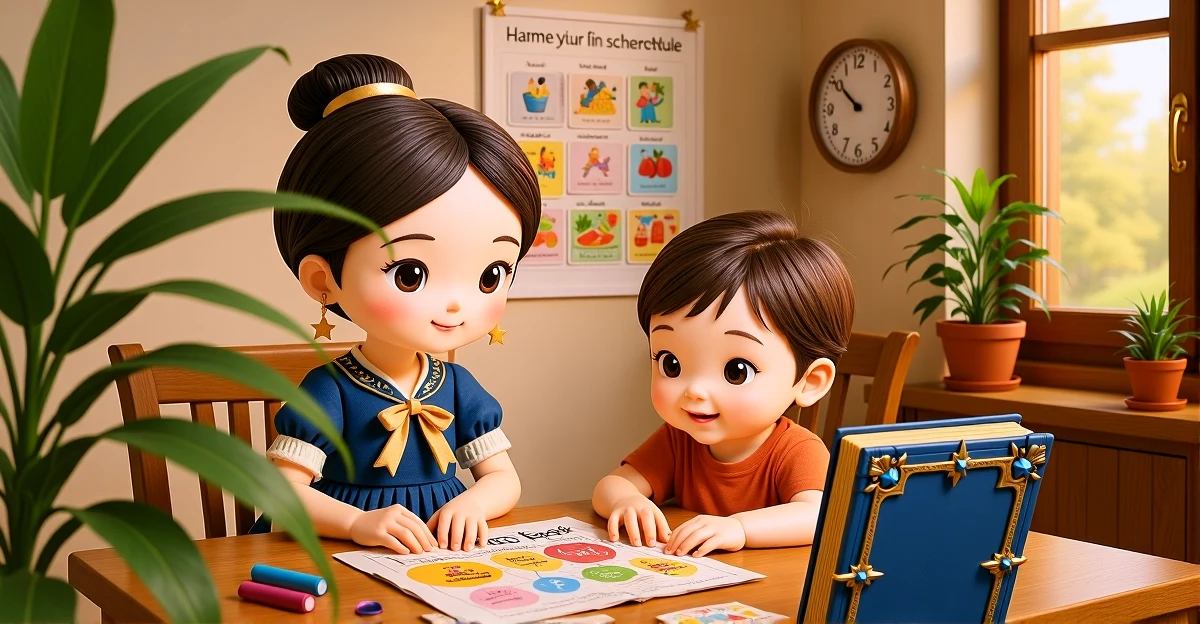
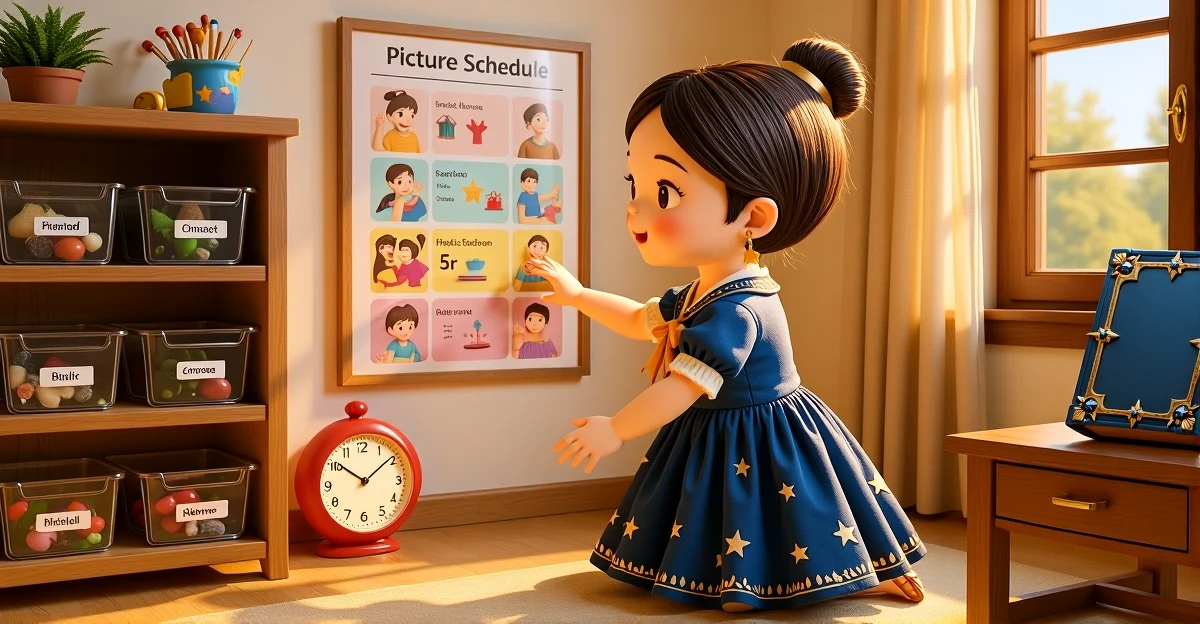
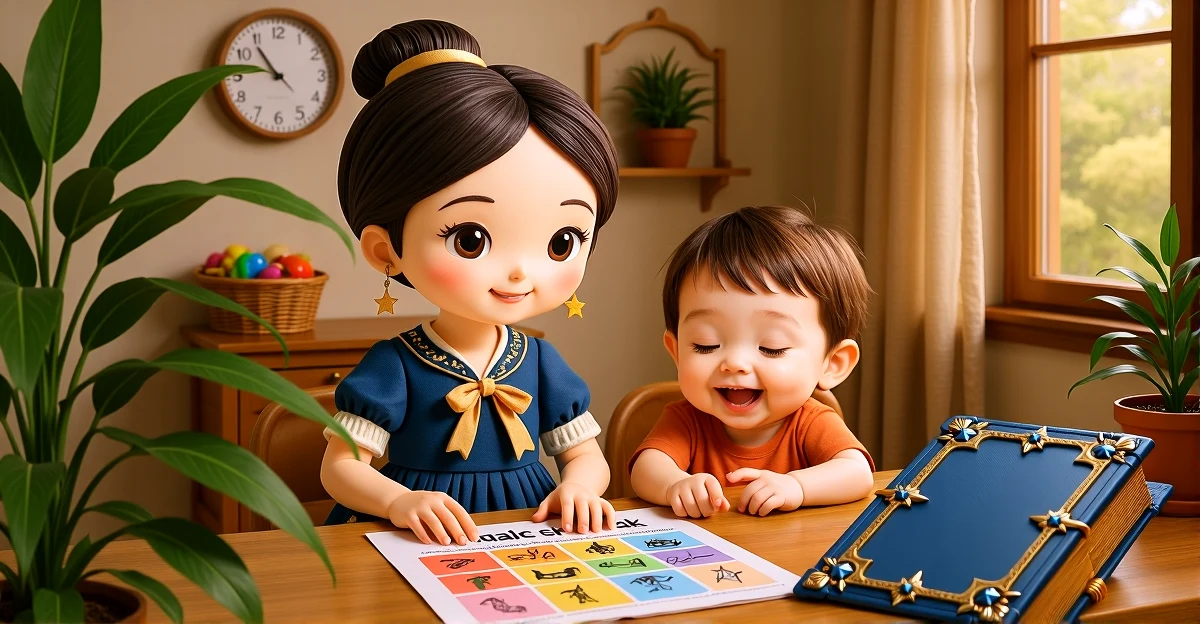
Four and five-year-olds are just beginning to hold sequences in their working memory, so pictures help tremendously. Create a simple morning chart with drawings or photos showing the steps: Get dressed, eat breakfast, brush teeth, put on shoes. Your child can move through these steps with growing independence when they can SEE the pattern.
You don't need anything fancy - hand-drawn pictures work beautifully! The Magic Book and I have seen families create wonderful visual schedules with stick figures, magazine cutouts, or photos of their child doing each step. What matters is that your child can reference it independently.
2. Celebrate the Small Wins
When your child remembers to put their backpack in its special spot, or finds their shoes because they put them away yesterday, acknowledge that! You might say, "You remembered where your shoes go! Your brain is getting SO good at keeping track of things!"
This helps them understand that organization is a skill they're building, not something they're supposed to already know. Every small success is strengthening those neural pathways.
3. Create Simple Systems Together
Maybe you designate a special basket for library books, or a hook that's just the right height for their coat. When children help create these systems, they're more likely to use them. And every time they do, they're strengthening those executive function pathways.
The key is making it EASY for your child to succeed. If the toy bins are too heavy to lift, or the shelf is too high to reach, even the most organized adult would struggle! Set your child up for success with systems that match their current capabilities.
4. Use Time Language Naturally Throughout the Day
"After we finish this puzzle, we'll have snack." "Before we go outside, let's put on sunscreen." "First we'll read a story, then it will be time for sleep." This gentle narration helps children build their understanding of time as a sequence of events.
You're not teaching them to read a clock - you're helping them understand the rhythm and flow of their day. This is the foundation that will eventually support more complex time management skills.
5. Provide Patient, Consistent Reminders
Your child's prefrontal cortex - the part of the brain responsible for planning and organization - won't be fully developed until they're in their mid-twenties! Right now, they genuinely need those reminders. They're not being forgetful on purpose; their brain is still building the systems that will eventually allow them to remember independently.
Instead of frustration, try curiosity: "Let's check our morning chart together. What comes after breakfast?" You're not doing it FOR them; you're scaffolding their growing independence.
What This Means for Your Daily Life
Here's something the research tells us that I find SO comforting: You don't need to have a perfectly organized child. You're not trying to create a miniature adult. You're simply providing the supportive environment where these skills can grow naturally, at your child's own pace, with lots of love and encouragement along the way.
The Magic Book reminds me that every child develops these skills in their own time. Some four-year-olds might be ready to help set the table following a sequence of steps. Others might still be working on remembering to wash their hands before meals. Both are exactly where they need to be.
Your job isn't to rush the process. It's to provide:
- The gentle structure of predictable routines
- The visual supports that make sequences concrete
- The patient reminders that scaffold growing independence
- The celebration of progress, no matter how small
- The warm validation that this is a journey, not a destination
And on the days when it feels like nothing is sticking, when the shoes are lost again and the morning routine fell apart, please be gentle with yourself. This is a long game. These skills develop over years, not days. Your patience, your consistency, your warm guidance - they're all making a difference, even when you can't see it yet.
Stories That Bring These Concepts to Life
Here's where stories become such beautiful helpers. When children hear stories about characters who develop routines, who learn to care for things, who discover the joy of patterns and sequences, they're absorbing these concepts in the most natural way possible. Through story, through imagination, through connection.
In The Book of Inara, we have a story that models this beautifully:
The Shy Plant's Garden Song
Perfect for: Ages 4-5
What makes it special: Ethan and Maeva discover a lonely plant in a magical singing greenhouse. And you know what helps that shy plant bloom? A care routine. Gentle touches, consistent attention, dancing together. The children learn that when you give something regular, loving care, it transforms and becomes part of something beautiful.
Key lesson: This story beautifully demonstrates how regular, predictable actions create positive outcomes - which directly parallels how daily routines help children develop organizational skills and responsibility. The metaphor of caring for something outside themselves helps children understand the importance of consistent attention and gentle persistence.
After reading together: You might create your own care routines - whether it's watering a plant together each morning, organizing toys with a special song, or preparing for the next day with a gentle evening ritual. The story shows that routines aren't about rigidity or perfection; they're about gentle, consistent attention that helps everyone (and everything) thrive.
You're Doing Beautifully
Remember, wonderful parent, your child's brain is doing something absolutely magnificent right now. It's building the air traffic control system that will serve them for their entire life. Every time you patiently show them where their things go, every time you walk through a routine together, every time you use time language naturally, you're supporting this incredible development.
The research is clear: Executive function skills develop through supportive environments and responsive interactions. You don't need special programs or expensive tools. You need exactly what you already have - your patience, your consistency, your warm presence, and your belief in your child's growing capabilities.
Keep providing those gentle routines. Keep celebrating the small wins. Keep trusting your child's timeline. And keep bringing love and warmth to this journey of growing up.
The Magic Book and I are here to support you every step of the way, with stories and insights and SO much love. Until our next adventure together, sweet dreams and starlight to you and your wonderful child!
With love and cosmic wonder,
Inara
Related Articles
- Why Your Child Can't Keep Track of Things (And How to Help Them Build Organization Skills)
- Why Morning and Bedtime Routines Feel Like Battles (And How to Transform Them)
- Nurturing Environmental Awareness in Young Children: A Guide for Parents of 4-5 Year Olds
- Teaching Responsibility When Your Child Blames Others | Ages 4-5
- Teaching Time Management to Preschoolers: Visual Schedules That Work
Show transcript
Hello, wonderful parent! It's me, Inara, and I am so happy you're here today. You know, the Magic Book and I have been hearing from so many parents who are wondering how to help their four and five year olds learn to manage their time and keep track of their belongings. And I want you to know something right from the start. If this feels challenging, you are not alone. This is one of the most common questions parents ask, and there's so much beautiful learning happening in your child's brain right now!
So grab a cozy cup of tea, settle in with me, and let's talk about what's really happening when your preschooler seems to lose track of everything, and more importantly, how we can support their growing capabilities with gentleness and joy.
First, let me share something WONDERFUL that the Magic Book taught me. When your four or five year old can't seem to remember where they put their shoes, or loses track of time during play, or forgets the steps of getting ready for bed, they're not being careless. They're not being difficult. What's actually happening is that their brain is building something absolutely magnificent. It's called executive function, and it's like an air traffic control system for the mind!
The Center on the Developing Child at Harvard University explains that executive function skills help us plan, focus attention, switch gears, and juggle tasks. And here's the beautiful part. While no one is born with these skills fully formed, every single child is born with the ability to develop them. Your child's brain is actively constructing these capabilities right now, in these precious preschool years.
Think of it this way. Your child's brain is like a garden where new pathways are growing every single day. Working memory, cognitive flexibility, the ability to pause and think before acting. All of these skills are sprouting and strengthening through the experiences you provide. Research shows that ages four and five are a particularly sensitive period for building these foundations, and the environment you create matters SO much.
Now, here's something that might shift how you see those moments when your child seems disorganized. Dr. Patricia Miller's research on executive function development shows us that for four and five year olds, time management isn't about understanding clocks or calendars yet. It's about understanding routines and sequences. Before and after. First, then, next. These are the building blocks of time awareness, and they develop through consistent, predictable daily rhythms.
So when your child asks for the tenth time, when are we leaving, or seems surprised that bedtime has arrived again, they're not being difficult. They're learning to map time through the patterns of their day. And you know what helps more than anything? Visual schedules, gentle routines, and your patient, loving guidance as they build these neural pathways.
The Magic Book showed me something beautiful about this. In one of our stories called The Shy Plant's Garden Song, Ethan and Maeva discover a lonely plant in a magical singing greenhouse. And you know what helps that shy plant bloom? A care routine. Gentle touches, consistent attention, dancing together. The children learn that when you give something regular, loving care, it transforms and becomes part of something beautiful.
And that's exactly what's happening with your child's developing organizational skills! When you create simple, consistent routines together, whether it's a morning sequence, a toy cleanup ritual, or a bedtime pattern, you're not just organizing the day. You're helping your child's brain build the pathways for planning, memory, and self-regulation.
Let me share some gentle, research-backed ways you can support this beautiful development.
First, make routines visible. Four and five year olds are just beginning to hold sequences in their working memory, so pictures help tremendously. You might create a simple morning chart with drawings or photos showing the steps. Get dressed, eat breakfast, brush teeth, put on shoes. Your child can move through these steps with growing independence when they can see the pattern.
Second, celebrate the small wins. When your child remembers to put their backpack in its special spot, or finds their shoes because they put them away yesterday, acknowledge that! You might say, you remembered where your shoes go! Your brain is getting so good at keeping track of things! This helps them understand that organization is a skill they're building, not something they're supposed to already know.
Third, create simple systems together. Maybe you designate a special basket for library books, or a hook that's just the right height for their coat. When children help create these systems, they're more likely to use them. And every time they do, they're strengthening those executive function pathways.
Fourth, use time language naturally throughout the day. After we finish this puzzle, we'll have snack. Before we go outside, let's put on sunscreen. First we'll read a story, then it will be time for sleep. This gentle narration helps children build their understanding of time as a sequence of events, which is exactly how four and five year olds need to learn it.
And here's something the research tells us that I find so comforting. The experts emphasize that for preschoolers, organization and time management are not about perfection or adult-level competence. They're about building foundational understanding through predictable routines, visual supports, and warm, patient guidance that validates your child's developmental journey while gently expanding their growing capabilities.
You know what this means? It means you don't need to have a perfectly organized child. You're not trying to create a miniature adult. You're simply providing the supportive environment where these skills can grow naturally, at your child's own pace, with lots of love and encouragement along the way.
The Magic Book reminds me that every child develops these skills in their own time. Some four year olds might be ready to help set the table following a sequence of steps. Others might still be working on remembering to wash their hands before meals. Both are exactly where they need to be. Your job isn't to rush the process. It's to provide the gentle structure, the patient reminders, and the celebrating of progress that helps these capabilities blossom.
And here's where stories become such beautiful helpers. When children hear stories about characters who develop routines, who learn to care for things, who discover the joy of patterns and sequences, they're absorbing these concepts in the most natural way possible. Through story, through imagination, through connection.
In The Shy Plant's Garden Song, children see how Ethan and Maeva's gentle, consistent care routine transforms not just the shy plant, but the whole garden's music. It's a beautiful metaphor for how our own daily routines help everything in our lives work more harmoniously together. After you read this story with your child, you might create your own care routines. Maybe you water a plant together each morning, or organize toys with a special song, or prepare for the next day with a gentle evening ritual.
The story shows that routines aren't about rigidity or perfection. They're about gentle, consistent attention that helps everyone and everything thrive. And that's exactly the energy we want to bring to supporting our children's developing organizational skills.
Remember, wonderful parent, your child's brain is doing something absolutely magnificent right now. It's building the air traffic control system that will serve them for their entire life. Every time you patiently show them where their things go, every time you walk through a routine together, every time you use time language naturally, you're supporting this incredible development.
And on the days when it feels like nothing is sticking, when the shoes are lost again and the morning routine fell apart, please be gentle with yourself. This is a long game. These skills develop over years, not days. Your patience, your consistency, your warm guidance, they're all making a difference, even when you can't see it yet.
The Magic Book and I are here to support you on this journey. We have stories that model routines, that celebrate growing capabilities, that show children the joy of caring for things and managing their world with growing confidence. And we have this community of parents, all learning together, all supporting their children's beautiful development.
You're doing such important work, and you're doing it beautifully. Keep providing those gentle routines, those visual supports, those patient reminders. Keep celebrating the small wins. Keep trusting your child's timeline. And keep bringing love and warmth to this journey of growing up.
Thank you for being here with me today. The Magic Book and I are always here for you, with stories and support and so much love. Until our next adventure together, sweet dreams and starlight to you and your wonderful child!