
You're searching for your child's library book for the third time this week. You find their homework crumpled at the bottom of their backpack. Their coat is on the floor again, even though the hook is right there. And you wonder: Why is keeping track of things so hard for my kindergartener?
\n\nIf this sounds familiar, I want you to know something really important: your child isn't behind. They're not careless. They're not irresponsible. They're exactly where they're supposed to be.
\n\nIn this article, I'll share what research reveals about executive function development, why ages 5-6 are a critical window for building organizational skills, and gentle strategies that really work.
\nWhat's Really Happening in Your Child's Brain
\n\nAges five and six are when executive function skills - like organization, time management, and planning - are just beginning to bloom. Think of it like this: your child's brain is building the filing system right now. The folders aren't labeled yet. The drawers don't have organizers. Everything is new and under construction.
\n\nResearch published in Frontiers in Psychology demonstrates that executive functions show significant development between ages 5-6, and that targeted support can meaningfully improve planning and organizational skills. But here's the key: these skills are still emerging. They're not fully developed yet.
\n\nYour five or six year old is learning to:
\n\n- \n
- Understand that belongings have designated places \n
- Remember multi-step instructions \n
- Follow routines independently \n
- Comprehend that time passes \n
- Plan ahead (even just a few minutes) \n
These are HUGE cognitive leaps. And they need our gentle guidance to build these skills.
\nWhy Organization Must Come Before Time Management
\n\nHere's something many parents don't realize: organization must come before time management.
\n\nBefore your child can manage their schedule, they need concrete systems. They need to know where things go. They need routines they can follow. They need visual supports that help their developing brain understand what's expected.
\n\nSharon Duke Estroff, author of "The Age-by-Age Guide to Teaching Kids Time Management," explains that children ages 5-6 are just learning to read calendars and clocks. Visual timers help young children comprehend time passage, but they're not yet ready to independently manage complex schedules.
\n\nThis is completely normal development. And it means we start with organization first.
\nResearch-Backed Strategies That Work
\n\n1. Create Designated Places for Everything
\n\nYour child's brain needs concrete, consistent systems. When everything has a specific place, you're teaching their brain how to organize.
\n\nPractical examples:
\n- \n
- Backpack hook: Always in the same spot by the door \n
- Library book basket: A special container just for library books \n
- Homework folder: Bright color, always goes in the same pocket of the backpack \n
- Shoe bin: Right by the door where shoes come off \n
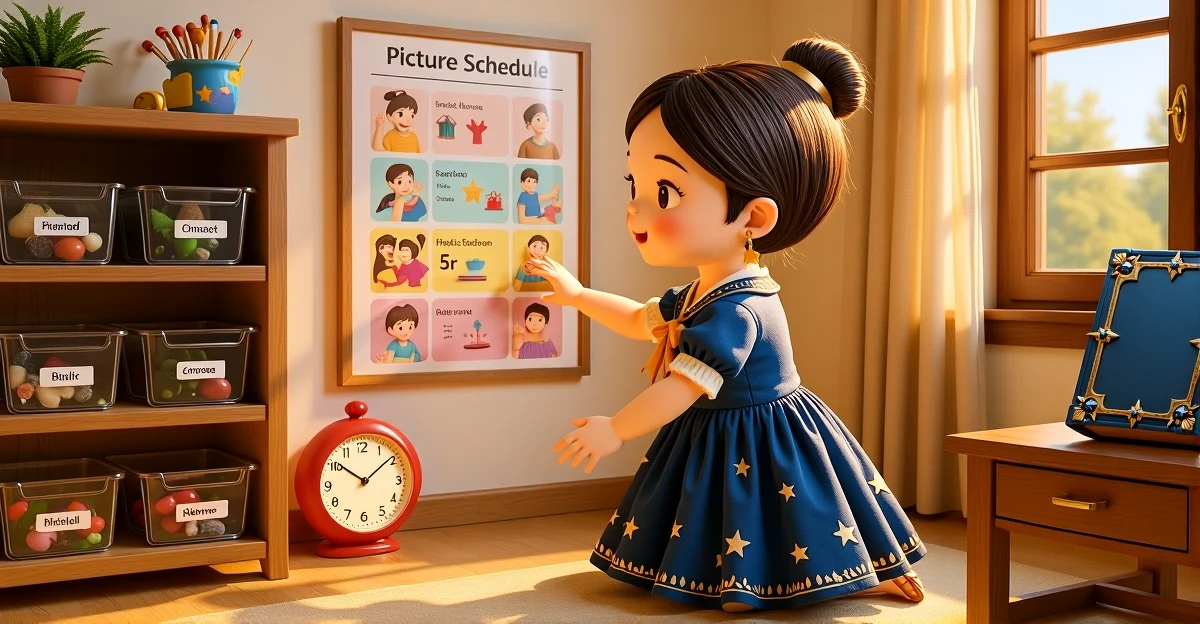
- Toy bins: Labeled with pictures showing what goes inside \n
The Child Mind Institute emphasizes that consistent routines and visual supports are essential for children developing executive function skills. These aren't crutches - they're scaffolding that helps your child's brain build the pathways it needs.
\n\n2. Use Visual Supports
\n\nVisual supports work beautifully at this age because they make abstract concepts concrete.
\n\nEffective visual supports:
\n- \n
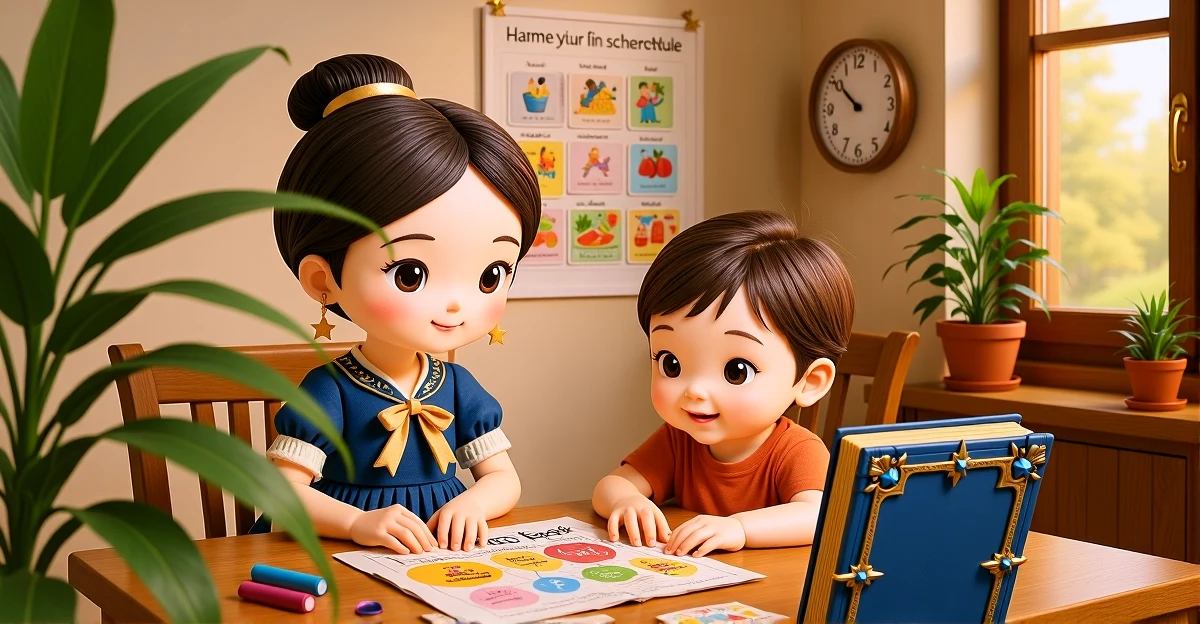
- Picture schedules: Photos showing the morning routine step by step \n
- Where things belong charts: Pictures of items next to pictures of where they go \n
- Visual timers: Show time passing in a way young children can understand \n
- Checklists with pictures: For bedtime routine, getting ready for school, etc. \n
Make these together with your child. When they help create the system, they're more invested in using it.
\n\n3. Break Tasks Into Smaller Steps
\n\nThe Child Mind Institute notes that breaking larger tasks into smaller, more manageable steps helps children succeed. This is crucial for developing organizational skills.
\n\nInstead of: "Clean up your room"
\nTry: "Let's put the blocks in the bin together. Great! Now let's hang up your coat. Perfect! Now let's put the books on the shelf."
You're not just getting the room clean. You're teaching the process of organizing. You're showing their brain how to think through tasks step by step.
\n\n4. Make It Playful
\n\nOrganization doesn't have to be boring! When you make it playful, children engage more fully and learn more deeply.
\n\nPlayful approaches:
\n- \n
- "Let's race to see how fast we can put all the blocks away!" \n
- "Can you find three things that belong in your room?" \n
- "Let's pretend we're organizing a store - where should each item go?" \n
- "Your backpack is hungry! What does it need to eat for school tomorrow?" \n
5. Provide Patient, Consistent Guidance
\n\nDr. Lynn Meltzer, president of the Research Institute for Learning and Development, emphasizes: "When we teach children strategies for time management from an early age, they internalize them, which sets them up for lifelong success."
\n\nBut here's the key: we're teaching, not expecting them to already know.
\n\nThis means:
\n- \n
- Doing tasks together, not just telling them to do it \n
- Reminding them gently, not getting frustrated when they forget \n
- Celebrating small successes: "You remembered to hang up your backpack!" \n
- Being consistent with routines and systems \n
- Having realistic expectations for their developmental stage \n
Understanding Time: A Gradual Process
\n\nMarcia Grosswald, an elementary teacher, explains that "in order to make a realistic schedule, you need a good sense of how long things take" - a skill that develops gradually with practice and parental support.
\n\nYour 5-6 year old is just beginning to understand time. You can support this development by:
\n\n- \n
- Using visual timers for activities \n
- Talking about time in relatable ways: "This takes as long as one song" \n
- Creating time anchors: "We read stories after dinner" \n
- Pointing out time passing: "We've been playing for 10 minutes" \n
Don't expect independent time management yet. You're creating the foundation.
\nA Story That Teaches This Beautifully
\n\nThe Sunshine Helpers
\nPerfect for: Ages 4-5 (also wonderful for ages 5-6)
\nWhat makes it special: This story teaches responsibility through the metaphor of caring for solar panels that need gentle daily attention. Ethan and Sofia discover that consistent, gentle daily care helps the solar panels work their best.
\nKey lesson: Just like solar panels need regular care to work well, our belongings work better when we care for them regularly. Taking care of things isn't a chore - it's caring for something special.
\nParent talking point: After reading this story together, you can create a gentle daily routine chart with your child, framing organization as caring for their special things. Make it playful: "Let's help your backpack rest in its special spot!" or "Your books are happy when they're on the shelf together!"
\nThe Long-Term Impact
\n\nResearch from NIH demonstrates that executive function development shows dramatic changes between ages 5-7, and that supportive scaffolding from adults is critical during this window.
\n\nWhen you provide patient structure and gentle guidance now, you're building:
\n\n- \n
- Neural pathways for organization and planning \n
- Habits that will serve them for life \n
- Confidence in their ability to manage their belongings \n
- Understanding that systems help us succeed \n
- Self-regulation skills that extend beyond organization \n
You're not just helping them find their shoes today. You're building the organizational skills they'll carry for the rest of their lives.
\n\nYour child is learning. Their brain is growing. And you, wonderful parent, are doing beautifully.
\n\nWith love and starlight,
Inara ✨
Related Articles
- Building Time Management Skills in Young Children: A Gentle Guide
- Teaching Financial Wisdom to Your 5-6 Year Old: A Gentle Guide to Money and Economics
- Teaching Financial Literacy to Young Children: Ages 5-6 Guide
- Building Your Child's Executive Function: Time Management & Organization (Ages 4-5)
- Teaching Time Management to Preschoolers: Visual Schedules That Work
Show transcript
Hello, wonderful parent. I see you. I see you searching for your child's library book for the third time this week. I see you finding their homework crumpled at the bottom of their backpack. I see you wondering why keeping track of things feels so hard for your kindergartener. And I want you to know something REALLY important: your child isn't behind. They're not careless. They're not irresponsible. They're exactly where they're supposed to be. Let me explain what's really happening in that beautiful, growing brain. Ages five and six are when executive function skills, like organization and time management, are just beginning to bloom. Think of it like this: your child's brain is building the filing system right now. The folders aren't labeled yet. The drawers don't have organizers. Everything is new and under construction. Research from child development experts shows that the cognitive abilities needed to keep track of belongings, follow schedules, and manage time independently are still emerging during these years. This isn't a problem to fix. It's development unfolding exactly as it should. Dr. Lynn Meltzer, who studies how children learn, says that when we teach organizational strategies from an early age, children internalize them and carry them forward for life. But here's the key: we're teaching, not expecting them to already know. Your five or six year old is learning to read calendars and clocks. They're discovering that time passes. They're beginning to understand that belongings have places. These are HUGE cognitive leaps. And they need our gentle guidance to build these skills. So what can we do? First, organization comes before time management. Before your child can manage their schedule, they need concrete systems. Designated places for everything. A hook for their backpack. A basket for library books. A special spot for homework. Visual supports work beautifully at this age. Picture schedules showing the morning routine. A chart with photos of where things belong. These aren't crutches, they're scaffolding that helps your child's brain build the pathways it needs. Second, break tasks into smaller steps. Instead of saying clean up your room, try let's put the blocks in the bin together. Then we'll hang up your coat. One step at a time. This teaches the process of organizing. Third, make it playful. There's a beautiful story in The Book of Inara called The Sunshine Helpers, where Ethan and Sofia learn that solar panels need gentle daily care to work their best. Just like those solar panels, our belongings work better when we care for them regularly. After reading this story with your child, you might create your own gentle daily routine, framing organization as caring for special things. The research is so clear on this: children whose parents provide patient structure and gentle guidance during this developmental window build stronger organizational skills over time. You're not just helping them find their shoes today. You're building the neural pathways they'll use for the rest of their lives. Your child is learning. Their brain is growing. And you, wonderful parent, are doing beautifully. With love and starlight, Inara.