
Hello, wonderful parent! If you are watching your six or seven year old struggle to keep track of assignments, lose their homework folder for the third time this week, or forget what materials they need for school tomorrow, I want you to take a deep breath and know something really important. You are not alone in this. And your child is not falling behind.
What you are seeing is not carelessness or irresponsibility. It is completely normal brain development. And there is SO much we can do to help!
In this guide, we will explore what executive function really means, why ages six and seven are such a critical growth period, and most importantly, the gentle, research-backed strategies that actually work. Plus, I will share a magical story that helps children see organization as an adventure rather than a chore.
Understanding Executive Function: Your Child Brain Air Traffic Control System
Let me share something the Magic Book taught me that changed everything. The skills your child needs to track assignments, remember materials, and plan ahead are called executive functions. Think of them as an air traffic control system for the brain, coordinating attention, working memory, planning, and organization.
And here is the WONDERFUL news. Research from places like Harvard University and the Child Mind Institute shows us that these skills develop gradually throughout childhood and adolescence. Ages six and seven are right in the middle of this growth period!
Dr. Matthew Cruger, a neuropsychologist at the Child Mind Institute, explains it beautifully. He says these are skills that develop over time, and some children need more support building them than others. And that is perfectly okay! In fact, it is more than okay. It is exactly how development is supposed to work.
What Working Memory Really Means
Working memory is the part of the brain that helps us hold information and use it. It is what allows your child to remember that they need to put their homework in their backpack, check their folder, and bring their library book, all while getting ready for school.
Research shows that working memory develops slowly and steadily throughout childhood. So when we expect a six or seven year old to independently track multiple assignments, remember what materials they need, and plan ahead for tomorrow, we are asking their brain to do something it is still learning how to do.
Think of it this way. If you were learning to play the piano, you would not expect to perform a concert after just a few lessons, right? You would need practice, support, and someone to guide you. Your child organizational skills are exactly the same.
Why This Is Normal Development, Not a Problem
The Harvard Center on the Developing Child reminds us that executive function skills are like building blocks. They stack on top of each other, and each child builds at their own pace. Some children naturally develop these skills a bit earlier. Others need more time and support. Both paths are completely normal.
When your child forgets their homework folder, they are not being irresponsible. Their brain is simply still building the pathways they need to remember multi-step processes. When they lose track of what is due tomorrow, they are not being careless. They are learning how to plan ahead, and that skill takes YEARS to fully develop.
Children develop better executive function skills when adults provide the scaffolding they need to practice these skills in everyday situations.
— Harvard Center on the Developing Child
This is such an important truth. Your child does not need to be fixed. They need scaffolding. They need external support while their internal systems are still being built. And that is exactly what you can provide.
Gentle Strategies That Actually Work
So what can we do to help? The Magic Book and the research both point us toward the same beautiful truth. We can provide external structure that compensates for developing internal organization skills. Here are strategies that really work:
Strategy 1: Create Visual Checklists Together
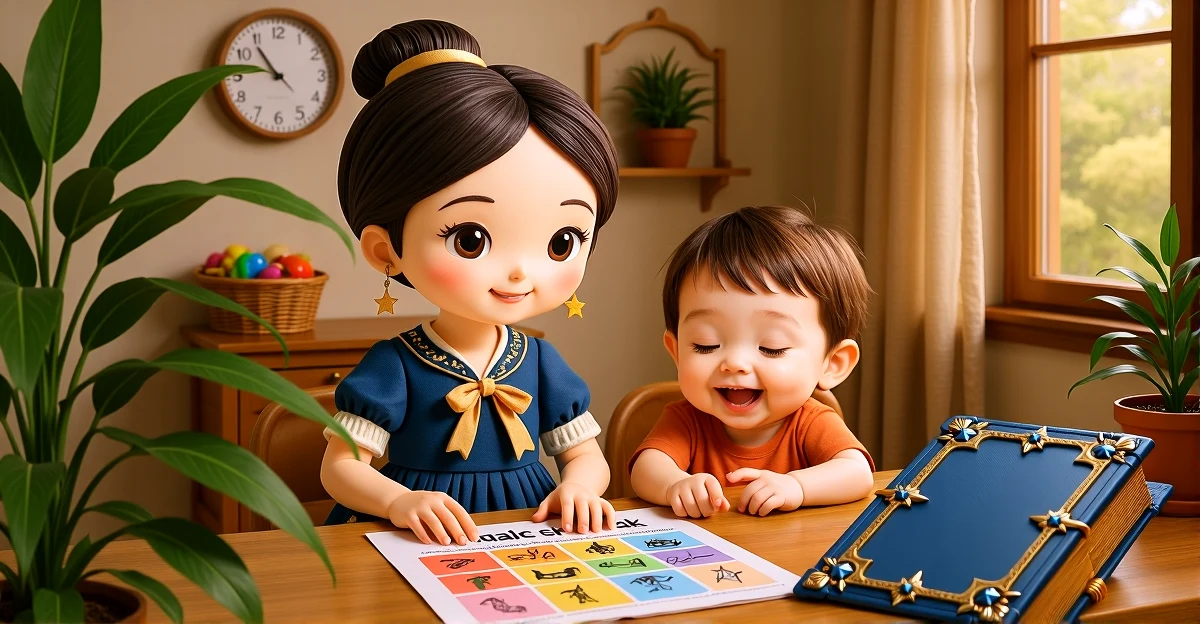
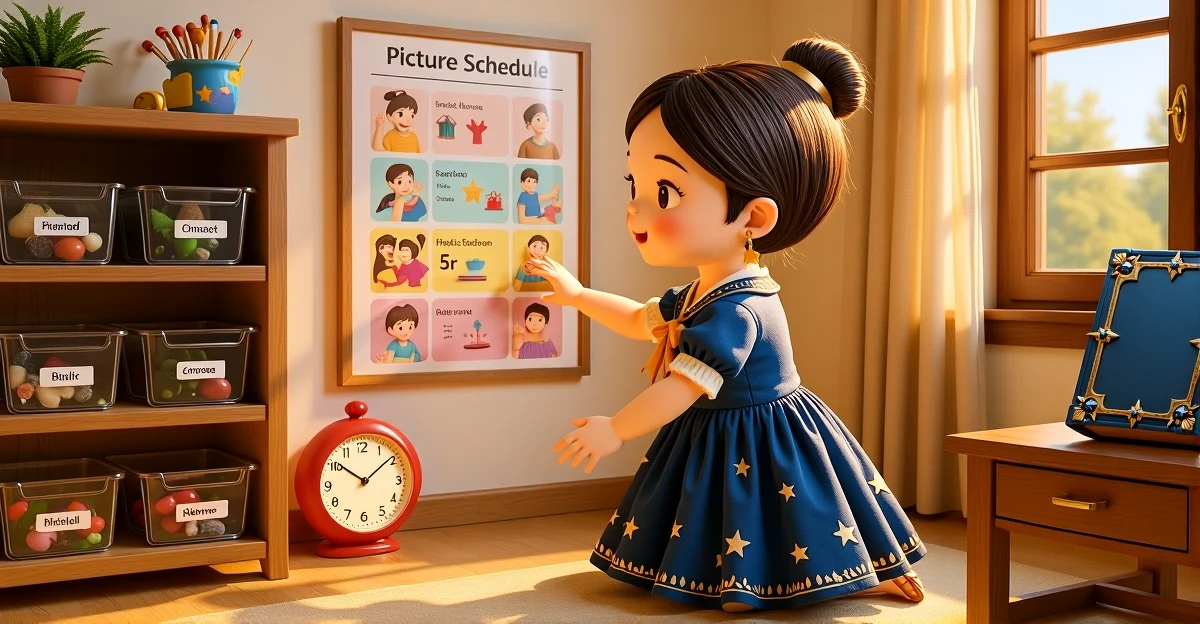
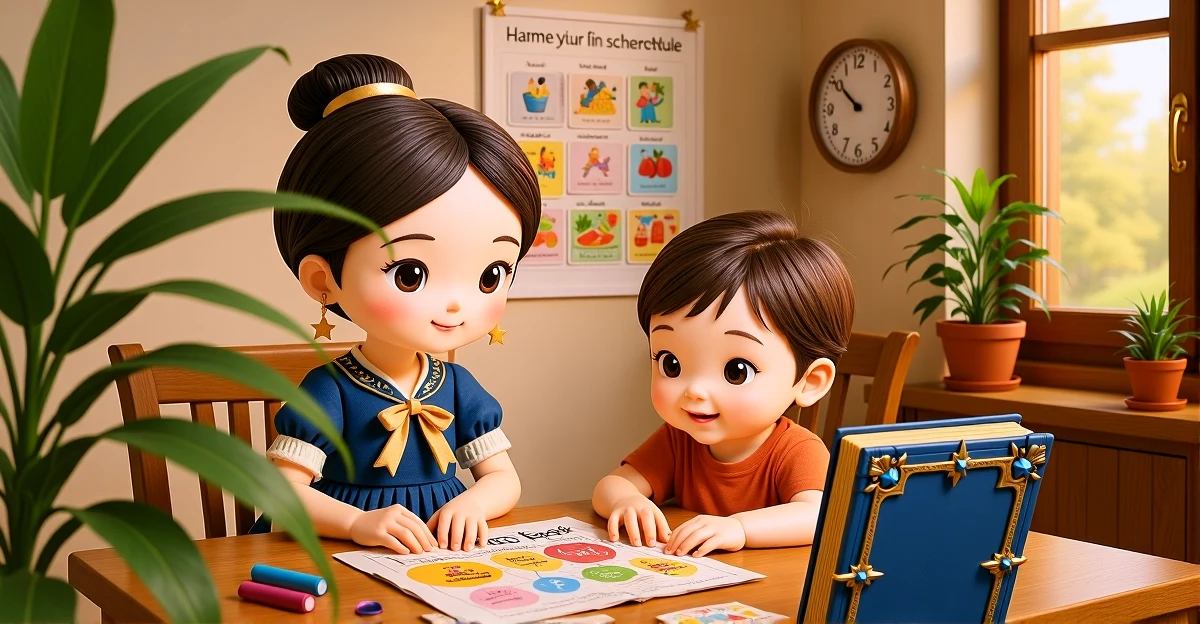
Visual supports are AMAZING for developing brains. Create a simple checklist with your child that they can see and touch. It might have pictures or words, depending on what works best for them.
Questions like:
- What do I need for tomorrow?
- Where does my homework go?
- Did I check my folder?
- Do I have my library book?
When children can see the steps, they can follow them much more easily. The visual checklist becomes their external memory system while their internal one is still developing.
Strategy 2: Break Tasks Into Tiny Steps
Instead of saying, Get ready for school, try breaking it down. First, let us put your homework in your backpack. Then we will check your folder. Then we will make sure you have your library book. One step at a time, with you right there to guide them.
This reduces the cognitive load on their developing brain. Instead of trying to remember five things at once, they focus on one thing, complete it, and move to the next.
Strategy 3: Establish Consistent Routines
The research shows that predictable systems reduce the cognitive load on children developing brains. When the routine is always the same, checking the backpack at the same time every evening, putting the folder in the same place every day, their brain can build those pathways more easily.
Consistency is not about being rigid. It is about creating predictable patterns that help your child brain know what comes next.
Strategy 4: Use Color Coding and Special Containers
Maybe homework always goes in the red folder. Maybe library books always live in the blue bin by the door. Maybe the Tuesday folder is green and the Friday folder is purple.
These external systems compensate for the internal organization skills that are still developing. They make abstract concepts like organization concrete and visible.
Strategy 5: Celebrate Every Small Win
And here is something really important. Celebrate the small wins! When your child remembers to check their folder, even if you reminded them, that is progress! When they put their homework in the right place, even if it took three tries, that is learning!
Your encouragement helps their brain build those pathways. Every time you celebrate their effort, you are reinforcing the neural connections they are working so hard to create.
A Story That Makes Organization Magical
In The Book of Inara, we have a beautiful story that shows this kind of systematic thinking in such a magical way. Let me tell you about it!
The Giggling Gallery of Forgotten Questions
Perfect for: Ages 6-7
What makes it special: Lucas and Ella discover an archive where old photographs giggle when asked the right questions. They go on a delightfully chaotic treasure hunt through time, and here is the beautiful part. Each question they ask unlocks the next clue. They learn that organization is not about being perfect. It is about creating systems and following steps in order, just like keeping track of homework and school materials.
Key lesson: When Lucas and Ella discover that asking questions in the right sequence helps them solve the mystery, children see that systematic thinking can be fun and magical. It is not boring or hard. It is an adventure!
How to use this story: After you share this story with your child, you can create your own question-based checklist system together. What do I need for tomorrow? Where does it go? Did I check my folder? This mirrors the story approach to solving mysteries, and it makes organization feel like a game instead of a chore.
You Are Doing Beautifully
Here is what I want you to remember, dear parent. Your child brain is doing exactly what it is supposed to be doing at this age. It is growing, learning, and building new pathways every single day. The struggles you are seeing are not signs of a problem. They are signs of development in action.
You are not doing this because your child is behind. You are doing this because you understand how learning works. You are giving their developing brain the external structure it needs while those internal systems are still being built.
And one day, maybe not tomorrow, maybe not next month, but one day, you will notice something wonderful. Your child will check their folder without being reminded. They will remember their library book on their own. They will start to internalize these systems you have been building together.
That is the magic of development. That is the power of patient, loving support. That is what happens when we work with our children brains instead of against them.
So take a deep breath, wonderful parent. You are doing beautifully. Your child is doing beautifully. And with these strategies, with stories like The Giggling Gallery of Forgotten Questions, and with your continued love and patience, those organizational skills will bloom in their own perfect time.
The Magic Book and I are always here for you, cheering you on every step of the way.
With love and starlight,
Inara
Related Articles
- Why Your Child Can't Keep Track of Things (And How to Help Them Build Organization Skills)
- Nurturing Your Child Innovation Mindset: A Gentle Guide for Ages 6-7
- Nurturing Purpose and Meaning in Young Children: A Gentle Guide for Parents
- Building Your Child's Executive Function: Time Management & Organization (Ages 4-5)
- Teaching Time Management to Preschoolers: Visual Schedules That Work
Show transcript
Hello, wonderful parent! It's me, Inara, and I am so happy you're here today. You know, the Magic Book and I have been hearing from so many parents who are feeling worried because their child seems to struggle with keeping track of assignments, deadlines, and school materials. And I want you to know something really important right from the start. You are not alone in this, and your child is not falling behind. What you're seeing is completely normal brain development, and there is so much we can do to help!
So grab a cozy cup of tea, settle in, and let's talk about what's really happening in your child's beautiful, growing brain, and how we can support them with love and patience.
First, let me share something the Magic Book taught me that changed everything. When your six or seven year old can't seem to remember their homework folder, or loses their library book for the third time this month, or forgets what they're supposed to bring to school tomorrow, they're not being careless. They're not being irresponsible. Their brain is simply still building the systems they need for organization and time management.
You see, these skills are called executive functions, and they're like an air traffic control system for the brain. They help us plan ahead, remember multiple things at once, organize our materials, and manage our time. And here's the WONDERFUL news. Research from places like Harvard University and the Child Mind Institute shows us that these skills develop gradually throughout childhood and adolescence. Ages six and seven are right in the middle of this growth period!
Dr. Matthew Cruger, a neuropsychologist at the Child Mind Institute, explains it beautifully. He says these are skills that develop over time, and some children need more support building them than others. And that's perfectly okay! In fact, it's more than okay. It's exactly how development is supposed to work.
The research shows us that working memory, which is the part of the brain that helps us hold information and use it, develops slowly and steadily throughout childhood. So when we expect a six or seven year old to independently track multiple assignments, remember what materials they need, and plan ahead for tomorrow, we're asking their brain to do something it's still learning how to do.
Think of it this way. If you were learning to play the piano, you wouldn't expect to perform a concert after just a few lessons, right? You'd need practice, support, and someone to guide you. Your child's organizational skills are exactly the same. They need practice, support, and gentle guidance from you.
So what can we do to help? The Magic Book and the research both point us toward the same beautiful truth. Children develop better executive function skills when adults provide the scaffolding they need to practice these skills in everyday situations.
Let me share some strategies that really work.
First, visual supports are AMAZING for developing brains. Create a simple checklist with your child that they can see and touch. It might have pictures or words, depending on what works best for them. Questions like, What do I need for tomorrow? Where does my homework go? Did I check my folder? When children can see the steps, they can follow them much more easily.
Second, break tasks into smaller steps. Instead of saying, Get ready for school, try, First, let's put your homework in your backpack. Then we'll check your folder. Then we'll make sure you have your library book. One step at a time, with you right there to guide them.
Third, create consistent routines. The research shows that predictable systems reduce the cognitive load on children's developing brains. When the routine is always the same, checking the backpack at the same time every evening, putting the folder in the same place every day, their brain can build those pathways more easily.
Fourth, use color coding or special containers. Maybe homework always goes in the red folder. Maybe library books always live in the blue bin by the door. These external systems compensate for the internal organization skills that are still developing.
And here's something really important. Celebrate the small wins! When your child remembers to check their folder, even if you reminded them, that's progress! When they put their homework in the right place, even if it took three tries, that's learning! Your encouragement helps their brain build those pathways.
Now, let me tell you about a story that shows this kind of systematic thinking in such a magical way. It's called The Giggling Gallery of Forgotten Questions, and it's about Lucas and Ella discovering an archive where old photographs giggle when asked the right questions.
In this story, Lucas and Ella go on a delightfully chaotic treasure hunt through time, and here's the beautiful part. Each question they ask unlocks the next clue. They learn that organization isn't about being perfect. It's about creating systems and following steps in order, just like keeping track of homework and school materials.
When Lucas and Ella discover that asking questions in the right sequence helps them solve the mystery, children watching or reading see that systematic thinking can be fun and magical. It's not boring or hard. It's an adventure!
After you share this story with your child, you can create your own question-based checklist system together. What do I need for tomorrow? Where does it go? Did I check my folder? This mirrors the story's approach to solving mysteries, and it makes organization feel like a game instead of a chore.
You can find The Giggling Gallery of Forgotten Questions in The Book of Inara, along with so many other stories that help children build these important skills through imagination and wonder.
Here's what I want you to remember, dear parent. Your child's brain is doing exactly what it's supposed to be doing at this age. It's growing, learning, and building new pathways every single day. The struggles you're seeing aren't signs of a problem. They're signs of development in action.
The Harvard Center on the Developing Child reminds us that children develop better executive function when given appropriate scaffolding and support. And that's exactly what you're providing when you create checklists, break down tasks, establish routines, and celebrate progress.
You're not doing this because your child is behind. You're doing this because you understand how learning works. You're giving their developing brain the external structure it needs while those internal systems are still being built.
And one day, maybe not tomorrow, maybe not next month, but one day, you'll notice something wonderful. Your child will check their folder without being reminded. They'll remember their library book on their own. They'll start to internalize these systems you've been building together.
That's the magic of development. That's the power of patient, loving support. That's what happens when we work with our children's brains instead of against them.
So take a deep breath, wonderful parent. You're doing beautifully. Your child is doing beautifully. And with these strategies, with stories like The Giggling Gallery of Forgotten Questions, and with your continued love and patience, those organizational skills will bloom in their own perfect time.
The Magic Book and I are always here for you, cheering you on every step of the way. Until our next adventure together, with love and starlight, Inara.