Your kindergartener comes home from school, and you ask how their day was. "Good," they say. You notice they seem a little quieter than usual, so you gently probe: "Did anything happen today?" They shrug. "It was just... good."
Or maybe it's the opposite scenario. Your child had a tough moment at the playground, and when you ask what's wrong, all they can say is "bad." You KNOW there's so much more happening inside that beautiful little heart - disappointment, frustration, maybe even a touch of embarrassment - but the words just aren't there yet.
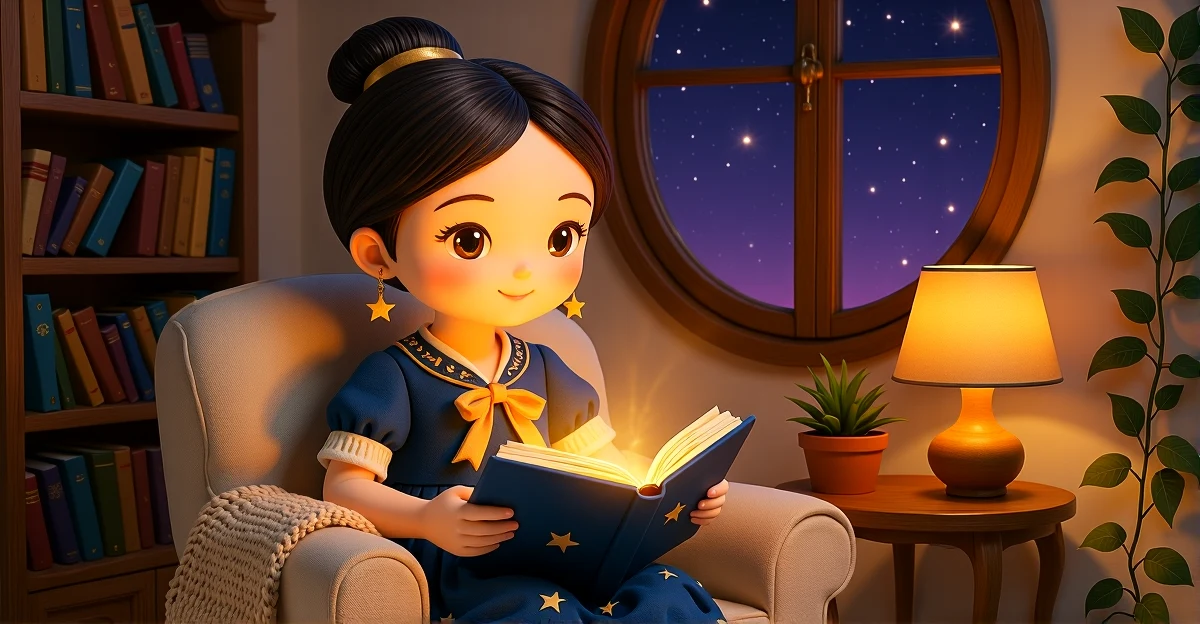
If this sounds familiar, I want you to know something important: You are not alone, and your child is developing EXACTLY as they should. In this post, the Magic Book and I are going to share what research tells us about emotional vocabulary development, why this "good or bad" phase is completely normal, and gentle strategies to help your child discover the full rainbow of feelings that exist beyond just two words.
Understanding the Good or Bad Phase
When children are five or six years old, they're at a fascinating point in their emotional development. They're experiencing a RICH inner world of feelings - curiosity, excitement, disappointment, pride, nervousness, delight - but they often lack the vocabulary to express these nuanced emotions. So they default to the broad categories they know: good and bad.
And here's what's beautiful about this: it's not a problem to fix. It's a starting point to celebrate.
Think of it this way. Your child has just learned the words "up" and "down." Over time, they'll gradually learn north, south, diagonal, sideways, and all the other direction words. But they start with the foundation - the big, broad-covering terms that can apply to lots of different situations. That's exactly what's happening with emotional vocabulary.
What Research Shows Us
Research from Leipzig University reveals something fascinating about how children develop emotional vocabulary. When children are four, five, or six years old, they typically use very basic, unspecific terms to describe their feelings. Words like "good," "nice," and "funny" for pleasant experiences, and "not good" or "bad" for unpleasant ones.
But here's the part that might surprise you: this developmental journey continues all the way through age eleven and beyond. Even ten and eleven year olds haven't fully mastered adult-like emotion vocabulary patterns yet.
"Learning to use language in an adult-like way is a long-lasting process. This may particularly apply to complex conceptual domains such as emotions."
— Dr. Gerlind Grosse and colleagues, Leipzig University
So if your five or six year old is saying "good" and "bad," they're right on track. They're at the very BEGINNING of a beautiful, gradual journey of emotional vocabulary development.
Why Emotional Vocabulary Matters SO Much
You might be wondering: does it really matter if my child can name their feelings with precision? Can't they just... feel them?
Here's where the research gets really WONDERFUL. Researchers from Oregon State University and the Yale Center for Emotional Intelligence have found that children with richer emotional vocabularies show significantly better outcomes across multiple areas of development.
Children who can accurately name their emotions are:
- Better able to pay attention - When you can name what you're feeling, it's easier to manage those feelings and focus on learning
- More engaged in school - Emotional literacy supports academic engagement and persistence
- Building more positive relationships - When you can express your feelings clearly, you can communicate better with friends and family
- More empathic - Understanding your own emotions helps you recognize and respond to others' emotions
Think about it from your child's perspective. Imagine feeling a swirl of emotions - maybe you're excited about a new activity but also nervous about whether you'll be good at it - and all you have are the words "good" and "bad." It's like trying to paint a sunset with only two colors. You can do it, but you're missing so many beautiful shades.
"Cultivating a rich vocabulary allows children to pinpoint their emotions accurately, communicate effectively, and identify appropriate regulation strategies."
— Dr. Shauna Tominey and Dr. Susan Rivers
When your child can say "I'm feeling nervous about the presentation but also excited to share what I learned," they're not just communicating more clearly - they're developing emotional intelligence that will serve them for their entire life.
How Emotional Vocabulary Develops
The Magic Book has taught me something beautiful about how children learn emotion words: it's all about frequency and connection.
Research shows that the more frequently an emotion word appears in adult speech, the earlier children produce it in their own vocabulary. This means that YOU, as your child's most important teacher, have tremendous power to shape their emotional vocabulary simply by using rich feeling words in your everyday conversations.
Children also learn emotion words in a specific pattern. They start with broad-covering terms (like "good" and "bad") and gradually add more specific, nuanced words. It's a natural progression, like learning to distinguish between different shades of blue before you can name them all - sky blue, navy, turquoise, cerulean.
The Two Parts of Emotional Vocabulary
Here's something important the research reveals: children need BOTH a range of different emotion words AND an understanding of what those words mean. This includes:
- The word itself - "disappointed," "proud," "frustrated"
- What it feels like in the body - "My shoulders feel heavy when I'm disappointed"
- When to use it - "I feel disappointed when something I was looking forward to doesn't happen"
- How it's different from similar feelings - "Disappointed is different from sad - it's specifically about expectations"
This is why simply telling your child "use more feeling words" doesn't work. They need you to help them build those bridges between the physical sensation of an emotion, the word that describes it, and the situations where it applies.
Gentle Strategies to Expand Your Child's Emotional Vocabulary
The beautiful news is that you can help your child develop rich emotional vocabulary through simple, loving practices woven into your daily life. The Head Start Early Childhood Learning & Knowledge Center reminds us that "before children develop their emotional vocabulary, adults need to help them express their feelings" by consistently modeling and labeling emotions.
Here are strategies that actually work:
1. Connect Body Sensations to Feeling Words
When you notice your child experiencing an emotion, help them connect what's happening in their body to a specific emotion word. You might say:
- "I notice your shoulders are tight and your voice sounds frustrated. Are you feeling frustrated right now?"
- "I see you smiling so big and your eyes are sparkling. You look delighted! Is that how you're feeling?"
- "Your hands are clenched and your face looks tense. I wonder if you're feeling angry or maybe disappointed?"
You're helping them build that crucial bridge between the physical sensation of an emotion and the word that describes it.
2. Model Your Own Emotional Vocabulary
Share your own feelings throughout the day - not in a way that burdens your child, but in a way that models emotional vocabulary. You might say:
- "I'm feeling a little overwhelmed right now because I have a lot to do, so I'm going to take three deep breaths."
- "I felt so proud when I finished that project. My heart felt warm and light."
- "I'm feeling curious about what we'll discover at the museum today!"
When you do this, you're showing your child that all feelings are okay to have and to name. You're showing them that grown-ups have lots of different feelings too, and that we can talk about them.
3. Read Stories About Emotions Together
Stories are SUCH a powerful way to build emotional vocabulary because they show emotions in context. When you read together, you can pause and talk about how characters are feeling, what clues tell you that, and what words describe those feelings.
The Magic Book and I have stories specifically designed to help with this, and I'll share one of my favorites in just a moment.
4. Create an Emotion Color Chart
This is a beautiful activity you can do together. Ask your child: "What color do you think curious feels like? What about disappointed? What about proud?" Create a chart together where different emotions have different colors. This helps them start to see that the emotional landscape is rich and varied, like a whole rainbow of feelings, not just two colors.
5. Expand on Their Words
When your child says "good" or "bad," gently expand on it without correcting them. If they say "I had a good day," you might respond: "That sounds wonderful! Were you feeling happy? Excited? Proud of something you did?" You're not saying they're wrong - you're offering them more specific words they might use.
6. Practice Throughout Daily Routines
The more you embed emotion vocabulary into your daily routines - during meals, during play, during bedtime - the more those words become part of your child's natural vocabulary. It doesn't have to be a formal lesson. It's just part of how you talk together about life.
Stories That Can Help
In The Book of Inara, we have beautiful stories that bring these concepts to life for your child. Let me share one that's PERFECT for helping children understand that feelings come in many shades:
The Books That Feel What You Feel
Perfect for: Ages 4-5 (and wonderful for 5-6 year olds too!)
What makes it special: In this magical story, Leo visits Professor Alistair's study where books glow different colors based on emotions. When Leo feels jealous of his friend's invention, the wise books help him understand that jealousy is just helpful information, not a command to follow. The books glow different colors for different emotions - showing Leo (and your child) that feelings come in many beautiful shades, not just good or bad.
Key lesson: Emotions are information, not commands. Each feeling has its own color, its own name, and its own message. This helps children understand that "good" and "bad" are just the beginning of a much richer emotional landscape.
After reading together: You can create your own emotion color chart, just like the glowing books in the story. Ask your child what color different feelings might be, and talk about when they've felt each one.
You're Doing Beautifully
The next time your child says "good" or "bad," I want you to feel hopeful instead of frustrated. Because you know this is the starting point. This is where the journey begins. And you have so many wonderful tools to help them along the way.
Every time you help them name a feeling, every time you read a story together and talk about emotions, every time you model your own emotional vocabulary, you're planting seeds. And those seeds will grow into a rich, beautiful garden of emotional literacy that will serve your child for their entire life.
Remember, this journey of emotional vocabulary development isn't a race. There's no deadline. Your child isn't behind if they're still using simple words at five or six. They're exactly where they need to be, learning at their own perfect pace.
The research is so clear on this: you're not just teaching vocabulary. You're teaching emotional intelligence. You're teaching your child to understand themselves and others. You're teaching them to communicate their inner world. And that is such IMPORTANT, beautiful work.
Your child will learn to express the full rainbow of their feelings. They will develop rich emotional vocabulary. They will learn to communicate their inner experiences with clarity and confidence. And it all starts right here, right now, with you helping them see that there's so much more than just good and bad.
Sweet dreams, my wonderful friend. Until our next adventure together.
With love and starlight,
Inara
Related Articles
- Why Your 4-5 Year Old Needs Words for Big Feelings (And How to Build Their Emotional Vocabulary)
- When Your Child Can't Express Their Feelings: A Gentle Guide to Building Emotional Vocabulary
- Teaching Toddlers to Identify and Name Feelings: Your Guide to Emotional Vocabulary
- How to Help Your Child Build Emotional Vocabulary: A Guide for Parents of 3-4 Year Olds
- Supporting Your Child's Social Awareness Development: A Gentle Guide
Show transcript
Hello, my wonderful friend! It's me, Inara, and I am SO happy you're here today. You know, the Magic Book and I have been noticing something that so many parents are experiencing, and I want you to know right from the start, you are not alone in this.
Maybe your kindergartener comes home from school, and you ask how their day was, and they say good. Or maybe they had a tough moment, and when you ask what's wrong, all they can say is bad. And you're thinking, wait, there has to be more to this story, right? You KNOW there's a whole rainbow of feelings happening inside that beautiful little heart, but the words just aren't there yet.
And here's what I want you to know, this is completely, beautifully, wonderfully NORMAL. In fact, it's exactly what researchers who study how children learn about emotions would expect to see at this age. Let me share what the Magic Book and I have learned.
Research from Leipzig University shows us something fascinating. When children are four, five, or six years old, they typically use very basic, unspecific terms to describe their feelings. Words like good, nice, funny for pleasant experiences, and not good, bad for unpleasant ones. And this isn't because they're not paying attention to their feelings. It's because learning to use emotion words in an adult-like way is a long, gradual process that continues all the way through age eleven and beyond.
Think about that for a moment. Your child is at the very BEGINNING of a beautiful journey of emotional vocabulary development. They're like little explorers who just learned the words up and down, and now they're slowly, gradually learning all the other direction words. North, south, diagonal, sideways. It takes time, and that's exactly as it should be.
Here's something else the research shows us. The emotion words that children learn earliest are the broad, covering ones. The words that can apply to lots of different situations. And you know what? That's actually brilliant. Your child is starting with the foundation, the big categories, and over time, they'll add more and more specific, nuanced words to describe all those shades of feeling in between.
Dr. Gerlind Grosse and her colleagues at Leipzig University put it beautifully. They said, learning to use language in an adult-like way is a long-lasting process, and this may particularly apply to complex conceptual domains such as emotions. Even ten and eleven year olds haven't fully mastered adult-like emotion vocabulary patterns yet. So if your five or six year old is saying good and bad, they're right on track.
Now, here's where it gets really WONDERFUL. Researchers from Oregon State University and the Yale Center for Emotional Intelligence have found that children with richer emotional vocabularies, they're better able to pay attention, they're more engaged in school, they have more positive relationships, and they're more empathic. So helping your child expand their feeling words isn't just about communication, it's about giving them tools for their whole life.
And the beautiful news is, you can help. The Head Start Early Childhood Learning & Knowledge Center reminds us that before children develop their emotional vocabulary, adults need to help them express their feelings by providing language and labels. You get to be your child's emotion vocabulary teacher, and it's simpler than you might think.
When you notice your child experiencing a feeling, you can help them connect what's happening in their body to a specific emotion word. You might say, I notice your shoulders are tight and your voice sounds frustrated. Are you feeling frustrated right now? Or, I see you smiling so big and your eyes are sparkling. You look delighted! Is that how you're feeling?
You're helping them build that bridge between the physical sensation of an emotion and the word that describes it. And the more you do this throughout your daily routines, during meals, during play, during bedtime, the more those words become part of their vocabulary.
Here's another beautiful strategy. Read stories together and talk about how the characters are feeling. The Magic Book and I have a story that's PERFECT for this. It's called The Books That Feel What You Feel, and it's about a child named Leo who visits a magical study where books glow different colors based on emotions.
In this story, Leo discovers that feelings like jealousy aren't just good or bad, they're information. They're messages. And the magical books glow different colors for different emotions, showing Leo, and showing children who hear this story, that feelings come in so many beautiful shades. It's not just good or bad, it's curious, excited, disappointed, proud, nervous, delighted, and so many more.
After you read this story with your child, you can create your own emotion color chart together. You might ask, what color do you think curious feels like? What about disappointed? What about proud? This helps them start to see that the emotional landscape is rich and varied, like a whole rainbow of feelings, not just two colors.
You can also share your own feelings throughout the day. Not in a way that burdens your child, but in a way that models emotional vocabulary. You might say, I'm feeling a little overwhelmed right now because I have a lot to do, so I'm going to take three deep breaths. Or, I felt so proud when I finished that project. My heart felt warm and light.
When you do this, you're showing your child that all feelings are okay to have and to name. You're showing them that grown-ups have lots of different feelings too, and that we can talk about them.
And here's something the Magic Book wants me to remind you of. This journey of emotional vocabulary development, it's not a race. There's no deadline. Your child isn't behind if they're still using simple words at five or six. They're exactly where they need to be, learning at their own perfect pace.
Every time you help them name a feeling, every time you read a story together and talk about emotions, every time you model your own emotional vocabulary, you're planting seeds. And those seeds will grow into a rich, beautiful garden of emotional literacy that will serve your child for their entire life.
The research is so clear on this. Children need both a range of different emotion words AND an understanding of what those words mean, including when to use them and in what situations. You're not just teaching vocabulary, you're teaching emotional intelligence. You're teaching your child to understand themselves and others. You're teaching them to communicate their inner world. And that is such IMPORTANT, beautiful work.
So the next time your child says good or bad, instead of feeling frustrated, you can feel hopeful. Because you know this is the starting point. This is where the journey begins. And you have so many wonderful tools to help them along the way.
Stories like The Books That Feel What You Feel in The Book of Inara. Conversations throughout your day. Modeling your own emotional vocabulary. Connecting body sensations to feeling words. Creating emotion charts together. All of these are gentle, loving ways to expand your child's emotional world.
And remember, my wonderful friend, you're doing beautifully. Your child is learning and growing every single day, and so are you. The Magic Book and I are here to support you on this journey with stories that help, with wisdom that empowers, and with the reminder that childhood is a time of gradual, beautiful unfolding.
Your child will learn to express the full rainbow of their feelings. They will develop rich emotional vocabulary. They will learn to communicate their inner experiences with clarity and confidence. And it all starts right here, right now, with you helping them see that there's so much more than just good and bad.
Sweet dreams, my wonderful friend. Until our next adventure together. With love and starlight, Inara.