Picture this: Your two-year-old is melting down in the middle of the grocery store. Their face is red, tears are streaming, and you can feel every eye in the store on you. You're trying everything—distraction, reasoning, even bribing—but nothing seems to work. Sound familiar?
Here's something beautiful I want you to know. This moment, as challenging as it feels, is actually your child's brain desperately trying to communicate something it doesn't yet have words for. And you, my wonderful friend, have the power to give your little one one of the most IMPORTANT gifts they'll ever receive: the ability to name their feelings.
In this guide, we're going to explore the magical journey of emotional vocabulary development in toddlers aged 2-3. You'll discover why this skill matters SO much, what research tells us about how children learn to name emotions, and gentle, practical strategies you can start using today. Let's dive in!
Why Emotional Vocabulary Matters More Than You Think
Your toddler's brain is in one of the most incredible growth periods of their entire life. Between ages two and three, they're learning language at an astonishing rate—sometimes adding dozens of new words each week! But here's what makes emotional vocabulary SO special: when children learn words for their feelings, they're not just expanding their vocabulary. They're actually building the foundation for emotional intelligence that will serve them for their entire lives.
Research from the Yale Center for Emotional Intelligence shows us something beautiful. Children who develop rich emotional vocabularies are better able to pay attention, more engaged in learning, and they build more positive relationships with others. Think about that for a moment. The simple act of teaching your child to say "I'm frustrated" instead of throwing a toy, or "I'm worried" instead of clinging to your leg, is giving them tools they'll use forever.
But here's what I love MOST about this. When your little one learns that feelings have names, they discover something powerful: emotions are manageable. They're not these overwhelming, scary forces that take over their whole body. They're experiences that can be named, understood, and moved through. And that, my friend, is absolutely MAGICAL.
What Research Tells Us About Emotional Vocabulary Development
The American Psychological Association emphasizes that all children benefit from teaching about feelings, and that caregivers play the most critical role in helping children develop emotional vocabulary. That's YOU, my wonderful friend. You're the most important teacher your child will ever have.
"Developing a rich vocabulary allows children to pinpoint emotions accurately, communicate effectively, and identify appropriate regulation strategies."
— Dr. Shauna Tominey, Yale Center for Emotional Intelligence
Recent research published in 2024 in the journal Early Education and Development confirms something beautiful: children's emotional vocabulary development is directly linked to the linguistic input they receive from caregivers. In simpler terms? The more feeling words you use with your child, the more feeling words they'll learn. It's that simple, and that beautiful.
Here's another fascinating finding. While over 2,000 emotion words exist in the English language, most young children use only a handful of basic terms like happy, sad, and mad. But when parents intentionally expand their child's emotional vocabulary to include words like frustrated, excited, worried, proud, disappointed, and content, something wonderful happens. These children become better at regulating their emotions, communicating their needs, and building positive relationships.
Starting with the Foundation: The Four Basic Emotions
So where do you begin? Let's start with the basics: happy, sad, mad, and scared. These four feelings are the foundation of emotional vocabulary. When you see your child experiencing one of these emotions, name it for them with warmth and clarity.
Try saying things like:
- "You're feeling happy because we're going to see Grandma!"
- "I can see you're feeling sad that playtime is over."
- "Your face looks mad. I think you're feeling mad because your tower fell down."
- "You look scared of that big dog. It's okay to feel scared."
Notice how each statement does three things: it names the emotion, connects it to the physical cues you're seeing, and links it to the situation that caused it. This helps your child understand that feelings have names, feelings show up in our bodies, and feelings happen for reasons. All three of these insights are SO important for emotional development.
Expanding Beyond the Basics: Building a Rich Emotional Vocabulary
Once your child is comfortable with the four basic emotions, here's where the magic really begins. Start introducing more nuanced vocabulary. Instead of just "mad," try frustrated, annoyed, or disappointed. Instead of just "happy," try excited, proud, content, or peaceful.
Here's a beautiful strategy: when you introduce a new feeling word, pair it with a familiar one. You might say, "You're feeling disappointed. Disappointed is like sad, but it's when something didn't happen the way you wanted it to." This helps your child build connections between emotions and understand the subtle differences.
Feelings to Introduce Gradually
- Frustrated: When something is hard and they want to give up
- Excited: When they're looking forward to something wonderful
- Worried: When they're thinking about something that might happen
- Proud: When they've accomplished something challenging
- Disappointed: When something didn't go the way they hoped
- Surprised: When something unexpected happens
- Calm: When their body feels peaceful and relaxed
- Silly: When they're feeling playful and giggly
Gentle Strategies That Work
1. Name Your Own Emotions Out Loud
Your emotional vocabulary matters just as much as your child's. When you name YOUR feelings out loud, you're modeling this skill for your little one. Try saying things like, "I'm feeling frustrated because the grocery store was so crowded," or "I'm feeling proud of myself for staying patient when things got tricky." When your child hears you naming your emotions, they learn that everyone has feelings, and it's safe and normal to talk about them.
2. Use Picture Books as Teaching Tools
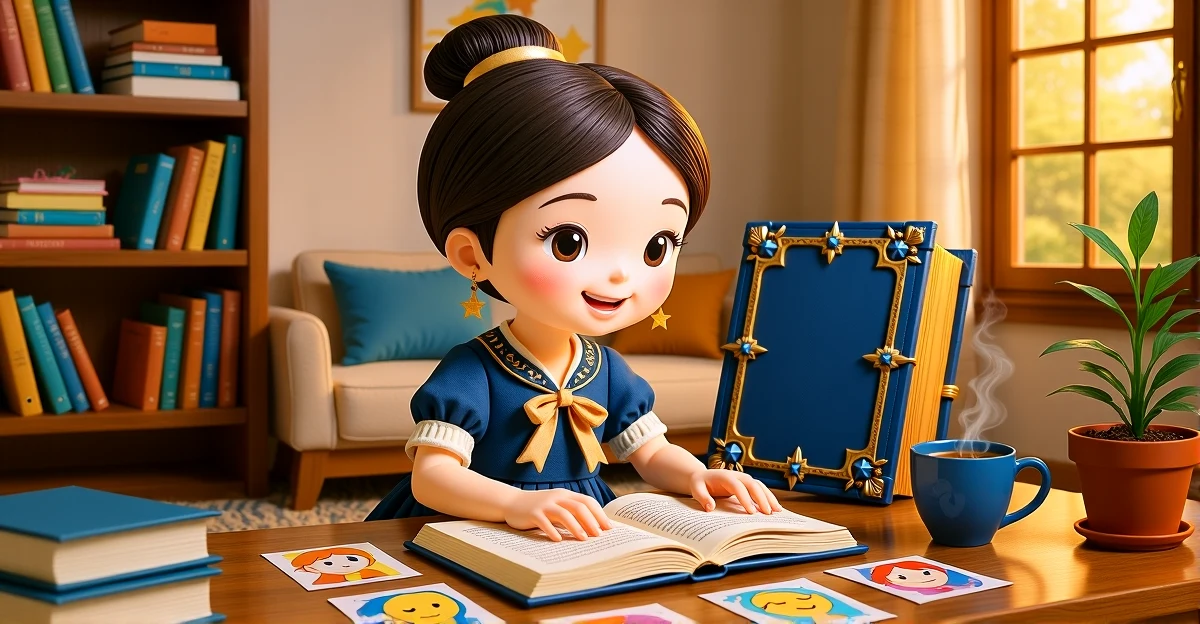
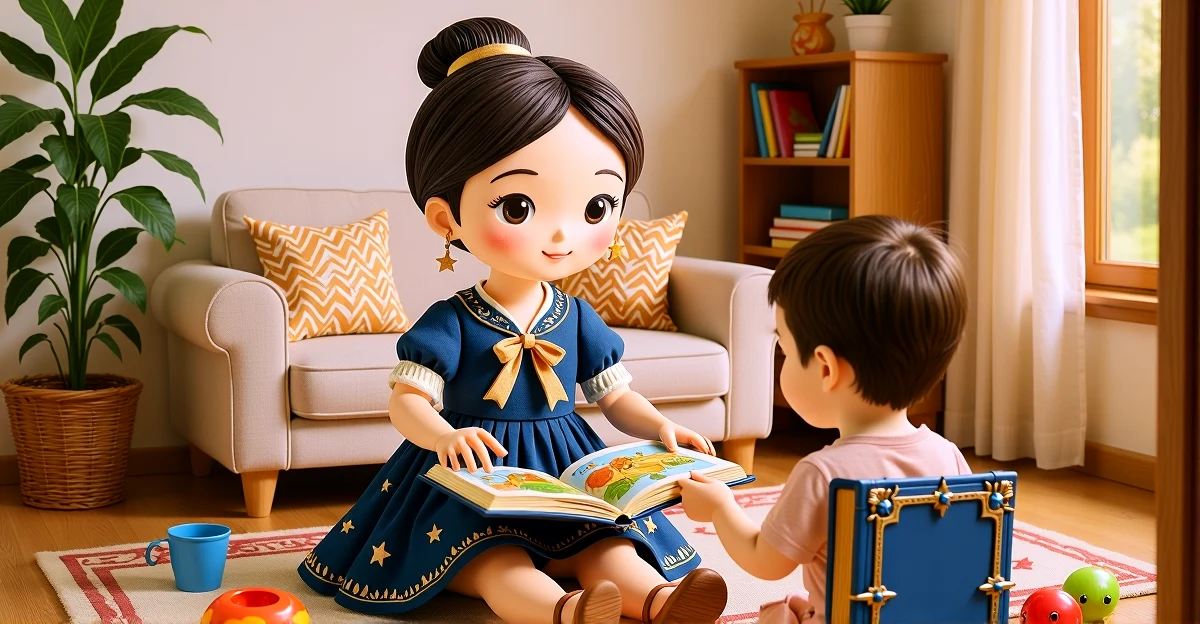
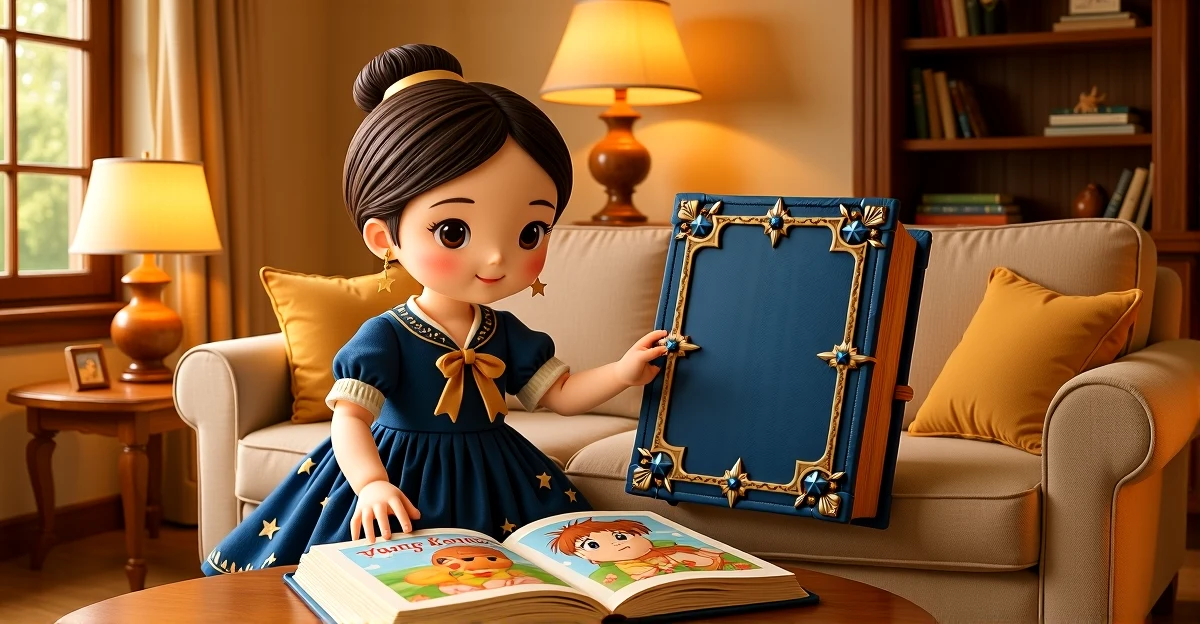
The Magic Book and I absolutely LOVE this approach! When you're reading together, pause and ask, "How do you think this character is feeling?" Point to their face, their body language. Help your child connect the visual cues with the emotion words. This is such a gentle, natural way to practice emotional vocabulary in a safe, low-pressure context.
3. Create Feeling Check-Ins Throughout Your Day
Make emotional vocabulary a natural part of your daily routine. At breakfast, you might ask, "How are you feeling this morning?" At bedtime, you might reflect together, "What feelings did we have today?" Keep it simple and playful. You're not conducting a therapy session—you're just opening the door for your child to practice this new skill in a safe, loving space.
4. Validate Before You Problem-Solve
When your toddler is having a hard moment, resist the urge to immediately distract them or rush past the feeling. Instead, pause. Get down on their level. Look into their eyes with all the love in your heart, and help them name what they're experiencing. You might say, "Your body looks tense and your face looks angry. I think you're feeling frustrated because the tower fell down. It's okay to feel frustrated. Let's take a deep breath together." This teaches your child that their feelings matter, that you're there to help them through difficult moments, and that emotions are manageable.
5. Be Patient with the Journey
Remember, my wonderful friend, this is a journey. Your two-year-old isn't going to wake up tomorrow with a complete emotional vocabulary. This learning happens gradually, gently, over time. Some days they'll surprise you with a perfectly placed feeling word. Other days they'll still communicate through tears or tantrums. And that's completely normal. Growth isn't linear—it's more like a spiral. We circle around the same lessons again and again, each time understanding them a little more deeply.
A Story That Brings Emotional Vocabulary to Life
In The Book of Inara, we have a beautiful story that shows emotional vocabulary in action, perfect for your 2-3 year old:
The Candy Jar Apology
Perfect for: Ages 2-3
What makes it special: Milo and Nana visit the corner store for penny candy, but when Milo accidentally knocks over Nana's favorite gummy bears, the magical candy jars dim until he learns that saying sorry can make everything bright again. This story beautifully demonstrates how naming emotions—sorry, worried, sad, and eventually happy—helps children communicate and repair relationships.
Key lesson: When Milo learns that saying sorry can make the magical candy jars bright again, children see that naming and expressing feelings has real power to heal and connect. After reading this story with your little one, you can practice together. When something goes wrong during the day, you can say, "Remember how Milo felt sorry when he knocked over the candy? I think you might be feeling sorry too. Let's talk about it."
You're Doing Beautifully
Before we close, I want to leave you with this. The work you're doing right now, teaching your toddler to identify and name their feelings, this is some of the most important work you'll ever do as a parent. You're giving your child tools they'll use for the rest of their lives.
You're teaching them that emotions are information, not something to be feared or suppressed. You're showing them that feelings can be named, understood, and moved through. You're building the foundation for emotional intelligence, healthy relationships, and a lifetime of self-awareness.
And that, my friend, is absolutely BEAUTIFUL.
So be patient with your little one. Be patient with yourself. Celebrate the small victories. The first time they say, "I'm sad," instead of just crying. The moment they tell you, "I'm excited," with that beautiful sparkle in their eyes. These are the moments that matter.
The Magic Book and I are always here for you, cheering you on, believing in you, and celebrating every step of this beautiful journey.
With love and starlight,
Inara
Related Articles
- Why Your 4-5 Year Old Needs Words for Big Feelings (And How to Build Their Emotional Vocabulary)
- When Your Child Can't Express Their Feelings: A Gentle Guide to Building Emotional Vocabulary
- Why Your Child Says Good or Bad for Every Feeling (And How to Help Them Express the Full Rainbow of Emotions)
- How to Help Your Child Build Emotional Vocabulary: A Guide for Parents of 3-4 Year Olds
- Understanding Why Toddlers Hit and Bite (And Gentle Ways to Help)
Show transcript
Hello, my wonderful friend! It's me, Inara, and I am SO happy you're here today!
You know, the Magic Book and I have been noticing something beautiful happening in homes all around the world. Parents like you are helping their little ones learn one of the most IMPORTANT skills they'll ever develop—the ability to name their feelings.
If you've been wondering how to help your toddler identify and express their emotions, you're in exactly the right place. And I want you to know something right from the start—you're already doing beautifully. The fact that you're here, learning and growing alongside your child, that's what matters most.
So let's talk about this magical journey of emotional vocabulary development, and how you can support your little one as they learn to put words to all those big, beautiful feelings.
You know what's absolutely WONDERFUL? Your toddler's brain is in one of the most incredible growth periods of their entire life. Between ages two and three, they're learning language at an astonishing rate. Every single day, they're discovering new words, new ways to express themselves, new ways to connect with you.
And here's something the Magic Book taught me that changed everything. When children learn words for their feelings, they're not just expanding their vocabulary. They're actually building the foundation for emotional intelligence that will serve them for their entire lives.
Research from the Yale Center for Emotional Intelligence shows us something beautiful. Children who develop rich emotional vocabularies are better able to pay attention, more engaged in learning, and they build more positive relationships with others. Isn't that AMAZING?
But here's what I love most. When your little one learns to say, I'm frustrated, instead of throwing their toy, or I'm worried, instead of clinging to your leg, they're discovering their own superpower. They're learning that feelings have names, and when we can name something, we can understand it. We can work with it. We can move through it.
Now, I know what you might be thinking. My toddler barely has twenty words. How can I teach them about emotions?
And here's the beautiful truth, my friend. You're already teaching them, every single day. Every time you say, You look sad, let me give you a hug, or I can see you're feeling excited about the park, you're showing them that feelings have names. You're teaching them that emotions are normal, natural, and nothing to be afraid of.
The American Psychological Association tells us that all children benefit from teaching about feelings, and that caregivers play the most critical role in helping children develop emotional vocabulary. That's YOU, my wonderful friend. You're the most important teacher your child will ever have.
So let's talk about some gentle, beautiful ways you can support this learning.
First, start with the basics. Happy, sad, mad, and scared. These four feelings are the foundation. When you see your child experiencing one of these emotions, name it for them. You're feeling happy because we're going to see Grandma! or I can see you're feeling sad that playtime is over.
But here's the magic. Don't stop there. As your child gets comfortable with these basic words, start introducing more nuanced vocabulary. Instead of just mad, try frustrated, annoyed, or disappointed. Instead of just happy, try excited, proud, or content.
Recent research from 2024 shows us that children's emotional vocabulary development is directly linked to the linguistic input they receive from caregivers. The more feeling words you use, the more feeling words they'll learn. It's that simple, and that beautiful.
Here's another wonderful strategy. Use picture books! The Magic Book and I absolutely LOVE this approach. When you're reading together, pause and ask, How do you think this character is feeling? Point to their face, their body language. Help your child connect the visual cues with the emotion words.
And you know what? We have a story in The Book of Inara that shows this beautifully. It's called The Candy Jar Apology, and it's about Milo and his friend Nana. When Milo accidentally knocks over Nana's favorite gummy bears, he has to learn about all sorts of feelings—sorry, worried, sad, and eventually, happy again when he makes things right.
What I love about this story is that it shows children that feelings change. We don't stay stuck in one emotion forever. And when we can name our feelings and express them, we can move through them and find our way back to connection.
After you read this story with your little one, you can practice together. When something goes wrong during the day, you can say, Remember how Milo felt sorry when he knocked over the candy? I think you might be feeling sorry too. Let's talk about it.
Here's another beautiful truth the Magic Book taught me. Your own emotional vocabulary matters just as much as your child's. When you name YOUR feelings out loud, you're modeling this skill for your little one.
Try saying things like, I'm feeling frustrated because the grocery store was so crowded, or I'm feeling proud of myself for staying patient when things got tricky. When your child hears you naming your emotions, they learn that everyone has feelings, and it's safe and normal to talk about them.
Now, I want to address something important. Sometimes parents worry that talking about negative emotions will make their child focus on them more. But research shows us the opposite is true. When children learn to name uncomfortable feelings, they actually become better at managing them.
Dr. Shauna Tominey from the Yale Center for Emotional Intelligence explains that developing a rich vocabulary allows children to pinpoint emotions accurately, communicate effectively, and identify appropriate regulation strategies. Isn't that POWERFUL?
So when your toddler is having a hard moment, instead of trying to distract them or rush past the feeling, pause. Get down on their level. Look into their eyes with all the love in your heart, and help them name what they're experiencing.
You might say, Your body looks tense and your face looks angry. I think you're feeling frustrated because the tower fell down. It's okay to feel frustrated. Let's take a deep breath together.
This is the magic, my friend. You're not just teaching vocabulary. You're teaching your child that their feelings matter, that you're there to help them through difficult moments, and that emotions are manageable.
Here's one more beautiful strategy. Create feeling check-ins throughout your day. At breakfast, you might ask, How are you feeling this morning? At bedtime, you might reflect together, What feelings did we have today?
Keep it simple and playful. You're not conducting a therapy session, you're just opening the door for your child to practice this new skill in a safe, loving space.
And remember, my wonderful friend, this is a journey. Your two-year-old isn't going to wake up tomorrow with a complete emotional vocabulary. This learning happens gradually, gently, over time. Some days they'll surprise you with a perfectly placed feeling word. Other days they'll still communicate through tears or tantrums. And that's completely normal.
The Magic Book reminds me that growth isn't linear. It's more like a spiral. We circle around the same lessons again and again, each time understanding them a little more deeply.
So be patient with your little one. Be patient with yourself. Celebrate the small victories. The first time they say, I'm sad, instead of just crying. The moment they tell you, I'm excited, with that beautiful sparkle in their eyes. These are the moments that matter.
Before we close, I want to leave you with this. The work you're doing right now, teaching your toddler to identify and name their feelings, this is some of the most important work you'll ever do as a parent. You're giving your child tools they'll use for the rest of their lives.
You're teaching them that emotions are information, not something to be feared or suppressed. You're showing them that feelings can be named, understood, and moved through. You're building the foundation for emotional intelligence, healthy relationships, and a lifetime of self-awareness.
And that, my friend, is absolutely BEAUTIFUL.
If you'd like more support on this journey, come visit us in The Book of Inara. We have stories like The Candy Jar Apology that help children see emotional vocabulary in action. We have resources for parents. And we have a whole community of families learning and growing together.
The Magic Book and I are always here for you, cheering you on, believing in you, and celebrating every step of this beautiful journey.
Until next time, my wonderful friend. With love and starlight, Inara.