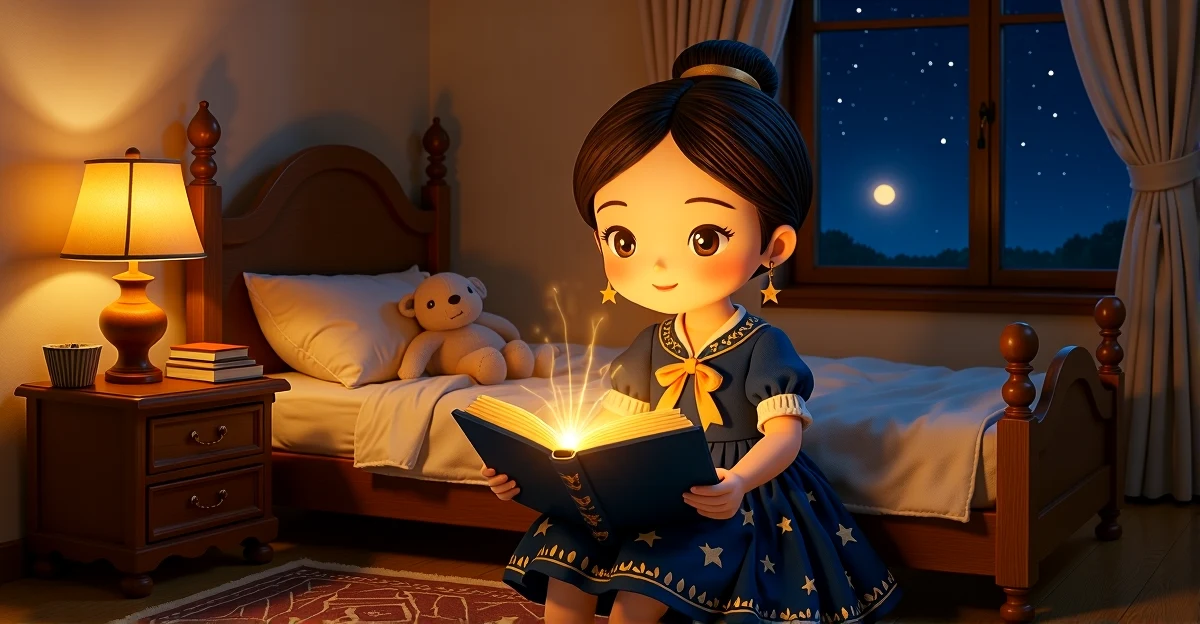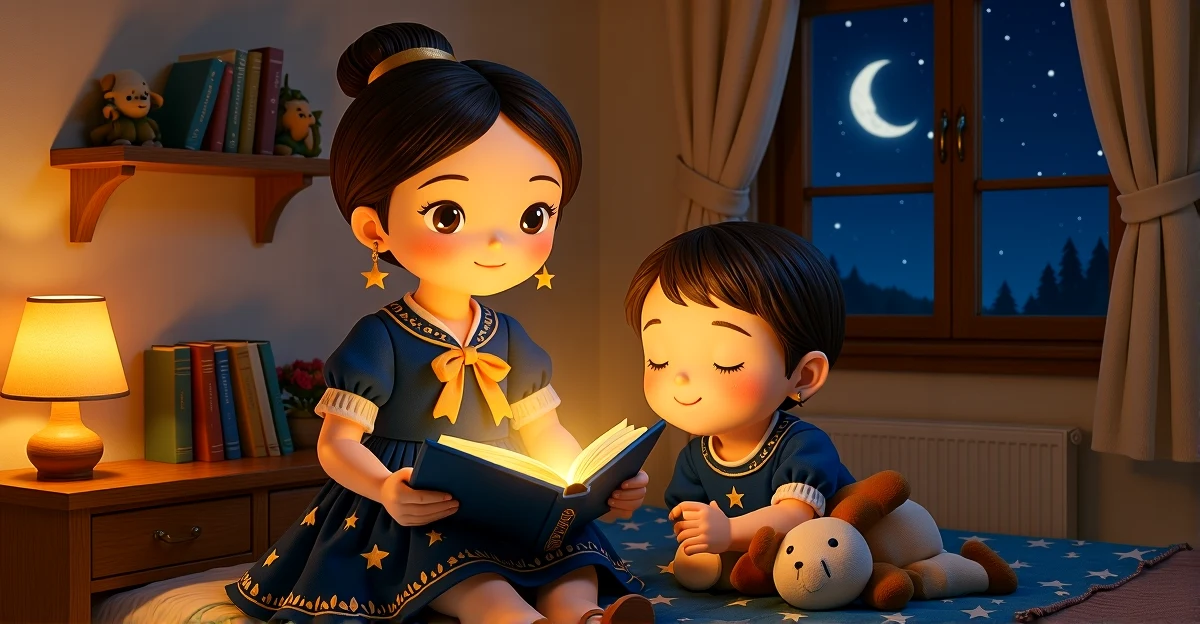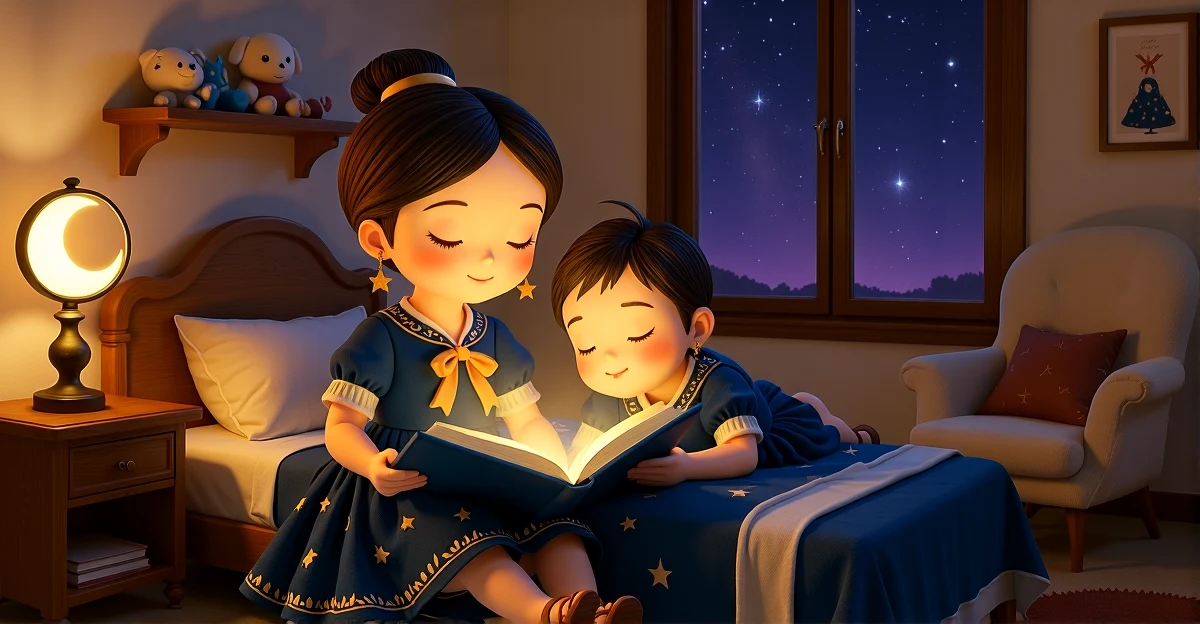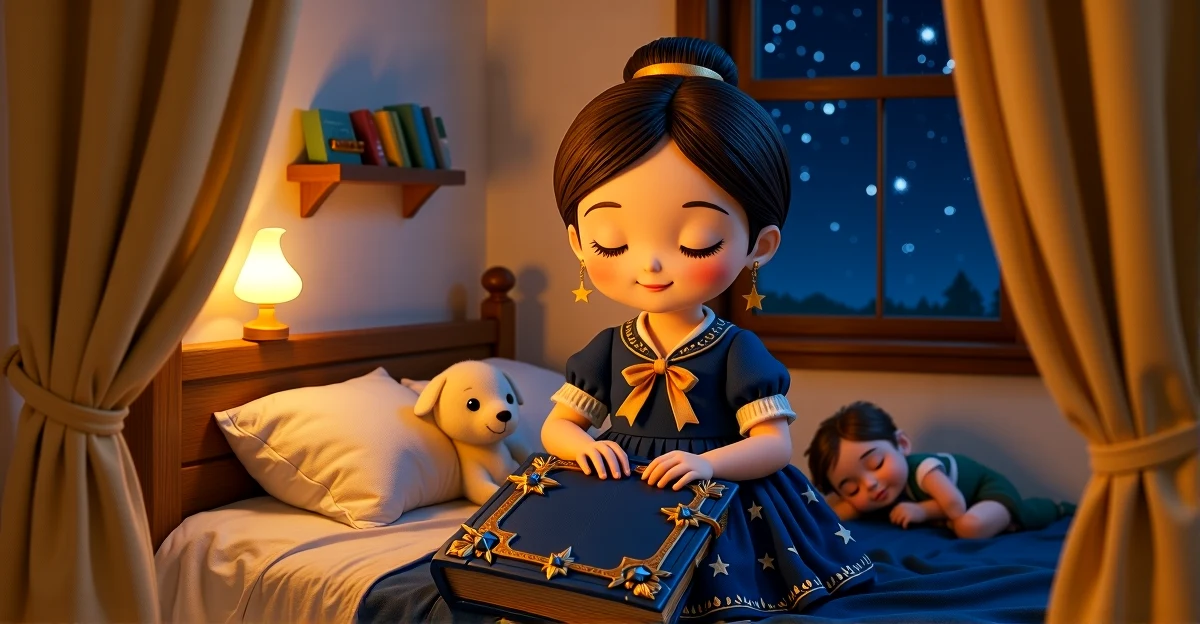

It's bedtime, and your little one is asking for the lights to stay on. Again. Maybe they're calling out from their room, saying they're scared. Maybe they're clinging to you, not wanting you to leave. And you're wondering if this is normal, if you're doing something wrong, or if this phase will ever end.
Let me tell you something beautiful right from the start. You are not alone in this, and your child is developing exactly as they should. Fear of the dark is one of the MOST common experiences for toddlers ages two to three, and it's actually a sign that your child's brain is growing in wonderful ways.
In this guide, we'll explore why fear of darkness happens, what research tells us about nighttime fears, and gentle strategies that actually help. Plus, I'll share a story from The Book of Inara that teaches children about nighttime comfort in the most magical way.
Why Fear of the Dark is Normal Development
When your toddler tells you they're afraid of the dark, what they're really showing you is that their imagination is blossoming. Between ages two and three, children's minds are developing rapidly. They're learning to create mental images, to remember things that aren't right in front of them, and to imagine possibilities.
This is AMAZING for their cognitive development. But it also means that when the lights go out, their minds can create images that feel very real and sometimes scary. The shadows on the wall might look like monsters. The quiet sounds of the house settling might seem frightening. Their growing imagination, which will serve them beautifully throughout life, is still learning to distinguish between what's real and what's imagined.
At the same time, your little one is becoming more aware of separation from you. They're learning that you exist even when they can't see you, which is a wonderful cognitive milestone. But it also means bedtime can feel like a separation, and darkness can feel like being alone.
Research from the National Center for Biotechnology Information confirms that fear of darkness is a normal developmental phase in children ages two to three years. Nighttime fears are linked to growing imagination and separation awareness. The typical responses you might see - crying, clinging, seeking security - are all completely normal ways your child is communicating their needs.
What Research Shows About Nighttime Fears
Studies published in peer-reviewed journals, including the Journal of Child and Family Studies, confirm that nighttime fears are typical aspects of early childhood development. Young children in this age group are learning to process new emotions and experiences, and darkness can feel overwhelming as their minds create vivid images they're still learning to understand.
Research shows that brief, evidence-based interventions can effectively reduce nighttime anxiety in young children. Consistent, calming bedtime routines significantly reduce stress responses and help children feel more secure.
— Journal of Child and Family Studies
The Child Mind Institute teaches us something powerful about fear management. When children learn to manage fears with gentle support, they build confidence and independence. They feel more in control and less afraid. This isn't about eliminating fear - it's about teaching children that they can feel scared and still be okay, that they have tools to help themselves feel better, and that their parents are always there to support them.
Zero to Three, one of the leading early childhood organizations, emphasizes that validating fears without amplifying them builds trust and emotional security. When you acknowledge your child's fear as real and important, you're teaching them that their feelings matter and that they can come to you with anything.
Gentle Strategies That Actually Help
So what can you do to support your child through this normal developmental phase? Here are research-backed strategies that work:
1. Validate Their Feelings
When your child tells you they're scared, believe them. Their fear is real, even if the thing they're afraid of isn't. You might say something like, "I hear you. The dark can feel scary sometimes. I'm right here with you." This simple validation builds trust and shows your child that their feelings matter. It also teaches them to trust their own emotions and to know that it's okay to feel afraid.
2. Create Consistent, Calming Bedtime Routines
Research shows that consistent bedtime routines reduce stress hormones and help children feel more secure. Your routine might include:
- A warm bath with gentle play
- Putting on cozy pajamas together
- Reading stories in a calm, quiet space
- Singing a gentle song or lullaby
- Talking about the day's happy moments
- Giving extra hugs and cuddles
The predictability of these routines helps your child's nervous system calm down and prepare for sleep. They know what's coming next, which reduces anxiety.
3. Introduce Darkness Gradually Through Positive Experiences
Zero to Three recommends taking short evening walks together, maybe with a flashlight. Notice the moon, point out stars, talk about how beautiful the night sky is. Help your child develop positive associations with darkness. You're teaching them that nighttime can be peaceful and even magical.
You might also try:
- Looking at the stars together from a window
- Reading books about nighttime and the moon
- Playing gentle shadow games with a flashlight
- Talking about nocturnal animals and how they love the night
4. Use Night Lights Thoughtfully
There's nothing wrong with using a night light. In fact, a gentle, warm night light can help your child feel more secure. Choose one that provides soft, amber light rather than bright blue light, which can interfere with sleep. Let your child help choose the night light - this gives them some control over their environment.
5. Stay Nearby During the Transition
If your child is very anxious, it's okay to stay in their room for a few extra minutes while they fall asleep. You might sit in a chair nearby, reading your own book with a small light. Your presence is reassuring, and over time, you can gradually move the chair closer to the door as your child builds confidence.
6. Talk About Your Own Presence
Remind your child that you're always nearby, even when they can't see you. You might say, "I'm going to be right in the living room. If you need me, I'll hear you and come right away." This helps them understand that separation doesn't mean abandonment.
A Story That Can Help
In The Book of Inara, we have a beautiful story that addresses nighttime fears in the most gentle, magical way:
The Gentle Glow of Friendship
Perfect for: Ages 2-3
What makes it special: This story is about Ayli, who feels scared during a nighttime bathroom trip. She and her friend Igar discover that their night light glows brighter whenever they share comforting hugs. This story teaches children that connection and gentle support help manage scary feelings. It shows them that it's okay to need comfort, and that gentle light can help them feel safe.
Key lesson: When Ayli and Igar discover their night light glows brighter with comforting hugs, children learn that connection and gentle support help manage scary feelings. Fear is normal, comfort is available, and we're never truly alone.
How to use this story: After reading The Gentle Glow of Friendship with your child, you can create your own comforting nighttime ritual. Maybe you have a special night light that you turn on together. Maybe you give extra hugs before bed. Maybe you talk about how you're always nearby, even when they can't see you. You're showing your child that you understand their feelings and that you're there to help them feel safe.
Understanding the Temporary Nature of This Phase
I want you to know something else that might bring you comfort. This phase is temporary. As your child's brain continues to develop, as they gain more experience with darkness, as they build confidence in their ability to manage big feelings, these fears will naturally decrease.
You're not failing if your child is afraid. You're succeeding by being there, by validating their feelings, by helping them learn that they can feel scared and still be okay. Every time you respond with patience and empathy, you're teaching your child that emotions are manageable, that they're not alone, and that you're a safe person to come to with any feeling.
The consensus among child development experts is clear: nighttime fears at ages two to three are completely normal. And parents who respond with validation and gentle guidance help their children develop the emotional tools they need for lifelong confidence and security.
You're Doing Beautifully
Tonight, when your little one asks for the lights to stay on, take a deep breath. Remember that their fear is a sign of healthy development. Remember that their imagination, which creates these nighttime worries, is the same imagination that will help them solve problems, create art, and dream big dreams throughout their life.
Validate their feelings. Offer comfort. Create that consistent routine. Read The Gentle Glow of Friendship together. And know that you are doing a BEAUTIFUL job supporting your child through this normal developmental phase.
The Magic Book whispers this wisdom: Fear is not the enemy. Fear is information. It tells us to pay attention, to seek comfort, to connect with the people we love. When you honor your child's fear instead of dismissing it, you're teaching them to trust their feelings and to know that they can come to you with anything.
You've got this, wonderful parent. The Magic Book and I are always here for you.
With love and starlight,
Inara
Related Articles
- Your Toddler Keeps Getting Up at Night? This Is Why (And How to Help)
- Understanding Your Toddler's Sensitivity to Loud Sounds (And How to Help)
- When Your Toddler Wakes Up Screaming: Understanding Night Terrors
- Understanding Your Child's Fear of Animals (And How to Help)
- Understanding Toddler Stranger Anxiety: A Gentle Guide for Parents
Show transcript
Hello, wonderful parent! It's me, Inara, and I am so happy you're here today. You know, the Magic Book and I have been noticing something that so many families are experiencing right now. Your little one needs lights on at bedtime, and maybe they get scared when it's dark. And I want you to know something really important right from the start. You are not alone in this, and your child is developing exactly as they should.
Let me share something beautiful with you. When your toddler says they're afraid of the dark, what they're really showing you is that their imagination is blossoming. Their mind is growing in the most WONDERFUL ways. Research from child development experts confirms that fear of darkness is a completely normal developmental phase for children ages two to three. It's not a problem to fix. It's a sign that your child's brain is doing exactly what it's supposed to do.
The Child Mind Institute teaches us something powerful. They say that when children learn to manage fears, they build confidence and independence. They feel more in control and less afraid. And Zero to Three, one of the leading early childhood organizations, reminds us that warm greetings and gentle transitions can ease nighttime anxiety. Validating fears without amplifying them builds trust and emotional security.
So let's talk about what's really happening in your child's growing mind. Between ages two and three, children's imaginations are developing rapidly. They're learning to create mental images, to remember things that aren't right in front of them, and to imagine possibilities. This is AMAZING for their cognitive development. But it also means that when the lights go out, their minds can create images that feel very real and sometimes scary.
At the same time, your little one is becoming more aware of separation from you. They're learning that you exist even when they can't see you, which is wonderful. But it also means bedtime can feel like a separation, and darkness can feel like being alone. When you understand this, everything shifts. Your child isn't being difficult. They're navigating big developmental changes, and they need your gentle support.
Here's what the research shows us. Studies published in peer-reviewed journals confirm that nighttime fears are typical aspects of early childhood development. Young children in this age group are learning to process new emotions and experiences, and darkness can feel overwhelming as their minds create vivid images they're still learning to understand. Evidence-based research shows that consistent, calming bedtime routines significantly reduce stress responses and help children feel more secure.
So what can you do to help? First, validate your child's feelings. When they tell you they're scared, believe them. Their fear is real, even if the thing they're afraid of isn't. You might say something like, I hear you. The dark can feel scary sometimes. I'm right here with you. This simple validation builds trust and shows your child that their feelings matter.
Second, introduce darkness gradually through positive experiences. Zero to Three recommends taking short evening walks together, maybe with a flashlight. Notice the moon, point out stars, talk about how beautiful the night sky is. Help your child develop positive associations with darkness. You're teaching them that nighttime can be peaceful and even magical.
Third, create consistent, calming bedtime routines. Research shows these routines reduce stress hormones and help children feel more secure. Your routine might include a warm bath, putting on cozy pajamas, reading stories together, and singing a gentle song. The predictability helps your child's nervous system calm down and prepare for sleep.
And here's something really special. We have a story in The Book of Inara called The Gentle Glow of Friendship. It's about Ayli, who feels scared during a nighttime bathroom trip. She and her friend Igar discover that their night light glows brighter whenever they share comforting hugs. This story teaches children that connection and gentle support help manage scary feelings. It shows them that it's okay to need comfort, and that gentle light can help them feel safe.
After you read this story with your child, you can create your own comforting nighttime ritual. Maybe you have a special night light that you turn on together. Maybe you give extra hugs before bed. Maybe you talk about how you're always nearby, even when they can't see you. You're showing your child that you understand their feelings and that you're there to help them feel safe.
The consensus among child development experts is clear. Nighttime fears at ages two to three are completely normal. And parents who respond with validation and gentle guidance help their children develop the emotional tools they need for lifelong confidence and security. When you respond with patience and empathy rather than frustration, your child develops stronger emotional regulation abilities and shows reduced anxiety over time.
I want you to know something else. This phase is temporary. As your child's brain continues to develop, as they gain more experience with darkness, as they build confidence in their ability to manage big feelings, these fears will naturally decrease. You're not failing if your child is afraid. You're succeeding by being there, by validating their feelings, by helping them learn that they can feel scared and still be okay.
The Magic Book whispers this wisdom. Fear is not the enemy. Fear is information. It tells us to pay attention, to seek comfort, to connect with the people we love. When you honor your child's fear instead of dismissing it, you're teaching them to trust their feelings and to know that they can come to you with anything.
So tonight, when your little one asks for the lights to stay on, take a deep breath. Remember that their fear is a sign of healthy development. Validate their feelings. Offer comfort. Create that consistent routine. Read The Gentle Glow of Friendship together. And know that you are doing a BEAUTIFUL job supporting your child through this normal developmental phase.
You can find The Gentle Glow of Friendship and so many other stories that help with big feelings in The Book of Inara. These stories are designed with love to support children's emotional development and to give you tools to help your little one navigate all the big feelings that come with growing up.
Thank you for being here, for caring so deeply about your child's emotional well-being, and for seeking gentle, research-backed ways to support them. The Magic Book and I are always here for you. Sweet dreams, wonderful parent. With love and starlight, Inara.