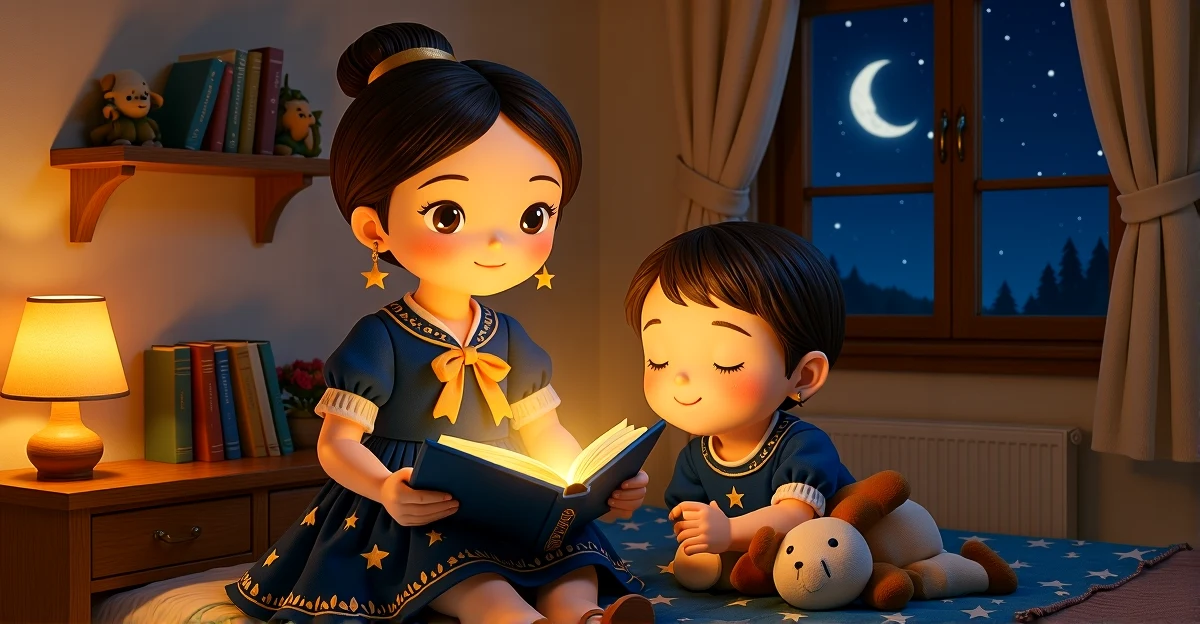

It is two in the morning, and you hear it again. That piercing scream that sends your heart racing as you rush to your child's room. Your little one is sitting up in bed, eyes wide with terror, convinced there are monsters in the shadows. You hold them close, whisper reassurances, and wonder if this will ever end.
My wonderful friend, I want you to take a deep breath right now and know this. You are not alone. What you are experiencing is one of the most common challenges parents of four and five year olds face. And here is something beautiful. This challenging phase? It is actually a sign that something WONDERFUL is happening in your child's growing brain.
In this guide, we will explore why night terrors and bedtime fears peak at this age, what the research tells us about supporting our children through this phase, and gentle, evidence-based strategies that actually work. Most importantly, you will discover that you are doing everything right, even when it feels impossibly hard.
Why Night Terrors and Bedtime Fears Happen at Ages 4-5
Let me tell you what the Magic Book taught me about this beautiful, challenging time. When children around ages four and five start experiencing nighttime fears or night terrors, their imagination is blooming like the most magnificent garden in the universe. Can you imagine? That same creativity that will one day help them solve problems, create art, and dream big dreams is right now creating vivid images of monsters and scary shadows.
Research shows that this age represents a peak period for sleep disruptions. According to a comprehensive review published in peer-reviewed medical literature, sleep terrors typically occur in children between 4 and 12 years of age, with a peak between 5 and 7 years of age. This is not a coincidence, my friend. This is development.
The Science Behind Night Terrors
Night terrors are different from regular nightmares, and understanding this distinction helps us respond with more confidence. Sleep terrors occur during the deepest part of sleep, usually within the first few hours after your child falls asleep. During these episodes, your child might sit up, scream, or even seem awake, but they are actually still in a deep sleep state called NREM sleep.
Their little nervous system is processing SO much information from their day, and sometimes it creates these intense experiences. The beautiful news? Most children naturally outgrow these experiences by late childhood or early adolescence. This is temporary, my friend. You are not going to be dealing with this forever.
Bedtime Fears and Growing Imagination
Bedtime fears, on the other hand, happen when your child is awake and aware. These are the moments when they tell you about the monster under the bed or the scary shadows on the wall. Their growing imagination is learning to process the world in complex new ways, and sometimes that imagination creates images that feel very real and very frightening.
This is not a problem. This is their brain developing exactly as it should. Your child is learning to distinguish between reality and imagination, between safe and unsafe, between known and unknown. These are HUGE cognitive leaps, and they come with some bumps along the way.
What Research Tells Us About Supporting Our Children
The research on childhood sleep and fear management is remarkably consistent and deeply reassuring. Studies demonstrate that consistent, calming bedtime routines can actually reduce stress hormones by up to thirty percent. Thirty percent! That is the power of rhythm and ritual, my friend.
When parents respond to nighttime fears with validation and gentle support rather than dismissal or frustration, children develop better emotional regulation skills. They learn that their feelings matter, that they can trust their caregivers, and that they have the inner resources to handle difficult emotions.
— Child Mind Institute, Clinical Experts in Child Development
The Child Mind Institute emphasizes that teaching children how to manage fears without constant parental intervention builds confidence and independence. This does not mean leaving them alone with their fears. It means supporting them as they learn to face fears, helping them develop their own coping strategies while knowing you are there.
Dr. Alexander KC Leung from the University of Calgary, who has conducted extensive research on sleep terrors, notes that most children outgrow the disorder by late adolescence and that reassurance and parental education are the primary interventions needed. This is such encouraging news. You do not need complex interventions or expensive solutions. You need patience, presence, and the gentle strategies we will explore together.
Gentle Strategies That Actually Work
Now, let us talk about what you can do right now to help your child feel safer and more secure at bedtime. These strategies are backed by research and aligned with gentle parenting principles.
1. Create Consistent, Calming Bedtime Routines
This is SO important, my friend. Research published in peer-reviewed journals shows that consistent bedtime routines significantly improve sleep quality and reduce anxiety in young children. When your child knows what to expect, when there is a gentle flow from playtime to bath time to story time to sleep time, their nervous system can begin to relax.
Your routine might look like this:
- Dinner and gentle play (no screens for at least one hour before bed)
- Warm bath with calming lavender or chamomile
- Pajamas and teeth brushing
- Story time in a cozy spot
- Gentle conversation about the day
- Tucking in with a special ritual (a song, a prayer, a special phrase)
- Nightlight on, door slightly open, you nearby
The key is consistency. Your child's nervous system learns to anticipate sleep when the same comforting sequence happens every night.
2. Validate Their Feelings Without Amplifying Fear
When your child says they are scared of monsters, your instinct might be to say there is nothing to be afraid of. But here is what works better. Try something like this: I can see you are feeling scared right now. Sometimes our imaginations create pictures that feel very real. I am right here with you, and you are safe.
This honors their experience while also reassuring them. You are not dismissing their fear, but you are also not making it bigger by engaging with the monster as if it were real. You are acknowledging the feeling and providing the comfort they need.
3. Use Stories to Process Courage and Fear
This is where I get really excited, my friend. Stories can be such powerful helpers in processing these big feelings. When children hear about characters who face their fears and discover their courage, something magical happens. They begin to see that fear is normal, that everyone experiences it, and that there are gentle ways to move through it.
After you read courage stories with your child, you can have the most beautiful conversations. You might ask: What helped the character feel brave? What do you think courage feels like? When have you felt scared but did something anyway? These questions open up a safe space for your child to talk about their own nighttime fears without feeling judged or dismissed.
4. Ensure Good Sleep Hygiene
The Magic Book reminds me that sleep hygiene matters so much. Making sure your child is getting enough sleep overall, keeping the bedroom cool and comfortable, avoiding screens before bedtime, these practical steps support their nervous system in settling down for rest.
Experts recommend that children ages 4-5 get 10-13 hours of sleep per 24 hours on a regular basis. Sleep deprivation can actually intensify night terrors and bedtime fears, so protecting sleep time is essential.
5. Respond Appropriately to Night Terrors vs. Nighttime Fears
Here is something really important. If your child is experiencing night terrors (those episodes where they seem awake but are actually in deep sleep), trying to wake them or comfort them during the episode can actually make it more intense. I know that feels counterintuitive, my friend. Every part of you wants to scoop them up and make it better.
But the kindest thing you can do is stay nearby, make sure they are safe, and let the episode pass. They will not remember it in the morning, and your calm presence is enough.
For regular nighttime fears when they are awake and aware, your presence and reassurance are exactly what they need. Sit with them. Rub their back. Remind them that you are close by and they are safe. This is how trust is built. This is how children learn that even when things feel scary, they have someone who will be there with them.
Stories That Can Help
In The Book of Inara, we have beautiful stories that bring these concepts to life for your child. Let me share one that I think will be especially helpful for your family right now:
The Courage Pools of Ocean Memory
Perfect for: Ages 4-5
What makes it special: This story follows two friends, Kenji and Maeva, who discover magical viewing pools at a Marine Center. These pools reveal the most beautiful underwater treasures and stories, but here is the thing. The pools only reveal their magic when someone approaches them with courage, even when they are feeling scared.
Key lesson: Kenji and Maeva learn that bravery does not mean not feeling afraid. Bravery means taking a step forward even when your heart is beating fast and your hands feel shaky. It means trusting that you can handle whatever comes, even when you are not sure.
How to use this story: After you read this story with your child, you can create your own courage ritual inspired by it. Maybe before bed, you and your child can talk about one brave thing they did that day. It does not have to be big. Maybe they tried a new food, or spoke up in class, or pet a dog they were nervous about. Celebrating these small moments of courage helps your child build a strong foundation of confidence.
You Are Doing Beautifully
I want to remind you of something the Magic Book whispers to me often. Your child's fears are not a reflection of your parenting. You have not done anything wrong. This is normal development. This is their brain growing and learning to process complex emotions and experiences.
And you, showing up night after night with patience and love? You are giving them exactly what they need to move through this phase with confidence and security. The research is so clear on this. When parents respond to nighttime fears with validation and gentle support, children develop better emotional regulation skills that serve them throughout their lives.
So tonight, when you tuck your little one into bed, maybe you will read The Courage Pools of Ocean Memory together. Maybe you will create a special courage ritual. Maybe you will just hold them close and remind them that they are safe, they are loved, and they are braver than they know.
The Magic Book and I are here with you, my friend. Every single night. Every single challenge. You are doing such beautiful work, even when it feels hard. Especially when it feels hard.
Sweet dreams to you and your little one. Until our next adventure together, this is Inara, sending you love and starlight.
Related Articles
- Understanding Night Terrors in Preschoolers: A Gentle Guide
- Understanding Your Toddler's Sensitivity to Loud Sounds (And How to Help)
- When Your Child Needs You for Hours at Bedtime: Understanding Sleep Independence
- When Your Toddler Wakes Up Screaming: Understanding Night Terrors
- Understanding Bathroom Anxiety in Young Children (And How to Help)
Show transcript
Hello, my wonderful friend! It's me, Inara, and I am SO grateful you're here with me today. You know, the Magic Book and I have been hearing from so many parents lately about something that breaks my heart a little bit, but also fills me with hope. Because what you're experiencing? It's completely normal, and there's so much we can do together to help.
If your little one has been waking up in the night, frightened about monsters or shadows or things that go bump in the dark, I want you to take a deep breath right now and know this. You are not alone. Your child is not broken. And this beautiful, challenging phase? It's actually a sign that something WONDERFUL is happening in their growing brain.
Let me tell you what the Magic Book taught me about this. When children around ages four and five start experiencing nighttime fears or night terrors, their imagination is blooming like the most magnificent garden in the universe. Can you imagine? That same creativity that will one day help them solve problems, create art, and dream big dreams is right now creating vivid images of monsters and scary shadows. It's not a problem, my friend. It's development. It's their brain learning to process the world in new and complex ways.
Now, I know that doesn't make it easier when you're exhausted at two in the morning, holding your trembling child who's convinced there's something under the bed. I see you. The Magic Book sees you. And I want you to know that your patience, your presence, your love in those moments? That's exactly what your child needs.
Here's something fascinating that research has shown us. Sleep terrors, which are different from regular nightmares, typically happen during the deepest part of sleep, usually within the first few hours after your child falls asleep. During these episodes, your child might sit up, scream, or even seem awake, but they're actually still in a deep sleep state. Their little nervous system is processing so much information from their day, and sometimes it creates these intense experiences.
The beautiful news? Most children naturally outgrow these experiences by late childhood or early adolescence. This is temporary, my friend. You're not going to be dealing with this forever.
But what can we do right now to help? The Magic Book has shown me some gentle, loving approaches that make such a difference.
First, and this is SO important, consistent bedtime routines create a foundation of safety and predictability. Research shows that calming bedtime routines can actually reduce stress hormones by up to thirty percent. Thirty percent! That's the power of rhythm and ritual, my friend. When your child knows what to expect, when there's a gentle flow from playtime to bath time to story time to sleep time, their nervous system can begin to relax.
Second, validate their feelings without amplifying the fear. When your child says they're scared of monsters, instead of saying there's nothing to be afraid of, try something like this. I can see you're feeling scared right now. Sometimes our imaginations create pictures that feel very real. I'm right here with you, and you are safe. This honors their experience while also reassuring them.
Third, and this is where I get really excited, stories can be such powerful helpers in processing these big feelings. When children hear about characters who face their fears and discover their courage, something magical happens. They begin to see that fear is normal, that everyone experiences it, and that there are gentle ways to move through it.
Let me tell you about a story that the Magic Book holds, one that I think might be especially helpful for your family right now. It's called The Courage Pools of Ocean Memory, and it's about two friends, Kenji and Maeva, who discover magical viewing pools at a Marine Center. These pools reveal the most beautiful underwater treasures and stories, but here's the thing. The pools only reveal their magic when someone approaches them with courage, even when they're feeling scared.
Kenji and Maeva learn something so important in this story. They learn that bravery doesn't mean not feeling afraid. Bravery means taking a step forward even when your heart is beating fast and your hands feel shaky. It means trusting that you can handle whatever comes, even when you're not sure.
After you read this story with your child, you can have the most beautiful conversations. You might ask, what helped Kenji and Maeva feel brave? What do you think courage feels like? When have you felt scared but did something anyway? These questions open up a safe space for your child to talk about their own nighttime fears without feeling judged or dismissed.
You could even create your own courage ritual inspired by the story. Maybe before bed, you and your child can talk about one brave thing they did that day. It doesn't have to be big. Maybe they tried a new food, or spoke up in class, or pet a dog they were nervous about. Celebrating these small moments of courage helps your child build a strong foundation of confidence.
The Magic Book also reminds me that sleep hygiene matters so much. Making sure your child is getting enough sleep overall, keeping the bedroom cool and comfortable, avoiding screens before bedtime, these practical steps support their nervous system in settling down for rest.
And here's something else that's really important. If your child is experiencing night terrors, trying to wake them or comfort them during the episode can actually make it more intense. I know that feels counterintuitive, my friend. Every part of you wants to scoop them up and make it better. But the kindest thing you can do is stay nearby, make sure they're safe, and let the episode pass. They won't remember it in the morning, and your calm presence is enough.
For regular nighttime fears, though, your presence and reassurance are exactly what they need. Sit with them. Rub their back. Remind them that you're close by and they are safe. This is how trust is built, my friend. This is how children learn that even when things feel scary, they have someone who will be there with them.
I also want to remind you of something the Magic Book whispers to me often. Your child's fears are not a reflection of your parenting. You have not done anything wrong. This is normal development. This is their brain growing and learning to process complex emotions and experiences. And you, showing up night after night with patience and love? You are giving them exactly what they need to move through this phase with confidence and security.
The research is so clear on this. When parents respond to nighttime fears with validation and gentle support rather than dismissal or frustration, children develop better emotional regulation skills. They learn that their feelings matter, that they can trust their caregivers, and that they have the inner resources to handle difficult emotions. That's the gift you're giving your child every single time you show up in the middle of the night.
So tonight, when you tuck your little one into bed, maybe you'll read The Courage Pools of Ocean Memory together. Maybe you'll create a special courage ritual. Maybe you'll just hold them close and remind them that they are safe, they are loved, and they are braver than they know.
The Magic Book and I are here with you, my friend. Every single night. Every single challenge. You are doing such beautiful work, even when it feels hard. Especially when it feels hard.
Sweet dreams to you and your little one. Until our next adventure together, this is Inara, sending you love and starlight.