Your precious two-year-old used to be curious about everything. But lately, something has changed. The moment they see a dog at the park, they scream and run to you. Cats make them cry. Even the neighbor's gentle bunny sends them into a panic. You're wondering: Is this normal? Should I be worried? And most importantly, how can I help my child feel brave again?
Hello, wonderful parent. It's me, Inara, and I want you to know something IMPORTANT right away. You are not alone in this, and what you're experiencing is not only normal, it's actually a beautiful sign that your child's brain is developing exactly as it should.
In this guide, we're going to explore why this fear emerges, what child development research tells us, and gentle, research-backed strategies that actually work. Plus, I'll share a story from The Book of Inara that can help your child understand that fears are normal and that courage grows through connection.
Why This Fear is Actually Good News
I know it might not feel like good news when your child is clinging to your leg, terrified of a friendly golden retriever. But here's what the Magic Book taught me, and what child development experts confirm: this fear is a sign of healthy neurological development.
Dr. Laura Kirmayer, a clinical psychologist at the Child Mind Institute, explains it beautifully:
It is a typical stage of development for children this age to start developing fears. It's actually a sign that their neurological system, which alerts them to danger, is developing, so it's a good thing.
— Dr. Laura Kirmayer, PhD, MSW, Child Mind Institute
Think about what this means. Your child's amazing little brain is learning to keep them safe. Their neurological system is waking up, becoming more aware of the world around them. They're noticing things that might be uncertain or unfamiliar, and animals, with their unpredictable movements, their sounds, their energy, can feel overwhelming to a developing nervous system.
This is not a flaw. This is not your child being overly sensitive or difficult. This is development happening exactly as it should.
What Research Tells Us About Childhood Fears
Research consistently shows that fear of animals in young children ages 2-3 is a completely normal and healthy developmental milestone. Studies published in peer-reviewed journals confirm that specific phobias, including animal fears, follow predictable patterns in early childhood.
Here's what makes this age SO special. Between ages two and three, children are experiencing rapid brain development. Their imagination is growing, their awareness of the world is expanding, and their ability to perceive potential danger is developing. All of this is WONDERFUL for their long-term safety and emotional intelligence.
The Developmental Timeline
Understanding when and why these fears emerge can help you respond with patience and confidence:
- Ages 2-3: Fear of animals, loud noises, and separation from parents emerges as the danger-detection system develops
- Why it happens: The neurological system responsible for detecting threats is becoming more sophisticated
- What it means: Your child is learning to assess their environment and identify potential risks
- How long it lasts: With supportive parenting, these fears typically resolve naturally as children gain experience and confidence
The Child Mind Institute's research team notes that teaching children to manage fears without constant parental intervention builds confidence and independence so they feel more in control and less afraid. This is about empowering your child to discover that they can handle uncertain situations, with you as their supportive guide.
Gentle Strategies That Actually Work
Now that you understand WHY this fear is happening, let's talk about HOW to help. The experts are very clear on this, and the Magic Book whispers the same wisdom: the most effective approach combines validation of your child's feelings with gentle, gradual exposure.
Strategy 1: Validate Their Feelings
When your child sees a dog and grabs your leg, don't dismiss their fear. Don't say, "Oh, it's just a dog, don't be silly." Instead, acknowledge what they're feeling.
You can say something like: "I see that dog feels big and scary to you right now. That's okay. I'm right here with you."
This simple acknowledgment tells your child that their feelings are real and acceptable, and that you are their safe base. It builds trust and emotional security.
Strategy 2: Stay Calm Yourself
Children are incredibly attuned to our emotions. If you tense up when you see a dog approaching, your child will pick up on that and think, "Mom is worried, this must be dangerous." But if you stay relaxed and confident, you're sending the message, "We're safe, I've got this."
Your calm presence is one of the most powerful tools you have. Take a deep breath, relax your shoulders, and model the confidence you want your child to develop.
Strategy 3: Offer Gradual Exposure at Their Pace
Child development specialists stress that parents should avoid reinforcing fears by always removing children from feared situations. But that doesn't mean you force your child to pet a dog when they're terrified. That would be overwhelming and counterproductive.
Instead, create opportunities for them to observe animals from a safe distance, at their own pace:
- Start far away: Watch dogs at the park from a distance. You might say, "Look at that dog playing with the ball. He's having fun." You're just observing together, no pressure.
- Build familiarity: Read books about friendly animals. Watch gentle videos of pets. Talk about how animals have feelings too.
- Move closer gradually: Over time, as your child feels more comfortable, you might move a little closer to animals. Always follow their lead.
- Celebrate small wins: "You watched that dog from the bench today! You were so brave!"
Research shows that when young children encounter animals that feel overwhelming, they are actually in an important learning phase about managing uncertainty and building courage. Every time your child feels that fear and works through it with your support, they're developing emotional resilience that will serve them for their entire life.
Strategy 4: Create Comfort Rituals
Give your child a concrete way to feel brave. This might be:
- Holding your hand in a special way when they see an animal
- Taking three deep breaths together
- Saying a brave phrase like "I'm safe with you"
- Having a special stuffed animal that gives them courage
These rituals give children a sense of control and a tangible way to manage their feelings.
A Story That Can Help
In The Book of Inara, we have a beautiful story that brings these concepts to life for your child:
The Gentle Glow of Friendship
Perfect for: Ages 2-3
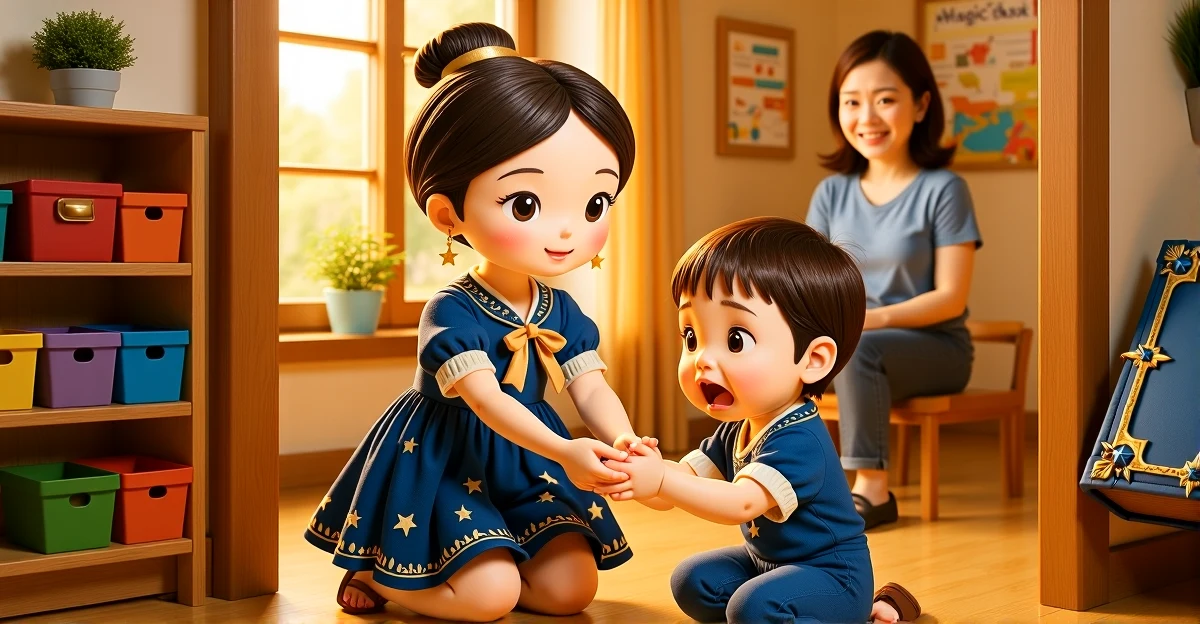
What makes it special: This story beautifully addresses fear management through the power of emotional connection and comfort. When Ayli feels scared during a nighttime moment, she discovers that friendship and gentle reassurance help her feel brave. The story teaches children that fears are normal and that seeking comfort from trusted friends is a healthy coping strategy.
Key lesson: When Ayli and Igar discover that their night light glows brighter with comforting hugs, children learn that connection and gentle support can transform scary moments into opportunities for courage and growth.
How to use it: After reading this story with your child, you can create your own comfort ritual. Just like Ayli found courage through friendship, your child can learn that you are their safe base as they gradually explore the world around them, including friendly animals. You might say, "When we see a dog and you feel scared, you can hold my hand tight, just like Ayli held Igar's hand. We'll be brave together."
You're Doing Beautifully
Let me remind you of something IMPORTANT. You are doing beautifully. Your child is not broken or overly fearful. They are learning, growing, and developing exactly as they should. This phase will pass.
The consensus among child development experts is clear: fears of animals at this age are temporary, developmentally appropriate, and best addressed through calm reassurance combined with gradual, supportive exposure. Children whose parents respond with patient validation rather than anxiety develop stronger emotional regulation skills that serve them throughout life.
With your gentle support, your calm presence, and your patient guidance, your child will learn that the world is full of wonder, including the animals in it. They will discover that they can feel afraid AND be brave. They will learn that you are always their safe base, no matter what.
The Magic Book and I believe in you. We believe in your child. And we're here to support you every step of the way with stories that teach, comfort, and inspire.
Sweet dreams, wonderful parent. Until our next adventure together.
With love and starlight,
Inara
Related Articles
- Understanding Your Toddler's Hesitation with New Experiences (And How to Gently Encourage Curiosity)
- Understanding Your Toddler's Sensitivity to Loud Sounds (And How to Help)
- Understanding Your Toddler's Fear of the Dark: A Gentle Parenting Guide
- When Your Toddler Wakes Up Screaming: Understanding Night Terrors
- Understanding Toddler Stranger Anxiety: A Gentle Guide for Parents
Show transcript
Hello, wonderful parent! It's me, Inara, and I am so happy you're here today. You know, the Magic Book and I have been noticing something that many parents are experiencing right now. Your little one, your precious two or three year old, suddenly seems afraid of animals. Dogs, cats, maybe even the neighbor's friendly bunny. They scream, they run, they hide behind your legs, and you're wondering, is this normal? Should I be worried?
Let me tell you something WONDERFUL. This is not only normal, it's actually a beautiful sign that your child's brain is developing exactly as it should. Dr. Laura Kirmayer, a clinical psychologist at the Child Mind Institute, explains it this way. It is a typical stage of development for children this age to start developing fears. It's actually a sign that their neurological system, which alerts them to danger, is developing, so it's a good thing.
Can you imagine? What feels like a challenge is actually your child's amazing brain learning to keep them safe. Their little neurological system is waking up, becoming more aware of the world around them, and that means they're noticing things that might be uncertain or unfamiliar. And animals, with their unpredictable movements, their sounds, their energy, can feel overwhelming to a developing nervous system.
The Magic Book taught me something beautiful about this. When your child runs from a friendly dog, they're not being difficult or overly sensitive. They're experiencing what researchers call a normal developmental fear pattern. Studies published in peer-reviewed journals confirm that specific phobias, including animal fears, follow predictable patterns in early childhood. This is temporary, it's meaningful, and it's part of their journey of learning about the world.
Now, here's what makes this even more interesting. Research shows that when young children encounter animals that feel overwhelming, they are actually in an important learning phase about managing uncertainty and building courage. Think about that for a moment. Every time your child feels that fear and works through it with your support, they're developing emotional resilience that will serve them for their entire life.
So what can you do to help? The experts are very clear on this, and the Magic Book whispers the same wisdom. The most effective approach combines validation of your child's feelings with gentle, gradual exposure. Let me break that down for you.
First, validation. When your child sees a dog and grabs your leg, don't dismiss their fear. Don't say, oh, it's just a dog, don't be silly. Instead, acknowledge what they're feeling. You can say something like, I see that dog feels big and scary to you right now. That's okay. I'm right here with you. This simple acknowledgment tells your child that their feelings are real and acceptable, and that you are their safe base.
Second, stay calm yourself. Children are incredibly attuned to our emotions. If you tense up when you see a dog approaching, your child will pick up on that and think, mom is worried, this must be dangerous. But if you stay relaxed and confident, you're sending the message, we're safe, I've got this.
Third, gradual exposure. And this is so important. Child development specialists stress that parents should avoid reinforcing fears by always removing children from feared situations. Now, that doesn't mean you force your child to pet a dog when they're terrified. That would be overwhelming and counterproductive. Instead, you create opportunities for them to observe animals from a safe distance, at their own pace.
Maybe you start by watching dogs at the park from far away. You might say, look at that dog playing with the ball. He's having fun. You're just observing together, no pressure. Over time, as your child feels more comfortable, you might move a little closer. You might read books about friendly animals. You might watch gentle videos of pets. You're building familiarity and understanding, one small step at a time.
The Child Mind Institute's research team notes that teaching children to manage fears without constant parental intervention builds confidence and independence so they feel more in control and less afraid. This is about empowering your child to discover that they can handle uncertain situations, with you as their supportive guide.
And here's where stories become such a beautiful helper. In The Book of Inara, we have a story called The Gentle Glow of Friendship. It's about Ayli and Igar, and in this story, Ayli feels scared during a nighttime moment. But she discovers something WONDERFUL. When she and Igar share comforting hugs, their night light glows brighter. The story teaches children that fears are normal, that seeking comfort from trusted friends is healthy, and that connection and gentle support can transform scary moments into opportunities for courage and growth.
After you read this story with your child, you can create your own comfort ritual. Just like Ayli found courage through friendship, your child can learn that you are their safe base as they gradually explore the world around them, including friendly animals. You might say, when we see a dog and you feel scared, you can hold my hand tight, just like Ayli held Igar's hand. We'll be brave together.
The consensus among child development experts is clear. Fears of animals at this age are temporary, developmentally appropriate, and best addressed through calm reassurance combined with gradual, supportive exposure. This approach, supported by developmental psychology research, demonstrates that children whose parents respond with patient validation rather than anxiety develop stronger emotional regulation skills.
So let me remind you of something IMPORTANT. You are doing beautifully. Your child is not broken or overly fearful. They are learning, growing, and developing exactly as they should. This phase will pass. With your gentle support, your calm presence, and your patient guidance, your child will learn that the world is full of wonder, including the animals in it.
The Magic Book and I believe in you. We believe in your child. And we're here to support you every step of the way with stories that teach, comfort, and inspire.
Sweet dreams, wonderful parent. Until our next adventure together. With love and starlight, Inara.