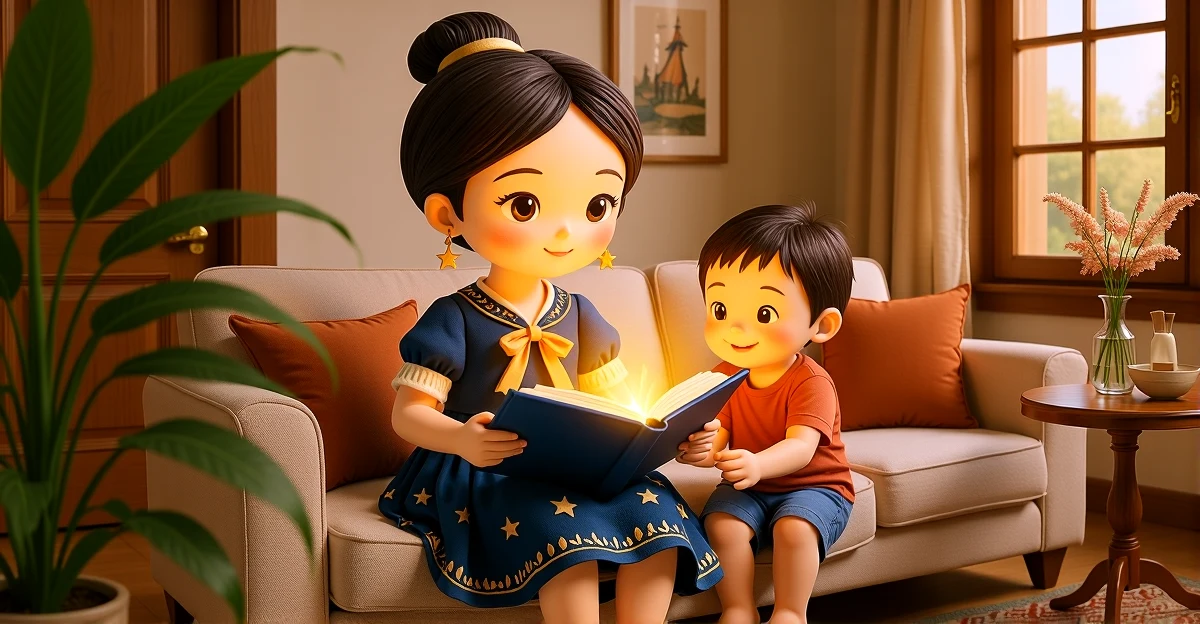

Your child just demanded juice without saying please. Again. And you can feel the eyes of other adults on you, silently judging. Your face flushes as you consider whether to stop everything and demand those magic words, or let it go and worry that your child is becoming rude.
If this sounds familiar, I want you to know something important: you are not alone in this, and your child is not being rude. They are learning, and that learning takes time, patience, and a completely different approach than you might expect.
In this guide, we will explore why forcing please and thank you often backfires, what child development research tells us about how children actually learn manners, and gentle strategies that build genuine respect rather than forced compliance. Plus, I will share a beautiful story that helps children understand the magic of polite communication.
Understanding Why Young Children Struggle with Polite Words
When your three or four-year-old demands things without saying please, it is not a character flaw. It is not a sign of disrespect. It is simply where their brain is in its development.
At this age, your child is absorbing EVERYTHING they see and hear. They are watching how you speak to them, how you speak to your partner, how you interact with the cashier at the store. Every single interaction is teaching them what respectful communication looks like.
But here is the thing that so many parents do not realize: their ability to remember to use those polite words in the moment is still developing. Their impulse control is growing. Their ability to pause their own urgent needs to add a please is still forming. This does not mean they are being rude. It means they are three or four years old, and their brain is exactly where it should be.
The Developmental Reality
Child development specialists emphasize that parents often have expectations for manners that exceed toddler developmental capabilities. When we understand this, everything shifts. We stop seeing our child as defiant or disrespectful, and we start seeing them as learners who need our patient modeling.
The prefrontal cortex, the part of the brain responsible for impulse control and social awareness, is still in its early stages of development at ages three and four. Your child is not choosing to be rude. They are simply operating with a brain that is still learning how to manage multiple tasks at once, like feeling thirsty AND remembering social niceties.
What Research Says About Teaching Manners
Research consistently shows that when young children ages three to four are learning social courtesy, they are in a critical developmental phase where modeling is far more powerful than forced compliance.
Studies indicate that children learn manners most effectively through observing adult behavior in their daily interactions, not through being required to say specific words on demand. This is such an important finding because it completely changes how we approach teaching manners.
Instead of asking how can I make my child say please and thank you, ask how can I raise a respectful child. This shift recognizes that authentic manners develop from internal values, not external pressure.
— Nurtured First, Child Development Specialists
The Montessori approach has demonstrated something wonderful through their grace and courtesy lessons. These lessons gently guide rather than force, supporting children natural social-emotional development. Montessori educators have found that when children feel respected and see courtesy modeled consistently, they internalize these behaviors at their own developmental pace.
Research from early intervention specialists reveals a crucial insight: demanding please and thank you can actually create power struggles and resistance, while genuine politeness develops naturally when children feel respected and see courtesy modeled consistently.
The Power of Modeling
The Virginia Early Intervention Professional Development center emphasizes that the best way for a parent to teach a toddler manners is through consistent modeling. This is not just theory. This is backed by decades of research on how young children learn social behaviors.
When you model respectful communication, your child absorbs these patterns naturally. They hear you say please when you ask them to hand you something. They hear you say thank you when they help you. They watch you express gratitude to strangers. And slowly, gradually, these patterns become part of their own communication style.
Gentle Strategies That Actually Work
So if forcing please and thank you does not work, what does? Here are research-backed strategies that build genuine respect:
1. Model the Words You Want to Hear
This is the foundation of everything. When you hand your child their cup of juice, say here is your juice, sweetheart. You are welcome. Even though they did not say thank you, you are modeling what that exchange sounds like.
When you need something from them, say could you please hand me that book? Thank you so much. You are showing them how requests work in a respectful relationship.
2. Narrate Your Own Polite Interactions
Make your modeling visible. When you are at the store, say out loud thank you so much for your help to the cashier. When someone holds the door, say I appreciate that, thank you. Your child is watching and learning.
3. Gently Reflect Without Demanding
When your child forgets to say please, instead of stopping everything and demanding it, you can gently model it. You might say oh, you would like the crackers? Let me get those for you. Or I heard you say you want help. I am happy to help you.
You are not forcing the words, but you are showing them what that interaction could sound like. There is no power struggle, no shame, just gentle guidance.
4. Release the Pressure
This might be the most important strategy of all. Release any pressure you are feeling about your child manners right now. Release the worry about what other people think. Release the idea that your child should be saying please and thank you every single time at three or four years old.
That expectation is not realistic, and it is not necessary. What matters is that you are creating an environment where respect is modeled, where kindness is the norm, where your child feels safe to learn and grow at their own pace.
5. Celebrate Natural Politeness
When your child does say please or thank you naturally, acknowledge it warmly. You might say I noticed you said please. That felt nice, did not it? You are reinforcing the positive feeling that comes with polite communication, not just the words themselves.
A Story That Makes Manners Magical
In The Book of Inara, we have a beautiful story that teaches children about the power of polite communication in a way that feels magical rather than mandatory:
The Candy Castle of Kind Asking
Perfect for: Ages 4-5 (also wonderful for 3-4 year olds)
What makes it special: Kenji and Maeva discover a magical candy castle where consent crystals teach them that asking permission makes everything more delicious and beautiful. When they ask politely and seek permission, the candy castle responds with even more magic and wonder. The consent crystals glow brighter, the flavors become more amazing, and everything feels more special.
Key lesson: This story shows children that polite requests create better experiences for everyone. It does not shame children for forgetting to say please. Instead, it shows them the natural positive outcomes of kind asking. It makes politeness feel magical rather than mandatory.
How to use it: After reading this story with your child, you can create your own asking permission ritual. You might say remember how the candy castle got more magical when Kenji and Maeva asked kindly? Let us try that with our words too. When we ask with kind words, it makes everything feel more special, just like in the story.
What This Looks Like in Real Life
Let me paint you a picture of what this gentle approach looks like in daily life:
Your child says give me juice. Instead of stopping and demanding please, you respond warmly: oh, you would like some juice? Let me pour that for you. Here you go, sweetheart. You are welcome.
You have modeled the entire polite exchange. Your child heard what it sounds like. There was no power struggle, no shame, no tension. Just a warm interaction where respect was demonstrated.
Over time, with consistent modeling, your child will start incorporating these words naturally. It might not happen overnight. It might not happen every time. But it will happen, because you are teaching them through the most powerful method available: your example.
When Others Judge Your Approach
I know one of the hardest parts of this gentle approach is dealing with other adults who expect you to demand please and thank you from your child. You might feel their judgment when your child forgets those magic words.
Here is what I want you to remember: you are not raising your child for other adults approval. You are raising a human being who will develop genuine respect and authentic politeness over time. That is SO much more valuable than forced compliance that disappears the moment the adult is not watching.
The consensus among early childhood experts is clear: children develop genuine politeness when they feel respected, observe courtesy in action, and are given developmentally appropriate time to internalize these social skills.
You are doing this right. You are taking the long view. You are building something real and lasting.
You Are Doing Beautifully
The Magic Book reminds us that every child is on their own timeline. Some children naturally start using polite words earlier. Some take a bit longer. And that is perfectly okay. What matters is that you are creating an environment where respect is modeled, where kindness is the norm, where your child feels safe to learn and grow at their own pace.
So the next time your child demands something without saying please, take a deep breath. Remember that they are learning. Remember that your modeling is more powerful than any demand you could make. And remember that genuine politeness, the kind that comes from the heart, takes time to develop.
You care enough to be here, learning about child development, thinking about how to support your child growth. That care, that intention, that is what matters most. You are raising a respectful human being, and that takes time, patience, and so much love.
The Book of Inara is here to support you on this journey. Stories like The Candy Castle of Kind Asking can help your child understand the beauty of polite communication in a way that feels magical and meaningful, not forced or shameful.
With love and starlight, Inara
Related Articles
- Understanding Your Child's Social Development: Why Playing Alone is Normal (Ages 3-4)
- Why Your Child Interrupts Conversations (And How to Teach Patient Listening)
- Teaching Manners to Preschoolers: A Gentle Guide for Ages 4-5
- Understanding Your Child's Rough Play: A Gentle Guide to Teaching Empathy
- Teaching Personal Space to Young Children: A Gentle Parenting Guide
Show transcript
Hello, my wonderful friend! It's me, Inara, and I am so happy you're here today. You know, the Magic Book and I have been noticing something that so many parents are experiencing right now. Your little one demands things without saying please or thank you, and you might be feeling judged by other adults, or worried that your child is becoming rude or disrespectful. And I want you to know something really important right from the start—you are not alone in this, and your child is not being rude. They're learning, and that learning takes time.
Let me share something the Magic Book taught me that changed everything. When young children ages three to four are learning social courtesy, they're in such a critical developmental phase. And here's the beautiful truth—modeling is far more powerful than forced compliance. Research shows us that children learn manners most effectively through observing adult behavior in their daily interactions, not through being required to say specific words on demand.
I know it can feel frustrating when your child says, Give me juice, without that please. Or when they grab something from your hands without a thank you. And especially when other adults are watching, you might feel that pressure to make your child say those magic words right now. But here's what child development experts want you to know—demanding please and thank you can actually create power struggles and resistance, while genuine politeness develops naturally when children feel respected and see courtesy modeled consistently.
The Montessori approach has shown us something wonderful. They use what they call grace and courtesy lessons, which gently guide rather than force. These lessons support children's natural social-emotional development. And research from early intervention specialists reveals that parents often have expectations for manners that exceed toddler developmental capabilities, which leads to frustration on both sides.
So let's talk about what's really happening in your child's developing brain. At three and four years old, your little one is absorbing everything they see and hear. They're watching how you speak to them, how you speak to your partner, how you interact with the cashier at the store, how you ask for things, how you express gratitude. Every single interaction is teaching them what respectful communication looks like.
But here's the thing—their ability to remember to use those polite words in the moment is still developing. Their impulse control is growing. Their ability to pause their own urgent needs to add a please is still forming. This doesn't mean they're being rude. It means they're three or four years old, and their brain is exactly where it should be.
Child development specialists at Nurtured First advise parents to reframe their approach. Instead of asking, How can I make my child say please and thank you, ask, How can I raise a respectful child? This shift recognizes that authentic manners develop from internal values, not external pressure.
The Virginia Early Intervention Professional Development center emphasizes that research has shown that parents often have expectations for manners that exceed toddler developmental capabilities, and they note that the best way for a parent to teach a toddler manners is through consistent modeling.
So what does this look like in real life? It means when you hand your child their cup of juice, you might say, Here's your juice, sweetheart. You're welcome. Even though they didn't say thank you, you're modeling what that exchange sounds like. When you need something from them, you say, Could you please hand me that book? Thank you so much. You're showing them how requests work.
And here's something beautiful—when you stop demanding please and thank you, and instead focus on modeling respectful communication, something magical happens. The power struggle disappears. Your child stops resisting because there's nothing to resist. And slowly, gradually, at their own developmental pace, those polite words start appearing naturally.
Now, I want to tell you about a story in The Book of Inara that shows this so beautifully. It's called The Candy Castle of Kind Asking, and it's about Kenji and Maeva discovering a magical candy castle where consent crystals teach them that asking permission makes everything more delicious and beautiful.
In this story, the children learn that when they ask politely and seek permission, the candy castle responds with even more magic and wonder. The consent crystals glow brighter, the flavors become more amazing, and everything feels more special. It's such a beautiful way to show children that polite requests create better experiences for everyone.
What I love about this story is that it doesn't shame children for forgetting to say please. Instead, it shows them the natural positive outcomes of kind asking. It makes politeness feel magical rather than mandatory. And that's exactly the energy we want to bring to teaching manners—not force, not shame, but genuine understanding of how beautiful it feels when we treat each other with kindness and respect.
After you read this story with your child, you can create your own asking permission ritual. You might say, Remember how the candy castle got more magical when Kenji and Maeva asked kindly? Let's try that with our words too. When we ask with kind words, it makes everything feel more special, just like in the story.
And here's what the research tells us—children whose parents model respectful communication and allow manners to develop at the child's pace show more authentic politeness and stronger social skills over time. This developmental phase is about building the foundation for lifelong respectful behavior, not achieving immediate compliance.
So I want you to release any pressure you're feeling about your child's manners right now. Release the worry about what other people think. Release the idea that your child should be saying please and thank you every single time at three or four years old. That's not realistic, and it's not necessary.
Instead, focus on being the model of the communication you want to see. Say please and thank you to your child. Say please and thank you to your partner. Say please and thank you to strangers. Let your child see you expressing gratitude, making polite requests, showing respect in your daily interactions.
And when your child forgets to say please, instead of stopping everything and demanding it, you can gently model it. You might say, Oh, you'd like the crackers? Let me get those for you. Or, I heard you say you want help. I'm happy to help you. You're not forcing the words, but you're showing them what that interaction could sound like.
The consensus among early childhood experts is clear—children develop genuine politeness when they feel respected, observe courtesy in action, and are given developmentally appropriate time to internalize these social skills.
And I want you to know something else. Your child is learning so much more than just words. They're learning about respect, about consideration, about how we treat each other in this world. And that learning happens through your example, through your patience, through your understanding that they're still growing and developing.
The Magic Book reminds us that every child is on their own timeline. Some children naturally start using polite words earlier. Some take a bit longer. And that's perfectly okay. What matters is that you're creating an environment where respect is modeled, where kindness is the norm, where your child feels safe to learn and grow at their own pace.
So the next time your child demands something without saying please, take a deep breath. Remember that they're learning. Remember that your modeling is more powerful than any demand you could make. And remember that genuine politeness, the kind that comes from the heart, takes time to develop.
You're doing such a beautiful job, my wonderful friend. You care enough to be here, learning about child development, thinking about how to support your child's growth. That care, that intention, that's what matters most.
The Book of Inara is here to support you on this journey. Stories like The Candy Castle of Kind Asking can help your child understand the beauty of polite communication in a way that feels magical and meaningful, not forced or shameful.
Sweet dreams, and remember—you're raising a respectful human being, and that takes time, patience, and so much love. The Magic Book and I are always here for you. With love and starlight, Inara.