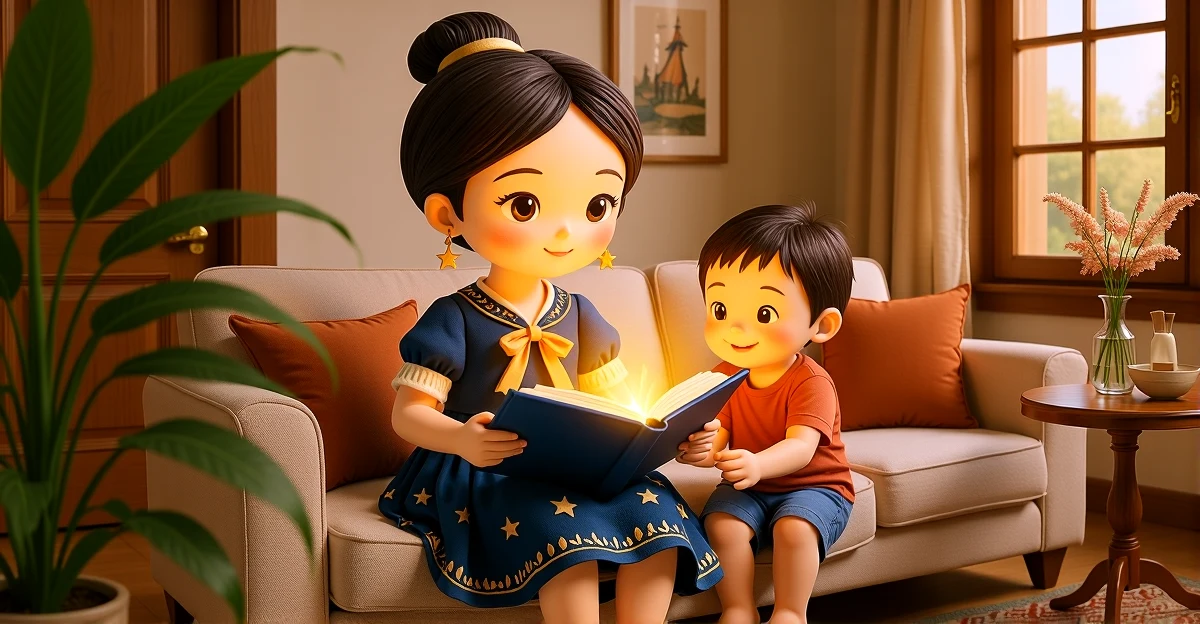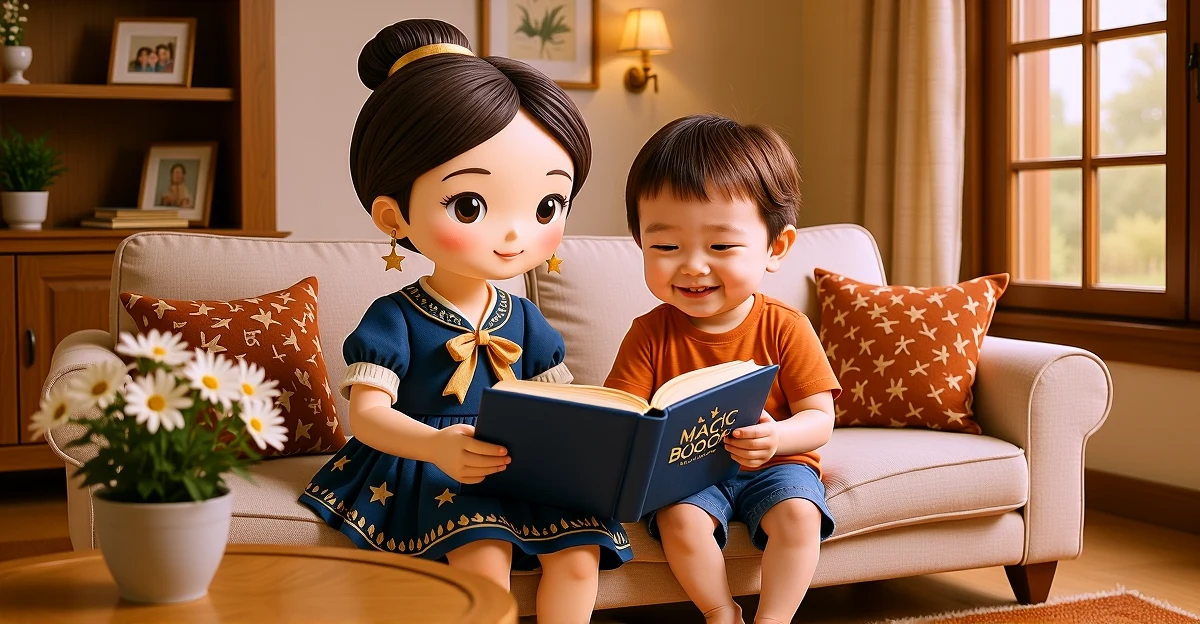
Hello, my wonderful friend! It's me, Inara, and I want to talk with you about something that so many parents are experiencing right now. Your beautiful four or five year old is demanding things without saying please or thank you. Maybe they say, "Give me that juice box," or "I want that toy NOW," and you're thinking, "Where did my polite child go?"
First, I want you to take a deep breath with me, because you are doing BEAUTIFULLY. This is not a sign that you've failed as a parent. This is not a sign that your child is rude or disrespectful. This is actually a sign that your child is right on track developmentally, and I'm going to explain exactly what I mean.
In this guide, we'll explore why children ages four and five sometimes forget their manners, what research tells us about teaching polite language, and most importantly, gentle strategies that actually work. Plus, I'll share a beautiful story from the Magic Book that teaches respect and kindness in a way children truly understand.
Understanding Your Child's Developing Brain
The Magic Book has taught me something wonderful about children ages four and five. At this age, your little one's brain is growing SO fast. They're discovering their independence, they're learning that they have their own ideas and their own voice, and they're testing out how to use that voice in the world. This is AMAZING development!
But here's the thing: they're so focused on what they want and what they're thinking that sometimes, the social niceties like please and thank you just slip away. It's not that they don't know these words. It's not that they're trying to be disrespectful. It's that their developing brain is prioritizing other things in that moment.
The Science Behind the Behavior
During the preschool years, children are experiencing rapid cognitive and emotional development. Their prefrontal cortex, the part of the brain responsible for impulse control and social awareness, is still developing and won't be fully mature until their mid-twenties. Right now, at ages four and five, they're learning to balance their own desires with social expectations, and that's a complex skill that takes time to develop.
When your child demands something without saying please, they're not deliberately being rude. They're simply focused on their immediate need or want, and the automatic habit of using polite language hasn't been fully established yet. This is completely normal, and with gentle guidance, they will learn.
What Research Says About Teaching Manners
Research from the National Association for the Education of Young Children tells us something really important: children learn polite language most effectively through consistent modeling, not through demands or punishment. When we model courtesy in our own speech, when we use please and thank you naturally throughout our day, children absorb these patterns like little sponges. They're watching us, listening to us, learning from us every single moment.
Teachers can intentionally teach social and emotional skills using evidence-based strategies to model and reinforce positive behaviors. Providing verbal cues helps children participate in appropriate social behavior, such as asking 'What magic words could you use?' to encourage polite communication.
— National Association for the Education of Young Children
The Collaborative for Academic, Social, and Emotional Learning confirms that respect and courtesy are skills that can be systematically taught through gentle, evidence-based strategies. This isn't about forcing your child to perform politeness. It's about creating an environment where respectful communication feels natural and meaningful.
The American Montessori Society emphasizes that grace and courtesy lessons need to be repeated many, many times before children internalize them. This is a gradual process that unfolds over months and years, not days. Your child will forget. They'll demand things rudely again tomorrow. And that's okay. That's normal. That's learning.
Five Gentle Strategies That Actually Work
So what can we do? Let me share some beautiful strategies that the Magic Book and child development experts recommend.
1. Model, Model, Model
Use please and thank you in every interaction, not just with your child, but with everyone. When you ask your partner to pass the salt, say please. When your child hands you something, say "thank you so much." When you're at the store, use polite language with the cashier. Your child is watching and learning from every single interaction.
Children learn by observing demonstrations of respectful communication and naturally adopt the courteous language patterns they see adults using. Make courtesy a natural part of your family's communication style, and your child will absorb it over time.
2. Use Gentle Verbal Cues
When your child demands something, you can say warmly, "Hmm, I wonder if there's a magic word that might help?" Or you might say, "Can you try asking me again with your kind words?" These cues remind your child without shaming them. You're teaching, not punishing.
The key is to keep your tone warm and supportive. You're not correcting bad behavior; you're guiding your child toward a skill they're still learning. This approach maintains connection while teaching important social skills.
3. Acknowledge and Celebrate
When your child DOES use polite language, even if it's quiet or hesitant, light up! Say, "I heard you say please! That makes my heart so happy. Thank you for using your kind words." This positive reinforcement is incredibly powerful.
Research shows that children who receive positive acknowledgment for courteous behavior develop stronger social skills than children who are primarily corrected for forgetting manners. Celebration creates motivation and builds confidence.
4. Be Patient with the Learning Process
Grace and courtesy lessons need to be repeated many, many times before children internalize them. This is a gradual process that unfolds over months and years, not days. Your child will forget. They'll demand things rudely again tomorrow. And that's okay. That's normal. That's learning.
When you approach this challenge with patience and warmth, when you model the behavior you want to see, when you celebrate small victories and stay calm through the setbacks, you're teaching your child something much deeper than just saying please and thank you. You're teaching them that people deserve respect, that kind words create connection, and that learning is a process.
5. Make It Playful
You might create a silly game where you practice asking for things politely. You could pretend to be a fancy restaurant where everyone uses their fanciest manners. You could read stories together about characters who learn about kindness and respect. When learning feels fun and playful, children engage more deeply and remember the lessons better.
A Story That Teaches Respect and Kindness
The Magic Book has a beautiful tale that I want to share with you. It's perfect for teaching children ages four and five about humility, respect, and helping others in a way that feels magical and memorable.
The Upside-Down Baobab Tree
Perfect for: Ages 4-5
What makes it special: This folktale tells the story of a proud baobab tree who learns an important lesson about humility and kindness from the wise gods. The tree discovers that when we treat others with respect and help them with kindness, we create beautiful connections and true happiness.
Key lesson: This story is wonderful because it doesn't lecture children about manners. Instead, it shows them through a memorable, magical tale why courtesy and respect matter. After you read this story together, you can talk with your child about how the baobab tree learned to be kind and helpful, just like we use please and thank you to show kindness to the people around us.
Why it works: The story provides a gentle, memorable metaphor for understanding why courtesy matters. Children see that respectful behavior creates positive connections and community, making the abstract concept of manners concrete and meaningful.
Addressing Common Worries
Sometimes parents worry that if they don't correct their child's rude demands immediately and firmly, the child will grow up to be disrespectful. But research shows us the opposite is true. Children who are taught courtesy through gentle modeling and positive reinforcement actually develop stronger social skills and more genuine respect than children who are punished or shamed for forgetting their manners.
When we respond to our child's rude demand with warmth and a gentle reminder, we're teaching them that mistakes are okay, that learning takes time, and that we're here to help them grow. We're building their confidence and their trust in us. And THAT is the foundation for true, lasting courtesy.
The Magic Book reminds me that children are not little adults. They're learners. They're explorers. They're discovering how to be in the world, and they need our patient guidance, not our frustration. When your child demands something rudely, they're not trying to disrespect you. They're simply focused on their need in that moment, and they haven't yet developed the automatic habit of using polite language.
What You're Really Teaching
Your job is not to make them perform politeness. Your job is to create an environment where courtesy feels natural, where respect is modeled constantly, where kind words are celebrated, and where mistakes are met with gentle guidance rather than shame.
And here's something beautiful. When you approach this challenge with patience and warmth, when you model the behavior you want to see, when you celebrate small victories and stay calm through the setbacks, you're not just teaching your child to say please and thank you. You're teaching them something much deeper:
- You're teaching them that people deserve respect
- You're teaching them that kind words create connection
- You're teaching them that learning is a process
- You're teaching them that you'll be there with love and support every step of the way
You're Doing Beautifully
Tonight, or tomorrow morning, I want you to try something. Notice how often YOU use please and thank you throughout your day. Notice how your child responds when you use polite language with them. And when your child forgets their manners, take a breath, smile, and offer a gentle reminder. Watch what happens over the next few weeks as you consistently model courtesy and celebrate your child's attempts at polite communication.
You are doing such important work, my wonderful friend. You're raising a human being, teaching them how to move through the world with kindness and respect. That's not easy, and it doesn't happen overnight. But with patience, with modeling, with gentle guidance, and with stories like The Upside-Down Baobab Tree to help along the way, your child will learn. They will internalize these lessons. They will become the courteous, respectful person you're helping them become.
The Magic Book and I believe in you. We believe in your child. And we're here to support you every step of this beautiful journey.
With love and starlight,
Inara
Related Articles
- Understanding Physical Affection Boundaries: Why Your Child Avoids or Over-Hugs
- Teaching Manners Without Power Struggles: A Gentle Parenting Guide
- When Your Child Plays Alone at Recess: Understanding Social Development (Ages 4-5)
- Teaching Your Child to Ask Permission: A Gentle Guide for Ages 4-5
- Helping Your 4-5 Year Old Build Friendship Skills: A Gentle Guide
Show transcript
Hello, my wonderful friend! It's me, Inara, and I am SO happy you're here with me today. You know, the Magic Book and I have been noticing something that so many parents are experiencing right now. Your beautiful four or five year old is demanding things without saying please or thank you, and it can feel frustrating, can't it? Maybe they say, Give me that juice box, or I want that toy NOW, and you're thinking, Where did my polite child go?
First, I want you to take a deep breath with me, because you are doing BEAUTIFULLY. This is not a sign that you've failed as a parent. This is not a sign that your child is rude or disrespectful. This is actually a sign that your child is right on track developmentally, and I'm going to explain exactly what I mean.
The Magic Book has taught me something wonderful about children ages four and five. At this age, your little one's brain is growing SO fast. They're discovering their independence, they're learning that they have their own ideas and their own voice, and they're testing out how to use that voice in the world. This is AMAZING development! But here's the thing, they're so focused on what they want and what they're thinking that sometimes, the social niceties like please and thank you just slip away. It's not that they don't know these words, it's that their developing brain is prioritizing other things in that moment.
Research from the National Association for the Education of Young Children tells us something really important. Children learn polite language most effectively through consistent modeling, not through demands or punishment. When we model courtesy in our own speech, when we use please and thank you naturally throughout our day, children absorb these patterns like little sponges. They're watching us, listening to us, learning from us every single moment.
The Collaborative for Academic, Social, and Emotional Learning confirms that respect and courtesy are skills that can be systematically taught through gentle, evidence-based strategies. This isn't about forcing your child to perform politeness, it's about creating an environment where respectful communication feels natural and meaningful.
So what can we do? Let me share some beautiful strategies that the Magic Book and child development experts recommend.
First, model, model, model. Use please and thank you in every interaction, not just with your child, but with everyone. When you ask your partner to pass the salt, say please. When your child hands you something, say thank you so much. When you're at the store, use polite language with the cashier. Your child is watching and learning from every single interaction.
Second, use gentle verbal cues. When your child demands something, you can say warmly, Hmm, I wonder if there's a magic word that might help? Or you might say, Can you try asking me again with your kind words? These cues remind your child without shaming them. You're teaching, not punishing.
Third, acknowledge and celebrate when your child DOES use polite language. When they say please, even if it's quiet or hesitant, light up! Say, I heard you say please! That makes my heart so happy. Thank you for using your kind words. This positive reinforcement is incredibly powerful.
Fourth, be patient with the learning process. The American Montessori Society reminds us that grace and courtesy lessons need to be repeated many, many times before children internalize them. This is a gradual process that unfolds over months and years, not days. Your child will forget. They'll demand things rudely again tomorrow. And that's okay. That's normal. That's learning.
Fifth, make it playful when you can. You might create a silly game where you practice asking for things politely. You could pretend to be a fancy restaurant where everyone uses their fanciest manners. You could read stories together about characters who learn about kindness and respect.
And speaking of stories, the Magic Book has a beautiful tale that I want to share with you. It's called The Upside-Down Baobab Tree, and it's perfect for children ages four and five. In this folktale, a proud baobab tree learns an important lesson about humility and kindness from the wise gods. The tree discovers that when we treat others with respect and help them with kindness, we create beautiful connections and true happiness.
This story is wonderful because it doesn't lecture children about manners. Instead, it shows them through a memorable, magical tale why courtesy and respect matter. After you read this story together, you can talk with your child about how the baobab tree learned to be kind and helpful, just like we use please and thank you to show kindness to the people around us.
You can find The Upside-Down Baobab Tree in The Book of Inara, along with hundreds of other stories that teach social and emotional skills through gentle, engaging narratives.
Now, I want to address something important. Sometimes parents worry that if they don't correct their child's rude demands immediately and firmly, the child will grow up to be disrespectful. But research shows us the opposite is true. Children who are taught courtesy through gentle modeling and positive reinforcement actually develop stronger social skills and more genuine respect than children who are punished or shamed for forgetting their manners.
When we respond to our child's rude demand with warmth and a gentle reminder, we're teaching them that mistakes are okay, that learning takes time, and that we're here to help them grow. We're building their confidence and their trust in us. And THAT is the foundation for true, lasting courtesy.
The Magic Book reminds me that children are not little adults. They're learners. They're explorers. They're discovering how to be in the world, and they need our patient guidance, not our frustration. When your child demands something rudely, they're not trying to disrespect you. They're simply focused on their need in that moment, and they haven't yet developed the automatic habit of using polite language.
Your job is not to make them perform politeness. Your job is to create an environment where courtesy feels natural, where respect is modeled constantly, where kind words are celebrated, and where mistakes are met with gentle guidance rather than shame.
And here's something beautiful. When you approach this challenge with patience and warmth, when you model the behavior you want to see, when you celebrate small victories and stay calm through the setbacks, you're not just teaching your child to say please and thank you. You're teaching them something much deeper. You're teaching them that people deserve respect. You're teaching them that kind words create connection. You're teaching them that learning is a process, and that you'll be there with love and support every step of the way.
So tonight, or tomorrow morning, I want you to try something. Notice how often YOU use please and thank you throughout your day. Notice how your child responds when you use polite language with them. And when your child forgets their manners, take a breath, smile, and offer a gentle reminder. Watch what happens over the next few weeks as you consistently model courtesy and celebrate your child's attempts at polite communication.
You are doing such important work, my wonderful friend. You're raising a human being, teaching them how to move through the world with kindness and respect. That's not easy, and it doesn't happen overnight. But with patience, with modeling, with gentle guidance, and with stories like The Upside-Down Baobab Tree to help along the way, your child will learn. They will internalize these lessons. They will become the courteous, respectful person you're helping them become.
The Magic Book and I believe in you. We believe in your child. And we're here to support you every step of this beautiful journey.
Sweet dreams, and until our next adventure together, with love and starlight, Inara.