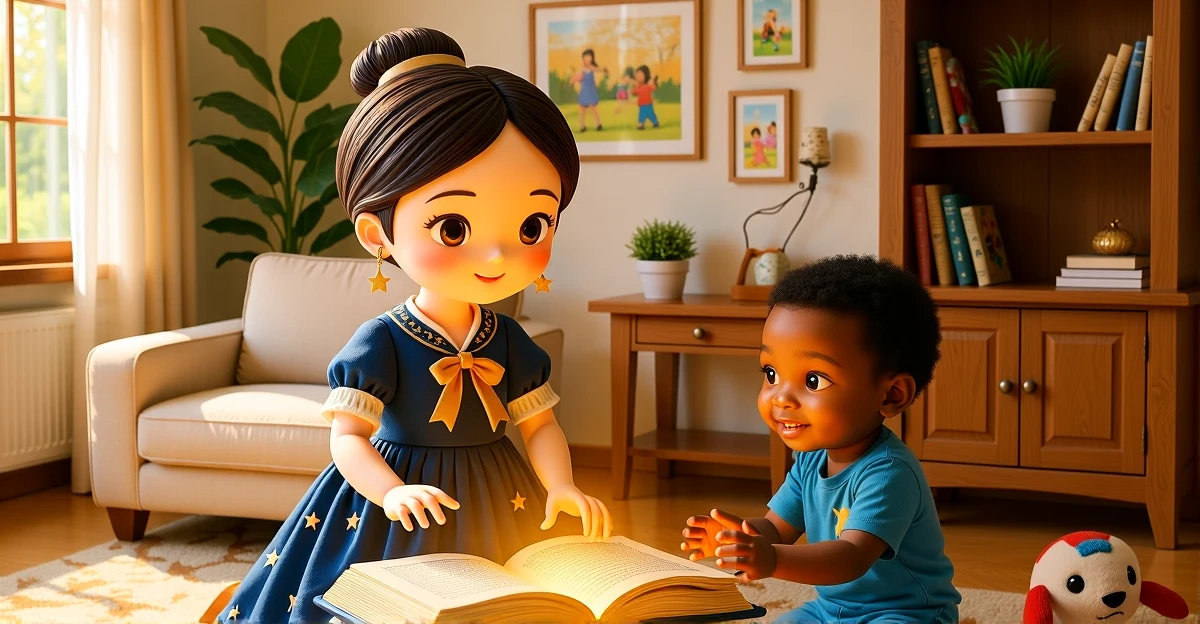
You notice your child walk right past a friend who's crying. Or maybe they don't seem to recognize when someone needs a comforting word or a helping hand. And you wonder, with a little worry in your heart, why doesn't my child notice when others need emotional support?
Let me tell you something wonderful, dear parent. You are not alone in this observation, and your child is not being unkind or selfish. What you're witnessing is actually a beautiful sign that your child is in the middle of learning one of life's most important skills. Empathy is not something children are born with fully formed. It's a capacity that grows and develops over time, just like learning to read or mastering a bicycle. And at ages six and seven, children are right in the heart of this learning journey.
In this post, we'll explore why children at this age sometimes don't recognize when others need support, what research tells us about empathy development, and most importantly, the gentle, evidence-based strategies you can use to nurture this beautiful capacity in your child. Plus, I'll share a story from The Book of Inara that brings these concepts to life in the most magical way.
Understanding Why Children Don't Always Notice Others' Feelings
When your six or seven-year-old doesn't seem to recognize that someone needs comfort, it's not because they lack caring or compassion. Their brain is still building the neural pathways that help them notice and interpret the invisible signals that tell us someone is struggling emotionally.
Think about it this way. Empathy requires several complex skills working together. Your child needs to notice subtle facial expressions, read body language, understand that other people have internal experiences different from their own, and then know how to respond appropriately. That's a LOT of cognitive and emotional work happening all at once!
At ages six and seven, children are developing what psychologists call theory of mind, which is the understanding that other people have thoughts, feelings, and perspectives that are different from their own. This capacity is still maturing, which means your child might be so focused on their own experience that they genuinely don't notice the emotional cues happening around them.
And here's what's beautiful about this. Every time your child doesn't notice someone's distress, it's an opportunity for gentle teaching. Every moment is a chance to help them build the awareness and skills they're still developing. You're not fixing a problem, you're supporting natural, healthy development.
What Research Says About Empathy Development
The research on empathy development is both fascinating and reassuring. According to the Harvard Graduate School of Education's Making Caring Common project, empathy is a skill that requires intentional teaching and practice. Their research emphasizes something SO important: there's more to developing empathy than simply asking children to walk in someone else's shoes. It requires structured, evidence-based approaches and consistent modeling from caring adults.
Young people who show empathy are less likely to bully and display more classroom engagement and higher academic achievement. Empathy helps people understand and work with others, leading to academic and career success.
— Harvard Graduate School of Education, Making Caring Common
The National Association for the Education of Young Children tells us that children who are socially and emotionally healthy can recognize, label, and manage their own emotions, and they can understand others' emotions and show empathy. But getting to that point requires intentional teaching. Teachers and parents can enhance these skills using evidence-based strategies to teach, model, and reinforce positive behaviors.
Here's what makes this research so hopeful. It shows us that empathy isn't fixed or innate. It's something that grows stronger with practice, guidance, and supportive relationships. When children have trusting relationships with adults who provide specific coaching and modeling, they develop stronger empathy skills. And those skills create a foundation for success in friendships, school, and eventually in their careers and relationships throughout life.
The Collaborative for Academic, Social, and Emotional Learning (CASEL) framework shows that empathy development is interconnected with other social-emotional competencies, including self-awareness, self-management, and relationship skills. When we support empathy development, we're actually building a whole constellation of capacities that help children thrive.
Gentle Strategies to Nurture Empathy in Your Child
Now let's talk about the beautiful, practical ways you can support your child's growing empathy. These strategies are backed by research and designed to fit naturally into your everyday moments together.
1. Name Emotions When You See Them
One of the most powerful things you can do is become an emotion narrator for your child. When you're reading a story together, watching something happen at the park, or even observing family interactions, name what you see.
You might say, I notice that little boy looks sad because his ice cream fell, or I think your friend felt happy when you shared your toy with her. This helps your child start to connect what they see on the outside with what someone might be feeling on the inside. You're teaching them to read the invisible language of emotions.
2. Model Empathetic Responses Yourself
Your child is watching you and learning from everything you do. When you see someone who needs help, narrate your thinking out loud. You might say, I notice that person dropped their groceries. I'm going to help them pick things up because I know it feels overwhelming when everything falls.
Or when a family member is upset, you can model empathy by saying, I can see Grandma is feeling sad right now. I'm going to sit with her and listen, because sometimes when we're sad, we just need someone to be with us. Your child learns that noticing and responding to others' needs is what caring people do.
3. Practice Perspective-Taking Through Conversation
Gently guide your child to think about others' experiences through questions. You might ask, How do you think your sister felt when that happened? or What do you think we could do to help your friend feel better? These questions aren't tests, they're invitations to practice seeing the world through someone else's eyes.
When your child gives an answer, validate their thinking and expand on it. You might say, Yes, I think she might have felt sad too. I also wonder if she felt a little scared. What do you think? This kind of conversation builds the mental muscles of perspective-taking.
4. Celebrate Empathetic Moments
When you notice your child showing empathy, acknowledge it warmly and specifically. Instead of just saying good job, describe what you saw and why it mattered. You might say, I saw you pat your friend's shoulder when they were sad. That was such a caring thing to do. You helped them feel less alone.
This positive reinforcement helps your child understand that empathy is valued and important. It also helps them recognize their own empathetic actions, which builds their identity as a caring person.
5. Create Rituals of Emotional Check-Ins
Build regular moments into your family routine where you check in with each other's feelings. At dinner, you might go around the table and ask not just how was your day, but how is your heart feeling today? This normalizes talking about emotions and helps children practice noticing and naming their own feelings, which is the foundation for recognizing feelings in others.
6. Use Stories as Empathy Teachers
Stories are one of the most powerful tools for building empathy because they let children step into someone else's experience in a safe, imaginative way. When you read stories together, pause to talk about how characters might be feeling and why they might be acting the way they are.
A Story That Teaches Empathy Beautifully
In The Book of Inara, we have a story that brings the concept of recognizing invisible feelings to life in the most beautiful way. Let me tell you about it.
The Room Where Hearts Speak Softly
Perfect for: Ages 6-7
What makes it special: This story follows two wonderful friends named Theo and Miles as they discover that their parents' bedroom holds gentle echoes of caring conversations. They learn something profound: that adults have invisible worries too, and that small acts of kindness can help heal hearts.
Key lesson: Everyone, even grown-ups, has feelings that aren't always visible on the outside. When we learn to notice these invisible feelings and respond with care and compassion, we make the world a gentler place.
Why it helps with empathy: This story shows children that empathy means paying attention not just to what people say, but to what their hearts might be feeling. Theo and Miles learn to notice subtle signs of emotion and respond with kindness, which is exactly the skill you're helping your child develop.
After you share this story with your child, you can have such meaningful conversations together. You might talk about how everyone has feelings we can't always see, and practice noticing when someone might need kindness or comfort, even if they don't ask for it. You can create your own family rituals of checking in with each other's hearts.
You're Doing Beautifully
The beautiful truth is that empathy is a skill that grows stronger with practice and gentle guidance. Your child is learning to see the invisible, to feel what others feel, to respond with care and compassion. And with your support, they're building capacities that will serve them throughout their entire life.
They're learning to be the kind of person who notices when someone is struggling and reaches out with kindness. They're learning to be the kind of friend who makes others feel seen and valued. They're learning to be the kind of human being who makes the world a little bit gentler and more caring.
So when you notice your child still learning to recognize when others need support, remember that this is normal, healthy development. You're doing a beautiful job guiding them on this journey. Keep modeling empathy, keep naming emotions, keep celebrating their caring moments, and keep sharing stories that show them what empathy looks like in action.
The Magic Book and I believe in you, and we believe in your child. Together, you're building a foundation of caring and connection that will ripple out into the world in the most wonderful ways.
With love and starlight,
Inara
Related Articles
- Nurturing Empathy and Social Responsibility in Children Ages 6-7
- Emotional Intelligence in 6-7 Year Olds: The Beautiful Milestone
- Understanding Perspective-Taking Development in 6-7 Year Olds (And How to Help)
- Understanding Your Child's Growing Empathy: A Guide for Ages 5-6
- Understanding Your Child's Emotional Intelligence Development | Ages 6-7
Show transcript
Hello, wonderful parent! It's me, Inara, and I am so happy you're here today. You know, the Magic Book and I have been hearing from many parents who are noticing something about their children. They're wondering why their child doesn't always seem to recognize when someone else needs comfort or emotional support. And I want you to know something really important right from the start. You are not alone in this, and your child is not being unkind. What you're seeing is actually a beautiful sign that your child is in the middle of learning one of life's most important skills.
Empathy is not something children are born with fully formed. It's a skill that grows and develops over time, just like learning to read or ride a bicycle. And at ages six and seven, children are right in the heart of this learning journey. Their brains are building the pathways that help them notice invisible feelings in others, and that takes practice, patience, and gentle guidance from caring adults like you.
Let me share something wonderful that research has shown us. According to the Harvard Graduate School of Education's Making Caring Common project, young people who develop strong empathy skills are less likely to engage in bullying behaviors, and they show more classroom engagement and higher academic achievement. Empathy helps children understand and work with others, which creates a foundation for success in school, friendships, and eventually in their careers. But here's the key insight. The research emphasizes that there's more to developing empathy than simply asking children to walk in someone else's shoes. It requires structured, evidence-based approaches and consistent modeling from the adults in their lives.
The National Association for the Education of Young Children tells us that children who are socially and emotionally healthy can recognize, label, and manage their own emotions, and they can understand others' emotions and show empathy. But getting to that point requires intentional teaching. Teachers and parents can enhance these skills using evidence-based strategies to teach, model, and reinforce positive behaviors. And one of the most powerful ways children learn empathy is through trusting relationships with caring adults who provide specific guidance and coaching.
So what does this mean for you and your child? It means that when your child doesn't notice that a friend is sad, or doesn't offer comfort when someone is hurt, they're not being selfish or uncaring. They're simply still learning to read the invisible signals that tell us someone needs support. Their brain is developing the capacity to notice subtle facial expressions, body language, and emotional cues. And you can help them build this capacity through everyday moments of connection and teaching.
Here are some beautiful ways you can support your child's growing empathy. First, name emotions when you see them. When you're reading a story together or watching something happen at the park, you can say things like, that little boy looks sad because his ice cream fell, or I think your friend felt happy when you shared your toy with her. This helps your child start to connect what they see on the outside with what someone might be feeling on the inside.
Second, model empathetic responses yourself. When you see someone who needs help, narrate your thinking out loud. You might say, I notice that person dropped their groceries. I'm going to help them pick things up because I know it feels overwhelming when everything falls. Your child is watching you and learning that noticing and responding to others' needs is what caring people do.
Third, practice perspective-taking through play and conversation. You can ask questions like, how do you think your sister felt when that happened, or what do you think we could do to help your friend feel better? These questions gently guide your child to think about others' experiences and feelings.
And fourth, celebrate moments when your child does show empathy. When you notice your child offering comfort, sharing, or showing kindness, acknowledge it warmly. You might say, I saw you pat your friend's shoulder when they were sad. That was such a caring thing to do. You helped them feel less alone. This positive reinforcement helps your child understand that empathy is valued and important.
Now, let me tell you about a story from The Book of Inara that beautifully illustrates this journey of learning to see invisible feelings. It's called The Room Where Hearts Speak Softly, and it follows two wonderful friends named Theo and Miles. In this story, Theo and Miles discover that their parents' bedroom holds gentle echoes of caring conversations, and they learn something profound. They learn that adults have invisible worries too, and that small acts of kindness can help heal hearts.
What makes this story so special is the way it shows children that everyone, even grown-ups, has feelings that aren't always visible on the outside. Theo and Miles learn to notice these invisible feelings and respond with care and compassion. When your child experiences this story, they see that empathy means paying attention not just to what people say, but to what their hearts might be feeling. And they learn that even small acts of kindness, like a gentle word or a caring gesture, can make a real difference in someone's life.
After you share this story with your child, you can have such meaningful conversations together. You might talk about how everyone has feelings we can't always see, and practice noticing when someone might need kindness or comfort, even if they don't ask for it. You can create your own family rituals of checking in with each other's hearts, asking not just how was your day, but how is your heart feeling today?
The beautiful truth is that empathy is a skill that grows stronger with practice and gentle guidance. Your child is learning to see the invisible, to feel what others feel, to respond with care and compassion. And with your support, they're building capacities that will serve them throughout their entire life. They're learning to be the kind of person who notices when someone is struggling and reaches out with kindness. They're learning to be the kind of friend who makes others feel seen and valued. They're learning to be the kind of human being who makes the world a little bit gentler and more caring.
So when you notice your child still learning to recognize when others need support, remember that this is normal, healthy development. You're doing a beautiful job guiding them on this journey. Keep modeling empathy, keep naming emotions, keep celebrating their caring moments, and keep sharing stories that show them what empathy looks like in action.
The Magic Book and I believe in you, and we believe in your child. Together, you're building a foundation of caring and connection that will ripple out into the world in the most wonderful ways. Until our next adventure together, with love and starlight, Inara.