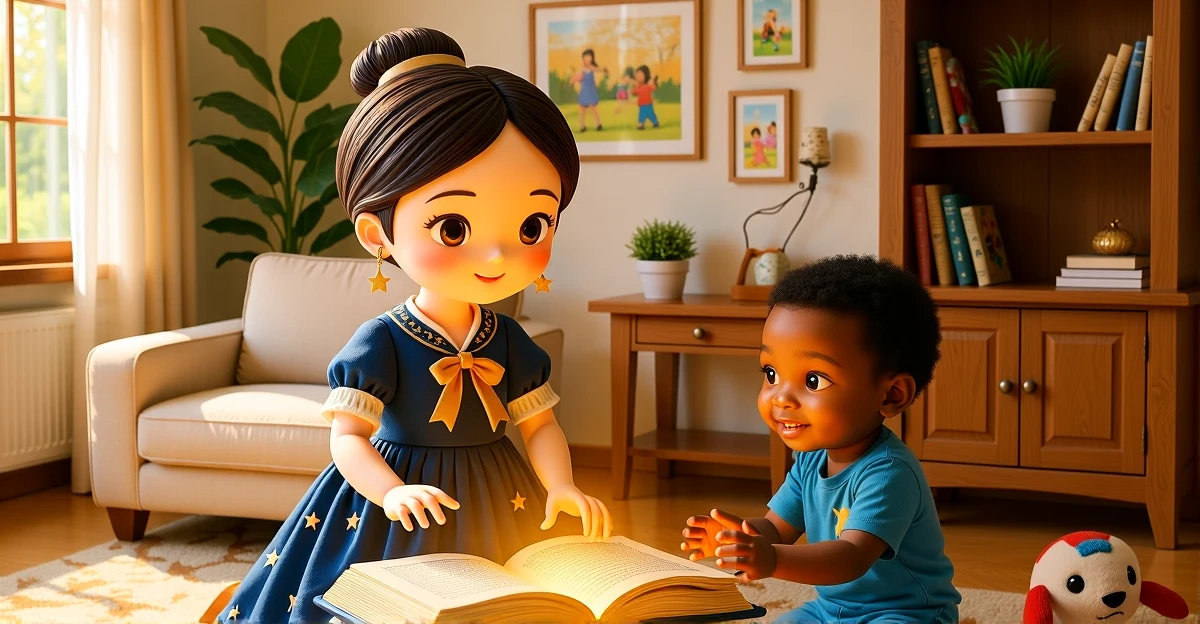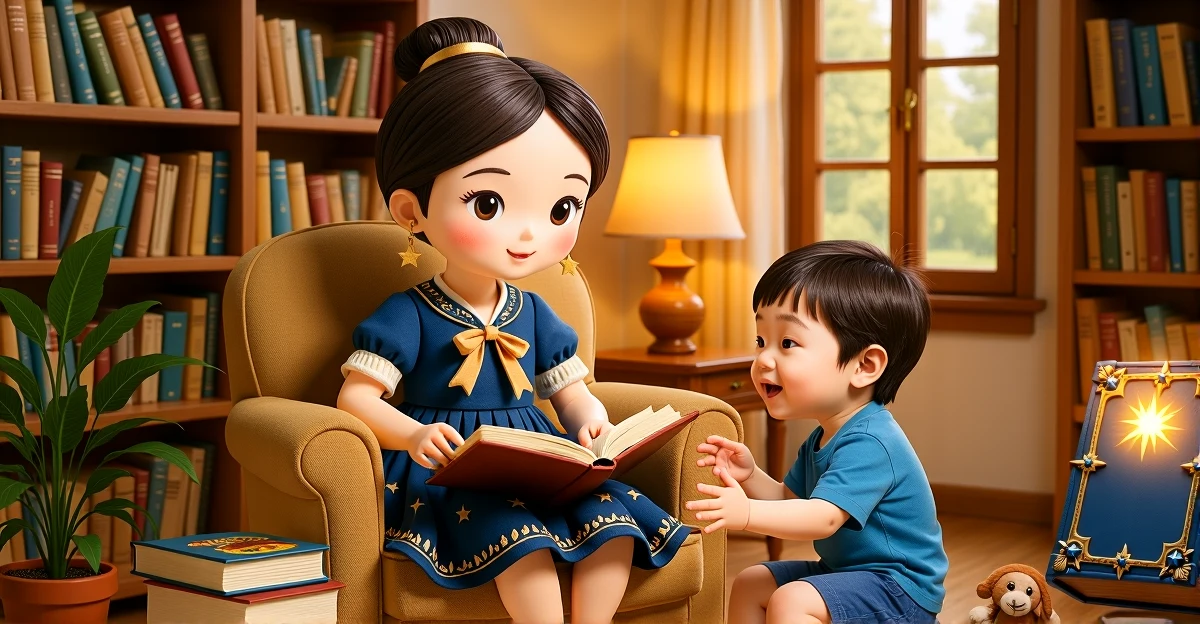

Your four-year-old pauses during playtime and asks, "Why is my friend sad even though they got the toy they wanted?" Or your five-year-old notices, "You're smiling, but Daddy looks worried." These questions might seem simple, but they're actually signs of something EXTRAORDINARY developing in your child's mind.
If you're witnessing these moments of insight, you're watching one of the most beautiful stages of childhood unfold. Your little one is developing advanced empathy and perspective-taking, learning to understand how others think and feel in complex situations. And you're not alone in wondering how to support this remarkable growth.
Let me share what the Magic Book has taught me about this magical developmental window, the research behind it, and gentle ways you can nurture your child's growing capacity for empathy.
What's Happening in Your Child's Beautiful, Growing Brain
Between ages four and five, something remarkable happens. Your child is moving beyond simply recognizing emotions on faces to understanding that different people can have different thoughts and feelings about the same situation. This is called perspective-taking, and it's one of the most important social-emotional skills your child will ever develop.
Around age four, children develop what scientists call theory of mind. This means they begin to understand that other people have their own thoughts, beliefs, and feelings that might be different from their own. Before this age, children often assume everyone sees the world exactly as they do. But now, your four or five year old is discovering something profound: other people have their own inner worlds.
This is the empathy window, and it's absolutely beautiful.
The Connection Between Emotion Understanding and Perspective-Taking
Research from the University of North Carolina found that emotion understanding actually comes first and helps children develop the ability to understand how others think. When children learn to recognize and name emotions in themselves, they become better at recognizing those same emotions in others. And when they can do that, they start to wonder: Why does my friend feel that way? What are they thinking about?
This developmental leap is rooted in your child's growing brain connections. The neural pathways that support empathy are strengthening every single day through experiences, conversations, and observations. Every time your child practices thinking about someone else's perspective, their brain gets stronger at this skill.
What Research Tells Us About Empathy Development
The science behind this stage of development is truly fascinating. Dr. Shauna Tominey from the Yale Center for Emotional Intelligence discovered something wonderful: children with higher emotional intelligence are better able to pay attention, are more engaged in school, have more positive relationships, and are more empathic.
Children with higher emotional intelligence are better able to pay attention, are more engaged in school, have more positive relationships, and are more empathic.
— Dr. Shauna Tominey, Yale Center for Emotional Intelligence
Research also shows us that affective perspective taking increases rapidly from ages 3-4 to 6 years of age. This means your child's ability to understand how someone else feels in a particular situation is growing by leaps and bounds during these preschool years.
Here's what's SO important to understand: this is completely normal and healthy development. If your child is asking questions about how others feel, if they're noticing when someone looks sad or happy or worried, if they're starting to understand that people can feel differently about the same thing, you are watching something truly extraordinary unfold.
The RULER Framework for Emotional Intelligence
Researchers have identified five teachable skills that support emotional intelligence development. These are called the RULER skills:
- Recognizing emotions in oneself and others
- Understanding the causes and consequences of emotions
- Labeling emotions accurately with a rich vocabulary
- Expressing emotions in appropriate ways
- Regulating emotional responses effectively
When children develop these skills during the critical 4-5 year window, they build a foundation for lifelong social-emotional competence.
Four Gentle Ways to Support Your Child's Developing Empathy
Now, you might be wondering: How can I support my child's developing empathy and perspective-taking? I'm so glad you asked! Here are four beautiful, research-backed approaches:
1. Talk About Feelings Throughout Your Day
Not just your child's feelings, but everyone's feelings. When you're reading a story together, pause and ask, "How do you think this character feels right now? What do you think they're thinking?" When you see someone at the park, you might say, "I wonder how that child feels about sharing the swing. What do you think?"
These conversations build the neural pathways for empathy. Every time your child practices thinking about someone else's perspective, their brain gets stronger at this skill. Make it natural, make it frequent, and make it part of your everyday rhythm.
2. Validate Your Child's Observations About Emotions
When your little one notices that their friend looks sad, celebrate that awareness! You might say, "You're right, they do look sad. You noticed that by looking at their face and thinking about their feelings. That's called empathy, and it's a very special skill you're developing."
This validation does two important things: it reinforces the behavior you want to see more of, and it helps your child understand that noticing others' emotions is valuable and important.
3. Model Perspective-Taking Yourself
Talk out loud about how you're thinking about other people's feelings. You might say, "I noticed Grandma seemed tired today, so I'm going to call her later to see if she needs anything." Or, "Your brother looks frustrated with that puzzle. I wonder if he'd like some help, or if he wants to figure it out himself. What do you think?"
When children hear you thinking about others' perspectives, they learn that this is something caring people do. You're not just teaching them what to think, you're showing them how to think about others with compassion.
4. Practice Listening With Your Heart
This is something the Magic Book taught me that I absolutely love. Create moments where you and your child practice quiet listening. When someone shares a feeling or a problem, pause together. Take a breath. Then ask, "What might they be feeling? What might help them?"
This teaches children that understanding others requires patience, attention, and genuine care. It's not about rushing to fix or solve, it's about being present and truly listening.
Why This Developmental Stage Matters SO Much
Here's something truly magical: research shows that children who develop strong empathy and perspective-taking skills at this age tend to have better friendships, do better in school, and grow into more compassionate adults. You're not just helping your child navigate preschool. You're giving them a gift that will serve them their entire life.
Children who understand that others have different perspectives are better equipped to:
- Navigate conflicts with friends peacefully
- Collaborate and work in teams
- Show kindness and compassion to others
- Regulate their own emotions more effectively
- Build meaningful, lasting relationships
- Develop strong moral reasoning and ethical thinking
The Magic Book reminds me that every child develops at their own pace, and that's perfectly wonderful. Some four year olds are just beginning to notice that others have different perspectives. Some five year olds are already quite skilled at perspective-taking. Wherever your child is on this journey is exactly where they're meant to be.
Stories That Can Help
In The Book of Inara, we have beautiful stories that bring these concepts to life for your child. Stories provide wonderful opportunities for children to practice understanding different perspectives safely, exploring how different characters think and feel.
The Listening Heart Center
Perfect for: Ages 4-5
What makes it special: This story beautifully models advanced empathy and perspective-taking through Ethan and Sofia's experience at a magical volunteer center where quiet listening helps them understand what others need. The story demonstrates that understanding others requires pausing, listening deeply, and recognizing that different people have different needs and feelings.
Key lesson: When Ethan and Sofia learn to listen quietly at the center, they discover that silence and attention reveal what others truly need. This teaches children that understanding others isn't about talking or fixing, it's about being present and truly listening.
After reading together: Create your own "listening with your heart" moments. When someone in your family shares a feeling or problem, pause together. Take a breath. Ask those beautiful questions: What might they be feeling? What might help them? This builds those neural pathways for advanced empathy in such a natural, loving way.
You're Doing Beautifully
If your child is asking questions about how others feel, if they're noticing when someone looks sad or happy or worried, if they're starting to understand that people can feel differently about the same thing, you are watching something truly extraordinary unfold.
This is your child's empathy blooming. This is their heart expanding to hold not just their own feelings, but the feelings of others too. And with your gentle guidance, your warm validation, and your patient modeling, you're helping them develop one of the most beautiful human capacities there is: the ability to understand and care about how others feel.
Your job isn't to rush them or push them. Your job is simply to notice, to celebrate, to guide gently, and to provide lots of opportunities for practice. Keep reading together. Keep talking about feelings. Keep modeling empathy in your own life. Keep celebrating when your child notices someone else's emotions.
You're doing something truly important, and the Magic Book and I are so proud of you. You're raising a human being with a beautiful, empathic heart. And that is one of the greatest gifts you can give the world.
Until our next adventure together, sweet dreams and starlight!
With love,
Inara
Related Articles
- Understanding Your Child's Difficulty with Character Emotions in Stories (Ages 4-5)
- When Your Child Plays Too Rough: Teaching Boundaries with Empathy (Ages 4-5)
- Understanding Your Child's Developing Empathy: A Guide to Perspective-Taking in 4-5 Year Olds
- How Your 4-5 Year Old Learns Empathy: The Beautiful Science of Caring
- When Your Child Struggles to Celebrate Others (What's Really Happening)
Show transcript
Hello, my wonderful friend! It's me, Inara, and I am SO happy you're here with me today!
You know, the Magic Book and I have been noticing something truly beautiful happening in homes with four and five year olds. Parents are watching their children ask the most AMAZING questions. Questions like, why is my friend sad even though they got the toy they wanted? Or, how come you're happy but Daddy looks worried? These questions might seem simple, but they're actually signs of something extraordinary developing in your child's mind.
Your little one is developing advanced empathy and perspective-taking. They're learning to understand how others think and feel in complex situations. And if you're wondering how to support this beautiful development, you're in exactly the right place.
Let me tell you what the Magic Book has taught me about this magical stage of growth.
Between ages four and five, something remarkable happens in your child's brain. They're moving beyond simply recognizing emotions on faces to understanding that different people can have different thoughts and feelings about the same situation. This is called perspective-taking, and it's one of the most important social-emotional skills your child will ever develop.
Research from child development experts shows us that this is completely normal and healthy development. Dr. Shauna Tominey from the Yale Center for Emotional Intelligence discovered that children with higher emotional intelligence are better able to pay attention, are more engaged in school, have more positive relationships, and are more empathic. Isn't that WONDERFUL?
Here's what's happening in your child's beautiful, growing brain. Around age four, children develop what scientists call theory of mind. This means they begin to understand that other people have their own thoughts, beliefs, and feelings that might be different from their own. Before this age, children often assume everyone sees the world exactly as they do. But now, your four or five year old is discovering something profound. Other people have their own inner worlds.
The Magic Book showed me research from the University of North Carolina that found emotion understanding actually comes first and helps children develop this ability to understand how others think. When children learn to recognize and name emotions in themselves, they become better at recognizing those same emotions in others. And when they can do that, they start to wonder, why does my friend feel that way? What are they thinking about?
This is the empathy window, my friend. And it's absolutely beautiful.
Now, you might be wondering, how can I support my child's developing empathy and perspective-taking? I'm so glad you asked! The Magic Book has shown me some truly wonderful approaches.
First, talk about feelings throughout your day. Not just your child's feelings, but everyone's feelings. When you're reading a story together, pause and ask, how do you think this character feels right now? What do you think they're thinking? When you see someone at the park, you might say, I wonder how that child feels about sharing the swing. What do you think?
These conversations build the neural pathways for empathy. Every time your child practices thinking about someone else's perspective, their brain gets stronger at this skill.
Second, validate your child's observations about emotions. When your little one notices that their friend looks sad, celebrate that awareness! You might say, you're right, they do look sad. You noticed that by looking at their face and thinking about their feelings. That's called empathy, and it's a very special skill you're developing.
Third, model perspective-taking yourself. Talk out loud about how you're thinking about other people's feelings. You might say, I noticed Grandma seemed tired today, so I'm going to call her later to see if she needs anything. Or, your brother looks frustrated with that puzzle. I wonder if he'd like some help, or if he wants to figure it out himself. What do you think?
When children hear you thinking about others' perspectives, they learn that this is something caring people do.
Fourth, practice listening with your heart. This is something the Magic Book taught me that I absolutely love. Create moments where you and your child practice quiet listening. When someone shares a feeling or a problem, pause together. Take a breath. Then ask, what might they be feeling? What might help them? This teaches children that understanding others requires patience, attention, and genuine care.
And here's something truly magical. Research shows that children who develop strong empathy and perspective-taking skills at this age tend to have better friendships, do better in school, and grow into more compassionate adults. You're not just helping your child navigate preschool, my friend. You're giving them a gift that will serve them their entire life.
Now, the Magic Book and I have a story that beautifully illustrates this kind of deep listening and understanding. It's called The Listening Heart Center, and it's about Ethan and Sofia discovering a magical volunteer center where quiet listening helps match helpers with people who need support.
In this story, Ethan and Sofia learn that when they pause and listen with their hearts, they can understand what others truly need. They discover that different people need different kinds of help, and that understanding someone else's perspective requires patience and attention. It's such a gentle, beautiful way to show children what advanced empathy looks like in action.
When Ethan and Sofia learn to listen quietly at the center, they discover that silence and attention reveal what others truly need. This teaches children that understanding others isn't about talking or fixing, it's about being present and truly listening.
After you read this story with your child, you can create your own listening with your heart moments. When someone in your family shares a feeling or problem, pause together. Take a breath. Ask those beautiful questions. What might they be feeling? What might help them? This builds those neural pathways for advanced empathy in such a natural, loving way.
You can find The Listening Heart Center in The Book of Inara, along with hundreds of other stories that support your child's social-emotional development. Each story is crafted with love to help children understand themselves and others more deeply.
My wonderful friend, I want you to know something important. If your child is asking questions about how others feel, if they're noticing when someone looks sad or happy or worried, if they're starting to understand that people can feel differently about the same thing, you are watching something truly extraordinary unfold.
This is your child's empathy blooming. This is their heart expanding to hold not just their own feelings, but the feelings of others too. And with your gentle guidance, your warm validation, and your patient modeling, you're helping them develop one of the most beautiful human capacities there is. The ability to understand and care about how others feel.
The Magic Book reminds me that every child develops at their own pace, and that's perfectly wonderful. Some four year olds are just beginning to notice that others have different perspectives. Some five year olds are already quite skilled at perspective-taking. Wherever your child is on this journey is exactly where they're meant to be.
Your job isn't to rush them or push them. Your job is simply to notice, to celebrate, to guide gently, and to provide lots of opportunities for practice. And stories, my friend. Stories are such a beautiful way to practice perspective-taking because children can safely explore how different characters think and feel.
So keep reading together. Keep talking about feelings. Keep modeling empathy in your own life. Keep celebrating when your child notices someone else's emotions. You're doing something truly important, and the Magic Book and I are so proud of you.
Thank you for being here with me today. Thank you for caring so deeply about your child's emotional development. And thank you for being the kind of parent who seeks to understand and support rather than simply manage or control.
You're raising a human being with a beautiful, empathic heart. And that, my wonderful friend, is one of the greatest gifts you can give the world.
Until our next adventure together, sweet dreams and starlight!
With love, Inara.