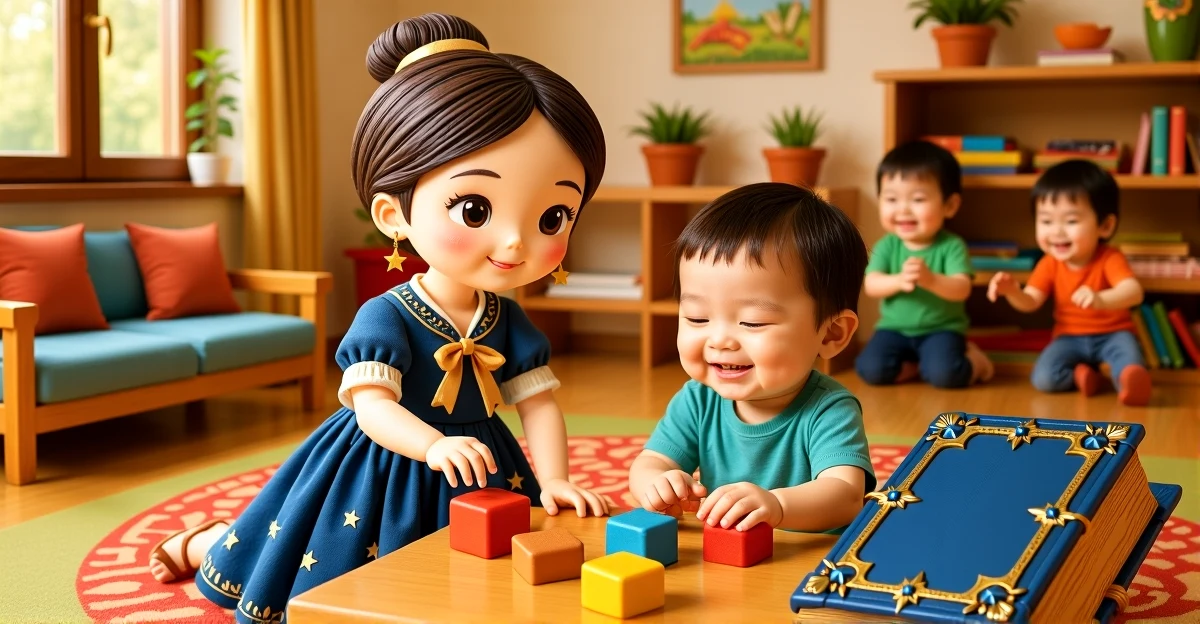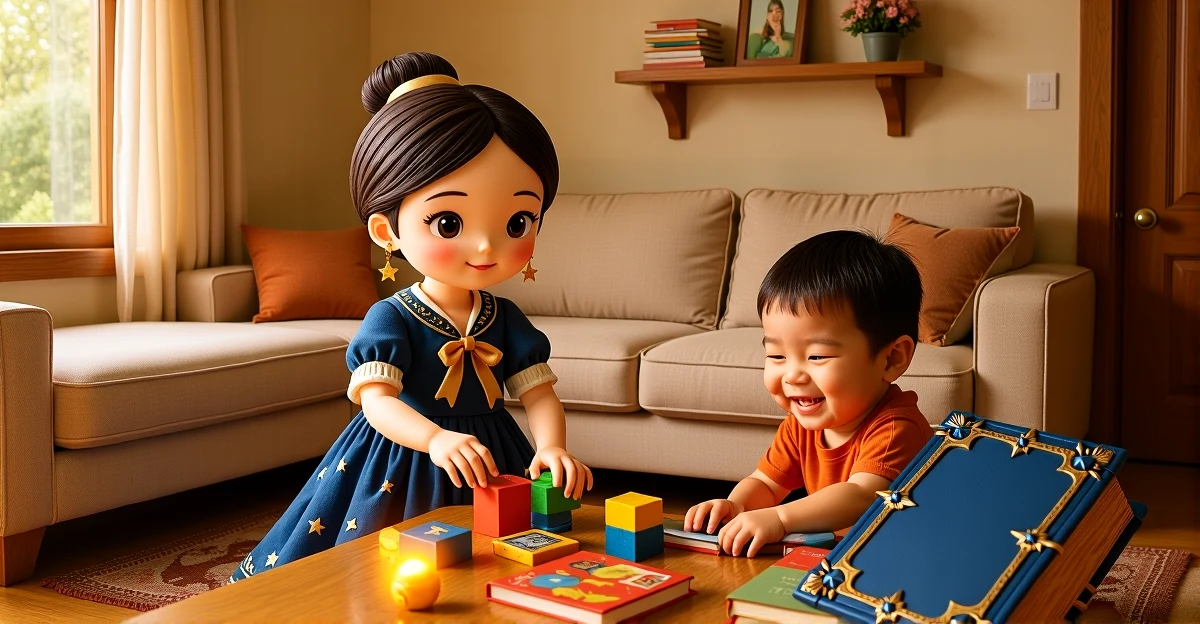

Your four year old comes home from preschool, and you ask about their day. They light up talking about their friend Emma. But then, the next day, you watch them struggle to share toys during a playdate. They grab, they protest, they melt down when it is time to take turns. And you wonder: if they care so much about their friend, why is being a good friend so hard?
Here is something beautiful I want you to know right from the start. You are not alone in this. And your child is not behind or struggling. They are learning one of life's most complex and valuable skills, and they are doing it exactly as they should.
In this guide, the Magic Book and I are going to explore what research tells us about how children ages 4-5 develop friendship skills. We will look at why these skills are so challenging, where children practice them, and how you can support this beautiful developmental journey. And I will share a story that brings these concepts to life in the most magical way.
Understanding Friendship Development at Ages 4-5
By age four, something wonderful happens. Research shows that most children can tell the difference between a friend and other children they know. They start actively seeking out preferred playmates. They might come home talking about their special friend, or ask for playdates with specific children.
This is BEAUTIFUL development! Your child is forming genuine connections. They are experiencing the joy of friendship. But here is what is equally important to understand: just because they can identify friends does not mean they automatically know how to be a good friend.
Think about what friendship actually requires. Sharing toys when you really want to keep them all to yourself. Taking turns when waiting feels impossible. Cooperating when you have different ideas about what to play. Listening to someone else's ideas when yours feel so important. Managing disagreements without hitting or yelling. Seeing things from another person's point of view when your own perspective feels like the only one that matters.
These are COMPLEX skills! And your four or five year old is just beginning to develop them.
The Skills That Make Up Friendship
The Raising Children Network, reviewed by Dr. Meredith Rayner, identifies the core friendship skills that children need to learn and practice:
- Sharing: Letting others use toys or materials, even when you want them
- Taking turns: Waiting patiently for your chance to play or speak
- Cooperating: Working together toward a common goal
- Listening to others: Paying attention when someone else is talking
- Managing disagreements: Handling conflicts without aggression
- Seeing other perspectives: Understanding that others have different thoughts and feelings
The Tennessee Early Learning Developmental Standards note that children at this age are still building their capacity for empathy and understanding others' perspectives. This takes time. It takes practice. It takes your patient, loving guidance.
Why Friendship Skills Are Learned, Not Innate
Here is the beautiful truth that the Magic Book taught me: friendship skills are not something children are born knowing. They are learned through practice, patience, and gentle guidance.
Dr. Meredith Rayner emphasizes that children need to learn and practice friendship skills, and as children play with others, they build skills that help them with friendships now and in the future. This is SO important for you to understand as a parent. When your child struggles with sharing or taking turns, they are not being difficult. They are not behind. They are simply learning.
Children need to learn and practice friendship skills. As children play with others, they build skills that help them with friendships now and in the future.
— Dr. Meredith Rayner, Raising Children Network
Research consistently demonstrates that ages 4-5 represent a critical developmental window for friendship skills, as children transition from parallel play to genuine cooperative interactions. They are moving from playing alongside other children to playing with other children. This is a BIG shift, and it requires new skills that take time to develop.
The Role of Brain Development
Understanding your child's brain development can help you have realistic expectations. The prefrontal cortex, the part of the brain responsible for impulse control, emotional regulation, and perspective-taking, is still developing throughout childhood and into young adulthood. At ages 4-5, your child is just beginning to develop these executive function skills.
This means that even when they WANT to be a good friend, even when they KNOW they should share, their brain is still learning how to override the impulse to grab the toy they want. This is completely normal development, and it requires your patience and support.
Where Children Practice Friendship Skills
Here is something that might surprise you. Some of the BEST places for your child to practice friendship skills are not at preschool or playdates. They are right at home with you and their siblings.
Family Mealtimes
Family mealtimes are perfect opportunities to practice listening, showing interest in what others are saying, and asking questions. When you model these skills, when you listen attentively to your child's stories about their day, when you ask follow-up questions that show genuine interest, you are teaching them how friends treat each other.
You might say things like: Tell me more about that! or What happened next? or How did that make you feel? These simple phrases teach your child that good friends show interest in each other's experiences and feelings.
Board Games and Play
Board games are another wonderful teacher. They give children safe opportunities to practice winning and losing graciously. You can model saying things like: Congratulations, well done! or Great game, thanks for playing! When your child sees you handle both victory and defeat with grace, they learn that friendship means celebrating others' successes and being kind even when things do not go your way.
Sibling Interactions
And sibling interactions, oh, those are RICH with learning opportunities! When your children are deciding what to play, or who gets to use a particular toy, they are practicing negotiation, compromise, and problem solving.
The Raising Children Network suggests that parents can help by praising children when you see them working out things well. You might say: That was a great idea to listen to each other before you decided what to play. Or if they need help, you can make gentle suggestions like: What if you told a story where you both had a turn with the toy?
Guided Practice Through Stories
Stories provide another powerful way for children to practice friendship skills. When children see characters modeling kindness, loyalty, and cooperation, they learn what these abstract concepts look like in action. Stories make friendship skills concrete and understandable in ways that lectures never can.
Gentle Strategies That Support Friendship Development
Educational research from Brookes Publishing confirms that children who need more specific and intentional instruction in friendship skills benefit significantly from cooperative activities. Here are gentle strategies you can use to support your child's friendship development:
1. Model the Skills You Want to See
Your child learns more from watching you than from anything you say. When you listen attentively, share generously, cooperate willingly, and handle disagreements calmly, you are teaching your child what friendship looks like.
2. Praise Specific Friendship Behaviors
Instead of general praise like Good job, notice and name specific friendship skills: I saw you share your blocks with your sister. That was so kind. or You waited patiently for your turn. That shows great self-control. This helps children understand exactly what behaviors make them a good friend.
3. Provide Gentle Guidance During Struggles
When your child struggles with friendship skills, offer gentle suggestions rather than criticism. Instead of Stop being selfish, try: I see you both want the same toy. What if you played with it together? or How about you use it for five minutes, then your friend gets a turn?
4. Create Opportunities for Cooperative Play
Set up activities that require cooperation rather than competition. Building a fort together, creating art as a team, or working on a puzzle collaboratively all provide natural opportunities to practice teamwork and cooperation.
5. Validate Their Feelings While Teaching Skills
It is SO hard to share when you really want to keep playing with that toy. And it is also important to give your friend a turn. Let us figure out how to do both. This validates their feelings while still teaching the friendship skill.
6. Be Patient With the Learning Process
Remember that friendship skills take YEARS to develop fully. Your child will have good days and hard days. They will share beautifully one moment and struggle the next. This is all part of the learning process. Your patient, consistent guidance is what matters most.
Stories That Can Help
In The Book of Inara, we have beautiful stories that bring friendship concepts to life for your child. Let me share one that the Magic Book and I treasure:
The Wind in the Willows: A Tale of Friendship
Perfect for: Ages 4-5
What makes it special: This classic story beautifully demonstrates friendship, loyalty, and teamwork through the adventures of Mole, Rat, Toad, and Badger. The characters model helping friends through challenges, showing kindness even when it is difficult, and working together to solve problems.
Key teaching moment: When the friends work together to help Toad despite his mistakes, children see that true friendship means being supportive and loyal even when friends make poor choices. This is such a powerful lesson about what real friendship looks like.
How to use this story: After experiencing this story together, ask your child: How did the friends help each other? What would you do if your friend needed help? These questions open up beautiful conversations about what it means to be a good friend.
Stories like The Wind in the Willows show children what friendship looks like in action. They make abstract concepts like loyalty and teamwork concrete and understandable. And they do it in a way that captures children's hearts and imaginations.
You Are Doing Beautifully
Here is what I want you to remember, wonderful parent. Your child is learning one of life's most valuable skills. They are learning how to connect with others, how to be kind and loyal and supportive. And this learning happens gradually, through countless small moments.
Every time they share a toy, even reluctantly. Every time they wait for their turn, even impatiently. Every time they listen to another child's idea, even when they would rather talk about their own. They are building friendship skills.
Your role is not to make them perfect at friendship right now. Your role is to guide them gently, to model what good friendship looks like, to praise their efforts, and to help them when they struggle. And you are doing that beautifully. The very fact that you are here, seeking wisdom on this topic, tells me that your child has a wonderful teacher in you.
The Magic Book and I believe in you. We believe in your child. And we believe in the power of stories to teach hearts what words alone sometimes cannot.
With love and starlight,
Inara
Related Articles
- Building Physical Confidence in Young Children: Gentle Movement Strategies for Ages 4-5
- Teaching Your 4-5 Year Old Peaceful Conflict Resolution: A Gentle Parenting Guide
- Building Confidence in Young Performers: A Gentle Guide for Ages 4-5
- When Your Child Plays Alone at Recess: Understanding Social Development (Ages 4-5)
- Helping Your 4-5 Year Old Build Friendship Skills: A Gentle Guide
Show transcript
Hello, wonderful parent! It's me, Inara, and I am so happy you're here today. You know, the Magic Book and I have been noticing something beautiful happening in homes all around the world. Parents like you are asking such thoughtful questions about helping their children learn to be kind, loyal, and supportive friends. And I want you to know something right from the start. If you're here, if you're seeking guidance on this, you're already doing something WONDERFUL. You care deeply about your child's heart, and that matters so much.
Let me share something the Magic Book taught me. When your four or five year old is learning friendship skills, they're not just learning how to play nicely. They're learning one of the most important life skills they'll ever develop. They're learning how to connect heart to heart with another person. They're learning empathy, cooperation, loyalty, and kindness. And here's the beautiful truth. These skills aren't something children are born knowing. They're learned through practice, patience, and your gentle guidance.
Research shows us something fascinating. By age four, most children can tell the difference between a friend and other children they know. They start actively seeking out preferred playmates. They might come home from preschool talking about their special friend, or ask for playdates with specific children. This is WONDERFUL development! But here's what's equally important to understand. Just because they can identify friends doesn't mean they automatically know how to be a good friend. That's where the learning comes in.
Dr. Meredith Rayner, who reviewed research for the Raising Children Network in Australia, emphasizes that children need to learn and practice friendship skills. And as children play with others, they build skills that help them with friendships now and in the future. Think about what friendship actually requires. Sharing toys when you really want to keep them all to yourself. Taking turns when waiting feels impossible. Cooperating when you have different ideas about what to play. Listening to someone else's ideas when yours feel so important. Managing disagreements without hitting or yelling. Seeing things from another person's point of view when your own perspective feels like the only one that matters.
These are complex skills! And your four or five year old is just beginning to develop them. The Tennessee Early Learning Developmental Standards identify helping, sharing, and taking turns as foundational friendship skills for four year olds. But they also note that children at this age are still building their capacity for empathy and understanding others' perspectives. This takes time. It takes practice. It takes your patient, loving guidance.
Here's something that might surprise you. Some of the BEST places for your child to practice friendship skills aren't at preschool or playdates. They're right at home with you and their siblings. Family mealtimes are perfect opportunities to practice listening, showing interest in what others are saying, and asking questions. When you model these skills, when you listen attentively to your child's stories about their day, when you ask follow up questions that show genuine interest, you're teaching them how friends treat each other.
Board games are another wonderful teacher. They give children safe opportunities to practice winning and losing graciously. You can model saying things like, Congratulations, well done! or Great game, thanks for playing! When your child sees you handle both victory and defeat with grace, they learn that friendship means celebrating others' successes and being kind even when things don't go your way.
And sibling interactions, oh, those are RICH with learning opportunities! When your children are deciding what to play, or who gets to use a particular toy, they're practicing negotiation, compromise, and problem solving. The Raising Children Network suggests that parents can help by praising children when you see them working out things well. You might say, That was a great idea to listen to each other before you decided what to play. Or if they need help, you can make gentle suggestions like, What if you told a story where you both had a turn with the toy?
Now, I know what some of you might be thinking. My child struggles with sharing. Or, My child has trouble taking turns. Or, My child doesn't seem interested in playing with other children. And I want you to hear this. All of that is completely normal development. Educational research from Brookes Publishing confirms that children who need more specific and intentional instruction in friendship skills benefit significantly from cooperative activities. That means your child isn't behind or struggling. They're simply learning, and they might need a bit more practice and support. And that's perfectly okay.
Let me tell you about a story that the Magic Book and I treasure. It's called The Wind in the Willows, A Tale of Friendship. In this beautiful classic story, we meet Mole, Rat, Toad, and Badger. Four very different friends who discover that friendship and loyalty help them overcome any challenge. And that home is truly where their friends are.
What I love about this story is how it shows friendship in action. The friends don't just say they care about each other. They show it. When Toad makes poor choices, his friends don't abandon him. They work together to help him, even when it's difficult. Even when Toad doesn't make it easy. They demonstrate loyalty, patience, and teamwork. And children watching this story unfold see what true friendship looks like.
There's a particularly powerful moment when the friends work together to help Toad despite his mistakes. Children see that true friendship means being supportive and loyal even when friends make poor choices. This is such an important lesson! Because real friendship isn't just about playing together when everything is fun and easy. It's about sticking together when things get hard. It's about helping each other. It's about being kind even when it's difficult.
After you and your child experience this story together, you might ask, How did the friends help each other? What would you do if your friend needed help? These questions open up beautiful conversations about what it means to be a good friend. They help your child think about friendship in concrete, actionable ways.
Here's what I want you to remember, wonderful parent. Your child is learning one of life's most valuable skills. They're learning how to connect with others, how to be kind and loyal and supportive. And this learning happens gradually, through countless small moments. Every time they share a toy, even reluctantly. Every time they wait for their turn, even impatiently. Every time they listen to another child's idea, even when they'd rather talk about their own. They're building friendship skills.
Your role isn't to make them perfect at friendship right now. Your role is to guide them gently, to model what good friendship looks like, to praise their efforts, and to help them when they struggle. And you're doing that beautifully. The very fact that you're here, seeking wisdom on this topic, tells me that your child has a wonderful teacher in you.
The Magic Book and I believe in you. We believe in your child. And we believe in the power of stories to teach hearts what words alone sometimes cannot. Stories like The Wind in the Willows show children what friendship looks like in action. They make abstract concepts like loyalty and teamwork concrete and understandable.
So keep going, dear parent. Keep modeling kindness. Keep praising your child's friendship efforts. Keep reading stories that show beautiful examples of connection and care. And trust that your child is learning, growing, and developing the skills they need to build wonderful friendships that will enrich their entire life.
With love and starlight, Inara. The Magic Book and I are always here for you.