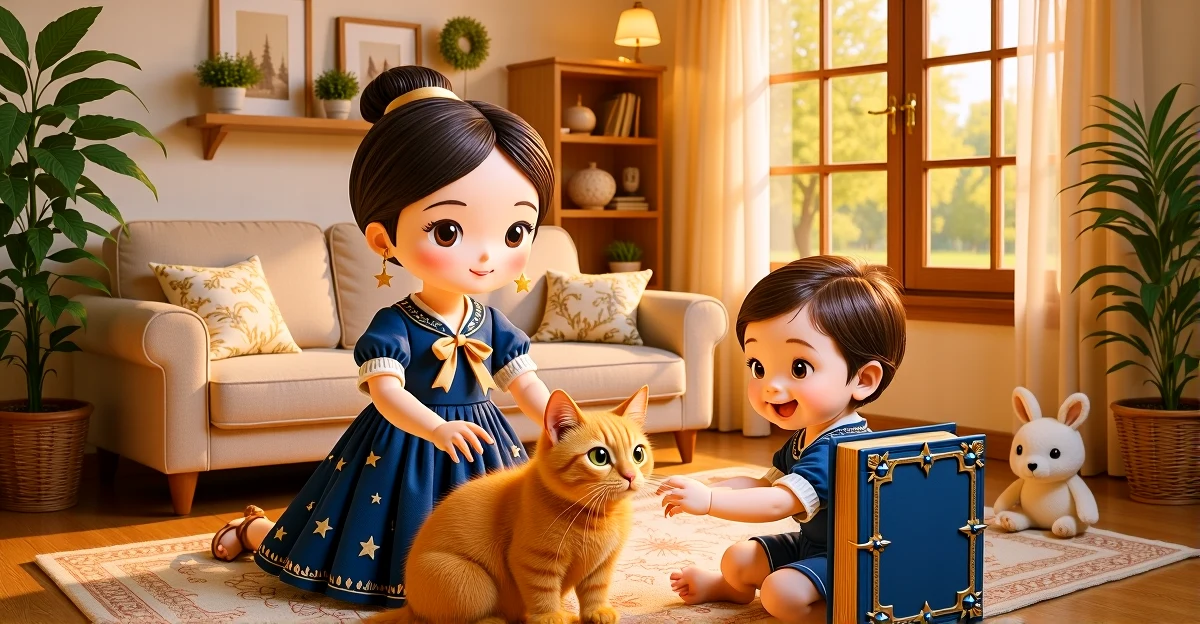

Hello, wonderful parent. I'm Inara, and I want to talk with you about something I see so many parents experiencing - those moments when your little one plays a bit too rough, when gentle touch seems like a mystery they haven't quite solved yet.
If you're reading this because your child sometimes plays rough with friends, pets, or even you, I want you to know something IMPORTANT - you are not alone, and your child is not being mean or difficult. What you're seeing is actually a beautiful, completely normal part of how young children learn about their bodies, their strength, and how to connect with others.
In this guide, we'll explore what's really happening in your child's developing brain, why rough play is a natural part of growth, and gentle strategies that actually work to help your child develop empathy and impulse control. Together, we'll discover how to support your child's journey toward gentle, caring interactions.
What's Really Happening in Your Child's Brain
Between ages three and four, children are navigating one of the most fascinating developmental phases. Their motor skills are growing rapidly - they can run, jump, climb, and use their hands in ways they couldn't just months ago. But here's the thing - their impulse control, their ability to pause and think before acting, is still developing. It's like they have a powerful engine but the brakes are still being installed.
Research from the American Academy of Pediatrics shows us that young children are transitioning from uncontrollable emotional responses to using words for self-expression, but this process takes time and patient support. Dr. Christina Low Kapalu, a pediatric psychologist at Children's Mercy Hospital, explains it beautifully:
It is very typical for a child who is 2 or 3 years old to start hitting or biting to express frustration or to get something they want. Toddlers have more motor control than infants, but don't yet have a lot of language to communicate what they need or want.
— Dr. Christina Low Kapalu, Pediatric Psychologist
So when your child plays rough, they're not trying to hurt anyone. They're exploring, testing, learning. They're discovering what their bodies can do, and they haven't yet developed the empathy skills to fully understand how their actions affect others. This is development, not defiance.
Why This Feels So Challenging
I know this can be difficult. When your child accidentally hurts a friend or plays too roughly with a beloved pet, it can feel worrying. You might wonder if you're doing something wrong, or if your child will always struggle with gentleness. Let me ease your heart - with your warm, patient guidance, your child will learn.
The National Association for the Education of Young Children emphasizes that children who receive warm, consistent guidance develop the ability to recognize and manage their own emotions, understand others' feelings, and express wishes clearly. Gentle touch and empathy are skills that develop through consistent modeling, patient coaching, and celebrating small successes.
The Development Timeline
Understanding the typical timeline can help you set realistic expectations:
- Ages 2-3: Children begin to understand cause and effect but struggle with impulse control. Physical expressions of frustration are common and normal.
- Ages 3-4: Language skills are emerging, but children still rely heavily on physical interactions. Empathy is beginning to develop but remains inconsistent.
- Ages 4-5: Impulse control improves significantly. Children can better understand how their actions affect others and can use words more effectively.
- Ages 5+: Most children have developed basic empathy skills and can regulate their physical interactions with increasing consistency.
Your child is exactly where they should be on this journey.
Gentle Strategies That Actually Work
Here's something WONDERFUL that research shows - practicing gentle touch during calm moments, not just when correction is needed, helps children internalize appropriate behaviors much more effectively. Let me share some strategies that can support your child's development:
1. Practice Gentle Touch During Peaceful Times
When you're reading a story together, you might say, "Let's use our gentle hands to turn the pages." When you're petting the family cat, you can demonstrate soft strokes and say, "See how kitty purrs when we use gentle touches? That means she feels safe and happy." When you're playing with stuffed animals or dolls, you can model caring touch and talk about how gentle hands help everyone feel loved.
This proactive approach is SO much more effective than only addressing rough play when it happens. You're building muscle memory and positive associations with gentle touch.
2. Give Your Child Words for Their Experiences
When you see them getting excited during play, you might say, "I can see your body has so much energy right now. Let's find a way to use that energy that keeps everyone safe." Or when they're frustrated, "I can see you're feeling upset. Let's use words to tell your friend what you need."
Language is the bridge between impulse and control. Every time you give your child words for their feelings, you're helping them build that bridge.
3. Model Empathy Through Narration
"When you hugged your friend too tightly, I noticed they said 'ow.' Their face looked uncomfortable. Let's check if they're okay." This helps your child start connecting their actions with how others feel. You're teaching them to read social cues and understand the impact of their behavior.
4. Create Opportunities for Gentle Care
Give your child responsibilities that require gentle touch - watering plants, feeding pets, helping with a younger sibling. These activities provide natural practice in being careful and caring.
5. Celebrate Gentle Moments
When you notice your child using gentle hands, acknowledge it warmly: "I saw how gently you petted the dog just now. That made her feel so safe and loved." Positive reinforcement is powerful - what we celebrate, we see more of.
Stories That Can Help
And here's something that might surprise you - stories can be powerful teachers for gentle touch and empathy. In The Book of Inara, we have beautiful stories that bring these concepts to life for your child:
The Shy Plant's Garden Song
Perfect for: Ages 4-5
What makes it special: Ethan and Maeva discover a lonely plant in a magical singing greenhouse. When they include this shy plant in their care routine with gentle touches and dancing, something WONDERFUL happens - the whole garden creates more beautiful music together.
Key lesson: This story beautifully demonstrates how gentle care and kindness create harmony. When children hear about Ethan and Maeva using gentle touches to help the shy plant feel included, they learn that gentle interactions create positive outcomes for everyone.
How to use it: After reading this story together, you might practice gentle touches by caring for a plant or stuffed animal, helping your child connect the story's lesson to real-life gentle interactions.
The Long-Term View: Building Emotional Intelligence
Remember, your child is learning that their bodies are powerful, and with that power comes the responsibility to use it gently. This is a lesson that unfolds over time, through hundreds of small moments of guidance, modeling, and practice.
Research demonstrates that children whose caregivers respond with patience and model gentle interactions develop stronger impulse control, greater empathy, and more positive peer relationships over time. You're not just teaching your child how to play gently - you're helping them develop emotional intelligence that will serve them throughout their entire life.
Every time you demonstrate gentle touch, every time you help them find words for their feelings, every time you celebrate their gentle moments, you're building the foundation for a kind, empathetic person. This work matters SO much.
You're Doing Beautifully
So when your child plays too rough, take a breath. Remember that this is normal development. Gently redirect, model the behavior you want to see, and trust that with your loving guidance, your child is learning.
The journey from rough play to gentle touch is not a straight line - there will be good days and challenging days. But with your patience, your modeling, and your warm encouragement, your child is developing the empathy and impulse control that will help them build beautiful relationships throughout their life.
The Magic Book and I believe in you, and we believe in your child's beautiful, unfolding journey. You're doing WONDERFUL work, even on the days when it doesn't feel that way.
With love and starlight,
Inara
Related Articles
- Teaching Your Preschooler to Celebrate Others' Success: A Gentle Guide
- When Your 3-4 Year Old Doesn't Notice Others' Feelings: Understanding Empathy Development
- How Young Children Learn Empathy and Kindness: A Gentle Guide for Parents
- Teaching Gentle Touch: Understanding Your Child's Tight Hugs (Ages 3-4)
Show transcript
Hello, wonderful parent. I'm Inara, and I want to talk with you today about something I see so many parents experiencing - those moments when your little one plays a bit too rough, when gentle touch seems like a mystery they haven't quite solved yet.
If you're watching this because your child sometimes plays rough with friends, pets, or even you, I want you to know something IMPORTANT - you are not alone, and your child is not being mean or difficult. What you're seeing is actually a beautiful, completely normal part of how young children learn about their bodies, their strength, and how to connect with others.
Let me share what's really happening in your child's developing brain during these preschool years.
Between ages three and four, children are navigating one of the most fascinating developmental phases. Their motor skills are growing rapidly - they can run, jump, climb, and use their hands in ways they couldn't just months ago. But here's the thing - their impulse control, their ability to pause and think before acting, is still developing. It's like they have a powerful engine but the brakes are still being installed.
Research from the American Academy of Pediatrics shows us that young children are transitioning from uncontrollable emotional responses to using words for self-expression, but this process takes time and patient support. Dr. Christina Low Kapalu, a pediatric psychologist at Children's Mercy Hospital, explains it beautifully. She says it's very typical for children ages two to three to express frustration physically because toddlers have more motor control than infants, but don't yet have a lot of language to communicate what they need or want.
So when your child plays rough, they're not trying to hurt anyone. They're exploring, testing, learning. They're discovering what their bodies can do, and they haven't yet developed the empathy skills to fully understand how their actions affect others. This is development, not defiance.
Now, I know this can be challenging. When your child accidentally hurts a friend or plays too roughly with a beloved pet, it can feel worrying. You might wonder if you're doing something wrong, or if your child will always struggle with gentleness. Let me ease your heart - with your warm, patient guidance, your child will learn. Gentle touch and empathy are skills that develop through consistent modeling, patient coaching, and celebrating small successes.
The National Association for the Education of Young Children emphasizes that children who receive warm, consistent guidance develop the ability to recognize and manage their own emotions, understand others' feelings, and express wishes clearly. And here's something WONDERFUL that research shows - practicing gentle touch during calm moments, not just when correction is needed, helps children internalize appropriate behaviors much more effectively.
So what can you do to support your child's journey toward gentle play?
First, practice gentle touch together during peaceful times. When you're reading a story together, you might say, "Let's use our gentle hands to turn the pages." When you're petting the family cat, you can demonstrate soft strokes and say, "See how kitty purrs when we use gentle touches? That means she feels safe and happy." When you're playing with stuffed animals or dolls, you can model caring touch and talk about how gentle hands help everyone feel loved.
Second, give your child words for what they're experiencing. When you see them getting excited during play, you might say, "I can see your body has so much energy right now. Let's find a way to use that energy that keeps everyone safe." Or when they're frustrated, "I can see you're feeling upset. Let's use words to tell your friend what you need."
Third, model empathy by narrating what you observe. "When you hugged your friend too tightly, I noticed they said 'ow.' Their face looked uncomfortable. Let's check if they're okay." This helps your child start connecting their actions with how others feel.
And here's something that might surprise you - stories can be powerful teachers for gentle touch and empathy. In the Magic Book, there's a story called "The Shy Plant's Garden Song" where two friends, Ethan and Maeva, discover a lonely plant in a magical singing greenhouse. When they include this shy plant in their care routine with gentle touches and dancing, something WONDERFUL happens - the whole garden creates more beautiful music together.
This story beautifully demonstrates how gentle care and kindness create harmony. When children hear about Ethan and Maeva using gentle touches to help the shy plant feel included, they learn that gentle interactions create positive outcomes for everyone. After reading this story together, you might practice gentle touches by caring for a plant or stuffed animal, helping your child connect the story's lesson to real-life gentle interactions.
Remember, your child is learning that their bodies are powerful, and with that power comes the responsibility to use it gently. This is a lesson that unfolds over time, through hundreds of small moments of guidance, modeling, and practice.
Research demonstrates that children whose caregivers respond with patience and model gentle interactions develop stronger impulse control, greater empathy, and more positive peer relationships over time. You're not just teaching your child how to play gently - you're helping them develop emotional intelligence that will serve them throughout their entire life.
So when your child plays too rough, take a breath. Remember that this is normal development. Gently redirect, model the behavior you want to see, and trust that with your loving guidance, your child is learning. Every time you demonstrate gentle touch, every time you help them find words for their feelings, every time you celebrate their gentle moments, you're building the foundation for a kind, empathetic person.
The Magic Book and I believe in you, and we believe in your child's beautiful, unfolding journey. You're doing WONDERFUL work, even on the days when it doesn't feel that way.
With love and starlight, I'm Inara, and I'm always here to support you and your little one.