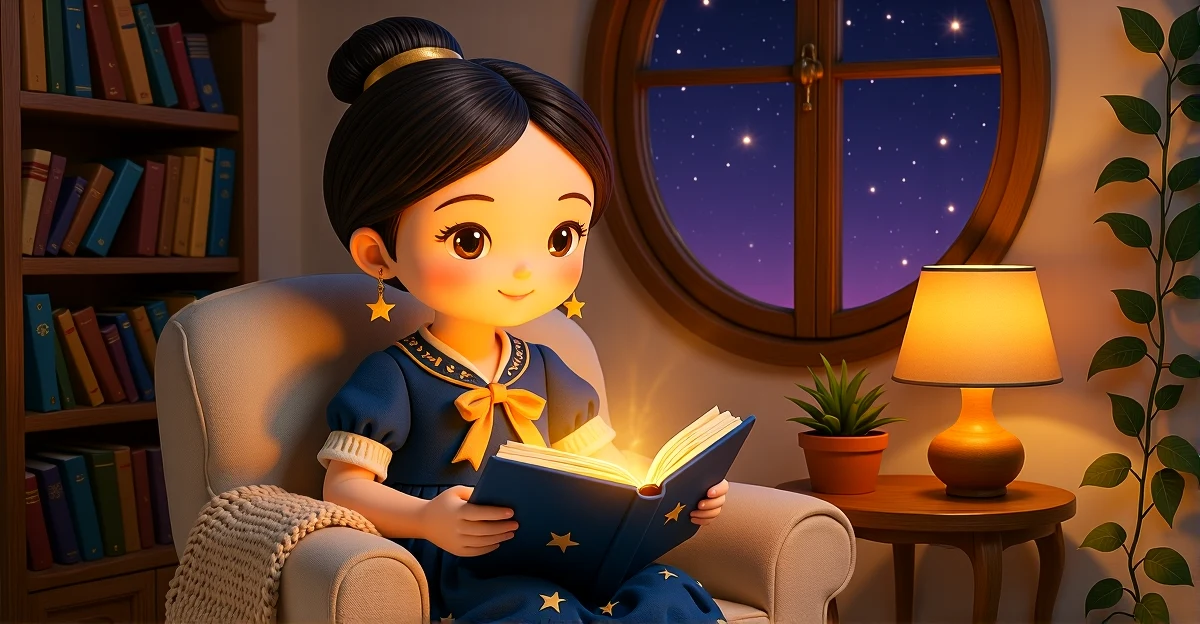

Hello, wonderful parent! It's me, Inara, and I want to start by saying something really important: if your toddler has started hitting or biting other children when they get upset, you are not a bad parent. Your child is not a bad child. What's happening is actually a completely normal part of development, and there is SO much we can do to help.
I know how it feels. That moment when your little one lashes out at another child, and suddenly all eyes are on you. The embarrassment, the worry, the questions that flood your mind: "What did I do wrong? Why is my child doing this? Will they always be like this?" The Magic Book and I have been hearing these concerns from parents for thousands of years, and here's what I want you to know: you're not alone, and this is temporary.
In this guide, we're going to explore the developmental truth behind why toddlers hit and bite, what the research really says, and gentle strategies that actually work. We'll also discover a beautiful story that can help your child learn empathy and repair. Let's dive in together.
The Developmental Truth: Why Toddlers Hit and Bite
Here's something the Magic Book taught me that changed everything: when your toddler hits or bites, they're not trying to be difficult. They're not trying to hurt anyone. What they're actually doing is communicating the only way their developing brain knows how in that moment.
Think about it this way. Your two or three year old is experiencing feelings that are ENORMOUS. Frustration when a friend takes their toy. Anger when they can't have what they want. Disappointment when playtime ends. Overwhelm when there's too much noise or too many people. These feelings are real, they're valid, and they're intense.
But here's the challenge: their words are still so small. Their language skills are just beginning to bloom like little flowers in spring. They might know fifty words, maybe a hundred, but they don't yet have the vocabulary to say, "I'm feeling frustrated right now because I was playing with that toy and I wasn't finished yet." That's a complex sentence that requires language development, emotional awareness, and impulse control all working together.
And impulse control? That's still growing in their beautiful little brain. The prefrontal cortex, the part of the brain responsible for stopping and thinking before acting, is still under construction. It won't be fully developed until they're in their mid-twenties! Right now, at age two or three, it's like a tiny seedling that needs years of patient tending to grow strong.
What the Research Shows
The American Academy of Pediatrics tells us something really important. They say that young children have little natural self-control. They need us to teach them, with patience and love, how to express their anger peacefully instead of using their bodies. And here's the beautiful part: they CAN learn this. With your gentle guidance, they absolutely can.
"Young children have little natural self-control. They need you to teach them not to kick, hit, or bite when they are angry, but instead to express their feelings through words."
— American Academy of Pediatrics
Research from Zero to Three, an organization that studies early childhood development, shows us that some hitting and biting is completely normal for toddlers. It's not a sign that something is wrong. It's actually a sign that your child is in a critical learning phase. They're learning about impulse control, about emotional regulation, about how to navigate big feelings in a world that sometimes feels overwhelming.
This is hard work for a little person. They need your compassion and your teaching.
Your Child's Brain: A Garden Still Being Planted
I want you to imagine something with me for a moment. Picture your child's brain like a beautiful garden that's still being planted. The seeds of self-control are there. The seeds of empathy are there. The seeds of emotional regulation are there. But they need time to grow. They need sunshine and water and patient tending.
When your child hits or bites, it's like a little sprout trying to push through the soil. It doesn't look like much yet. It might even look messy or concerning. But with your help, with your gentle guidance and patient teaching, it will grow into something WONDERFUL.
The National Association for the Education of Young Children emphasizes that biting and hitting are communication attempts when language skills are still developing. Your child is trying to tell you something. They're trying to say, "I'm overwhelmed," or "I'm frustrated," or "I don't know what to do with these big feelings."
And Children's Mercy Hospital wants you to know something important: "You are not a bad parent" when your child exhibits these behaviors. Understanding the developmental reasons behind hitting and biting helps us respond with compassion instead of frustration. And that compassion, that understanding, changes everything.
Gentle Strategies That Actually Work
So what can we do? How can we help our little ones learn to use their words instead of their hands or their teeth? Let me share some gentle strategies that really work, backed by research and thousands of years of wisdom from the Magic Book.
1. Stay Calm (Your Calm is Their Anchor)
I know this is hard, especially if your child has just hurt another child and you're feeling embarrassed or frustrated. But your calm is their anchor. When you can take a deep breath and respond with patience instead of anger, you're teaching them that feelings can be managed, that we don't have to let our emotions control us. You're modeling the very skill you want them to learn.
Try this: When you see your child about to hit or right after they've hit, take a slow breath. Count to three in your mind. Then respond from a place of calm teaching rather than reactive frustration.
2. Get Down to Their Level and Use Simple Words
Kneel or sit so you're at eye level with your child. Use simple, clear words that their developing brain can understand. You might say something like, "Hitting hurts. We use gentle hands." Keep it short and direct. Their little brains can't process long explanations when they're upset, but they can understand simple truths.
3. Help Them Name the Feeling
This is SO important. You might say, "You felt angry when your friend took your toy. It's okay to feel angry, but it's not okay to hit. Let's use words. You can say, 'I'm angry.'" You're teaching them that feelings are valid, that it's okay to be upset, but that we express those feelings with words, not actions.
You're also building their emotional vocabulary. Every time you name a feeling for them, you're adding a new word to their emotional toolbox. Eventually, they'll be able to name their own feelings before they act on them.
4. Teach Them What TO Do (Not Just What NOT to Do)
This is one of the most powerful strategies. Instead of only saying "Don't hit," show them alternatives. Teach them to:
- Say "Stop" in a firm voice
- Walk away when they're frustrated
- Come get you for help
- Use words like "I'm mad" or "That's mine"
- Take deep breaths when they feel upset
Give them tools they can actually use. Practice these alternatives when everyone is calm, so they're ready when big feelings arise.
5. Praise Them When They Handle Frustration Well
Here's something beautiful: children learn SO much from our positive attention. When you see them using their words, when you see them walking away instead of hitting, celebrate that! Tell them, "You used your words! That was so grown up!" or "You walked away when you felt angry. That took such strength!"
What we pay attention to grows. When we notice and celebrate gentle behavior, we're watering those seeds of self-control and empathy in their beautiful garden-brain.
6. Supervise Play and Intervene Early
During this learning phase, stay close during playdates and group activities. Watch for signs of frustration building: clenched fists, raised voices, tense body language. When you see these early warning signs, you can step in before hitting or biting happens. You might say, "I see you're getting frustrated. Let's take a break together."
7. Model Calm Emotional Expression
Your child is watching you all the time, learning how to be human by watching the humans they love most. When you express your own anger in quiet, peaceful ways, your child learns that this is how we handle big feelings. You might say out loud, "I'm feeling frustrated right now, so I'm going to take some deep breaths," and then model that breathing.
A Story That Can Help: The Candy Jar Apology
Now, let me tell you about a story from The Book of Inara that might help. It's called The Candy Jar Apology, and it's one of my favorites for teaching empathy and repair.
The Candy Jar Apology
Perfect for: Ages 2-3
What makes it special: In this gentle tale, Milo and his Nana visit the corner store for penny candy. When Milo accidentally knocks over Nana's favorite gummy bears, something magical happens. The candy jars, which usually glow with warm light, suddenly dim. And they stay dim until Milo learns something important: that saying sorry, that caring about how our actions affect others, has the power to make everything bright again.
Why it helps with hitting and biting: This story teaches empathy in the most gentle way. It shows children that their actions matter, that they affect the people around them, and that we have the power to repair when we've made a mistake. The story doesn't shame Milo for his accident. It doesn't call him bad or naughty. It simply shows him, with love and magic, that his actions have consequences and that he has the power to make things right.
How to use it: After your child hits or bites, after you've helped them calm down and talked about gentle hands, this story can be a beautiful bridge. You can say, "Remember how Milo said sorry and made the candy jars bright again? Let's go say sorry together and make things better." You're giving them a concrete example of repair, showing them that mistakes can be fixed with empathy and kind words.
You might snuggle up together tonight or tomorrow, when your little one is calm and happy, and read The Candy Jar Apology. Talk about how Milo felt when he knocked over the gummy bears, how Nana felt, and how saying sorry made everything better. You're planting seeds of empathy, of emotional awareness, of the understanding that we can repair our relationships when we've hurt someone.
What the Research Says About Long-Term Outcomes
Here's something that might give you hope: the research is SO clear on this. Children whose parents respond to aggressive behaviors with empathy and teaching, rather than punishment and anger, develop better emotional regulation skills. They learn faster. They feel safer. And that safety, that secure attachment to you, is what allows them to grow and learn and become the kind, empathetic people we know they can be.
Studies show that these behaviors typically decrease as language skills develop and children learn emotional regulation strategies. The key is responding with empathy and patience while setting clear, calm limits and teaching children that their feelings are valid even when their actions need redirection.
You're not just managing behavior in this moment. You're teaching life skills that will serve your child for decades to come. You're teaching them that feelings are manageable, that we can communicate without hurting others, that mistakes can be repaired, and that they are loved even when they're learning and growing.
You're Doing Beautifully
In those moments when your child does hit or bite, remember this: they're not giving you a hard time. They're having a hard time. Their feelings are bigger than their words, and they need your patient teaching to learn how to bridge that gap.
Every time you stay calm, every time you teach instead of punish, every time you help them name their feelings and find their words, you're helping that beautiful garden in their brain grow stronger. You're watering the seeds of empathy, of self-control, of emotional intelligence.
This phase is temporary. With your gentle guidance, your child will learn. They will develop the language skills to express their feelings. They will build the impulse control to stop and think before acting. They will grow into the kind, empathetic person you already see in them.
The Magic Book and I believe in you. We believe in your child. And we're here to help, with stories and wisdom and gentle guidance, every step of the way.
Sweet dreams, wonderful parent. With love and starlight, Inara.
Related Articles
- Understanding Parallel Play: Why Your Toddler Plays Near (Not With) Other Kids
- Understanding Your Energetic Toddler: Why Quiet Play Develops Gradually
- When Your Toddler Hurts Themselves During Big Feelings: Understanding and Gentle Support
- Why Your Toddler Cannot Wait (And How to Gently Help)
- Why Your Toddler Struggles with Gentle Touch (And How to Help)
Show transcript
Hello, wonderful parent! It's me, Inara, and I am so glad you're here today. You know, the Magic Book and I have been hearing from so many parents lately who are struggling with something that feels really hard. Your little one, your precious two or three year old, has started hitting or biting other children when they get upset. And I want you to know something right away—you are not a bad parent. This is not your fault. And your child is not a bad child. What's happening is actually a completely normal part of development, and there is so much we can do to help.
Let me share something the Magic Book taught me that changed everything. When your toddler hits or bites, they're not trying to be difficult. They're not trying to hurt anyone. What they're actually doing is communicating the only way their developing brain knows how in that moment. You see, their feelings are SO big—frustration, anger, disappointment, overwhelm—but their words are still so small. Their language skills are just beginning to bloom, and their impulse control, that ability to stop and think before acting, is still growing in their beautiful little brain.
The American Academy of Pediatrics tells us something really important. They say that young children have little natural self-control. They need us to teach them, with patience and love, how to express their anger peacefully instead of using their bodies. And here's the beautiful part—they CAN learn this. With your gentle guidance, they absolutely can.
Research from organizations like Zero to Three, which studies early childhood development, shows us that some hitting and biting is completely normal for toddlers. It's not a sign that something is wrong. It's actually a sign that your child is in a critical learning phase. They're learning about impulse control, about emotional regulation, about how to navigate big feelings in a world that sometimes feels overwhelming. This is hard work for a little person, and they need your compassion and your teaching.
I want you to imagine something with me for a moment. Picture your child's brain like a beautiful garden that's still being planted. The seeds of self-control are there, the seeds of empathy are there, but they need time to grow. They need sunshine and water and patient tending. When your child hits or bites, it's like a little sprout trying to push through the soil. It doesn't look like much yet, but with your help, it will grow into something WONDERFUL.
So what can we do? How can we help our little ones learn to use their words instead of their hands or their teeth? Let me share some gentle strategies that really work.
First, stay calm. I know this is hard, especially if your child has just hurt another child and you're feeling embarrassed or frustrated. But your calm is their anchor. When you can take a deep breath and respond with patience instead of anger, you're teaching them that feelings can be managed, that we don't have to let our emotions control us. You're modeling the very skill you want them to learn.
Second, get down to their level and use simple, clear words. You might say something like, "Hitting hurts. We use gentle hands." Keep it short and direct. Their little brains can't process long explanations when they're upset, but they can understand simple truths.
Third, help them name the feeling. You might say, "You felt angry when your friend took your toy. It's okay to feel angry, but it's not okay to hit. Let's use words. You can say, I'm angry." You're teaching them that feelings are valid, that it's okay to be upset, but that we express those feelings with words, not actions.
Fourth, teach them what TO do, not just what NOT to do. This is so important. Instead of only saying "Don't hit," show them alternatives. Teach them to say "Stop" in a firm voice. Teach them to walk away when they're frustrated. Teach them to come get you for help. Give them tools they can actually use.
And here's something beautiful—praise them when they handle frustration well. When you see them using their words, when you see them walking away instead of hitting, celebrate that! Tell them, "You used your words! That was so grown up!" Children learn so much from our positive attention.
Now, let me tell you about a story that might help. In The Book of Inara, we have a gentle tale called The Candy Jar Apology. It's about Milo and his Nana visiting a corner store for penny candy. When Milo accidentally knocks over Nana's favorite gummy bears, something magical happens. The candy jars, which usually glow with warm light, suddenly dim. And they stay dim until Milo learns something important—that saying sorry, that caring about how our actions affect others, has the power to make everything bright again.
This story is so special because it teaches empathy in the most gentle way. It shows children that their actions matter, that they affect the people around them, and that we have the power to repair when we've made a mistake. After your child hits or bites, after you've helped them calm down and talked about gentle hands, this story can be a beautiful bridge. You can say, "Remember how Milo said sorry and made the candy jars bright again? Let's go say sorry together and make things better."
The story doesn't shame Milo for his mistake. It doesn't call him bad or naughty. It simply shows him, with love and magic, that his actions have consequences and that he has the power to make things right. That's exactly the message we want our children to receive.
You know, the research is so clear on this. Children whose parents respond to aggressive behaviors with empathy and teaching, rather than punishment and anger, develop better emotional regulation skills. They learn faster. They feel safer. And that safety, that secure attachment to you, is what allows them to grow and learn and become the kind, empathetic people we know they can be.
Children's Mercy Hospital wants you to know something important. They say, "You are not a bad parent" when your child exhibits these behaviors. Understanding the developmental reasons behind hitting and biting helps us respond with compassion instead of frustration. And that compassion, that understanding, changes everything.
So tonight, or tomorrow, when your little one is calm and happy, you might snuggle up together and read The Candy Jar Apology. You might talk about how Milo felt when he knocked over the gummy bears, how Nana felt, and how saying sorry made everything better. You're planting seeds of empathy, of emotional awareness, of the understanding that we can repair our relationships when we've hurt someone.
And in those moments when your child does hit or bite, remember this. They're not giving you a hard time. They're having a hard time. Their feelings are bigger than their words, and they need your patient teaching to learn how to bridge that gap. You're doing beautifully, even when it doesn't feel like it. Every time you stay calm, every time you teach instead of punish, every time you help them name their feelings and find their words, you're helping that beautiful garden in their brain grow stronger.
The Magic Book and I believe in you. We believe in your child. And we're here to help, with stories and wisdom and gentle guidance, every step of the way.
Sweet dreams, wonderful parent. With love and starlight, Inara.