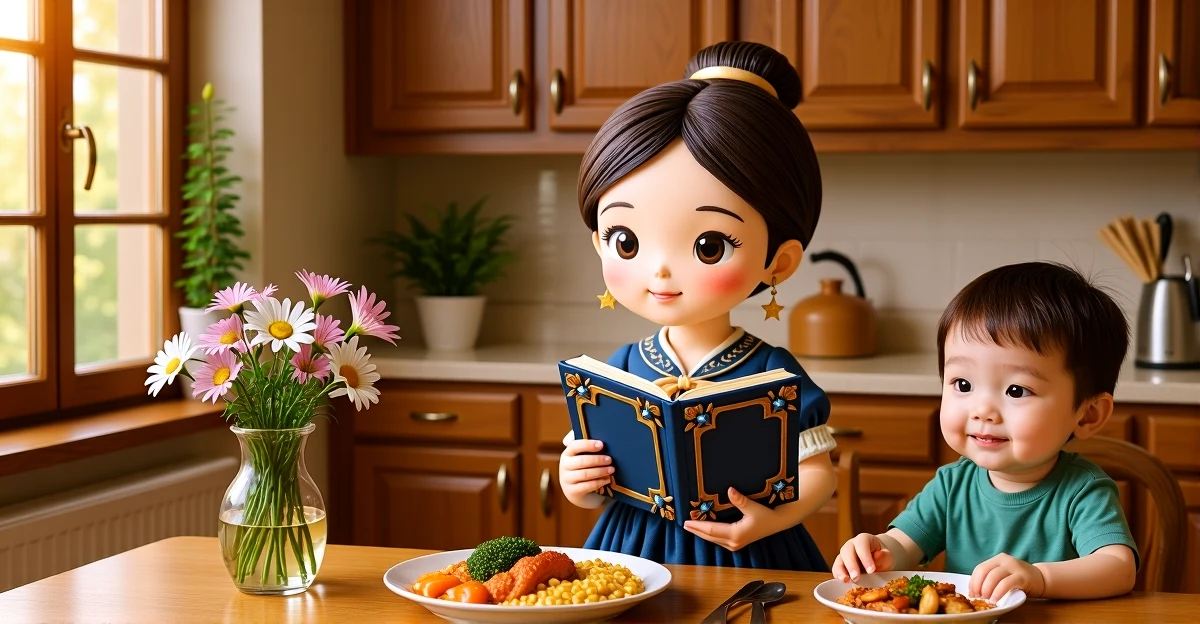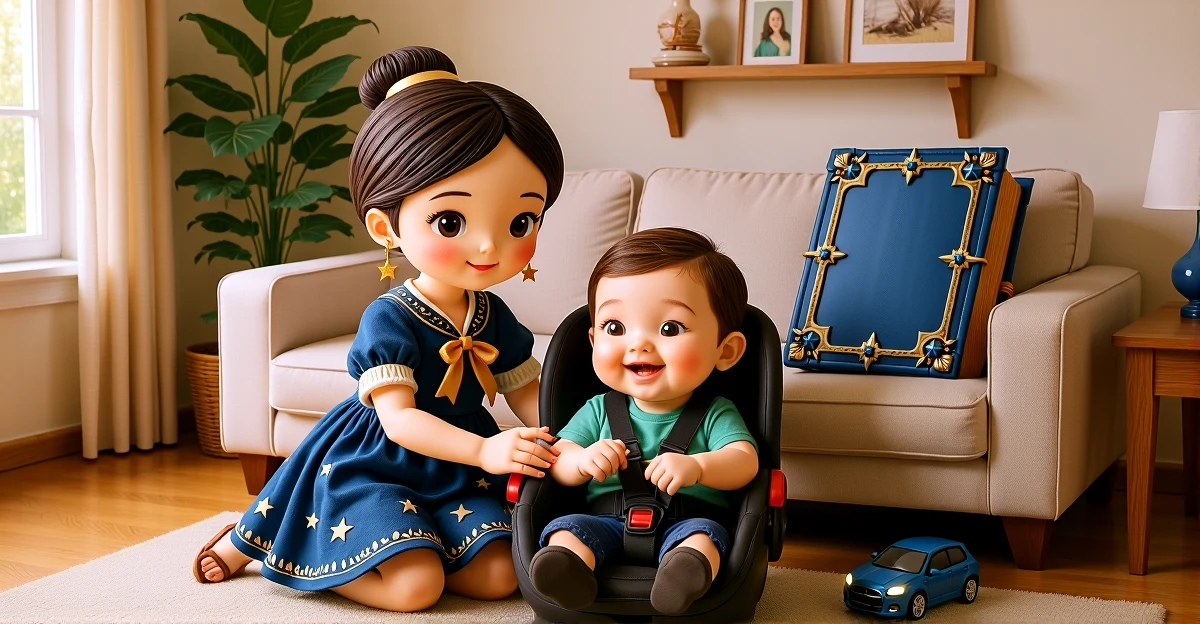

You are running late for daycare. Your toddler is happily playing with blocks. You announce it is time to go, and suddenly your sweet child transforms into an arching, twisting, screaming bundle of resistance. The car seat that should take thirty seconds to buckle becomes a fifteen-minute battle. You feel your patience wearing thin. You wonder if you are doing something wrong. You wonder if other parents deal with this. And you wonder if it will ever get easier.
Let me tell you something important right from the start. You are not alone in this, and you are doing beautifully. The Magic Book and I have been hearing from SO many parents experiencing this exact challenge. And here is what is truly wonderful. When your toddler fights the car seat, they are not being difficult or defiant. They are showing you something AMAZING. They are discovering their independence.
In this post, we will explore why car seat resistance happens, what child development research tells us about this phase, and three gentle strategies that actually work. Plus, I will share a beautiful story from the Magic Book that helps children understand cooperation in a way that feels natural and loving.
Understanding the Real Reason Behind Car Seat Resistance
When you see your two or three-year-old arching their back and fighting the car seat straps, what you are really witnessing is their brain doing exactly what it is supposed to do at this age. Research from child development experts, including the American Academy of Pediatrics, shows us that toddlers aged two to three are in a critical phase of autonomy development. Their brains are literally wired to test boundaries and assert themselves.
Think about it from their perspective for just a moment. They are playing happily, fully engaged in their world, and suddenly they are being strapped into a seat where they cannot move freely. Their brain has not fully developed the ability to understand time or delayed gratification yet, so they cannot really grasp that this uncomfortable moment leads to something fun later. All they know is that right now, in this moment, they want freedom.
Child development specialist Khalid Lerner explains this beautifully. He notes that the early years are all about autonomy and personal mastery. When children feel controlled by our constant demands, this causes friction with their natural developmental drive. So when you see your child resisting the car seat, what you are really seeing is their brain learning to say, I am my own person with my own ideas.
And here is what is magical about understanding this. Once you realize that car seat resistance is not defiance but healthy development, everything shifts. You can approach this challenge with empathy instead of frustration. You can work WITH your child's developmental stage instead of against it.
What Research Says About Toddler Cooperation
The research on toddler cooperation is SO encouraging. Studies show that when toddlers feel they have some control within safe boundaries, cooperation naturally increases. This is not about giving in or letting your child make unsafe choices. It is about honoring their growing need for independence while maintaining non-negotiable safety requirements.
Being consistent with car safety seat use is good parenting, reduces fussing and complaints, and is safest for your child.
— American Academy of Pediatrics
This insight is powerful. When children experience predictable expectations, they actually show less resistance over time. Your consistency is not just keeping them safe. It is teaching them that car seats are simply part of how we travel, just like shoes are part of how we go outside.
Research also shows that parents who approach car seat time with empathy and understanding of their child's developmental needs create more positive associations with this necessary routine. The key is balancing your toddler's growing need for independence with non-negotiable safety practices, transforming potential power struggles into opportunities for connection and skill-building.
Experts agree that offering toddlers two acceptable choices gives them a sense of control while maintaining safety boundaries. This approach respects the child's developmental stage while ensuring compliance with critical safety requirements. When we understand that resistance stems from healthy autonomy-seeking rather than defiance, we can respond with patience and strategies that honor both the child's developmental needs and safety imperatives.
Three Gentle Strategies That Actually Work
Now that we understand the why, let us talk about what actually helps. The Magic Book has shown me three gentle strategies that honor your child's growing independence while keeping them safe.
Strategy 1: Offer Two Acceptable Choices
This is SO powerful. Instead of asking, Do you want to get in your car seat, which gives them the option to say no, try this approach. Would you like to climb in yourself, or would you like me to help you? Both options lead to the same safe outcome, but your child gets to feel that sense of control they are craving.
You can also offer choices about other aspects of the routine. Would you like to bring your stuffed bear or your toy car? Would you like to sing the ABC song or count to ten while we buckle? These small choices make a BIG difference in how cooperative your child feels.
Research shows that when toddlers feel they have some control within safe boundaries, cooperation naturally increases. You are not giving up your authority. You are working WITH their developmental stage.
Strategy 2: Make It Playful
Your child's brain is wired for play, and play bypasses resistance. When you add an element of fun to car seat time, you are working with their natural learning style instead of against it.
Try saying things like, I wonder if you can buckle faster than the tickle monster, or Let us see if we can get buckled before this song ends. You might pretend the car seat is a spaceship and they are an astronaut preparing for launch. You might make silly sounds as you click each buckle. Swish, swoosh, click.
When car seat time becomes associated with connection and fun rather than just restriction, resistance naturally decreases. You are creating positive neural pathways that say, Car seat time can be enjoyable.
Strategy 3: Validate Their Feelings While Holding the Boundary
This is where the magic really happens. You can acknowledge your child's emotions while maintaining the non-negotiable safety requirement. It sounds like this.
I know you do not want to get in your car seat right now. You are having so much fun playing. AND we need to keep you safe in the car. It is okay to feel frustrated about that.
This approach, which experts call positive language, does something beautiful. It shows your child that their feelings are valid even when the answer is still no. It teaches them that you can be both loving and firm. It demonstrates that safety and empathy can coexist.
When you validate feelings while holding boundaries, you are teaching your child emotional regulation. You are showing them that big feelings are okay, that you can handle their emotions, and that some things are non-negotiable because we love them.
Creating Positive Car Seat Rituals
Here is one more practical tip that parents tell me works wonders. Create a special car seat ritual. Maybe it is a specific song you sing together, or a special stuffed friend who only comes out for car rides, or a game where you count things you see out the window.
When car seat time has its own special ritual, it becomes something your child can anticipate rather than resist. The predictability is comforting. The special elements make it feel less like a restriction and more like a meaningful part of your day together.
Some families do a special handshake before buckling. Some families have a car seat buddy who goes on every adventure. Some families play I Spy while buckling up. Find what resonates with your child and make it YOUR thing.
Stories That Can Help
In The Book of Inara, we have beautiful stories that bring these concepts to life for your child. Stories help children internalize lessons in a way that feels natural and loving, not like a lecture.
The Candy Jar Apology
Perfect for: Ages 2-3
What makes it special: This story is about Milo and Nana visiting the corner store for penny candy. When Milo accidentally knocks over Nana's favorite gummy bears, the magical candy jars dim until he learns that saying sorry and being gentle can make everything bright again. This story beautifully models the cooperation and gentle connection we practice during car seat time.
Key lesson: When Milo learns to be gentle and work together with Nana, everything becomes magical again. Children see that cooperation and kindness create positive results.
How to use it: After reading this story with your child, you can create a gentle connection. You might say, Remember how Milo learned to be gentle and cooperative with Nana? That is just like how we practice being cooperative during car seat time. We are being gentle and safe together.
You Are Doing Beautifully
Please, be gentle with yourself on the hard days. Some days, despite your best efforts, your child will still resist. Some days you will be tired and your patience will be thin. That is okay. You are human, and parenting is the hardest, most beautiful work in the universe.
Your child is learning from you every single day. They are learning that safety matters. They are learning that their feelings are valid even when the answer is still no. They are learning that you can be both loving and firm. And they are learning that cooperation feels better than conflict. These are lessons that will serve them for their entire lives.
So the next time car seat time feels like a battle, take a deep breath. Remember that your child is not giving you a hard time, they are having a hard time. Offer those two choices. Add a sprinkle of playfulness. Validate their feelings. Stay consistent. And know that this phase, like all phases, will pass.
The Magic Book and I see you, and we want you to know that you are doing SO much better than you think you are. You are exactly the parent your child needs.
With love and starlight, Inara
Related Articles
- Understanding Your Child's Growing Independence: Why Clothing Battles Are Actually Healthy Development
- Why Toddlers Pull Away in Parking Lots (And How to Keep Them Safe)
- Why Your Toddler Resists Cleanup (And How to Make It Joyful)
- When Your Toddler Wanders Off in Public: Understanding and Gentle Strategies
Show transcript
Hello, wonderful parent! It's me, Inara, and I am so happy you're here today. You know, the Magic Book and I have been hearing from so many parents who are experiencing something that might sound familiar. Car seat time has become a daily struggle. Your little one arches their back, fights the straps, and turns what should be a simple routine into an exhausting battle. And I want you to know something really important right from the start. You are not alone in this, and you are doing beautifully.
Let me share something the Magic Book taught me that completely changed how I understand this challenge. When your toddler fights the car seat, they're not being difficult or defiant. They're actually showing you something WONDERFUL. They're discovering their independence. They're learning that they're a separate person with their own ideas and preferences. And while this can feel frustrating in the moment, it's actually a sign of healthy development.
Research from child development experts, including the American Academy of Pediatrics, shows us that toddlers aged two to three are in a critical phase of autonomy development. Their brains are literally wired to test boundaries and assert themselves. Child development specialist Khalid Lerner explains it beautifully. He says that the early years are all about autonomy and personal mastery. When children feel controlled by our constant demands, this causes friction with their natural developmental drive. So when you see your child resisting the car seat, what you're really seeing is their brain doing exactly what it's supposed to do at this age.
Now, I know that understanding the why doesn't make it easier when you're running late and your toddler is arching their back for the third time this morning. So let's talk about what actually helps. The Magic Book has shown me three gentle strategies that honor your child's growing independence while keeping them safe.
First, offer two acceptable choices. This is SO powerful. Instead of saying, do you want to get in your car seat, which gives them the option to say no, try this. Would you like to climb in yourself, or would you like me to help you? Both options lead to the same safe outcome, but your child gets to feel that sense of control they're craving. Research shows that when toddlers feel they have some control within safe boundaries, cooperation naturally increases.
Second, make it playful. Your child's brain is wired for play, and play bypasses resistance. You might say, I wonder if you can buckle faster than the tickle monster, or let's see if we can get buckled before this song ends. When you add an element of fun, you're working WITH their developmental stage instead of against it.
Third, validate their feelings while holding the boundary. You can say something like, I know you don't want to get in your car seat right now. You're having so much fun playing. AND we need to keep you safe in the car. It's okay to feel frustrated about that. This approach, which experts call positive language, acknowledges your child's emotions while maintaining the non-negotiable safety requirement.
The American Academy of Pediatrics emphasizes that being consistent with car safety seat use is good parenting, reduces fussing and complaints, and is safest for your child. When children experience predictable expectations, they actually show less resistance over time. So even when it feels hard, know that your consistency is teaching your child that car seats are simply part of how we travel safely.
Now, let me tell you about a story from the Magic Book that shows this cooperation and gentle connection so beautifully. It's called The Candy Jar Apology, and it's about Milo and Nana visiting the corner store for penny candy. When Milo accidentally knocks over Nana's favorite gummy bears, the magical candy jars dim until he learns that saying sorry and being gentle can make everything bright again.
This story is SPECIAL because it shows children that cooperation and kindness create positive results. When Milo learns to be gentle and work together with Nana, everything becomes magical again. After you read this story with your child, you can create a gentle connection. You might say, remember how Milo learned to be gentle and cooperative with Nana? That's just like how we practice being cooperative during car seat time. We're being gentle and safe together.
Stories like this one help children internalize these lessons in a way that feels natural and loving, not like a lecture. The Magic Book knows that children learn best through connection and story, not through power struggles.
I also want to share something that might shift your perspective even more. When your child resists the car seat, they're communicating something important. They're saying, I want to feel like I have some say in what happens to my body. And that's actually a HEALTHY message. We want our children to develop body autonomy and the ability to express their preferences. The key is helping them learn that safety is non-negotiable while still honoring their growing sense of self.
Think about it from their perspective for just a moment. They're playing happily, fully engaged in their world, and suddenly they're being strapped into a seat where they can't move freely. Their brain hasn't fully developed the ability to understand time or delayed gratification yet, so they can't really grasp that this uncomfortable moment leads to something fun later. All they know is that right now, in this moment, they want freedom. When you see it through their eyes, their resistance makes perfect sense.
This is where your calm, consistent presence becomes their anchor. When you can stay regulated even when they're dysregulated, you're teaching them something profound. You're showing them that big feelings are okay, that you can handle their emotions, and that safety and love can coexist with boundaries.
The research is so clear on this. Parents who approach car seat time with empathy and understanding of their child's developmental needs create more positive associations with this necessary routine. The key is balancing your toddler's growing need for independence with non-negotiable safety practices, transforming potential power struggles into opportunities for connection and skill-building.
Let me give you one more practical tip that parents tell me works wonders. Create a special car seat ritual. Maybe it's a specific song you sing together, or a special stuffed friend who only comes out for car rides, or a game where you count things you see out the window. When car seat time becomes associated with connection and fun rather than just restriction, resistance naturally decreases.
And please, be gentle with yourself on the hard days. Some days, despite your best efforts, your child will still resist. Some days you'll be tired and your patience will be thin. That's okay. You're human, and parenting is the hardest, most beautiful work in the universe. The Magic Book and I see you, and we want you to know that you're doing SO much better than you think you are.
Your child is learning from you every single day. They're learning that safety matters. They're learning that their feelings are valid even when the answer is still no. They're learning that you can be both loving and firm. And they're learning that cooperation feels better than conflict. These are lessons that will serve them for their entire lives.
So the next time car seat time feels like a battle, take a deep breath. Remember that your child isn't giving you a hard time, they're having a hard time. Offer those two choices. Add a sprinkle of playfulness. Validate their feelings. Stay consistent. And know that this phase, like all phases, will pass.
The Book of Inara has so many stories that support cooperation, gentle transitions, and emotional regulation. Stories like The Candy Jar Apology are there whenever you need them, ready to help your child understand these big concepts through the magic of narrative.
Thank you for being here, for caring so deeply about your child's development, and for seeking gentle solutions. You are exactly the parent your child needs. With love and starlight, Inara.