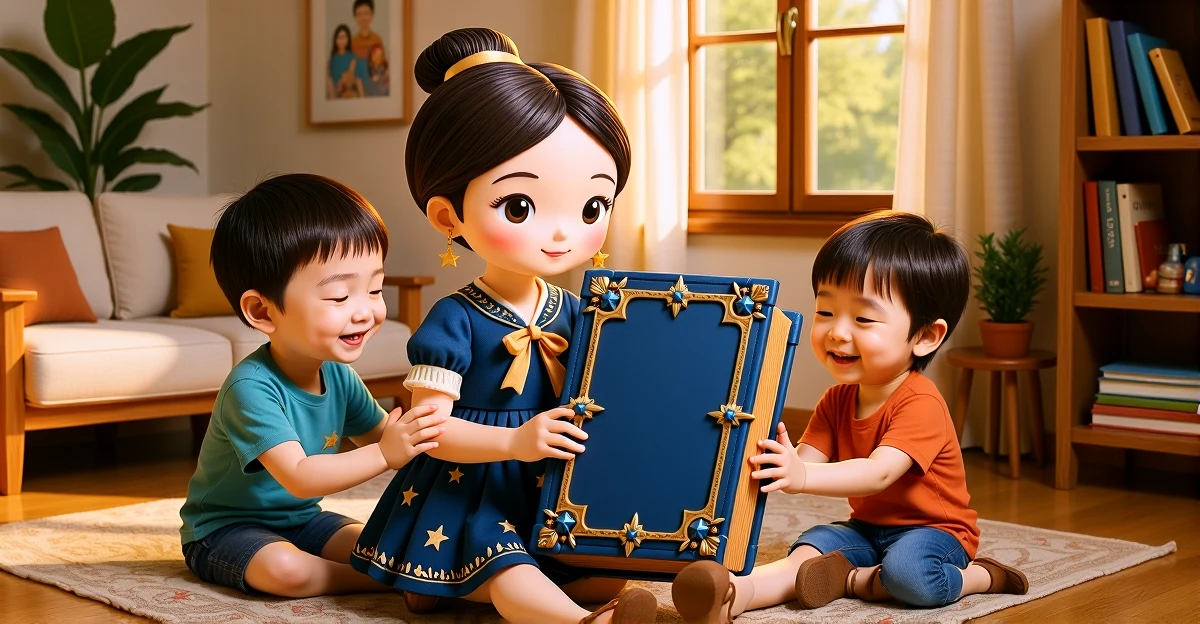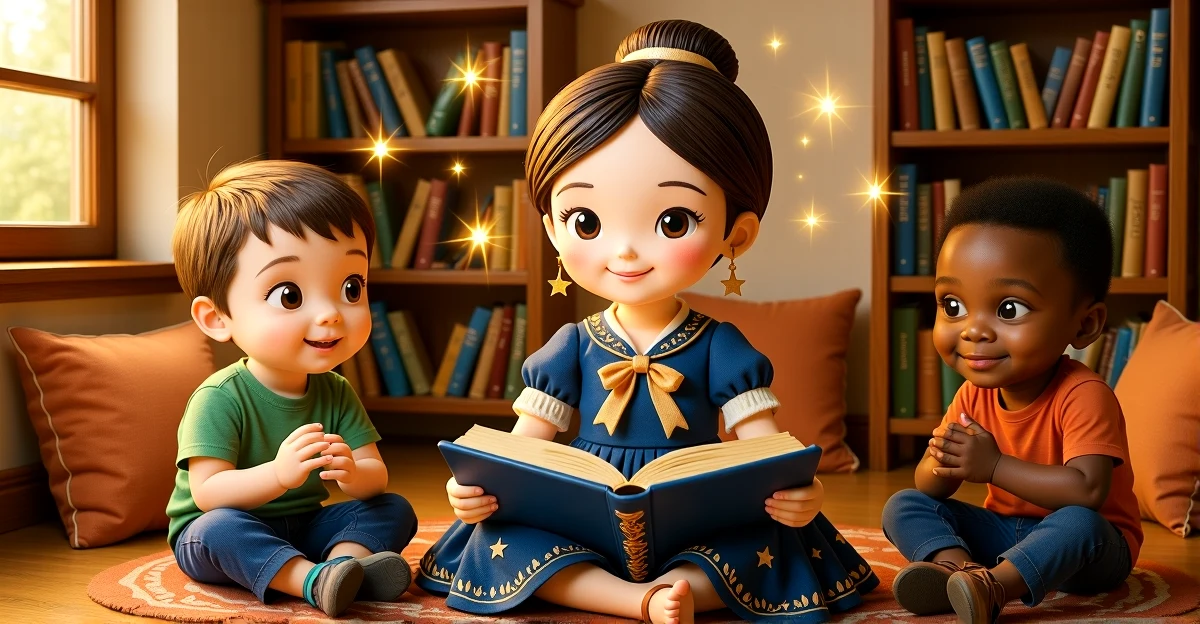

Hello, wonderful parent! It's me, Inara, and I want to start by saying something really important. If you're hearing "that's not fair" ten times before breakfast, if your children are constantly arguing over who got the bigger piece or who got more time or who got to go first, you are not alone. Your heart might be tired, and you might be wondering if your children will ever learn to get along. I see you, and I want to wrap you in the warmest cosmic hug right now.
Here's something WONDERFUL that the Magic Book taught me. When your children ages four and five are fighting over fairness, they're not being difficult. They're actually in one of the most important learning phases of their entire lives. Their brains are actively constructing their understanding of equity, justice, and cooperation. Every single argument about fairness is their mind working hard to figure out how the world works.
In this post, we're going to explore why sibling conflicts about fairness are actually a beautiful sign of healthy development, what research tells us about this critical learning phase, and most importantly, gentle strategies you can use right now to guide your children toward cooperation and empathy. Plus, I'll share a beautiful story from The Book of Inara that teaches the joy of sharing in the most magical way.
Why Fairness Becomes SO Important at Ages 4-5
Let me share something that might shift how you see these daily conflicts. Children ages four and five are in a critical developmental phase where they're actively building their understanding of fairness and equity. This isn't just about wanting the bigger cookie. It's about their developing sense of justice, their growing awareness of themselves as individuals with needs and wants, and their emerging ability to understand that other people have perspectives too.
What feels unfair to one child might seem perfectly reasonable to another at this age, because they're each developing their own sense of equity through their experiences. And here's what's beautiful about this. Every argument, every "that's not fair," every conflict over turns and portions is actually their brain doing exactly what it's supposed to be doing. They're learning.
The Developmental Magic Happening Right Now
At ages four and five, your children are experiencing incredible cognitive growth. They're developing what researchers call "theory of mind," which is the ability to understand that other people have thoughts, feelings, and perspectives different from their own. This is HUGE. It's the foundation for empathy, cooperation, and all healthy relationships throughout life.
But here's the thing. This skill is still developing. So while your four-year-old might understand that their sibling wants the red cup too, they're still learning how to balance that understanding with their own strong desire for the red cup. The conflict isn't a failure. It's practice. It's their brain building the neural pathways they'll use for the rest of their lives to navigate relationships, negotiate needs, and cooperate with others.
What Research Shows About Sibling Conflict and Fairness
The Magic Book and I have been exploring what child development experts know about sibling relationships, and what we've discovered is SO reassuring. Dr. Nina Howe and her colleagues at Concordia University have spent years studying sibling relationships, and they found something beautiful.
The sibling relationship is a natural laboratory for young children to learn about their world, providing opportunities to learn how to manage disagreements and regulate both positive and negative emotions in socially acceptable ways.
— Dr. Nina Howe, Concordia University
Isn't that AMAZING? Your children aren't creating problems. They're creating learning opportunities. Every conflict is a chance to practice negotiation, empathy, compromise, emotional regulation, and perspective-taking. These are the skills that will help them build healthy friendships, navigate school challenges, and eventually create loving relationships as adults.
How Parents Can Make the Difference
Here's where it gets even more interesting. Research shows that how we respond to sibling conflicts matters enormously. When parents mediate sibling disagreements rather than just stepping in to adjudicate or punish, children develop more sophisticated negotiation skills and a deeper understanding of one another's perspectives.
Dr. Stephanie Lee from the Child Mind Institute emphasizes that teaching cooperation skills and establishing clear expectations helps children develop lifelong relationship abilities. The key word here is "teaching." We're not just managing today's argument about the red cup. We're building the foundation for how our children will handle conflicts for the rest of their lives.
Understanding Perceptions of Fairness
Research on children's understanding of equity shows us something really important. Children ages four and five are actively constructing their understanding of fairness through their daily experiences. What one child perceives as unfair might be about feeling less loved or less important, not actually about the size of the cookie.
This is why validation is SO powerful. When we acknowledge their feelings first, we're teaching them that their emotions matter. We're helping them develop emotional regulation skills. We're showing them that conflicts can be resolved through understanding and cooperation, not just through adult intervention or power struggles.
Gentle Strategies That Actually Work
Now let's talk about what you can do right now, today, to help your children navigate these conflicts with more cooperation and less chaos. These strategies come from both research and the wisdom of the Magic Book, and they're designed to teach your children the skills they need while honoring their developmental stage.
Strategy 1: Coach Before Conflicts Arise
One of the most powerful things you can do is give your children the language and tools they need before emotions run high. During calm moments, you can say things like, "When you feel like something isn't fair, you can use your words to tell your sibling how you feel. You can say, 'I feel sad when I don't get a turn.'"
This proactive coaching gives them a script to follow when they're upset. It teaches them that feelings can be expressed with words, not just actions. And it empowers them to advocate for themselves in healthy ways.
Strategy 2: Mediate, Don't Adjudicate
When conflicts do happen, and they will, try to mediate rather than immediately solve the problem for them. Get down to their level, acknowledge both children's feelings, and then guide them toward finding a solution together.
You might say, "I hear that you both want the red cup. That's tricky. What could we do so you both feel happy?" This approach teaches them that conflicts can be resolved through cooperation. It shows them that their ideas matter. And it builds their problem-solving skills.
Sometimes they'll come up with creative solutions you never would have thought of. Other times, they'll need more guidance. Either way, you're teaching them the process of working together to find solutions that work for everyone.
Strategy 3: Validate Feelings First
Remember that your children's perceptions of fairness are deeply personal at this age. What one child sees as unfair might be about feeling less loved or less important, not actually about the object or situation itself.
When you validate their feelings first, you're doing something magical. You're teaching them that their emotions are valid and important. You're showing them that you understand. And you're creating the emotional safety they need to then move toward cooperation.
Try saying things like, "I can see you're really upset that your sister got to go first. That feels hard." Then, after they feel heard, you can guide them toward the next step. "Let's think about how we can make this fair for both of you."
Strategy 4: Teach the Difference Between Equal and Fair
This is a beautiful lesson that the Magic Book taught me. Fair doesn't always mean equal. Sometimes fair means each person gets what they need, even if it looks different.
You can explain this to your children in age-appropriate ways. "Your brother needs a nap because he's tired. You don't need a nap because you're not tired. That's fair, even though it's not the same." This helps them develop a more sophisticated understanding of fairness that will serve them throughout life.
Strategy 5: Celebrate Cooperation
When you notice your children sharing, taking turns, or working together, celebrate it! Not with rewards or prizes, but with genuine acknowledgment. "I noticed you let your sister have the first turn. That was so kind. I bet that made her feel happy."
This helps them see that cooperation feels good. It reinforces the behaviors you want to see more of. And it builds their intrinsic motivation to be kind and fair with each other.
Stories That Can Help
In The Book of Inara, we have beautiful stories that bring these concepts to life for your children. Stories are such a powerful way to teach because they show rather than tell. They let children see characters navigating challenges and making choices, and they create space for conversations about values and behaviors.
The Chocolate Tree
Perfect for: Ages 4-5
What makes it special: This beautiful Mayan folktale teaches the joy of sharing sweet treasures with community. A curious child discovers the sacred gift of chocolate and learns that sharing creates more happiness than keeping things to oneself.
Key lesson: When the child in the story discovers that sharing the chocolate brings joy to everyone in the community, children watching or listening learn something profound. They learn that fairness isn't about making sure everything is exactly equal. It's about making sure everyone feels cared for and included. They learn that generosity creates connection, not scarcity.
How to use it: After you share this story with your children, you can talk with them about how sharing and taking turns makes everyone feel happy, just like the chocolate brought joy to the whole community. You can ask them, "How do you think the people in the village felt when they got to share the chocolate? How do you feel when you share something special with your sibling?"
You're Doing Beautifully
I want you to take a deep breath right now. You are doing beautifully. Your children are learning, even when it feels like chaos. Every time you respond with patience instead of frustration, every time you guide them toward cooperation instead of just separating them, every time you validate their feelings while teaching them better strategies, you are planting seeds of wisdom that will grow throughout their lives.
The research is so clear on this. Sibling conflict, when navigated with parental support and empathy, becomes an opportunity for growth rather than a problem to eliminate. Your role isn't to prevent all conflicts. It's to teach your children how to navigate them with kindness and respect.
So the next time you hear "that's not fair," I want you to take a breath and remember. This is your child's brain actively learning about equity and justice. This is normal development. This is temporary. And you have the power to guide them through it with love.
The Magic Book and I are always here for you, offering stories that teach these beautiful lessons in gentle, magical ways. Stories like The Chocolate Tree show children that sharing creates joy. Stories throughout The Book of Inara help children understand cooperation, empathy, and the beauty of caring for one another.
You've got this, wonderful parent. Your children are so lucky to have someone who cares enough to seek understanding and guidance. Keep showing up with love, keep guiding them with patience, and trust that they are learning, even on the hard days.
With love and starlight, Inara
Related Articles
- Teaching Your 4-5 Year Old Peaceful Conflict Resolution: A Gentle Parenting Guide
- Understanding Your Child's Growing Awareness of Competition (Ages 4-5)
- Teaching Good Sportsmanship to Young Children: A Gentle Parenting Guide
- Building Confidence in Young Performers: A Gentle Guide for Ages 4-5
- Teaching Right from Wrong: How Children Ages 4-5 Develop Moral Reasoning
Show transcript
Hello, wonderful parent! It's me, Inara, and I am so happy you're here today. You know, the Magic Book and I have been hearing something from parents all around the world. Many of you are feeling exhausted by the constant conflicts between your children, especially when they say everything is unfair. And I want you to know something really important. You are not alone in this, and what you're experiencing is actually a beautiful sign that your children are growing and learning.
I know it doesn't feel beautiful when you're hearing, that's not fair, for the tenth time before breakfast. I know it's hard when your little ones are arguing over who got the bigger piece, who got more time, who got to go first. Your heart is tired, and you're wondering if they'll ever learn to get along. I see you, and I want to wrap you in the warmest cosmic hug right now.
Here's something WONDERFUL that the Magic Book taught me. When your children ages four and five are fighting over fairness, they're not being difficult. They're actually in one of the most important learning phases of their entire lives. Their brains are actively constructing their understanding of equity, justice, and cooperation. Every single argument about fairness is their mind working hard to figure out how the world works.
Let me share what the research shows us. Dr. Nina Howe and her colleagues at Concordia University discovered something beautiful. They found that the sibling relationship is a natural laboratory for young children to learn about their world. It provides opportunities to learn how to manage disagreements and regulate both positive and negative emotions in socially acceptable ways. Isn't that AMAZING? Your children aren't creating problems, they're creating learning opportunities.
And here's something else that might shift how you see these conflicts. Children ages four and five are in a critical developmental phase where they're actively building their understanding of fairness. What feels unfair to one child might seem perfectly reasonable to another, because they're each developing their own sense of equity through their experiences. This is completely normal, and it's actually a sign of healthy cognitive development.
The research also shows us something really important about how we respond to these conflicts. When parents mediate sibling disagreements rather than just stepping in to adjudicate or punish, children develop more sophisticated negotiation skills and a deeper understanding of one another's perspectives. Dr. Stephanie Lee from the Child Mind Institute emphasizes that teaching cooperation skills and establishing clear expectations helps children develop lifelong relationship abilities.
So what does this mean for you, right now, in your home? It means that every time your children argue about fairness, you have an opportunity to guide them toward cooperation and empathy. Instead of seeing it as a problem to fix, you can see it as a teaching moment to embrace.
Here are some gentle strategies that the Magic Book and I want to share with you. First, before conflicts even arise, you can coach your children on how to respond when they feel something is unfair. You might say, when you feel like something isn't fair, you can use your words to tell your sibling how you feel. You can say, I feel sad when I don't get a turn. This gives them the language they need before emotions run high.
Second, when conflicts do happen, and they will, try to mediate rather than immediately solve the problem for them. Get down to their level, acknowledge both children's feelings, and then guide them toward finding a solution together. You might say, I hear that you both want the red cup. That's tricky. What could we do so you both feel happy? This teaches them that conflicts can be resolved through cooperation, not just through adult intervention.
Third, remember that your children's perceptions of fairness are deeply personal at this age. What one child sees as unfair might be about feeling less loved or less important, not actually about the size of the cookie. When you validate their feelings first, you're teaching them that their emotions matter, and that helps them develop emotional regulation skills.
And here's something beautiful. The research shows that children whose parents respond to sibling conflicts with patience and empathy develop better emotional regulation and relationship skills over time. You're not just managing today's argument, you're building the foundation for how your children will handle conflicts for the rest of their lives.
Now, let me tell you about a story that might help. In The Book of Inara, we have a beautiful folktale called The Chocolate Tree. It's about a curious Mayan child who discovers the sacred gift of chocolate and learns the joy of sharing sweet treasures with her community. What I love about this story is how it shows that sharing and generosity create more happiness than keeping things to ourselves.
When the child in the story discovers that sharing the chocolate brings joy to everyone in the community, children watching or listening learn something profound. They learn that fairness isn't about making sure everything is exactly equal, it's about making sure everyone feels cared for and included. They learn that generosity creates connection, not scarcity.
After you share this story with your children, you can talk with them about how sharing and taking turns makes everyone feel happy, just like the chocolate brought joy to the whole community. You can ask them, how do you think the people in the village felt when they got to share the chocolate? How do you feel when you share something special with your sibling? These conversations help them connect the story's wisdom to their own lives.
The Magic Book also reminds me that sibling conflicts, while exhausting for parents, are actually opportunities for children to practice some of life's most important skills. Negotiation, empathy, compromise, emotional regulation, perspective-taking. These are the skills that will help them build healthy friendships, navigate school challenges, and eventually create loving relationships as adults. And they're learning all of this right now, in your home, through these daily interactions with their siblings.
I want you to take a deep breath right now. You are doing beautifully. Your children are learning, even when it feels like chaos. Every time you respond with patience instead of frustration, every time you guide them toward cooperation instead of just separating them, every time you validate their feelings while teaching them better strategies, you are planting seeds of wisdom that will grow throughout their lives.
The research is so clear on this. Sibling conflict, when navigated with parental support and empathy, becomes an opportunity for growth rather than a problem to eliminate. Your role isn't to prevent all conflicts, it's to teach your children how to navigate them with kindness and respect.
So the next time you hear, that's not fair, I want you to take a breath and remember. This is your child's brain actively learning about equity and justice. This is normal development. This is temporary. And you have the power to guide them through it with love.
The Magic Book and I are always here for you, offering stories that teach these beautiful lessons in gentle, magical ways. Stories like The Chocolate Tree show children that sharing creates joy. Stories throughout The Book of Inara help children understand cooperation, empathy, and the beauty of caring for one another.
You've got this, wonderful parent. Your children are so lucky to have someone who cares enough to seek understanding and guidance. Keep showing up with love, keep guiding them with patience, and trust that they are learning, even on the hard days.
With love and starlight, Inara. Until our next adventure together!