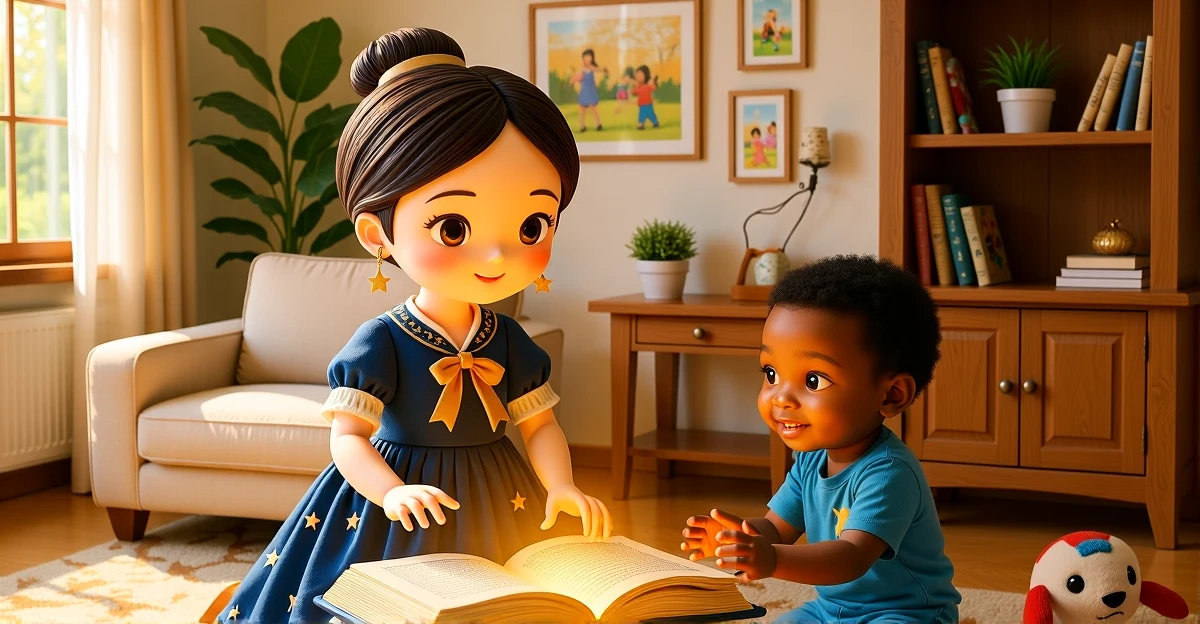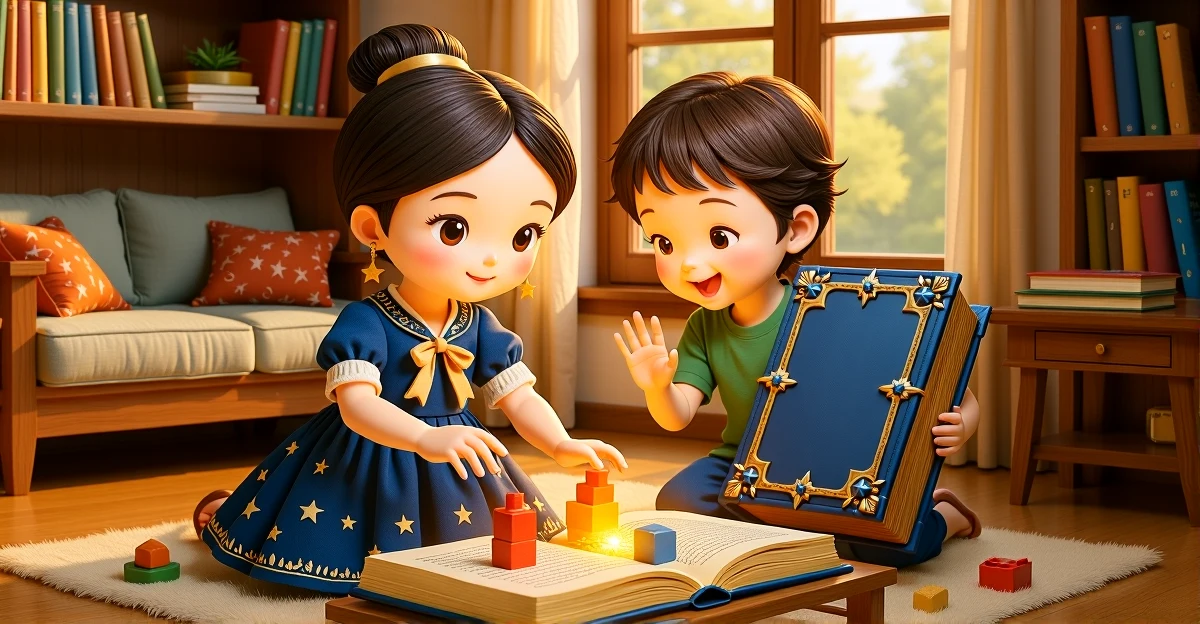
Your three-year-old is building a tower with blocks. She carefully places each one, her little tongue poking out in concentration. And then... crash. The tower tumbles. Her face crumbles. Tears well up. "I can't do it! I'm bad at this!" she cries, pushing the blocks away.
If this scene feels familiar, take a deep breath. You're not alone. And here's something that might surprise you: that moment when the tower fell? That was actually your child's brain growing stronger, right before your eyes.
In this post, I'm going to share something BEAUTIFUL with you. We're going to explore why mistakes are actually magical learning opportunities, what research tells us about how young children develop resilience, and most importantly, gentle strategies you can use TODAY to help your child embrace errors as part of their learning journey.
What's Really Happening When Your Child Makes a Mistake
Let me share something that changed how I see those frustrating moments. When your little one makes a mistake, something absolutely MAGICAL is happening inside their brain. Scientists have discovered that when children try something, make an error, and then try again, their brain creates brand new connections. It's like tiny starlight pathways lighting up, helping them learn and understand the world.
Think about it this way. Every time your child tries to pour their own juice and spills a little, every time they attempt to button their shirt and get it wrong, every time they build a block tower that falls down, they're literally growing their brain's capacity to learn and adapt. Their neural pathways are building through trial and error.
Why It Feels So Hard for Them
But here's what makes this age particularly challenging. At three and four years old, your child's prefrontal cortex, the part of their brain that controls impulses and manages emotions, is still developing. It won't be fully developed until they're in their twenties! So right now, when something doesn't work the way they want it to, they don't yet have all the tools to regulate that disappointment.
The frustration they feel is real and big. They're not being dramatic or overreacting. Their feelings are completely valid and developmentally appropriate. And they need your help to navigate them.
What Research Tells Us About Mistakes and Learning
Here's where the research gets really exciting. Studies show that young children aged 3-6 are actually MOTIVATED by failure. Their curious little minds are drawn to figuring things out. When something doesn't work the first time, their brain says, "Ooh, let's try that again and see what happens!" They're natural scientists, natural explorers.
Children who demonstrate a 'regret and repair' approach to mistakes, feeling some disappointment but then normalizing the situation and trying again with self-care, engage in less self-blame and participate more actively in problem solving.
— Dr. Amy L. Eva, Educational Psychologist, UC Berkeley
This is SO important. The research shows that it's not about avoiding mistakes or minimizing them. It's about how children RESPOND to their errors. And here's the beautiful truth: how YOU respond to your child's mistakes makes all the difference.
When you respond with patience and validation, when you help them see that mistakes are just part of learning, you're teaching them something researchers call a growth mindset. You're teaching them that their abilities can grow and develop, that they're not stuck, that every error is a step toward mastery.
The Long-Term Impact
Dr. Amanda Mintzer from the Child Mind Institute reminds us that when kids fear failing, they're at risk for anxiety and meltdowns when things go wrong. But when we create safe spaces for them to make mistakes, when we model persistence ourselves, when we celebrate effort over perfection, we're building resilience that will serve them their whole lives long.
This developmental phase is critical. Children whose early mistakes are met with patience and validation show better emotional regulation and academic performance as they grow. You're not just helping your child handle a fallen block tower. You're building the foundation for lifelong resilience and confidence.
Gentle Strategies That Actually Work
So what does this look like in your home? Let me share three research-backed strategies that really work:
Strategy 1: Validate First, Teach Second
When that tower falls and your child is crying, resist the urge to immediately say "it's okay" or "try again." Instead, validate their feelings first. You might say:
- "Oh, I can see you're really disappointed that the tower fell. You worked so hard on that."
- "It's frustrating when things don't work the way we want them to, isn't it?"
- "I notice you're feeling upset. That makes sense."
You're acknowledging that their feelings are real and important. You're showing them that emotions are valid, that it's okay to feel disappointed. That's such an important foundation.
Then, once they feel heard, you can gently reframe the mistake. You might say something like, "You know what? Every time the tower falls, your brain is learning something new about how to balance the blocks. That's how we all get better at things."
And here's a crucial tip: if your child is too upset to hear that reframing, don't push it. When they're in shutdown mode, their nervous system is overwhelmed. In those moments, the best thing you can do is just be present with them. Sit nearby, maybe offer a gentle touch if they want it, and wait. Don't try to teach or explain anything. Just let them feel what they're feeling. Once they're calmer, THEN you can talk about what happened.
Strategy 2: Model Your Own Mistakes
Children learn so much more from what we DO than from what we SAY. Let your child see you make errors and handle them with patience. Maybe you're cooking dinner and you spill something. Instead of getting frustrated, you might say out loud:
"Oops, I spilled the sauce! That happens sometimes. Let me get a towel and clean it up. No big deal."
You're showing them that mistakes are normal, that adults make them too, and that we can handle them calmly. You're demonstrating that errors aren't catastrophes. We can fix things. We can try again. Mistakes don't define us.
This is incredibly powerful. When your child sees you handle your own mistakes with grace, they're learning that they can do the same.
Strategy 3: Celebrate Effort Over Outcome
Instead of saying "Good job!" when your child successfully builds the tower, try saying:
- "Wow, you kept trying even when it was tricky! I noticed how you carefully placed each block."
- "I saw you working so hard on that. You didn't give up!"
- "Look at how you figured out a new way to stack those blocks!"
You're praising their persistence, their problem-solving, their willingness to keep going. That builds what researchers call intrinsic motivation. They learn to value the process of learning, not just the end result.
Research shows that children who are praised for effort rather than outcome develop stronger resilience. They're more willing to take on challenges because they're not afraid of failing. They understand that the trying itself is valuable.
Stories That Can Help
You know what I absolutely LOVE? Stories have this magical way of making abstract concepts tangible for young children. In The Book of Inara, we have beautiful stories that bring these concepts to life:
The Cathedral of Gentle Echoes
Perfect for: Ages 4-5 (also wonderful for advanced 3-year-olds)
What makes it special: This story is about two friends, Kenji and Maeva, who are learning to play music in a peaceful cathedral. And here's the magical part: every time they make a musical mistake, the cathedral transforms those errors into the most BEAUTIFUL harmonies! The story teaches children that mistakes aren't failures. They're opportunities for unexpected beauty and discovery.
Key lesson: Errors can lead to something even more wonderful than we originally planned. Mistakes are part of creating beauty.
How to use it: After you read this story together, you can remind your child, "Remember how Kenji and Maeva's mistakes made beautiful music? Your brain does that too! When you try something and it doesn't work quite right, your brain is learning and making new connections. That's how we all get better at things."
This gives you and your child a shared language to talk about mistakes. When their tower falls, you can say, "Just like in the cathedral, this mistake is teaching you something beautiful."
You're Doing Beautifully
Here's what I want you to remember, my wonderful friend. This is a developmental journey, not a quick fix. You're planting seeds right now that will grow over months and years. You might see small shifts in a few weeks, like maybe your child doesn't cry quite as long when something goes wrong. But the real transformation happens gradually, as their brain develops and as they internalize these lessons through repeated experiences.
You're going to have days when you forget to validate first, when you jump to fixing instead of feeling. That's okay. You're learning too, just like your child. The important thing is that you keep trying, that you keep showing up with love and understanding.
When you create a home where mistakes are met with understanding instead of frustration, you're raising a resilient, confident, capable human being who will face life's challenges with courage and grace. And that? That's absolutely BEAUTIFUL.
The Magic Book and I believe in you. We believe in your child. And we're always here to support you on this journey.
Until next time, may your days be filled with stardust and wonder.
With love,
Inara
Related Articles
- Why Your Child Doesn't Understand Consequences Yet (And How to Help)
- Building Resilience in Young Children: How to Help Your Child Bounce Back from Disappointments
- Understanding Your Child's Active Learning Style: Why Movement Helps Focus (Ages 3-4)
- Nurturing Your Child Curiosity: A Gentle Guide for Ages 3-4
- Why Mistakes Are Your Child's Superpower: Growth Mindset for Ages 4-5
Show transcript
Hello, my wonderful friend! It's me, Inara, and I am SO happy you're here today! You know, the Magic Book and I have been noticing something beautiful happening in homes all around the world. Parents like you are asking such thoughtful questions about how to help their little ones learn and grow. And today, we're going to talk about something that might surprise you. We're going to talk about the WONDERFUL power of mistakes!
I know, I know. When your three or four year old spills their milk for the third time today, or knocks over that tower they've been building, or can't quite get their shoes on the right feet, it doesn't always FEEL wonderful, does it? But here's what the Magic Book taught me, and it's going to change everything. Those mistakes? They're not problems to fix. They're actually your child's brain growing stronger, right before your eyes!
Let me tell you what I mean. You see, when your little one makes a mistake, something absolutely MAGICAL is happening inside their brain. Scientists have discovered that when children try something, make an error, and then try again, their brain creates brand new connections. It's like tiny starlight pathways lighting up, helping them learn and understand the world. Isn't that BEAUTIFUL?
Dr. Amy Eva, a wonderful educational psychologist, studied how children learn from mistakes. And you know what she found? Children who learn to approach their errors with what she calls regret and repair, meaning they feel a little bit of disappointment but then normalize the situation and try again with self-care, these children actually become better problem solvers! They participate more actively with their friends, and they earn greater respect from their teachers as they grow.
But here's the really important part, my friend. How WE respond to our children's mistakes makes all the difference. When we respond with patience and validation, when we help them see that mistakes are just part of learning, we're teaching them something the Magic Book calls a growth mindset. We're teaching them that their abilities can grow and develop, that they're not stuck, that every error is a step toward mastery.
Now, I want to share something that might feel a bit surprising. Research on preschool children, ages three to six, shows that failure actually MOTIVATES young children! Their curious little minds are drawn to figuring things out. When something doesn't work the first time, their brain says, ooh, let's try that again and see what happens! They're natural scientists, natural explorers. And when we honor that process instead of rushing to fix everything for them, we're giving them such a precious gift.
Dr. Amanda Mintzer from the Child Mind Institute reminds us that when kids fear failing, they're at risk for anxiety and meltdowns when things go wrong. But when we create safe spaces for them to make mistakes, when we model persistence ourselves, when we celebrate effort over perfection, we're building resilience that will serve them their whole lives long.
So what does this look like in your home? Well, when your little one spills that milk, instead of sighing with frustration, you might say, oops, the milk spilled! That happens sometimes. Let's get a towel together and clean it up. No big deal, right? You're showing them that mistakes are fixable, that they're not catastrophes, that we can handle them calmly together.
When they're struggling to put on their coat and getting frustrated, instead of jumping in to do it for them, you might say, I can see you're working really hard on this! It's tricky, isn't it? Do you want to keep trying, or would you like me to help you with one arm? You're giving them agency, acknowledging their effort, and offering support without taking over.
And here's something the Magic Book showed me that I absolutely LOVE. There's a beautiful story in The Book of Inara called The Cathedral of Gentle Echoes. In this story, two friends named Kenji and Maeva are learning to play music in a peaceful cathedral. And you know what happens? Every time they make a musical mistake, the cathedral transforms those errors into the most BEAUTIFUL harmonies! The story teaches children, and us, that mistakes aren't failures. They're opportunities for unexpected beauty and discovery.
After you read this story with your child, you can remind them, remember how Kenji and Maeva's mistakes made beautiful music? Your brain does that too! When you try something and it doesn't work quite right, your brain is learning and making new connections. That's how we all get better at things!
The Magic Book also teaches us that this phase, when your three or four year old is making lots of mistakes, is actually a CRITICAL learning period. Their brains are building neural pathways through trial and error. Every time they try to pour their own juice and spill a little, every time they attempt to button their shirt and get it wrong, every time they build a block tower that falls down, they're literally growing their brain's capacity to learn and adapt.
Japanese teachers have known this for a long time. In their classrooms, they don't ignore mistakes or rush past them. They actually pause and explore them together! They ask children to share different ways they tried to solve a problem, including the ways that didn't work. And you know what? Japanese students outperform many other students in mathematics, partly because they've learned that mistakes are valuable teachers.
So here's what I want you to remember, my wonderful friend. When your child makes a mistake today, tomorrow, or next week, take a deep breath. Remind yourself that their brain is growing. Respond with warmth and patience. Help them see that errors are just part of the beautiful journey of learning. Model persistence by sharing your own mistakes and how you handle them. And most importantly, let them know that you love them no matter what, that their worth isn't tied to getting everything right the first time.
The Magic Book and I believe in you. We believe in your child. And we know that when you create a home where mistakes are met with understanding instead of frustration, you're raising a resilient, confident, capable human being who will face life's challenges with courage and grace.
If you'd like more support on this journey, The Book of Inara has many stories that help children understand that learning takes time, that mistakes are okay, and that persistence leads to growth. The Cathedral of Gentle Echoes is a beautiful place to start, but there are so many more waiting for you.
Thank you for being here with me today. Thank you for caring so deeply about your child's emotional well-being. You're doing such important work, and I'm honored to walk alongside you. Until our next adventure together, sweet dreams and starlight to you and your little one. With love, Inara.