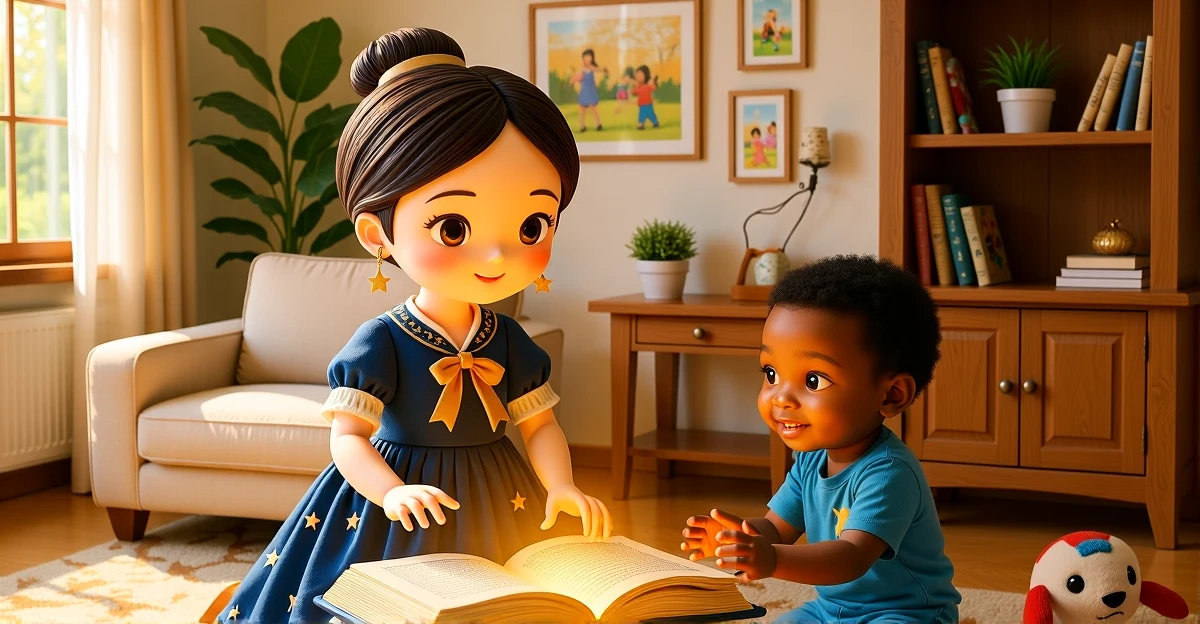

Your four-year-old is building a tower with blocks. You watch as they carefully place each piece, their little face scrunched in concentration. Then—crash—the whole thing tumbles down. Their eyes fill with tears. "I can't do it!" they cry, pushing the blocks away in frustration.
If you've been there, you're not alone. In fact, this moment—this beautiful, messy, frustrating moment—is one of the most important learning opportunities your child will ever have. And here's what the Magic Book taught me that might surprise you: when your child makes a mistake, something absolutely WONDERFUL is happening in their brain.
In this post, we're going to explore why mistakes are actually your child's superpower for learning and growing. We'll look at what research tells us about growth mindset, share gentle strategies for supporting your child through frustration, and introduce you to a beautiful story that brings these concepts to life. So grab a cozy cup of tea, settle in, and let's talk about the magic of mistakes.
Understanding Why Mistakes Matter
When your four or five-year-old makes a mistake, it doesn't FEEL like a superpower, does it? It feels messy. It feels exhausting. And sometimes, if we're being really honest, it feels like maybe we're not doing enough to help them get it right.
But here's the beautiful truth: mistakes are not setbacks. They're essential stepping stones in your child's journey toward confidence and capability.
According to the National Academies of Sciences, ages four and five represent a critical period for developing something called executive function and self-regulation skills. These are the skills that help us plan, focus our attention, remember instructions, and juggle multiple tasks. And here's the magical part: children learn these skills best not through passive instruction, not by watching us do things perfectly, but through active problem-solving. Through trying, making mistakes, and trying again.
What's Happening in Your Child's Brain
When your child encounters a challenge and makes a mistake, their neurons are firing, new connections are forming, and they're building something called resilience. Think of it like this: every time your child tries something difficult, succeeds or fails, and tries again, they're exercising their brain's learning muscles. And just like physical muscles, these mental muscles grow stronger with practice.
Educational experts at Bright Horizons put it beautifully when they said that "coping skills are like muscles; we don't know how strong they truly are until we need to use them." And just like muscles, coping skills need to be exercised. They need practice. They need those moments of struggle to grow stronger.
The Science of Growth Mindset
There's a researcher named Carol Dweck who has spent decades studying something called growth mindset, and what she discovered is truly beautiful. She found that people generally fall into one of two mindsets when it comes to their abilities:
- Fixed Mindset: The belief that our abilities are static—we're either good at something or we're not, and there's not much we can do to change that.
- Growth Mindset: The belief that our abilities can be developed through dedication and hard work—we can get better at things through practice and learning.
And here's what matters for your child: children who learn to view mistakes as learning opportunities rather than failures develop greater persistence and confidence in their abilities. They become braver. They try new things. They don't give up when something is hard.
"Children who don't have opportunities to fail or struggle and recover have lower self-confidence and a less developed self-concept. They tend to be more fearful of failure and less willing to try new things because they don't know how they'll handle it if things don't go perfectly."
— Bright Horizons Educational Research Team
This is SO important. When we shield our children from struggle, when we rush in to fix every problem or prevent every mistake, we're actually depriving them of the chance to discover their own strength. We're sending the message that we don't believe they can handle challenges. And that's the opposite of what we want.
The Beautiful Balance: Support Without Rescue
Now, I want to be really clear about something important. Supporting your child through mistakes doesn't mean leaving them to struggle alone. It doesn't mean we don't help them or comfort them. What it means is that we respond with patience and guidance rather than immediately rescuing them. We become their cheerleader, their supporter, their safe place, while they build their own strength.
The research shows us that when parents respond to mistakes with patience and guidance, children develop essential life skills: problem-solving, emotional regulation, resilience. And perhaps most importantly, they develop confidence in their own abilities.
Four Gentle Strategies for Supporting Your Child Through Mistakes
So how do we do this? How do we support our children through mistakes in a way that builds them up? Here are four strategies that work beautifully:
1. Validate Their Feelings First
When that tower falls down for the fifth time and your child is upset, start by acknowledging their emotions. You might say, "That's so frustrating when you worked so hard and it fell down. I can see you're disappointed." We're not dismissing their feelings. We're not saying, "Oh, it's no big deal." We're acknowledging that yes, this is hard, and their feelings about it are completely valid.
2. Help Them Reframe the Experience
Next, gently help them see the mistake as information rather than failure. You might say, "You know what? Every time that tower falls, your brain is learning something new about balance and how blocks work together. You're becoming a better builder with every try." We're teaching them that mistakes aren't failures—they're teachers.
3. Offer Support Without Taking Over
Instead of building the tower for them, guide their thinking. You might say, "What do you think would happen if we tried a wider base?" or "I wonder if these bigger blocks on the bottom might help?" We're supporting their problem-solving process, not doing their thinking for them.
4. Celebrate Effort, Not Just Outcomes
When they finally get that tower to stand, don't just say "Good job." Instead, celebrate their persistence: "You kept trying even when it was hard. You didn't give up. That's what makes you such a strong learner." We're teaching them that persistence and effort are what matter most.
Creating a Home Environment That Embraces Mistakes
Beyond these specific strategies, we can create an overall environment in our homes that normalizes and even celebrates mistakes as part of learning. Here's how:
- Model your own mistakes: When you make a mistake, talk about it out loud. "Oops, I spilled my coffee! That's okay, mistakes happen. Let me clean it up and try again."
- Use growth mindset language: Replace "I can't" with "I can't YET." Replace "This is too hard" with "This is challenging, but I'm learning."
- Share stories of famous failures: Talk about how inventors, artists, and scientists made countless mistakes before their breakthroughs.
- Create low-stakes practice opportunities: Provide activities where mistakes are expected and safe—art projects, building challenges, cooking together.
- Avoid perfectionism: Resist the urge to correct every little thing. Sometimes "good enough" really is good enough.
A Story That Brings This to Life
The Magic Book and I have a story that shows this concept so beautifully. It's called The Cathedral of Gentle Echoes, and it's about two friends, Kenji and Maeva, who discover something magical about mistakes.
The Cathedral of Gentle Echoes
Perfect for: Ages 4-5
What makes it special: In this story, Kenji and Maeva are learning to play music in a peaceful cathedral. At first, they're so worried about making mistakes—they want every note to be perfect. But then something wonderful happens. They discover that when they make mistakes, when the notes don't come out quite right, the cathedral transforms those mistakes into the most beautiful harmonies. The errors don't create chaos. They create something new and unexpected and lovely.
Key lesson: Through this magical experience, Kenji and Maeva learn that every mistake is a step toward something wonderful. That there's beauty in the imperfect. That learning and growing means trying things that might not work out perfectly the first time, or the second time, or even the tenth time.
How to use it: After reading this story with your child, you might ask: "What did you learn from this? What could we try differently next time?" Just like Kenji and Maeva, every mistake is a chance to discover something new.
You're Doing Beautifully
My wonderful friend, I want you to know something. This developmental phase, where your child is learning to handle mistakes and imperfection, is completely normal. It's not a sign that something is wrong. It's a sign that everything is exactly right. Your child is learning. Their brain is growing. And you, by being patient and supportive through this process, are giving them one of the greatest gifts possible: the confidence to try, to fail, to learn, and to try again.
The research is so clear on this. Parents who create safe opportunities for their children to struggle, make mistakes, and recover are building the foundation for lifelong learning confidence and emotional strength. You're not just helping them learn to build a tower or tie their shoes. You're teaching them that they are capable. That challenges are opportunities. That mistakes are teachers. And that they have everything they need inside themselves to keep growing and learning.
So the next time your little one makes a mistake, take a deep breath. Remember that their brain is doing exactly what it's supposed to do. And know that by responding with patience, guidance, and love, you're helping them build the resilience and confidence they'll carry with them for the rest of their lives.
The Magic Book and I are always here for you, cheering you on through every spill, every fallen tower, every beautiful mistake that helps your child grow.
With love and starlight,
Inara
Related Articles
- The Beautiful Truth About Mistakes: Helping Your 3-4 Year Old Embrace Learning
- When Your Child Gives Up Easily: Building Persistence in Ages 4-5
- Why Your Child Melts Down Over Feedback (And How to Build Growth Mindset)
- Teaching Your Child to Value Effort and Hard Work: A Growth Mindset Guide for Parents
- Building Emotional Resilience in Young Children: A Gentle Parenting Guide
Show transcript
Hello, my wonderful friend! It's me, Inara, and I am so happy you're here today. You know, the Magic Book and I have been noticing something beautiful happening in homes all around the world. Parents like you are asking such thoughtful questions about how to help their children learn and grow, and today I want to talk about something that might surprise you. Something that might even change the way you see those moments when your little one makes a mistake.
So settle in, grab a cozy cup of tea if you'd like, and let's talk about why mistakes are actually your child's superpower for learning and growing.
I know, I know. When your four or five year old spills their juice for the third time today, or when they're trying to build that tower and it keeps falling down and they get so frustrated, it doesn't FEEL like a superpower, does it? It feels messy. It feels exhausting. And sometimes, if we're being really honest, it feels like maybe we're not doing enough to help them get it right.
But here's what the Magic Book taught me, and what research from some of the most brilliant minds in child development confirms. When your child makes a mistake, something absolutely WONDERFUL is happening in their brain. Their neurons are firing, new connections are forming, and they're building something called resilience. And resilience, my friend, is one of the most important gifts you can help your child develop.
Let me share what the research tells us. According to the National Academies of Sciences, ages four and five represent a critical period for developing something called executive function and self-regulation skills. These are the skills that help us plan, focus our attention, remember instructions, and juggle multiple tasks. And here's the magical part. Children learn these skills best not through passive instruction, not by watching us do things perfectly, but through active problem-solving. Through trying, making mistakes, and trying again.
There's a researcher named Carol Dweck who has spent decades studying something called growth mindset. And what she discovered is truly beautiful. Children who learn to view mistakes as learning opportunities rather than failures develop greater persistence and confidence in their abilities. They become braver. They try new things. They don't give up when something is hard.
But children who are shielded from struggle, who don't get opportunities to fail and recover, often develop lower self-confidence. They become more fearful of failure. They're less willing to try new things because they don't know how they'll handle it if things don't go perfectly.
Educational experts at Bright Horizons put it so beautifully. They said that coping skills are like muscles. We don't know how strong they truly are until we need to use them. And just like muscles, coping skills need to be exercised. They need practice. They need those moments of struggle to grow stronger.
So when your child is working on a puzzle and getting frustrated, when they're learning to tie their shoes and the loops keep coming undone, when they're trying to pour their own milk and it spills everywhere, something incredible is happening. Their coping muscles are getting stronger. Their brain is learning that challenges are normal, that mistakes are part of the process, and that they have what it takes to keep trying.
Now, I want to be really clear about something important. This doesn't mean we leave our children to struggle alone. It doesn't mean we don't help them or comfort them. What it means is that we respond with patience and guidance rather than immediately rescuing them. We become their cheerleader, their supporter, their safe place, while they build their own strength.
The research shows us that when parents respond to mistakes with patience and guidance, children develop essential life skills. Problem-solving. Emotional regulation. Resilience. And perhaps most importantly, they develop confidence in their own abilities.
So how do we do this? How do we support our children through mistakes in a way that builds them up?
First, we validate their feelings. When that tower falls down for the fifth time and your child is upset, you might say something like, That's so frustrating when you worked so hard and it fell down. I can see you're disappointed. We're not dismissing their feelings. We're not saying, Oh, it's no big deal. We're acknowledging that yes, this is hard, and their feelings about it are completely valid.
Then, we help them reframe the experience. You might say, You know what? Every time that tower falls, your brain is learning something new about balance and how blocks work together. You're becoming a better builder with every try. We're helping them see that the mistake isn't a failure. It's information. It's learning.
Next, we offer support without taking over. Instead of building the tower for them, we might say, What do you think would happen if we tried a wider base? Or, I wonder if these bigger blocks on the bottom might help? We're guiding their thinking, not doing their thinking for them.
And finally, we celebrate the effort, not just the outcome. When they finally get that tower to stand, we don't just say, Good job. We say, You kept trying even when it was hard. You didn't give up. That's what makes you such a strong learner. We're teaching them that persistence and effort are what matter most.
The Magic Book and I have a story that shows this so beautifully. It's called The Cathedral of Gentle Echoes, and it's about two friends, Kenji and Maeva, who discover something magical about mistakes.
In the story, Kenji and Maeva are learning to play music in a peaceful cathedral. And at first, they're so worried about making mistakes. They want every note to be perfect. But then something wonderful happens. They discover that when they make mistakes, when the notes don't come out quite right, the cathedral transforms those mistakes into the most beautiful harmonies. The errors don't create chaos. They create something new and unexpected and lovely.
And through this magical experience, Kenji and Maeva learn that every mistake is a step toward something wonderful. That there's beauty in the imperfect. That learning and growing means trying things that might not work out perfectly the first time, or the second time, or even the tenth time.
This story has helped so many children, and their parents, reframe how they think about mistakes. After reading it, you might ask your child, What did you learn from this? What could we try differently next time? Just like Kenji and Maeva, every mistake is a chance to discover something new.
You can find The Cathedral of Gentle Echoes in The Book of Inara, along with hundreds of other stories designed to support your child's emotional growth and learning.
My wonderful friend, I want you to know something. This developmental phase, where your child is learning to handle mistakes and imperfection, is completely normal. It's not a sign that something is wrong. It's a sign that everything is exactly right. Your child is learning. Their brain is growing. And you, by being patient and supportive through this process, are giving them one of the greatest gifts possible. The confidence to try, to fail, to learn, and to try again.
The research is so clear on this. Parents who create safe opportunities for their children to struggle, make mistakes, and recover are building the foundation for lifelong learning confidence and emotional strength. You're not just helping them learn to build a tower or tie their shoes. You're teaching them that they are capable. That challenges are opportunities. That mistakes are teachers. And that they have everything they need inside themselves to keep growing and learning.
So the next time your little one makes a mistake, take a deep breath. Remember that their brain is doing exactly what it's supposed to do. And know that by responding with patience, guidance, and love, you're helping them build the resilience and confidence they'll carry with them for the rest of their lives.
The Magic Book and I are always here for you, cheering you on through every spill, every fallen tower, every beautiful mistake that helps your child grow.
Sweet dreams and happy learning, my wonderful friend. With love and starlight, Inara.