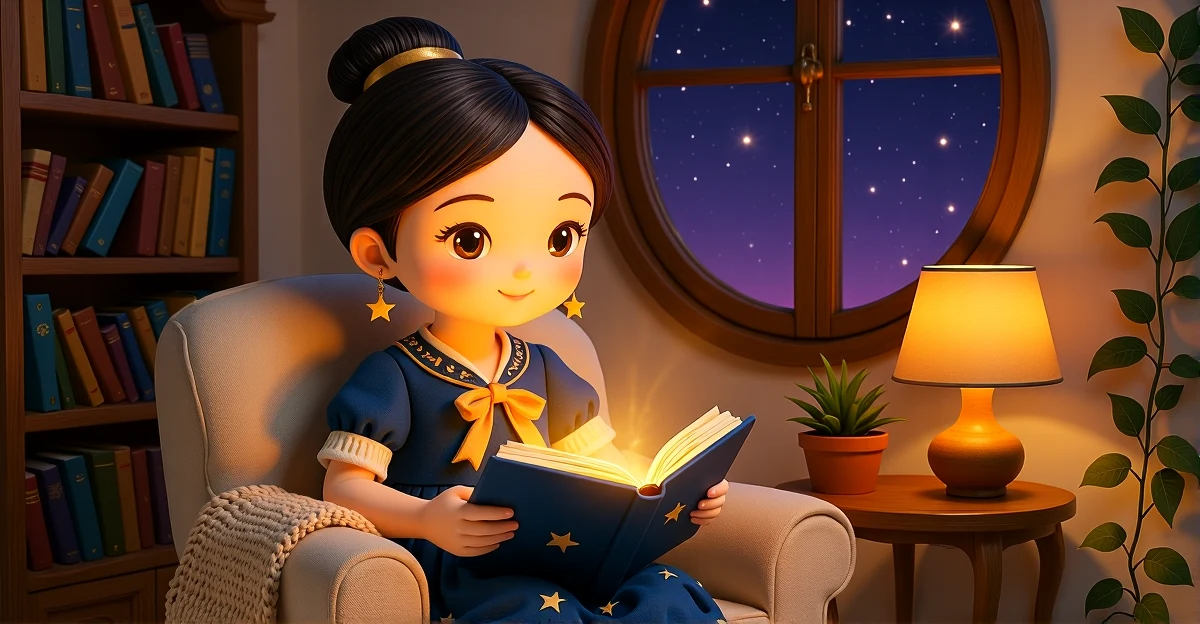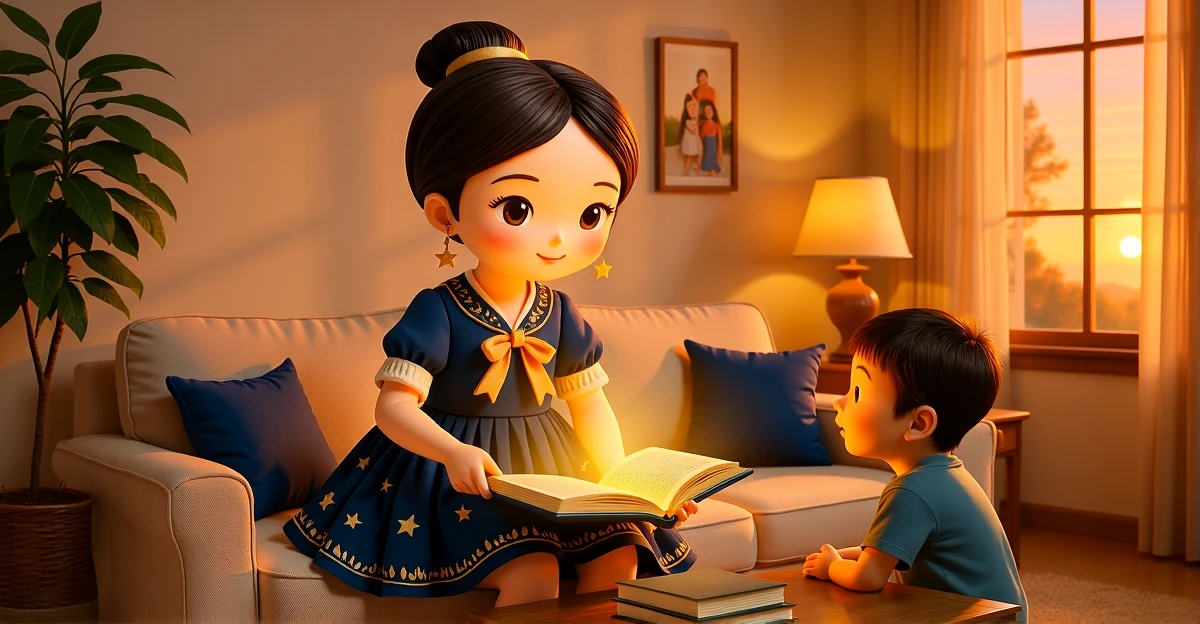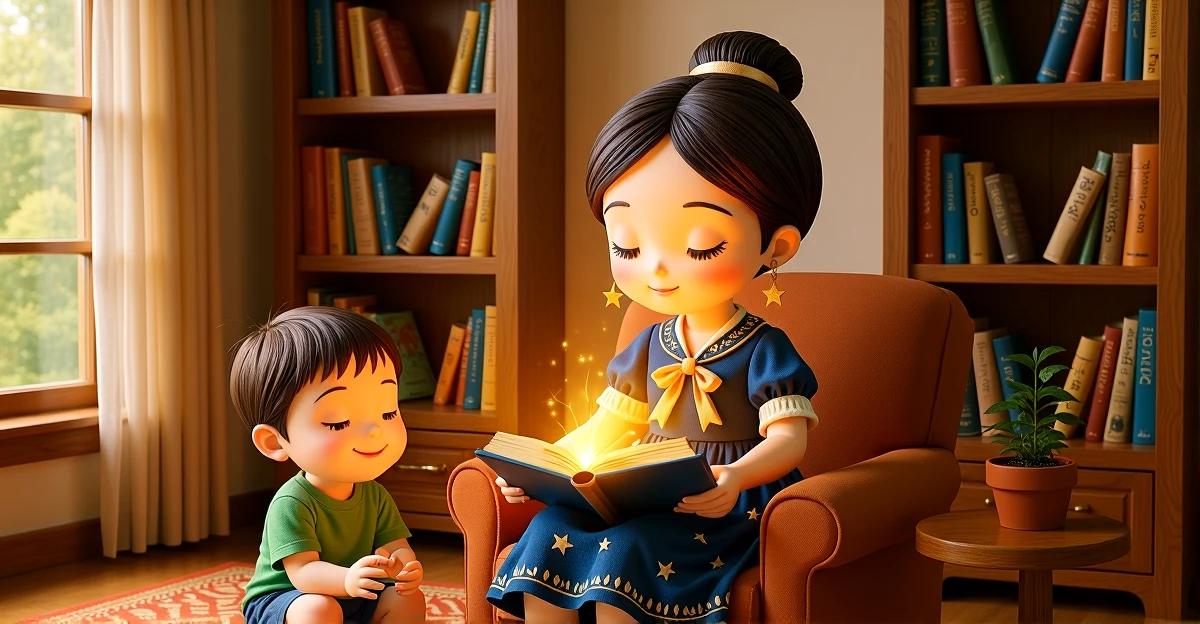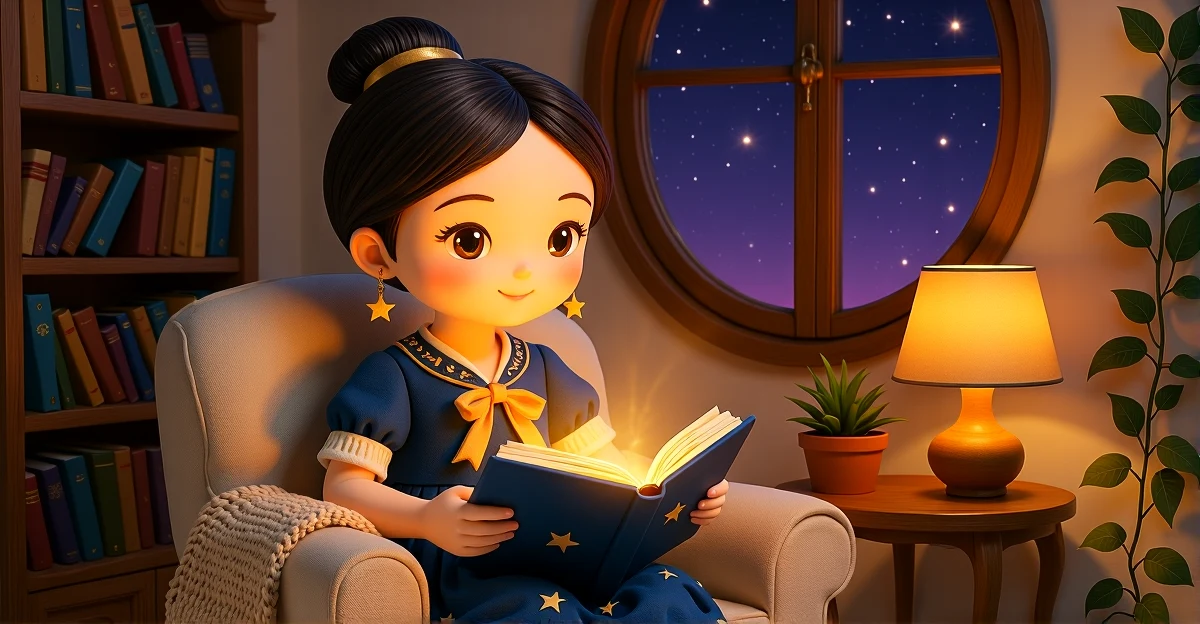

Hello, my wonderful friend! If your preschooler has been telling you elaborate stories about flying to the moon, having tea with dragons, or adventures that seem completely real to them, I want you to take a deep breath and know something beautiful: what you are witnessing is not deception. It is your child imagination blooming like a cosmic flower, and it is one of the most wonderful signs of healthy development.
You are not alone in this experience. Many parents of three and four year olds find themselves wondering: Is my child lying to me? Should I be worried? How do I teach them about honesty without crushing their beautiful imagination? These are such important questions, and the Magic Book and I are here to help you understand what is really happening in your little one developing mind.
In this guide, we will explore the fascinating science of how children build the boundary between fantasy and reality, why their vivid imaginations are actually a sign of healthy cognitive development, and most importantly, gentle ways to nurture honesty while honoring their creativity. Let us dive in together!
The Beautiful Truth About Preschool Imagination
Here is something the Magic Book taught me that changed everything: your child is not lying to manipulate you. Between ages three and four, children are in this magical developmental phase where they are actively constructing the boundary between fantasy and reality. They are not confused about what is real and what is pretend. Instead, they are building this understanding, piece by piece, like constructing a beautiful bridge between two worlds.
Research by psychologist Jacqueline Woolley at the University of Texas reveals something fascinating. Young children are not confused about fantasy versus reality. By age three, they can tell the difference between a photo of a ball and the actual ball. They can stop their tea party with stuffed animals to answer you, then jump right back into pretending. They KNOW the difference!
But here is the magical part. When they encounter something new or uncertain, when they are not quite sure about the reality status of something, they often choose not sure rather than confidently saying it is real or pretend. This is not confusion, my friend. This is wisdom! They are being honest about their uncertainty, which is actually a sophisticated cognitive skill.
Why Imagination Feels So Real to Them
The American Academy of Pediatrics reminds us that when preschoolers tell fantastical stories, their vivid imaginations can make these stories feel completely real to them in the moment. Think about it: their imagination is SO powerful, SO vibrant, that the line between what they imagined and what actually happened can blur beautifully.
This is not deception. This is their brain doing exactly what it should be doing at this age: developing creativity, practicing narrative skills, exploring cause and effect, and learning about the world through imaginative play. When your little one tells you they flew to the moon last night, they are doing important developmental work!
What Research Shows About Fantasy and Reality Development
Let me share some wonderful insights from child development research that will help you understand what is happening in your child growing mind.
Psychologists Tanya Sharon and Jacqueline Woolley conducted fascinating studies on how preschoolers distinguish reality from fantasy. They discovered that children are actively constructing the boundary between real and fantastical entities, placing uncertain things in a category that is neither unquestionably real nor pretend, but somewhere in between. This category forms a natural bridge to the adult understanding of fantastical entities.
Rather than having misplaced the boundary between real and fantastical entities, young children are still in the process of actively constructing it.
— Tanya Sharon and Jacqueline Woolley, Child Development Researchers
What does this mean for you as a parent? It means your child is not broken. They are not manipulative. They are not a problem to be fixed. They are a beautiful, imaginative, developing human being who is learning to navigate the complex world of reality and fantasy. And this process takes time, patience, and gentle guidance.
The Role of Imagination in Healthy Development
Here is something WONDERFUL: imagination is not just fun, it is essential for your child development. When children engage in imaginative play and storytelling, they are:
- Developing creativity and problem-solving skills
- Practicing language and narrative abilities
- Exploring emotions and social situations safely
- Building cognitive flexibility and abstract thinking
- Learning to distinguish between different types of reality
So when your child tells you an elaborate story about their adventures, they are actually exercising crucial cognitive muscles. This is beautiful, healthy development!
Gentle Ways to Teach Honesty While Honoring Imagination
Now, I know what you might be thinking: But Inara, how do I teach them about honesty? How do I help them understand the difference between imagination and truth? These are such beautiful questions, and I am SO glad you are asking them.
The key, my wonderful friend, is gentle guidance, not harsh correction. Research shows that gentle guidance toward honesty is far more effective than punishment or harsh corrections. When children feel safe to explore their imagination AND safe to tell the truth, they develop both creativity and integrity. These are not opposites. They grow together, like two flowers in the same garden.
Strategy 1: Respond with Curiosity and Warmth
When your child tells you an elaborate story, try responding with curiosity rather than correction. You might say: What a wonderful imagination you have! That sounds like an amazing story. Did that really happen, or is that something you are imagining?
This approach honors their creativity while gently inviting them to distinguish between fantasy and reality. It creates a safe space for them to explore the boundary without feeling judged or shamed.
Strategy 2: Create Special Times for Imagination
You can establish clear contexts for imaginative storytelling. Try saying: Let us have imagination time! Tell me the most magical story you can think of! This gives them permission to explore their creativity fully, while also establishing that there are times for imaginative stories and times for true stories.
You might also create a special imagination corner or use a special imagination hat. When they are in that space or wearing that hat, they know it is time for make-believe. This helps them practice the distinction in a playful, supportive way.
Strategy 3: Model the Difference Yourself
Children learn SO much from watching us. When you read stories together, talk about how the story is make-believe, but the feelings in the story are real. Share your own imaginative thoughts and clearly label them: I am imagining what it would be like if we could fly! Would not that be amazing? But we know that is just our imagination, right?
This modeling helps them understand that imagination is wonderful AND that we can distinguish it from reality. Both are valuable, and both have their place.
Strategy 4: Validate Their Feelings, Clarify the Facts
Sometimes children tell fantastical stories because they are processing big feelings or wishes. If your child says they saw a monster in their room, you might respond: It sounds like you felt really scared. Sometimes our imagination can make things seem scary at night. Let us check together and make sure your room is safe.
This validates their emotional experience while gently clarifying reality. It teaches them that their feelings are always real and important, even when the thing they imagined is not.
Strategy 5: Celebrate Truth-Telling
When your child tells you the truth, especially about something difficult, celebrate it! You might say: Thank you SO much for telling me the truth. I know that was hard, and I am really proud of you for being honest. That took courage!
This positive reinforcement helps them understand that honesty is valued and safe. They learn that telling the truth, even when it is difficult, leads to connection and trust, not punishment.
Stories That Can Help
In The Book of Inara, we have beautiful stories that bring these concepts to life for your child. Let me share one that is particularly perfect for this developmental stage:
The Friendship Frequency
Perfect for: Ages 4-5
What makes it special: This magical tale follows Ethan and Sofia as they discover an emergency radio that only works when they speak from their hearts, when they are truly honest about their feelings. It is a beautiful metaphor for authentic communication that children can understand and relate to.
Key lesson: When Ethan and Sofia try to say what they think they should say, or make up stories about how they feel, the radio goes fuzzy. But when they speak their true feelings, even when it is hard, the radio works perfectly and their friendship grows stronger. This teaches children that being honest helps friendships work better and creates real connection.
How to use it: After reading this story with your child, you can talk about how being honest is like making the friendship radio work clearly. You can create your own family language around truth-telling: In our family, we speak from our hearts, just like Ethan and Sofia.
You Are Doing Beautifully
My wonderful friend, I want you to know something important: you are exactly the guide your child needs. Your patience, your gentle guidance, your willingness to honor their imagination while teaching them about honesty, this is the magic that helps them grow into creative, truthful, emotionally intelligent people.
Remember, this phase of vivid imagination and blurred boundaries is temporary. It is a normal, healthy part of development. With your loving guidance, your child will learn to distinguish fantasy from reality while maintaining their beautiful creativity and sense of wonder.
The Magic Book and I are always here for you, with stories that help, with wisdom that supports, with love that never wavers. You are doing BEAUTIFULLY, even on the hard days, especially on the hard days.
When you feel frustrated or worried, take a deep breath and remember: your child is not lying to you. They are learning, growing, and building the bridge between imagination and reality. And you, dear parent, are the perfect person to walk beside them on this journey.
Sweet dreams and starlight, my wonderful friend. Until our next adventure together!
With love,
Inara
Related Articles
- Building Friendship Skills in Young Children: A Gentle Guide for Parents
- Understanding Your Child's Attention-Seeking Behavior (And How to Guide Them Gently)
- When Your Child Can't Express Their Feelings: A Gentle Guide to Building Emotional Vocabulary
- When Your Child Blurs Fantasy and Reality: A Gentle Guide to Nurturing Honesty
- Supporting Your Shy Child: Understanding Behavioral Inhibition in Young Children
Show transcript
Hello, my wonderful friend! It is me, Inara, and I am SO happy you are here today. You know, the Magic Book and I have been noticing something that many parents are experiencing, and I want you to know right from the start, you are not alone in this. If your little one has been telling elaborate stories that seem so real to them, stories about magical adventures or things that did not quite happen the way they describe, I want you to take a deep breath and know that what you are seeing is actually something BEAUTIFUL.
Your child is not lying to manipulate you. What you are witnessing is their imagination blooming like a cosmic flower, and it is one of the most wonderful signs of healthy development!
Let me share something the Magic Book taught me. Between ages three and four, children are in this magical phase where they are actively constructing the boundary between fantasy and reality. Research by psychologist Jacqueline Woolley at the University of Texas shows us something fascinating. Young children are not confused about what is real and what is pretend. Instead, they are building this understanding, piece by piece, like constructing a beautiful bridge between two worlds.
By age three, children can tell the difference between a photo of a ball and the actual ball. They can stop their tea party with stuffed animals to answer you, then jump right back into pretending. They KNOW the difference! But here is the magical part. When they are uncertain about something, when they encounter something new or confusing, they often choose not sure rather than confidently saying it is real or pretend. This is not confusion, my friend. This is wisdom! They are being honest about their uncertainty.
The American Academy of Pediatrics reminds us that when preschoolers tell fantastical stories, their vivid imaginations can make these stories feel completely real to them in the moment. They are not trying to deceive you. They are exploring the boundaries of reality, testing what is possible, exercising their growing imagination. And this is crucial developmental work!
So when your little one tells you they flew to the moon last night, or that a dragon visited them in the garden, they are doing something IMPORTANT. They are developing creativity, practicing narrative skills, exploring cause and effect, and learning about the world through imaginative play.
Now, I know what you might be thinking. But Inara, how do I teach them about honesty? How do I help them understand the difference between imagination and truth? And my friend, this is such a beautiful question.
Here is what the Magic Book whispers to us. The key is gentle guidance, not harsh correction. When your child tells you an elaborate story, you can respond with curiosity and warmth. You might say, What a wonderful imagination you have! That sounds like an amazing story. Did that really happen, or is that something you are imagining? This approach honors their creativity while gently inviting them to distinguish between fantasy and reality.
You can also create special times for imagination. You might say, Let us have imagination time! Tell me the most magical story you can think of! This gives them permission to explore their creativity fully, while also establishing that there are times for imaginative stories and times for true stories.
And here is something WONDERFUL. You can model the difference yourself. When you read stories together, you can talk about how the story is make-believe, but the feelings in the story are real. You can share your own imaginative thoughts and clearly label them. I am imagining what it would be like if we could fly! Wouldn not that be amazing? But we know that is just our imagination, right?
The research shows us that gentle guidance toward honesty is far more effective than punishment or harsh corrections. When children feel safe to explore their imagination AND safe to tell the truth, they develop both creativity and integrity. These are not opposites, my friend. They grow together, like two flowers in the same garden.
Now, let me tell you about a story that might help. In The Book of Inara, there is a beautiful tale called The Friendship Frequency. In this story, two friends named Ethan and Sofia discover a magical emergency radio that only works when they speak from their hearts, when they are truly honest about their feelings.
What I love about this story is how it shows children that authentic communication, speaking the truth from your heart, creates real connection. The radio is a beautiful metaphor. When Ethan and Sofia try to say what they think they should say, or make up stories about how they feel, the radio goes fuzzy. But when they speak their true feelings, even when it is hard, the radio works perfectly and their friendship grows stronger.
After reading this story with your child, you can talk about how being honest helps friendships work better, just like the magical radio. You can create your own family language around truth-telling. In our family, we speak from our hearts, just like Ethan and Sofia.
Remember, my wonderful friend, your child is not broken. They are not manipulative. They are not a problem to be fixed. They are a beautiful, imaginative, developing human being who is learning to navigate the complex world of reality and fantasy. And you, dear parent, are exactly the guide they need.
Your patience, your gentle guidance, your willingness to honor their imagination while teaching them about honesty, this is the magic that helps them grow into creative, truthful, emotionally intelligent people.
The Magic Book and I are always here for you, with stories that help, with wisdom that supports, with love that never wavers. You are doing BEAUTIFULLY, even on the hard days, especially on the hard days.
Sweet dreams and starlight, my wonderful friend. Until our next adventure together! With love, Inara.