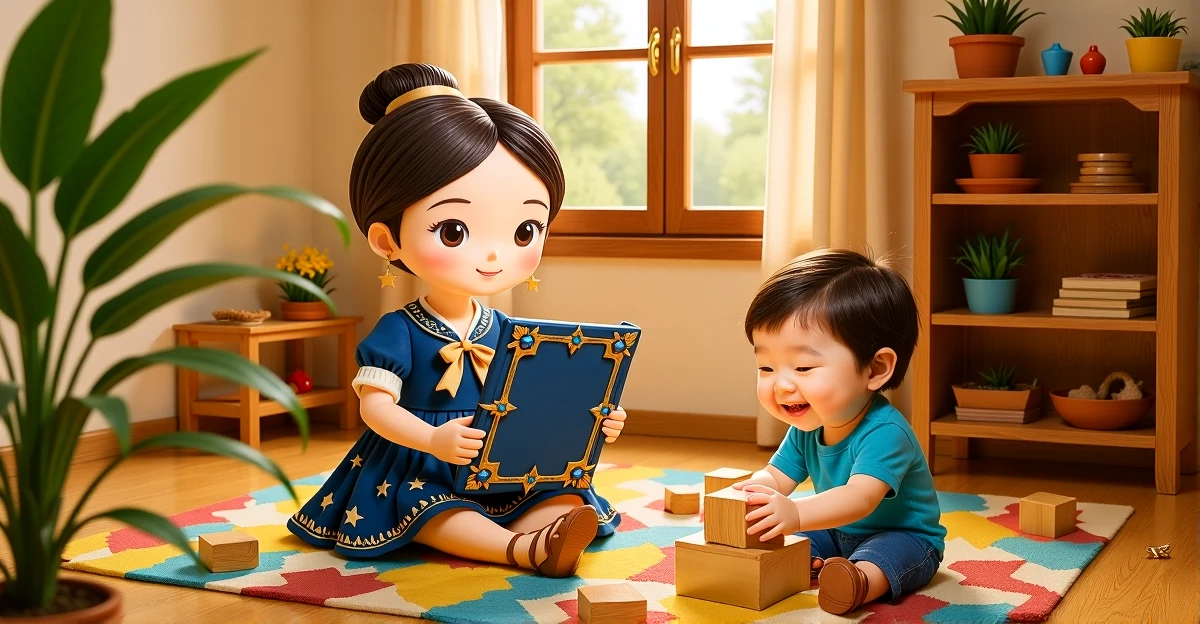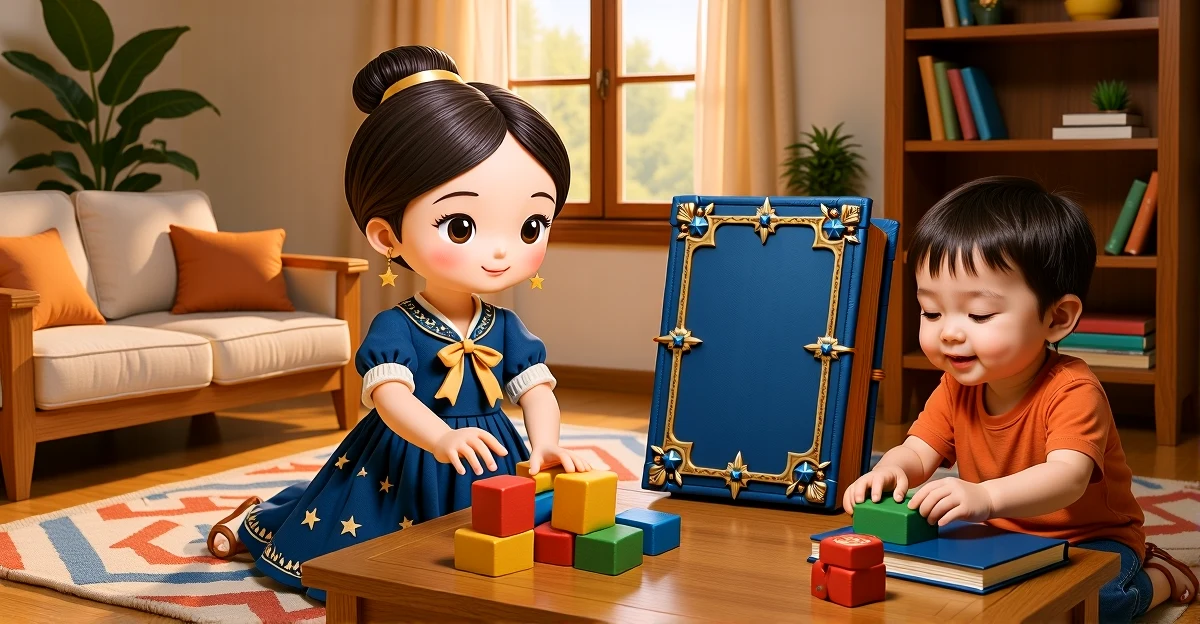

Hello, wonderful parent! It's me, Inara, and I want to talk with you about something the Magic Book and I have been noticing. Maybe your little one loves to build with real blocks but doesn't pretend they're castles. Maybe they organize their toys by color and size instead of creating imaginary worlds. Maybe they're fascinated by how things actually work rather than making up stories about them. And you might be wondering: is this okay? Should I be worried?
Let me share something wonderful with you. You are not alone in this question, and your child is absolutely perfect exactly as they are.
In this post, we're going to explore the beautiful science of concrete thinking, understand why some children prefer real-world exploration, and discover gentle ways to support your child's unique developmental journey. The Magic Book has taught me SO much about this, and I cannot wait to share it with you.
Understanding Concrete Play: What It Is and Why It Matters
First, let's talk about what we mean by concrete play. When your child engages in concrete play, they're exploring the real, physical world around them. They're learning how things work, discovering cause and effect, understanding patterns and relationships. They might:
- Build towers with blocks and test how high they can go before they fall
- Sort objects by color, size, or shape
- Take apart safe objects to see how they work inside
- Line up toys in precise patterns
- Ask endless questions about how real things function
- Prefer realistic toys (toy cars that look like real cars, not fantastical creatures)
This is different from imaginative or pretend play, where children create scenarios that don't exist in reality. They might pretend a block is a phone, create elaborate stories about their stuffed animals, or act out fantasy scenarios.
Here's what's IMPORTANT to understand: both types of play are valuable, and both are completely normal. Some children dive into imaginative play early. Others, like yours, are taking a different path. And that path is just as beautiful and just as essential for their growth.
The Science: How Concrete Play Builds the Foundation for Imagination
The Magic Book has shown me research that will absolutely change how you see your child's play style. Dr. Tamar Kushnir at Duke University's Department of Psychology and Neuroscience has studied how children's minds develop, and her findings are fascinating.
Imagination is a cognitive process used to generate new ideas from old, not just in the service of creativity and fantasy, but also in our ordinary thoughts about alternatives to current reality.
— Dr. Tamar Kushnir, Duke University
Do you see what this means? Your child IS using their imagination right now, just in a different way. When they figure out how to stack blocks higher, when they sort objects by properties, when they explore cause and effect, their brain is imagining possibilities and testing them in the real world.
Think about it this way: before an architect can design a fantastical building, they need to understand how real buildings work. Before an inventor can create something new, they need to know how existing things function. Your child is building that foundation right now. They're learning the rules of the physical world, understanding how things connect, discovering patterns and relationships.
Dr. Maite Garaigordobil at the University of the Basque Country conducted twenty years of research on children's play and creativity. Her studies confirm something beautiful: representative play, the kind of concrete, reality-based play your child is doing right now, fosters cognitive decentralization, which drives the development of symbolic thinking.
In other words, what your child is doing now is preparing their brain for imaginative thinking later. This concrete knowledge is the soil from which imagination will bloom when they're ready.
Why Some Children Prefer Concrete Play (And Why That's Wonderful)
Children develop at different rates, and that's not just okay, it's WONDERFUL. The Raising Children Network reminds us that preschoolers ages 4-5 naturally enjoy creative play, tall stories, and imaginative activities as part of healthy development. But notice that word: part. It's PART of development, not ALL of development.
Some children are early talkers. Some are early walkers. Some dive into pretend play at two. And some prefer concrete exploration until they're five or six or even older. None of these paths is better or worse. They're just different routes up the same beautiful mountain.
What Influences Play Style?
Several factors can influence whether a child gravitates toward concrete or imaginative play:
- Temperament: Some children are naturally more analytical and detail-oriented
- Developmental timing: Every brain develops on its own unique timeline
- Learning style: Some children need to understand the real before they can explore the fantastical
- Sensory preferences: Some children find comfort in the predictability of real objects
- Individual interests: Your child might simply be more fascinated by how the real world works
None of these factors indicate a problem. They're simply part of what makes your child beautifully, perfectly unique.
Gentle Ways to Support Your Child's Development
So what can you do to support your child exactly where they are while gently nurturing the seeds of imagination? Let me share some ideas the Magic Book and I have discovered.
1. Celebrate Their Concrete Interests
First and most important: celebrate what your child loves. If they love organizing, give them things to sort. If they love building, provide different materials to explore. If they're fascinated by how things work, let them take apart safe objects or watch you cook or fix things. This isn't just play, it's learning. It's brain development. It's beautiful.
2. Gently Model Imaginative Thinking Without Pressure
You might say, "I wonder what this block tower would look like if it were a real building. Who do you think would live there?" But if they're not interested in that question, that's perfectly fine. You're planting seeds, not demanding flowers. The key is offering invitations to imagination without making your child feel like their current play style is wrong.
3. Read Stories Together
And this is where something magical happens. Stories are a bridge between the concrete and the imaginative. When you read together, your child can explore imaginative worlds while still feeling safe and grounded in your lap, in the real book, in your real voice. They can dip their toes into fantasy without having to generate it themselves yet.
4. Provide Open-Ended Materials
Offer materials that can be used in both concrete and imaginative ways: blocks, art supplies, natural objects like sticks and stones, fabric pieces, cardboard boxes. Your child might use them concretely at first (sorting, stacking, organizing), and that's perfect. Over time, they might begin to use them in more imaginative ways, or they might not, and both are okay.
5. Honor Their Timeline
Perhaps most importantly, trust that your child is growing in their own perfect way and their own perfect time. Dr. Kushnir's research shows us that children's imaginative capacities develop through pretend play in toddlers and counterfactual reasoning in preschoolers, and that imaginative play is tied to children's emerging understanding of real events and develops alongside conceptual knowledge.
Your child's deep exploration of real events and real objects IS the process that will lead to imaginative play. They're not behind. They're right on track for their own unique developmental journey.
Stories That Can Help
In The Book of Inara, we have a beautiful story that I think might be perfect for your family. It honors both concrete skills and imaginative possibilities in the most magical way.
The Magic Paintbrush
Perfect for: Ages 4-5
What makes it special: This story is about a kindhearted boy named Ma Liang who loves to paint real things. He paints what he sees: the mountains, the rivers, the animals. He's very good at it because he pays such close attention to the real world. Then one day, he receives a magical paintbrush, and suddenly his paintings come to life. But here's the beautiful part: Ma Liang doesn't abandon his concrete skills. Instead, he uses them as the foundation for his magic. He paints real things that become real help for people who need it.
Key lesson: This story shows that concrete skills, paying attention to reality, understanding how things really work, these aren't obstacles to imagination. They're the FOUNDATION of it. Ma Liang's magic works because he first learned to paint real things well. Your child's future imaginative thinking will be richer and deeper because they're building such a strong understanding of the real world first.
When you read this story together, you're not teaching your child that they should be different. You're showing them that their way of exploring the world is valuable and important. You're also gently introducing the idea that someday, when they're ready, they can use all that concrete knowledge to create something magical.
You're Doing Beautifully
Tonight, when you tuck your little one into bed, I want you to feel proud. Proud of their curious mind, proud of their careful observations, proud of the way they're building such a strong foundation for all the learning and creating and imagining they'll do in the years ahead.
The Magic Book has shown me thousands of children over thousands of years, and every single one of them has been beautifully, perfectly unique. Your child is exactly who they're meant to be, learning exactly what they need to learn, in exactly the way that's right for them.
Imagination isn't something you either have or don't have. It's a skill that grows over time, and it grows differently for every child. Some children's imagination shows up in pretend play. Other children's imagination shows up in problem-solving, in building, in figuring out how things work. Your child IS imaginative. They're imagining solutions, imagining possibilities, imagining what will happen if they try something new. That's imagination too.
You're doing a WONDERFUL job. Keep celebrating your child's interests, keep offering gentle invitations to new experiences, keep reading stories together, and keep trusting that your child is growing in their own perfect way and their own perfect time.
The Magic Book and I are always here for you, cheering you on, believing in you and your beautiful child.
With love and starlight,
Inara
Related Articles
- Nurturing Your Child's Eye for Beauty: A Parent's Guide to Aesthetic Development (Ages 4-5)
- Why Your Child's Creative Expression Matters More Than You Think
- Understanding Imaginative Play Development in Young Children (Ages 3-4)
- How Young Children Develop Problem-Solving Skills: A Guide for Parents
- How to Encourage Pretend Play in Toddlers: Brain Development Through Imagination
Show transcript
Hello, wonderful parent! It's me, Inara, and I am so happy you're here today. You know, the Magic Book and I have been noticing something that many parents are wondering about, and I want to talk with you about it because it's IMPORTANT and beautiful.
Maybe your little one loves to build with real blocks but doesn't pretend they're castles. Maybe they organize their toys by color and size instead of creating imaginary worlds. Maybe they're fascinated by how things actually work rather than making up stories about them. And you might be wondering, is this okay? Should I be worried?
Let me tell you something wonderful. Your child is absolutely perfect exactly as they are.
You see, the Magic Book has taught me so much about how children's minds grow and develop, and one of the most beautiful things I've learned is this. There are many paths to the same magical destination. Some children dive into imaginative play early, creating elaborate pretend worlds. Other children, like yours, are taking a different path. They're building something equally important. They're developing what we call concrete thinking, and it's absolutely ESSENTIAL for their growth.
Dr. Tamar Kushnir at Duke University explains that imagination is a cognitive process used to generate new ideas from old, not just in the service of creativity and fantasy, but also in our ordinary thoughts about alternatives to current reality. And here's the beautiful part. Your child IS using their imagination, just in a different way right now. When they figure out how to stack blocks higher, when they sort objects by properties, when they explore cause and effect, their brain is imagining possibilities and testing them in the real world.
Think about it this way. Before an architect can design a fantastical building, they need to understand how real buildings work. Before an inventor can create something new, they need to know how existing things function. Your child is building that foundation right now. They're learning the rules of the physical world, understanding how things connect, discovering patterns and relationships. This concrete knowledge is the soil from which imagination will bloom when they're ready.
Research from Dr. Maite Garaigordobil at the University of the Basque Country shows us something fascinating. Twenty years of studies confirm that cooperative creative play significantly increases verbal and graphic figurative creativity in children ages four to six. But here's what's important. That research also shows us that representative play, the kind of concrete, reality-based play your child is doing right now, fosters cognitive decentralization, which drives the development of symbolic thinking. In other words, what your child is doing now is preparing their brain for imaginative thinking later.
Children develop at different rates, and that's not just okay, it's WONDERFUL. Some children are early talkers, some are early walkers, some dive into pretend play at two, and some prefer concrete exploration until they're five or six or even older. None of these paths is better or worse. They're just different routes up the same beautiful mountain.
So what can you do to support your child exactly where they are while gently nurturing the seeds of imagination? Let me share some ideas the Magic Book and I have discovered.
First, celebrate their concrete interests. If they love organizing, give them things to sort. If they love building, provide different materials to explore. If they're fascinated by how things work, let them take apart safe objects or watch you cook or fix things. This isn't just play, it's learning. It's brain development. It's beautiful.
Second, gently model imaginative thinking without pressure. You might say, I wonder what this block tower would look like if it were a real building. Who do you think would live there? But if they're not interested in that question, that's perfectly fine. You're planting seeds, not demanding flowers.
Third, read stories together. And this is where something magical happens. Stories are a bridge between the concrete and the imaginative. When you read together, your child can explore imaginative worlds while still feeling safe and grounded in your lap, in the real book, in your real voice. They can dip their toes into fantasy without having to generate it themselves yet.
Let me tell you about a story we have in The Book of Inara that I think might be perfect for your family. It's called The Magic Paintbrush, and it's about a kind hearted boy named Ma Liang who loves to paint real things. He paints what he sees, the mountains, the rivers, the animals. He's very good at it because he pays such close attention to the real world. Then one day, he receives a magical paintbrush, and suddenly his paintings come to life. But here's the beautiful part. Ma Liang doesn't abandon his concrete skills. Instead, he uses them as the foundation for his magic. He paints real things that become real help for people who need it.
This story is so special because it honors both paths. It shows that concrete skills, paying attention to reality, understanding how things really work, these aren't obstacles to imagination. They're the FOUNDATION of it. Ma Liang's magic works because he first learned to paint real things well. Your child's future imaginative thinking will be richer and deeper because they're building such a strong understanding of the real world first.
When you read this story together, you're not teaching your child that they should be different. You're showing them that their way of exploring the world is valuable and important. You're also gently introducing the idea that someday, when they're ready, they can use all that concrete knowledge to create something magical.
The Raising Children Network reminds us that preschoolers ages four to five naturally enjoy creative play, tall stories, and imaginative activities as part of healthy development. But notice that word, part. It's PART of development, not ALL of development. Your child is developing beautifully in other ways right now, and that's exactly what they need to be doing.
Here's something else the Magic Book taught me. Imagination isn't something you either have or don't have. It's a skill that grows over time, and it grows differently for every child. Some children's imagination shows up in pretend play. Other children's imagination shows up in problem solving, in building, in figuring out how things work. Your child IS imaginative. They're imagining solutions, imagining possibilities, imagining what will happen if they try something new. That's imagination too.
Dr. Kushnir's research shows us that children's imaginative capacities develop through pretend play in toddlers and counterfactual reasoning in preschoolers, and that imaginative play is tied to children's emerging understanding of real events and develops alongside conceptual knowledge. Do you see what that means? Your child's deep exploration of real events and real objects IS the process that will lead to imaginative play. They're not behind. They're right on track for their own unique developmental journey.
So tonight, when you tuck your little one into bed, I want you to feel proud. Proud of their curious mind, proud of their careful observations, proud of the way they're building such a strong foundation for all the learning and creating and imagining they'll do in the years ahead. And maybe, if it feels right, you could read The Magic Paintbrush together and see where the story takes you.
Remember, wonderful parent, there is no single right way for a child to play or learn or grow. The Magic Book has shown me thousands of children over thousands of years, and every single one of them has been beautifully, perfectly unique. Your child is exactly who they're meant to be, learning exactly what they need to learn, in exactly the way that's right for them.
You're doing a WONDERFUL job. Keep celebrating your child's interests, keep offering gentle invitations to new experiences, keep reading stories together, and keep trusting that your child is growing in their own perfect way and their own perfect time.
The Magic Book and I are always here for you, cheering you on, believing in you and your beautiful child.
With love and starlight, Inara.