
Your four-year-old is building a tower with blocks. One piece falls, and suddenly they are hitting themselves on the head, screaming, I am so stupid! I cannot do anything right! Your heart breaks. You rush to comfort them, but they push you away, lost in their own storm of frustration and disappointment.
If this sounds familiar, I want you to know something important: you are not alone, and your child is going to be okay. What you are witnessing is not misbehavior or a sign that something is deeply wrong. It is emotional overwhelm from perfectionism, and with your gentle guidance, your child can learn one of life's most important lessons: that mistakes are not failures, they are how we grow.
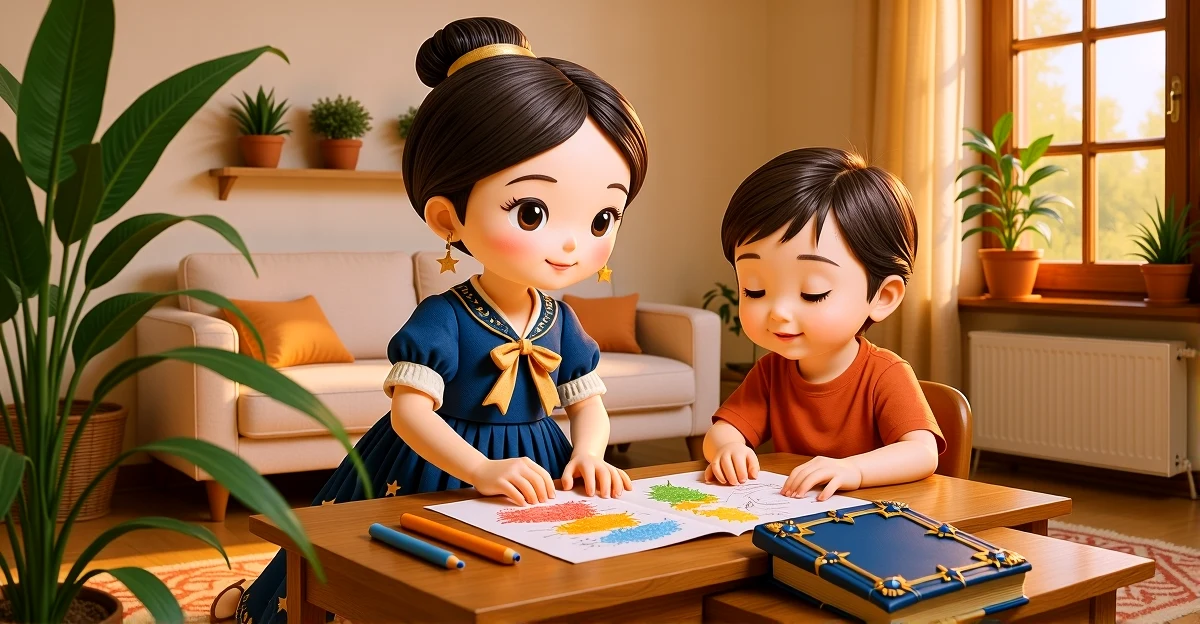
I am Inara, and the Magic Book and I have been learning so much about this challenge that more and more parents are facing. In this guide, I will share what research tells us about perfectionism in young children, why it leads to self-directed frustration, and most importantly, the gentle strategies that actually help. Plus, I will introduce you to a beautiful story that teaches self-compassion in the most magical way.
Understanding What Is Really Happening
When your child hits themselves after making a mistake, they are not trying to hurt themselves in the way we think of self-harm in older children or adults. What is actually happening is that their little heart is experiencing something called maladaptive perfectionism, and their developing brain does not yet have the tools to manage the BIG feelings that come when things do not go exactly as they hoped.
Research shows that perfectionism can emerge as early as ages four and five. These sensitive, thoughtful children develop what experts call black and white thinking. In their minds, if they make even one small mistake, they believe they have failed completely. If they cannot draw a circle perfectly, they think they are terrible at drawing. If they stumble over a word, they think they cannot read at all. It is not logical to us as adults, but to their developing brains, it feels absolutely true.
The Perfectionism-Overwhelm Connection
Here is what happens in that moment when your child makes a mistake. Their body is flooded with stress hormones. Their heart races. They feel this crushing sense of disappointment in themselves. And because they are only four or five years old, they do not have the words to say, I am feeling overwhelmed by my own expectations. I am experiencing shame and frustration. Instead, that energy has to go somewhere, and sometimes it comes out as hitting themselves or screaming.
The Magic Book taught me something so important about this: these children are not trying to hurt themselves. They are trying to release the unbearable feeling of having disappointed themselves. It is a form of emotional overwhelm, not self-harm in the clinical sense. But that does not make it any less concerning, and it does not mean we ignore it. It means we approach it with understanding and compassion.
What Research Tells Us About Childhood Perfectionism
A comprehensive review published in Frontiers in Psychiatry found that maladaptive perfectionism, especially concern over mistakes, is a significant risk factor for self-directed behaviors in children and adolescents. The research emphasizes that children with high perfectionism use self-directed actions as a form of self-punishment when they perceive they have failed to meet impossibly high standards.
Children with high maladaptive perfectionism use self-injury as a means of self-punishment and self-torture when they perceive failure.
— Frontiers in Psychiatry, 2021
But here is what is beautiful about this research: it also shows us that early intervention focusing on self-compassion and realistic thinking prevents escalation and builds lifelong emotional resilience. When we help children develop healthier relationships with mistakes early, we are giving them tools they will use forever.
The Developmental Context
Your four or five year old is in this AMAZING developmental phase where they are building their sense of competence. They are learning what they can do, what they are good at, and how the world works. Children with sensitive, thoughtful temperaments often develop incredibly high standards for themselves. They want everything to be just right. They want to succeed at everything they try.
According to child psychology experts at the Quirky Kid Child Psychology Clinic, perfectionistic children commonly think they must adhere to meeting impossibly high standards and display distorted thinking where if I make an error, I will be a complete failure. This black and white thinking is characteristic of their developmental stage, but it needs gentle redirection before it becomes a fixed pattern.
Gentle Strategies That Actually Work
The beautiful thing is that there are so many gentle, loving ways to help your child learn that mistakes are not failures. They are learning opportunities. They are stepping stones. They are actually how our brains grow and develop. When we make a mistake, our brain creates new connections. It is literally how we get smarter and more capable.
1. Model Mistake Acceptance Yourself
One of the most powerful things you can do is show your child how YOU handle mistakes. When you spill something, say out loud, Oops, I made a mistake. That is okay, I will clean it up. When you forget something, say, Oh, I forgot. My brain was thinking about something else. I will remember next time. Let your child see you make mistakes and handle them calmly, without harsh self-criticism.
Children are such keen observers. They watch how we treat ourselves, and they learn from that. If they see you being gentle with yourself when you make mistakes, they start to internalize that mistakes are a normal, acceptable part of being human.
2. Develop a Growth Mindset
Research consistently shows that fostering a growth mindset is essential for helping perfectionistic children. Instead of praising the outcome, praise the effort. Instead of saying, You drew that perfectly, say, I love how hard you worked on that drawing. I can see you tried so many different colors. Instead of, You are so smart, say, I noticed you kept trying even when it was tricky. That is how we learn.
This shift from outcome-focused praise to process-focused praise helps children understand that the journey matters more than the destination, and that effort and persistence are what we celebrate.
3. Stay Calm in the Moment
When your child does hit themselves or scream after a mistake, this is SO important: stay calm. I know that is hard when your heart is breaking, but your calm presence is what they need most. Get down to their level, and say something like, I see you are feeling really upset right now. Making mistakes can feel big and hard. But mistakes are how we learn. Your brain is growing right now.
Then help them take some deep breaths with you. You might say, Let us breathe together. In through our nose, out through our mouth. We are safe, and mistakes are okay. You are co-regulating with them, showing them that their big feelings are manageable and that you are there with them through it all.
4. Teach Realistic Self-Talk
You can help your child develop more realistic self-talk. When they say, I am terrible at this, you can gently say, You are learning this. It is hard right now, and that is okay. Learning new things takes time. When they say, I cannot do it, you can say, You cannot do it YET. But with practice, you will.
That little word, yet, is so powerful. It transforms a statement of defeat into a statement of possibility. It teaches children that abilities are not fixed, they are developed through practice and patience.
5. Break Tasks Into Smaller Steps
Breaking tasks down into smaller steps can help tremendously. If your child is trying to build something and getting frustrated, you might say, Let us start with just this one piece. Then we will add the next piece. One step at a time. This helps them experience success in small doses, which builds confidence and reduces the overwhelm.
Evidence-based research on behavioral interventions shows that breaking down overwhelming tasks and teaching problem-solving skills significantly reduces both perfectionistic anxiety and self-directed behaviors in young children.
Stories That Can Help
In The Book of Inara, we have beautiful stories that bring these concepts to life for your child. Stories are such powerful teachers because they show rather than tell, and children can see themselves in the characters they love.
The Cathedral of Gentle Echoes
Perfect for: Ages 4-5
What makes it special: This story directly addresses the core challenge of perfectionism and self-directed frustration. Kenji and Maeva discover that their musical mistakes in a peaceful cathedral create the most beautiful harmonies, teaching them that every error is a step toward something wonderful. The story perfectly models self-compassion, growth mindset, and the transformative power of accepting mistakes as part of learning.
Key lesson: When the children realize their mistakes create beautiful harmonies instead of failures, they learn that errors are not endpoints but pathways to discovery and beauty. After reading this story with your child, you can talk about it together. You might say, Remember how Kenji and Maeva's mistakes made beautiful music? I wonder if your mistakes are like that too. Maybe when you are learning to write and the letters do not look perfect yet, that is like the music in the cathedral. You are creating something beautiful as you learn.
When to Seek Additional Support
I also want you to know that if this behavior continues or intensifies, it is absolutely okay to reach out to your pediatrician or a child psychologist. Early intervention with a professional who understands childhood perfectionism can be incredibly helpful. There is no shame in getting support. In fact, it is one of the most loving things you can do for your child.
The research is so clear on this: when we help children develop self-compassion early, when we teach them that mistakes are part of learning, when we model gentle self-talk and celebrate effort over perfection, we are giving them tools they will use for their entire lives. We are helping them build resilience, emotional regulation, and a healthy relationship with challenge and growth.
You Are Doing Beautifully
Your child's sensitive heart, their high standards, their desire to do well, these are actually beautiful qualities. With your gentle guidance, these traits can become strengths. They can become the foundation for persistence, for creativity, for deep caring about their work and their relationships. Your child just needs your help to learn that perfection is not the goal. Growth is. Learning is. Trying is.
Remember, this is a journey. There will be days when it feels like you are making progress, and days when it feels like you are back at the beginning. That is normal. That is part of growth, for both you and your child. Be patient with yourself, just as you are learning to help your child be patient with themselves.
The Magic Book and I are always here for you, my wonderful friend. You are doing such important work, and you are doing it beautifully. With love and starlight, Inara.
Related Articles
- Building Physical Confidence in Young Children: Gentle Movement Strategies for Ages 4-5
- When Your Child Destroys Their Work Because It's Not Perfect: Understanding Childhood Perfectionism
- Building Confidence in Young Performers: A Gentle Guide for Ages 4-5
- When Your Toddler Hurts Themselves During Big Feelings: Understanding and Gentle Support
- When Your Child Won't Try New Things: Understanding Fear of Failure in Preschoolers
Show transcript
Hello, my wonderful friend. It's me, Inara, and I'm so glad you're here today. I want to talk with you about something that I know can be really frightening for parents. When your little one hits themselves or screams after making a mistake, it can feel absolutely heartbreaking. You might be wondering, why is my child doing this? Is something wrong? And I want you to know, first and foremost, that you're not alone in this, and your child is going to be okay.
The Magic Book and I have been learning so much about this, and what I've discovered is truly beautiful. Your child isn't misbehaving. They're not trying to hurt themselves in the way we might think. What's actually happening is that their little heart is experiencing something called perfectionism, and their developing brain doesn't yet have the tools to manage the BIG feelings that come when things don't go exactly as they hoped.
Let me explain what's really going on. Your four or five year old is in this AMAZING developmental phase where they're building their sense of competence. They're learning what they can do, what they're good at, and how the world works. And some children, especially those with sensitive, thoughtful temperaments, develop these incredibly high standards for themselves. They want everything to be just right. They want to succeed at everything they try. And when something doesn't work out perfectly, their whole nervous system floods with overwhelming feelings.
Research shows us that this kind of perfectionism can emerge as early as ages four and five. These little ones develop what experts call black and white thinking. In their minds, if they make even one small mistake, they believe they've failed completely. If they can't draw the circle perfectly, they think they're terrible at drawing. If they stumble over a word, they think they can't read at all. It's not logical to us as adults, but to their developing brains, it feels absolutely true.
And here's what happens in that moment when they make a mistake. Their body is flooded with stress. Their heart races. They feel this crushing sense of disappointment in themselves. And because they're only four or five years old, they don't have the words to say, I'm feeling overwhelmed by my own expectations. I'm experiencing shame and frustration. Instead, that energy has to go somewhere, and sometimes it comes out as hitting themselves or screaming.
The Magic Book taught me something so important about this. These children aren't trying to hurt themselves. They're trying to release the unbearable feeling of having disappointed themselves. It's a form of emotional overwhelm, not self-harm in the way we think of it with older children or adults. But that doesn't make it any less concerning, and it doesn't mean we ignore it. It means we approach it with understanding and compassion.
So what can we do to help? The research gives us such beautiful guidance here. First, we need to help our children understand that mistakes are not failures. They're learning opportunities. They're stepping stones. They're actually how our brains grow and develop. When we make a mistake, our brain creates new connections. It's literally how we get smarter and more capable.
One of the most powerful things you can do is model mistake acceptance yourself. When you spill something, say out loud, Oops, I made a mistake. That's okay, I'll clean it up. When you forget something, say, Oh, I forgot. My brain was thinking about something else. I'll remember next time. Let your child see you make mistakes and handle them calmly, without harsh self-criticism.
You can also help your child develop what researchers call a growth mindset. Instead of praising the outcome, praise the effort. Instead of saying, You drew that perfectly, say, I love how hard you worked on that drawing. I can see you tried so many different colors. Instead of, You're so smart, say, I noticed you kept trying even when it was tricky. That's how we learn.
When your child does hit themselves or scream after a mistake, stay calm. I know that's hard, but your calm presence is what they need most. Get down to their level, and say something like, I see you're feeling really upset right now. Making mistakes can feel big and hard. But mistakes are how we learn. Your brain is growing right now. Then help them take some deep breaths with you. You might say, Let's breathe together. In through our nose, out through our mouth. We're safe, and mistakes are okay.
You can also help them develop more realistic self-talk. When they say, I'm terrible at this, you can gently say, You're learning this. It's hard right now, and that's okay. Learning new things takes time. When they say, I can't do it, you can say, You can't do it YET. But with practice, you will.
Breaking tasks down into smaller steps can help too. If they're trying to build something and getting frustrated, you might say, Let's start with just this one piece. Then we'll add the next piece. One step at a time. This helps them experience success in small doses, which builds confidence and reduces the overwhelm.
And here's where stories become such a beautiful helper. The Magic Book and I have a story called The Cathedral of Gentle Echoes, and it's absolutely perfect for this. In this story, Kenji and Maeva are making music in a beautiful cathedral, and they keep making mistakes. But instead of those mistakes being failures, they discover that their mistakes create the most beautiful harmonies. The cathedral transforms their errors into something wonderful.
This story teaches children, in the gentlest way, that mistakes aren't endings. They're part of the creative process. They're part of learning. They're part of becoming. When children hear this story, they start to internalize the idea that mistakes can lead to beauty, to discovery, to something they never would have found if everything had gone perfectly.
After you read this story with your child, you can talk about it together. You might say, Remember how Kenji and Maeva's mistakes made beautiful music? I wonder if your mistakes are like that too. Maybe when you're learning to write and the letters don't look perfect yet, that's like the music in the cathedral. You're creating something beautiful as you learn.
I also want you to know that if this behavior continues or intensifies, it's absolutely okay to reach out to your pediatrician or a child psychologist. Early intervention with a professional who understands childhood perfectionism can be incredibly helpful. There's no shame in getting support. In fact, it's one of the most loving things you can do for your child.
The research is so clear on this. When we help children develop self-compassion early, when we teach them that mistakes are part of learning, when we model gentle self-talk and celebrate effort over perfection, we're giving them tools they'll use for their entire lives. We're helping them build resilience, emotional regulation, and a healthy relationship with challenge and growth.
Your child's sensitive heart, their high standards, their desire to do well, these are actually beautiful qualities. With your gentle guidance, these traits can become strengths. They can become the foundation for persistence, for creativity, for deep caring about their work and their relationships. But they need your help to learn that perfection isn't the goal. Growth is. Learning is. Trying is.
So tonight, or tomorrow, whenever feels right, snuggle up with your little one and read The Cathedral of Gentle Echoes together. Let them see that mistakes can create beauty. Let them feel your calm presence. Let them know that you love them exactly as they are, mistakes and all. Because that's the truth, isn't it? You love them not because they're perfect, but because they're perfectly themselves.
The Magic Book and I are always here for you, my wonderful friend. You're doing such important work, and you're doing it beautifully. With love and starlight, Inara.