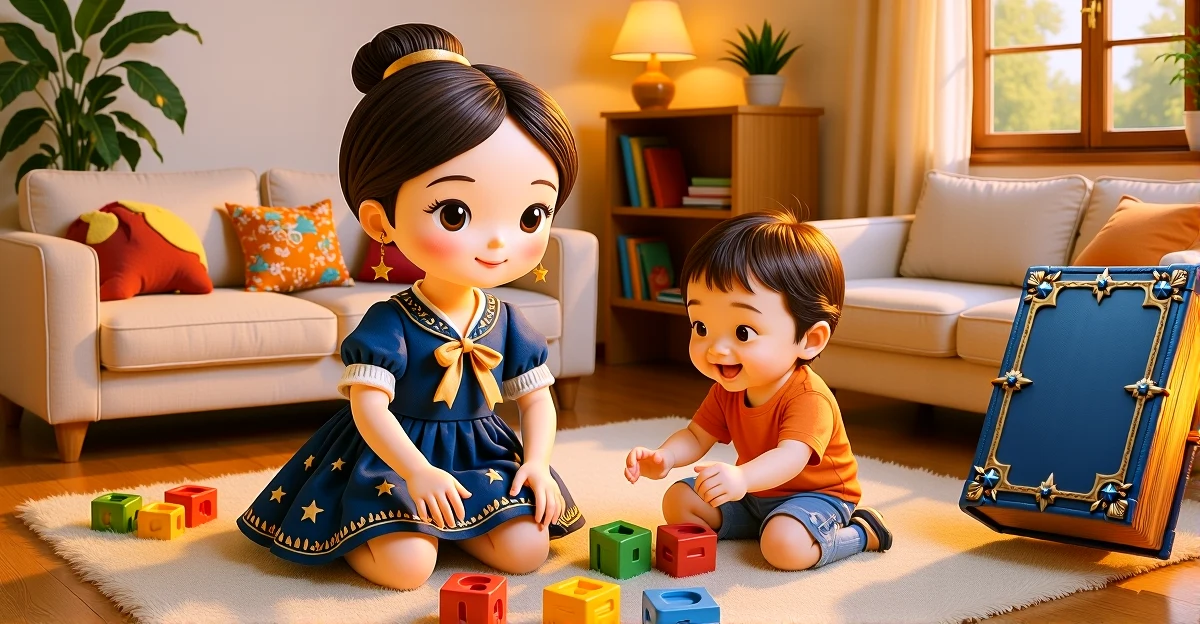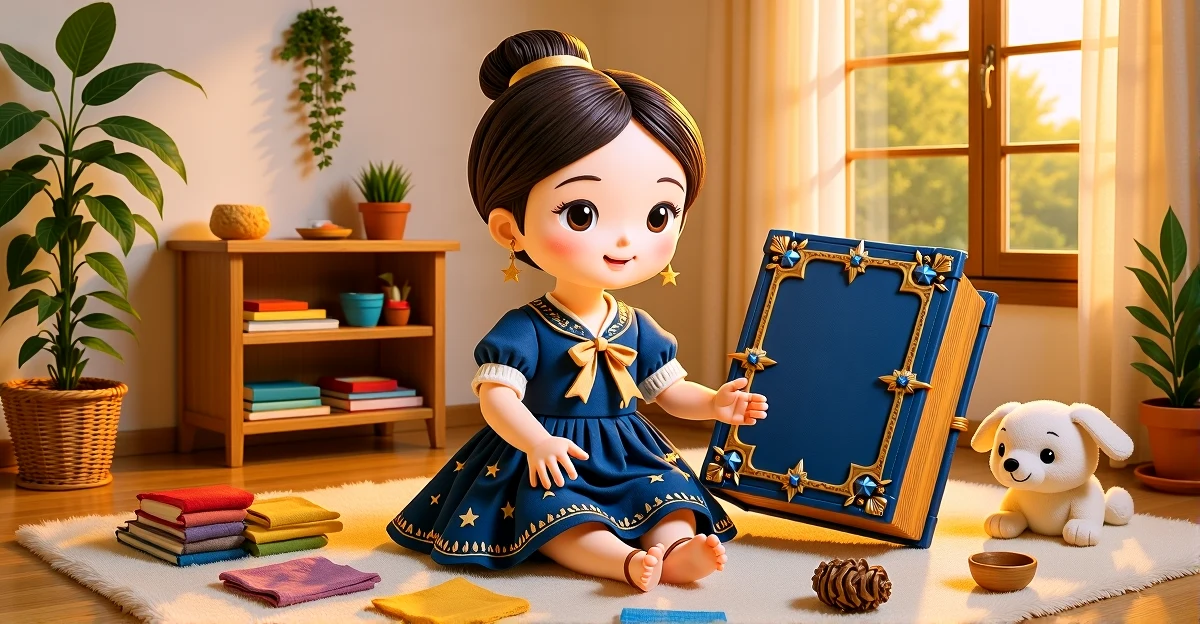

Hello, wonderful parent! It's me, Inara, and I want to talk with you about something that might surprise you. Something that might even make you feel a little less guilty. You know those moments when your toddler is happily exploring their toys, and you're folding laundry or reading a book nearby? Those moments when you wonder if you should be down on the floor playing with them instead?
Here's what the Magic Book and I want you to know: You're not being neglectful. In fact, you're giving your child something incredibly precious. You're giving them the gift of independent play, and it's one of the MOST important things you can offer your growing toddler.
In this guide, we're going to explore why independent play matters SO much for children ages two to three, what the research tells us, and gentle strategies you can use to encourage this beautiful skill. Plus, I'll share a story from The Book of Inara that brings these concepts to life in the most magical way.
Understanding Independent Play (And Why It's Not What You Think)
When I talk about independent play, I'm not talking about leaving your child alone in a room for hours. I'm talking about those precious moments when your child is engaged in self-directed exploration while you're nearby, available but not hovering. It's about trusting their natural curiosity and giving them space to discover their own capabilities.
The Magic Book has taught me that children ages two to three are in a BEAUTIFUL developmental phase. They're discovering their independence, testing their abilities, and learning that they can entertain themselves. This isn't just play, it's brain development in action.
What Independent Play Looks Like at Ages 2-3
For toddlers, independent play might look like:
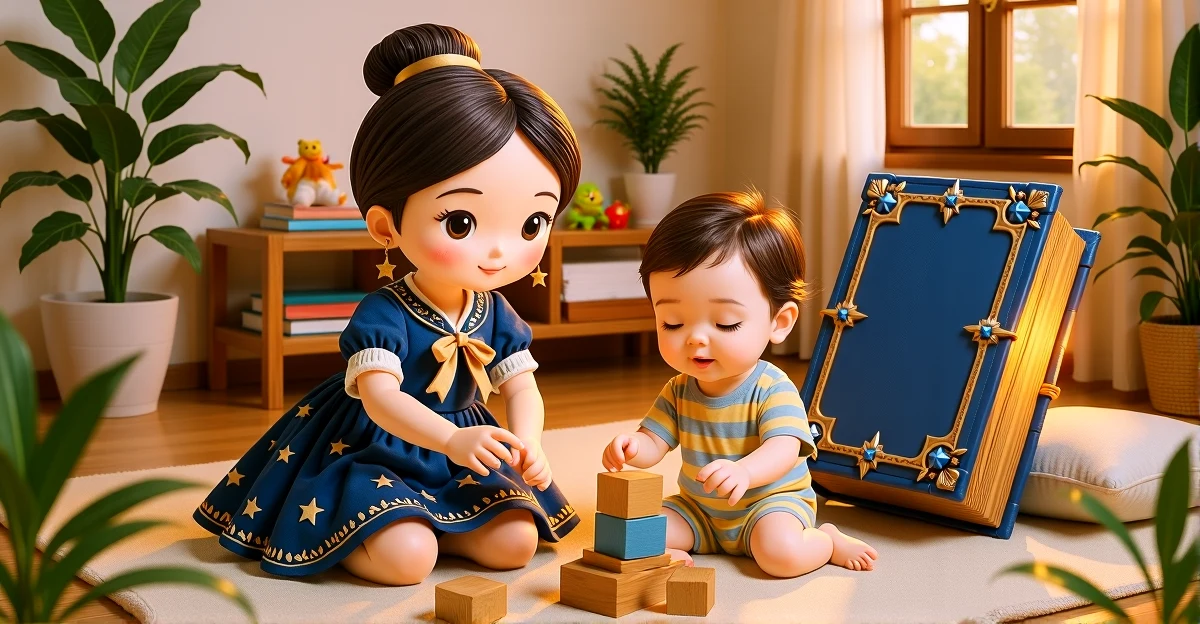
- Stacking blocks and knocking them down, over and over
- Arranging toys in patterns only they understand
- Talking to stuffed animals or dolls
- Exploring how objects fit together or come apart
- Simply sitting and observing the world around them
Even when it looks like they're "just messing around," something magical is happening. They're strengthening their imagination, sharpening their motor skills, and building confidence in their own ideas.
What Research Tells Us About Independent Play
Here's where things get really interesting. The research on independent play is clear, and it's SO encouraging for parents who sometimes feel guilty about not playing with their children every single moment.
The Centers for Disease Control and Prevention, which studies child development very carefully, tells us that children ages two to three are going through HUGE changes in their thinking, learning, and emotional abilities. This is the age when they're discovering their independence, and free play is absolutely essential for developing their motor skills and creativity.
"Encouraging free play helps toddlers stay active and develop motor skills. When we encourage our children to play freely, we're supporting their natural development in the most beautiful way."
— Centers for Disease Control and Prevention
Janet Lansbury, a wonderful child development specialist and RIE associate, shares something that really opened my eyes. She explains that when we join in our children's play, our presence can easily take over. Without us even realizing it, our child's activity can become all about us instead of about them.
Here's what she discovered: When parents stay in a responsive mode and allow children to lead, children do something far more interesting than what adults might direct. Even when children seem to be just messing around, they're actually sharpening their cognitive and motor skills in ways we might not immediately see.
The Raising Children Network reminds us that what we sometimes call the "terrible twos" is actually an exciting developmental phase. It's when toddlers are exploring their capabilities and discovering what they can do all on their own. This independence-building is a key milestone, and it's completely normal and healthy.
The Beautiful Benefits of Independent Play
When your child engages in independent play, here's what's happening in that amazing little brain:
Building Confidence and Self-Reliance
Every time your child figures something out on their own, whether it's how to stack blocks or how to make a toy work, they're learning something POWERFUL: "I can do this myself." This builds the foundation for confidence that will serve them their entire lives.
Strengthening Imagination and Creativity
When children direct their own play, they create whole worlds in their minds. That block becomes a car, then a house, then a spaceship. This imaginative flexibility is crucial for creative thinking and problem-solving later in life.
Developing Problem-Solving Skills
When you're not there to immediately help, your child has to figure things out. How do these pieces fit together? What happens if I try this? This trial-and-error process is how children learn to think critically and solve problems.
Learning to Self-Regulate
Independent play teaches children to manage their own attention, to stay focused on something that interests them, and to handle small frustrations without immediately seeking adult intervention. These are ESSENTIAL life skills.
Gentle Strategies for Encouraging Independent Play
Now, let me share some beautiful, gentle strategies for encouraging independent play. Remember, this isn't about pushing your child away or ignoring them. It's about creating the conditions where they can discover their own capabilities.
Create a Safe, Inviting Space
Set up an area where your child can explore freely without you worrying about their safety. This doesn't have to be fancy. It just needs to be a place where they can move around, where nothing heavy can fall on them, and where you feel comfortable letting them discover on their own.
Offer Open-Ended Materials
The Magic Book has taught me that children's imaginations are INCREDIBLE. They don't need expensive toys to create whole worlds of play. Simple items work beautifully:
- Wooden blocks in various shapes and sizes
- Fabric scraps or scarves
- Safe household items like wooden spoons and bowls
- Simple dolls or stuffed animals
- Baskets for sorting and collecting
Resist the Urge to Direct or Complete Tasks
This is SO important, and it can be challenging. When you see your child struggling with something, your instinct might be to jump in and help. But unless they're in danger or truly frustrated, try waiting. Give them the chance to figure it out. When they do, the pride and confidence they feel is absolutely beautiful.
Stay Nearby But Not Hovering
You can be in the same room doing your own thing—reading a book, folding laundry, or just sitting quietly. Your presence provides security, but your focus on your own activity shows them that it's okay to be engaged in separate things. This is healthy for both of you!
Start Small and Build Gradually
If your child isn't used to independent play, start with just five or ten minutes. Stay nearby and available. As they become more comfortable, you can gradually extend these periods. There's no rush. Every child develops at their own pace.
Validate Their Play
When you do engage, show genuine interest in what they've created or discovered. "I see you stacked those blocks SO high!" or "You figured out how to open that container all by yourself!" This validation reinforces that their independent exploration is valuable and important.
A Story That Brings This to Life
In The Book of Inara, we have a beautiful story that illustrates the kind of gentle, focused engagement that builds independence. Let me tell you about it:
The Greenhouse Where Plants Whisper Thank You
Perfect for: Ages 2-3
What makes it special: This story beautifully models the kind of focused, gentle engagement that builds independence. Milo and Nana discover a magical greenhouse where plants glow softly when they're cared for. Through their gentle touches and kind words, they learn that their own actions have meaningful effects.
Key lesson: When the plants glow in response to Milo and Nana's gentle care, children learn something WONDERFUL. They learn that they have the power to nurture and create positive outcomes through their own actions. This is exactly the kind of confidence that independent play builds.
How to use this story: After reading this story with your child, you might try creating simple care activities together. Maybe watering a plant, arranging toys gently, or even just observing how things change when we give them gentle attention. These activities let your child experience the satisfaction of focused, independent engagement.
The Magic Book reminds me that just as plants grow when given gentle care and space, children flourish when given opportunities for self-directed exploration.
You're Doing Beautifully
I know this can feel counterintuitive, especially in a world that tells us we should be constantly entertaining and educating our children. But the research is clear, and the Magic Book confirms it: Independent play is not about leaving children alone or neglecting them. It's about trusting their natural curiosity and giving them the space to develop their own ideas.
So the next time your toddler is happily engaged in play, and you're tempted to feel guilty about not joining in, remember this: You're not being neglectful. You're being wise. You're giving your child the precious gift of discovering their own capabilities. You're building their confidence, creativity, and independence.
And that, wonderful parent, is absolutely BEAUTIFUL.
The Magic Book and I are always here for you, cheering you on as you navigate this wonderful journey of parenting. You're doing such important work, and you're doing it beautifully.
With love and starlight,
Inara
Related Articles
- Understanding Your Toddler's Need for Connection: The Journey from Attachment to Independence
- Why Your Child Follows You Everywhere and How to Build Independent Play
- Understanding Your Toddler's Growing Independence (Ages 2-3)
- Understanding Why Your Toddler Wants to Be Carried (The Beautiful Truth About Connection)
- Understanding the Me Do It Phase: Supporting Your Toddler's Growing Independence
Show transcript
Hello, wonderful parent! It's me, Inara, and I am SO happy you're here today. You know, the Magic Book and I have been noticing something beautiful happening in homes all around the world. Parents like you are asking such thoughtful questions about how to help their little ones grow into confident, independent explorers. And today, I want to talk about something that might surprise you. Something that might even make you feel a little less guilty. We're going to talk about independent play, and why those moments when your child plays alone are actually a precious gift you're giving them.
Now, I know what some of you might be thinking. You might be feeling a little guilty right now, wondering if you should be playing with your child more. Maybe you've had those moments where your toddler is happily exploring their toys, and you think, should I be down there on the floor with them? Am I being a bad parent if I'm folding laundry while they play?
Let me tell you something WONDERFUL. You are not being a bad parent. In fact, when you give your child space to play independently, you're giving them something incredibly valuable. You're giving them the chance to discover their own capabilities, to strengthen their imagination, and to build confidence in themselves. The Magic Book has shown me that independent play is one of the most important gifts we can offer our little ones.
Let me share what the research tells us. The Centers for Disease Control and Prevention, which studies child development very carefully, tells us that children ages two to three are going through HUGE changes in their thinking, learning, and emotional abilities. This is the age when they're discovering their independence, and free play is absolutely essential for developing their motor skills and creativity. When we encourage our children to play freely, we're supporting their natural development in the most beautiful way.
And here's something that really opened my eyes. Janet Lansbury, a wonderful child development specialist, explains that when we join in our children's play, our presence can easily take over. Without us even realizing it, our child's activity can become all about us instead of about them. She says that when we stay in a responsive mode and allow children to lead, they do something far more interesting than what we adults might direct. Even when children seem to be just messing around, they're actually sharpening their cognitive and motor skills in ways we might not immediately see.
The Raising Children Network, which helps parents all over Australia, reminds us that what we sometimes call the terrible twos is actually an exciting developmental phase. It's when toddlers are exploring their capabilities and discovering what they can do all on their own. This independence-building is a key milestone, and it's completely normal and healthy.
So what does this mean for you, dear parent? It means that when your two or three year old is happily engaged with their toys, exploring how things work, or even just sitting quietly and observing the world around them, something MAGICAL is happening. They're learning that they can entertain themselves. They're discovering that their own ideas are valuable. They're building the foundation for creativity, problem-solving, and confidence that will serve them for their entire lives.
Now, let me share some gentle strategies for encouraging this beautiful independent play. First, create a safe space where your child can explore freely. This doesn't have to be fancy. It just needs to be a place where they can move around, where nothing heavy can fall on them, and where you feel comfortable letting them discover on their own.
Second, offer open-ended materials. Things like blocks, simple toys, fabric scraps, or even safe household items like wooden spoons and bowls. The Magic Book has taught me that children's imaginations are INCREDIBLE, and they don't need expensive toys to create whole worlds of play.
Third, and this is so important, resist the urge to direct or complete tasks for your child. When you see them struggling with something, your instinct might be to jump in and help. But unless they're in danger or truly frustrated, try waiting. Give them the chance to figure it out. When they do, the pride and confidence they feel is absolutely beautiful.
Fourth, stay nearby but not hovering. You can be in the same room doing your own thing, reading a book, folding laundry, or just sitting quietly. Your presence provides security, but your focus on your own activity shows them that it's okay to be engaged in separate things.
And here's something the research shows us. Children whose parents facilitate self-directed play rather than directing activities develop stronger imagination, better problem-solving abilities, and greater self-reliance. They learn to trust their own ideas and capabilities.
Now, I want to tell you about a story that beautifully illustrates this kind of gentle, focused engagement. It's called The Greenhouse Where Plants Whisper Thank You, and it's about Milo and Nana discovering a magical greenhouse where plants glow softly when they're cared for. In this story, Milo and Nana learn that their gentle touches and kind words help their green friends grow stronger and happier.
What I love about this story is how it shows children engaged in calm, focused activity. They're discovering that their own actions have meaningful effects. When the plants glow in response to their gentle care, Milo and Nana learn something WONDERFUL. They learn that they have the power to nurture and create positive outcomes through their own actions. This is exactly the kind of confidence that independent play builds.
After you read this story with your child, you might try creating simple care activities together. Maybe watering a plant, arranging toys gently, or even just observing how things change when we give them gentle attention. These activities let your child experience the satisfaction of focused, independent engagement.
The Magic Book reminds me that just as plants grow when given gentle care and space, children flourish when given opportunities for self-directed exploration. We don't need to fill every moment with structured activities or constant interaction. Sometimes, the most loving thing we can do is provide a safe space and then step back, trusting our children to discover their own capabilities.
I know this can feel counterintuitive, especially in a world that tells us we should be constantly entertaining and educating our children. But the research is clear, and the Magic Book confirms it. Independent play is not about leaving children alone or neglecting them. It's about trusting their natural curiosity and giving them the space to develop their own ideas.
So the next time your toddler is happily engaged in play, and you're tempted to feel guilty about not joining in, remember this. You're not being neglectful. You're being wise. You're giving your child the precious gift of discovering their own capabilities. You're building their confidence, creativity, and independence. And that, dear parent, is absolutely BEAUTIFUL.
The Magic Book and I are always here for you, cheering you on as you navigate this wonderful journey of parenting. You're doing such important work, and you're doing it beautifully.
With love and starlight, Inara.