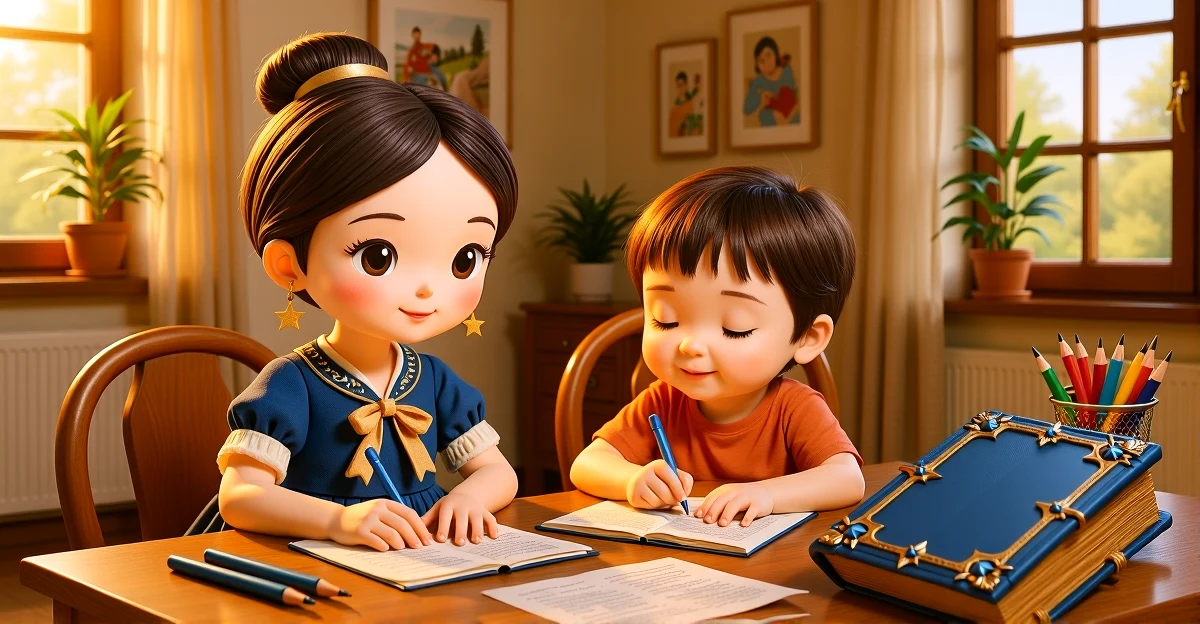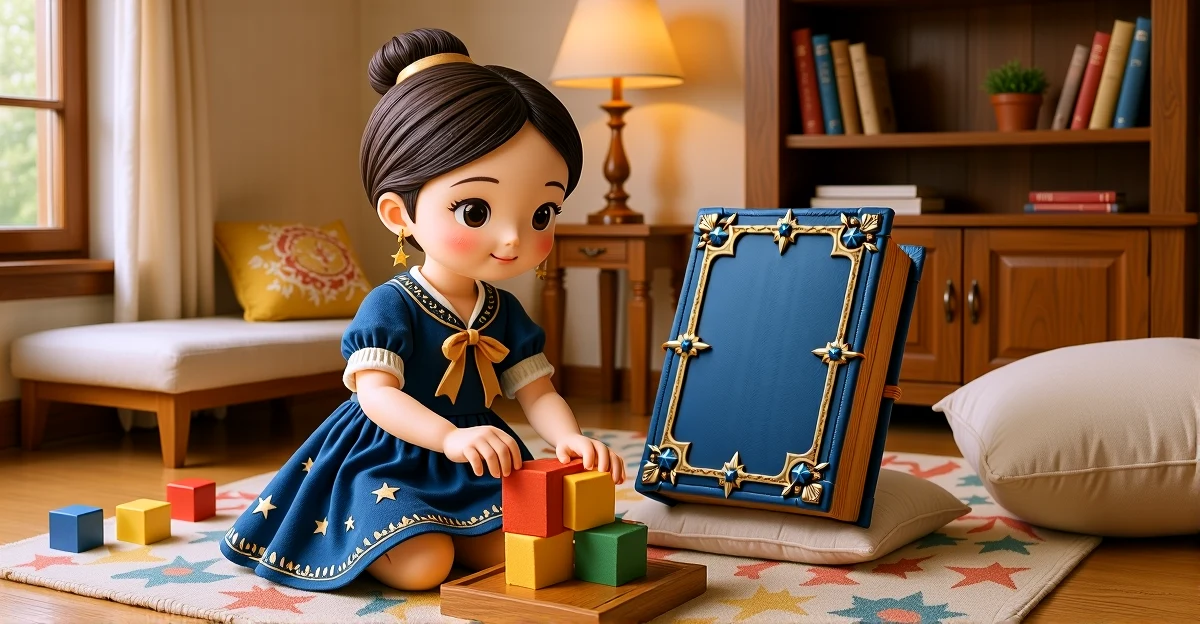

Hello, wonderful parent! It's me, Inara, and I am SO happy you're here today. If you have a four or five year old who sometimes gets overwhelmed by big feelings, who struggles when things don't go as planned, or who seems to have emotions that feel too big for their little body, I want you to know something important right from the start: You are not alone in this. And your child is not being difficult.
The Magic Book and I have been noticing something beautiful happening in homes all around the world. Parents like you are asking such thoughtful questions about helping their children navigate big emotions. And here's what's magical about this moment: your child's brain is actually building something incredible right now. Something I like to call emotional superpowers.
In this guide, we're going to explore why this phase is actually WONDERFUL, what the research tells us about emotional development in 4-5 year olds, and most importantly, gentle strategies that actually work to help your child build these lifelong skills. Let's begin this journey together.
Understanding What's Really Happening
Between ages four and five, your child's brain is in a critical period of emotional development. They're learning to recognize feelings, name them, and eventually manage them. But here's the thing that the Magic Book taught me: this skill doesn't happen overnight. It takes YEARS to develop, and what you're seeing right now, those big emotions, those moments of overwhelm, that's actually their brain hard at work.
Think about it this way. When your child was learning to walk, they fell down many times before they could take steady steps. When they were learning to talk, they made sounds that didn't quite make sense before forming clear words. Emotional regulation is exactly the same. It's a skill that requires practice, patience, and your gentle guidance.
Research consistently demonstrates that emotional regulation is a foundational developmental skill for children ages 4-5, representing a critical period when young learners are building the capacity to manage big feelings and navigate increasingly complex social and academic environments. Your child isn't behind. They're not broken. They're right on track, learning one of the most important skills they'll ever develop.
What Research Tells Us About Emotional Development
The Magic Book loves to share wisdom from researchers who have studied how children grow and learn. And what they've discovered about emotional regulation is truly fascinating.
Dr. Paulo Graziano, a child psychologist at the University of North Carolina, discovered something wonderful in his research. He found that children with stronger emotion regulation skills don't just have fewer meltdowns. They actually perform better in school, have more positive friendships, and feel more confident in themselves.
Emotion regulation helps children handle the qualitative shift in the learning environment that occurs during kindergarten. Children with good regulation skills are better equipped to independently attend to and learn new information.
— Dr. Paulo Graziano, University of North Carolina at Greensboro
In other words, when your child learns to manage their big feelings, they're not just learning to calm down. They're learning how to learn, how to connect with others, how to grow into their fullest potential.
The Child Mind Institute explains this beautifully. They emphasize that emotional regulation is a skill some children need to be taught explicitly. And I want you to really hear that, because it's SO important. When your child struggles with big emotions, it doesn't mean something is wrong. It means they're in a learning phase, and they need your patient guidance, your warm presence, and your belief in them.
The CASEL framework, which is used by educators all around the world, identifies self-management as one of five core social-emotional learning competencies. Self-management includes the ability to manage emotions, thoughts, and behaviors effectively. This isn't just about preventing meltdowns. It's about giving your child tools they'll use throughout their entire life. Tools for handling stress, for solving problems, for building relationships, for believing in themselves.
Four Gentle Strategies That Actually Work
So how can you help your child build these emotional superpowers? Let me share some gentle, research-backed strategies that the Magic Book and I have seen work beautifully in families just like yours.
1. Name the Feelings
When your child is experiencing a big emotion, get down to their level, look into their eyes with warmth, and help them put words to what they're feeling. You might say something like, "I can see you're feeling really frustrated right now. Your body is telling me that this is hard for you."
When you name the emotion, you're actually helping their brain process it. You're teaching them that feelings are normal, that they have names, and that they can be understood. This simple act of naming creates a bridge between their emotional experience and their developing language skills, giving them power over feelings that once felt overwhelming.
2. Validate Before You Redirect
This is SO important, and it's something many parents skip in the heat of the moment. Before you try to solve the problem or change the behavior, let your child know that their feelings make sense.
You might say, "Of course you're disappointed. You really wanted to keep playing, and now it's time to stop. That's hard." When children feel understood, their nervous system can begin to calm down. But when they feel dismissed or judged, those big emotions often get even bigger.
Validation doesn't mean you're saying yes to everything they want. It means you're acknowledging that their emotional experience is real and valid, even when the answer has to be no.
3. Teach Calming Strategies When Everyone Is Calm
Here's a truth the Magic Book taught me: You can't teach someone to swim while they're drowning, and you can't teach emotional regulation in the middle of a meltdown.
Instead, during peaceful moments, practice deep breathing together. Make it playful. Pretend you're blowing out birthday candles, or smelling flowers and blowing out candles. Practice counting to five slowly. Practice finding a cozy spot where they can go when they need to calm down.
When you practice these strategies during calm times, your child's brain builds the neural pathways to access them during stressful times. It's like creating a map they can follow when emotions feel overwhelming.
4. Be Their Calm
This might be the most important strategy of all. When your child is overwhelmed, their nervous system is looking to yours for cues about whether they're safe. If you can stay calm, breathe slowly, and speak gently, you're actually helping regulate their nervous system with yours.
This is called co-regulation, and it's one of the most powerful tools you have as a parent. Your calm becomes their calm. Your steady presence tells their nervous system, "You're safe. We can handle this together."
Research demonstrates that children whose parents respond with patience and teaching during emotional moments develop stronger regulation skills that serve them throughout their educational journey. Every time you stay calm during your child's storm, you're building their emotional intelligence. You're giving them a gift that will last a lifetime.
Stories That Can Help
The Magic Book and I believe that stories are such gentle helpers in this journey of emotional growth. In The Book of Inara, we have beautiful stories that bring these concepts to life for your child in ways that feel magical and meaningful.
The Center Where Hearts Are Heard
Perfect for: Ages 4-5
What makes it special: In this story, Ethan and Sofia visit a magical advocacy center with their Grandpa Ravi, where worried feelings actually bloom into solution flowers. They discover that every problem has many creative answers waiting to be found, and that their big feelings aren't something to be afraid of. They're actually the first step toward finding solutions.
Key lesson: When worried feelings transform into solution flowers at the advocacy center, children learn that their emotions are valid and valuable. Their feelings can lead to creative problem-solving rather than being something to fear or suppress.
How to use this story: After reading this story together, you might create your own worry-to-solution ritual with your child. You could help them understand that big feelings are the first step toward finding answers, not something to be ashamed of. You might even create a special "feelings garden" where you draw or talk about emotions together.
Each story in The Book of Inara is crafted with care to help children understand their emotions, build confidence, and know that they're loved exactly as they are. These aren't just bedtime stories. They're gentle teachers, cosmic companions on your child's journey of emotional growth.
You're Doing Beautifully
I want you to know something else, too. This phase is completely normal. Every child goes through it. Some children move through it more quickly, some take more time. Some children have bigger emotions, some have quieter ones. But every single child is learning, growing, and building these skills at their own perfect pace.
And you, wonderful parent, you're doing such a beautiful job guiding them through it. Every time you get down to their level and name their feelings. Every time you validate before redirecting. Every time you practice calming strategies together during peaceful moments. Every time you are their calm in the storm. You're building their emotional superpowers.
Those big emotions? They're not a problem to fix. They're a sign that your child's heart is growing, their mind is expanding, and their emotional intelligence is being built, one feeling at a time.
The Magic Book and I believe in you. We believe in your child. And we're here to support you with stories, with wisdom, and with love.
With love and starlight,
Inara
Related Articles
- When Your Child Falls Apart During Stress: Understanding and Supporting Emotional Regulation
- Understanding Extended Meltdowns in Preschoolers Ages 4-5
- Teaching Good Sportsmanship to Young Children: A Gentle Parenting Guide
- Understanding Why Unexpected Changes Feel So Big to Your Child (And How to Help)
- Why Your Child Melts Down Over Feedback (And How to Help)
Show transcript
Hello, wonderful parent! It's me, Inara, and I am so happy you're here today. You know, the Magic Book and I have been noticing something beautiful happening in homes all around the world. Parents like you are asking such thoughtful questions about helping their children navigate big emotions. And today, we're going to talk about something that might feel challenging right now, but is actually one of the most WONDERFUL parts of your child's development.
If you have a four or five year old who sometimes gets overwhelmed by big feelings, who struggles when things don't go as planned, or who seems to have emotions that feel too big for their little body, I want you to know something important. You are not alone in this. And your child is not being difficult. Their brain is actually building something incredible right now, something I like to call emotional superpowers.
Let me share what the Magic Book taught me about this magical time in your child's life. Between ages four and five, your child's brain is in a critical period of emotional development. They're learning to recognize feelings, name them, and eventually manage them. But here's the thing, this skill doesn't happen overnight. It takes YEARS to develop, and what you're seeing right now, those big emotions, those moments of overwhelm, that's actually their brain hard at work, building the neural pathways they'll use for the rest of their lives.
Dr. Paulo Graziano, a child psychologist at the University of North Carolina, discovered something fascinating in his research. He found that children with stronger emotion regulation skills don't just have fewer meltdowns, they actually perform better in school, have more positive friendships, and feel more confident in themselves. But here's what I love most about his research, he emphasizes that emotion regulation helps children handle the qualitative shift in their learning environment. In other words, when your child learns to manage their big feelings, they're not just learning to calm down, they're learning how to learn, how to connect, how to grow.
The Child Mind Institute explains this beautifully. They say that emotional regulation is a skill some children need to be taught. And I want you to really hear that, because it's so important. When your child struggles with big emotions, it doesn't mean something is wrong. It means they're in a learning phase, just like when they were learning to walk or learning to talk. They need your patient guidance, your warm presence, and your belief in them.
So how can you help your child build these emotional superpowers? Let me share some gentle, research-backed strategies that the Magic Book and I have seen work beautifully.
First, name the feelings. When your child is experiencing a big emotion, get down to their level, look into their eyes with warmth, and help them put words to what they're feeling. You might say something like, I can see you're feeling really frustrated right now. Your body is telling me that this is hard for you. When you name the emotion, you're actually helping their brain process it. You're teaching them that feelings are normal, that they have names, and that they can be understood.
Second, validate before you redirect. This is SO important. Before you try to solve the problem or change the behavior, let your child know that their feelings make sense. You might say, Of course you're disappointed. You really wanted to keep playing, and now it's time to stop. That's hard. When children feel understood, their nervous system can begin to calm down. But when they feel dismissed or judged, those big emotions often get even bigger.
Third, teach calming strategies when everyone is calm. This is key. You can't teach someone to swim while they're drowning, and you can't teach emotional regulation in the middle of a meltdown. Instead, during peaceful moments, practice deep breathing together. Make it playful. Pretend you're blowing out birthday candles, or smelling flowers and blowing out candles. Practice counting to five slowly. Practice finding a cozy spot where they can go when they need to calm down. When you practice these strategies during calm times, your child's brain builds the pathways to access them during stressful times.
Fourth, be their calm. This might be the most important strategy of all. When your child is overwhelmed, their nervous system is looking to yours for cues about whether they're safe. If you can stay calm, breathe slowly, and speak gently, you're actually helping regulate their nervous system with yours. This is called co-regulation, and it's one of the most powerful tools you have. Your calm becomes their calm.
And here's something else the Magic Book showed me. Stories can be such gentle helpers in this journey. We have a beautiful story in The Book of Inara called The Center Where Hearts Are Heard. In this story, Ethan and Sofia visit a magical advocacy center with their Grandpa Ravi, where worried feelings actually bloom into solution flowers. They discover that every problem has many creative answers waiting to be found, and that their big feelings aren't something to be afraid of, they're actually the first step toward finding solutions.
What I love about this story is how it shows children that their emotions are valid and valuable. When worried feelings transform into solution flowers at the advocacy center, children learn that their feelings can lead to creative problem-solving rather than being something to fear or suppress. After reading this story together, you might create your own worry-to-solution ritual with your child. You could help them understand that big feelings are the first step toward finding answers, not something to be ashamed of.
The CASEL framework, which is used by educators all around the world, identifies self-management as one of five core social-emotional learning competencies. And self-management includes the ability to manage emotions, thoughts, and behaviors effectively. This isn't just about preventing meltdowns, it's about giving your child tools they'll use throughout their entire life. Tools for handling stress, for solving problems, for building relationships, for believing in themselves.
Research shows us that children whose parents respond with patience and teaching during emotional moments develop stronger regulation skills that serve them throughout their educational journey. Every time you stay calm during your child's storm, every time you validate their feelings, every time you teach them a calming strategy, you're building their emotional intelligence. You're giving them a gift that will last a lifetime.
I want you to know something else, too. This phase is completely normal. Every child goes through it. Some children move through it more quickly, some take more time. Some children have bigger emotions, some have quieter ones. But every single child is learning, growing, and building these skills at their own perfect pace. And you, wonderful parent, you're doing such a beautiful job guiding them through it.
The Magic Book and I believe in you. We believe in your child. And we're here to support you with stories, with wisdom, and with love. You can find The Center Where Hearts Are Heard and so many other helpful stories in The Book of Inara. Each story is crafted with care to help children understand their emotions, build confidence, and know that they're loved exactly as they are.
Thank you for being here today. Thank you for caring so deeply about your child's emotional well-being. And remember, those big emotions? They're not a problem to fix. They're a sign that your child's heart is growing, their mind is expanding, and their emotional superpowers are being built, one feeling at a time.
With love and starlight, Inara.