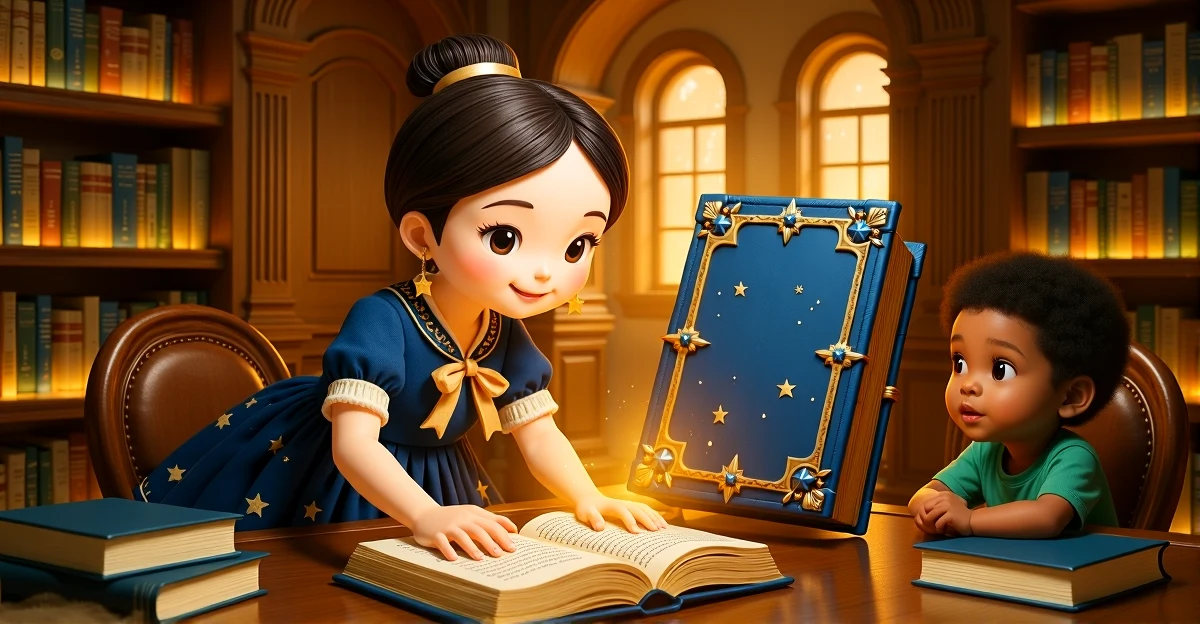

Hello, wonderful parent! It's me, Inara, and I want to share something truly beautiful with you today. You know those moments when your five or six year old tells you the truth even though it's hard? Or when they share their favorite toy with a friend who's sad? Or when they stand up for what's right, even when no one else is watching? Those aren't just sweet moments—they're glimpses of something MAGNIFICENT happening inside your child's heart and mind.
If you're here because you want to raise a child with strong character and unshakeable integrity, I want you to know something right away: the fact that you're even thinking about this tells me everything I need to know about the kind of parent you are. You care deeply about raising a child who knows right from wrong, who treats others with kindness and fairness, and who stands up for what's good. And that is SO important.
Here's what the Magic Book taught me, and what I'm going to share with you today: your child between ages five and six is in a critical developmental window for character formation. Right now, in this very moment, they're building their moral compass. And what you do—how you model integrity, how you respond to their mistakes, how you celebrate their character—matters more than you might think.
Why Ages 5-6 Are a Critical Window for Character Development
Let me tell you what makes this age SO special. Research shows that ages five to six represent a pivotal time when children transition from simple rule-following to genuine moral reasoning. Your kindergartener isn't just asking "Will I get in trouble?" anymore. They're starting to ask "Is this the right thing to do?" And that shift—that beautiful shift from external rules to internal values—is what we're nurturing right now.
Dr. Melanie Killen from the University of Maryland discovered something remarkable in her research on moral development. She found that starting around ages five to six, children begin to evaluate group-based norms and develop sophisticated moral reasoning about fairness and equality. Isn't that AMAZING? Your child is actually thinking about what makes something right or wrong. They're developing their own sense of justice and fairness.
"Starting around ages 5-6, children begin to evaluate group-based norms and develop sophisticated moral reasoning about fairness and equality."
— Dr. Melanie Killen, University of Maryland
This developmental phase is characterized by your child's growing capacity to recognize right from wrong not just through consequences, but through internalized values. They're building the foundation of who they'll become as a person of character. And here's what's truly magical: they're doing this by watching YOU.
How Your Child Learns Integrity by Watching You
Here's what the Magic Book taught me about how character development actually works at this age. Your child is watching you. Not just sometimes. All the time. They're watching how you handle honesty when it's hard. They're watching how you treat people when you're frustrated. They're watching whether you keep your promises, even the small ones. And through that watching, they're building their understanding of what it means to be a person of character.
The VIA Institute on Character has done extensive research on this, and they found that parent and teacher modeling of character strengths creates stronger development of integrity and moral excellence in children ages five to six. In other words, your child learns integrity by seeing integrity lived authentically by the adults they trust most. That's you, wonderful parent. You are their first and most important teacher of character.
Now, I know what some parents might be thinking. "But my child doesn't always tell the truth," or "My child sometimes takes things that aren't theirs." And I want to pause here and say something really important: Your child is not broken. They're not bad. They're LEARNING. Character development is a journey, not a destination. And every single moment of that journey matters.
What This Looks Like in Daily Life
When you tell the truth about making a mistake at work, your child learns that honesty matters even when it's uncomfortable. When you keep your promise to play a game even though you're tired, they learn that people with integrity keep their word. When you treat the grocery store clerk with kindness even when you're stressed, they learn that character means treating everyone with respect.
These aren't just nice moments. These are the building blocks of your child's moral foundation. And the beautiful part? You don't have to be perfect. You just have to be authentic.
Gentle Strategies to Support Character Development
The research is clear that evidence-based approaches focus on strengths-based development rather than deficit-focused correction. What does that mean? It means we're not trying to fix what's wrong with our children. We're helping them recognize and cultivate their natural capacities for honesty, courage, and fairness.
Here are some beautiful, gentle strategies that actually work:
1. Narrate Your Own Moral Reasoning Out Loud
When you're making a choice that involves honesty or fairness, let your child hear your thinking. You might say something like, "I promised your sister I would help her with her project, and even though I'm tired, I'm going to keep my promise because that's what people with integrity do. They keep their word."
This helps your child understand that character isn't just about following rules—it's about making thoughtful choices based on values.
2. Create Opportunities for Moral Choices in Low-Stakes Situations
Maybe your child finds a toy at the park that isn't theirs. Instead of immediately telling them what to do, you might ask, "What do you think we should do with this? How do you think the child who lost it might feel?" This helps them develop their own moral reasoning, not just follow your rules.
3. Celebrate Moments of Character
When your child tells the truth about something difficult, when they share fairly, when they stand up for a friend, acknowledge it. You might say, "I noticed you told the truth even though it was hard. That took real courage, and I'm so proud of the person you're becoming."
Notice the language here: "the person you're becoming." This helps your child see character as part of their identity, not just a set of behaviors.
4. Respond to Mistakes with Grace and Guidance
When your child makes a mistake—and they will, because they're learning—we don't shame them. We don't label them as bad or dishonest. We say, "That wasn't your best choice, and I know you can make a better choice next time." We separate the behavior from the child. We maintain our belief in their goodness while guiding them toward better choices.
5. Read Stories Together That Show Character in Action
Stories are SUCH powerful tools for character development. They make abstract concepts like integrity tangible and engaging. They give you and your child a shared language for talking about these important values. And they show children what character looks like in action, not through lectures, but through adventure and wonder.
Stories That Can Help
In The Book of Inara, the Magic Book and I have created beautiful stories that bring these concepts to life for your child. Let me share one that's PERFECT for this journey:
The Cosmic Traffic Controllers
Perfect for: Ages 6-7 (also wonderful for advanced 5-6 year olds)
What makes it special: This cosmic adventure follows Theo and Miles as they discover traffic jams at the Wormhole Transit Authority. They must choose between staying quiet (the easy path) and speaking up to fix the cosmic traffic jam (the right path). Through their adventure, children see that integrity means doing what's right even when it's difficult.
Key lesson: When Theo and Miles face their choice, children witness the internal struggle between comfort and courage. The story doesn't preach—it shows. And through that showing, children internalize the truth that character means choosing what's right, even when it's hard.
After-reading conversation starter: "Have you ever had to choose between what was easy and what was right? How did you decide?" This opens beautiful conversations about your child's developing moral compass and validates their growing sense of integrity.
Explore The Cosmic Traffic Controllers and More in The Book of Inara
The Beautiful Truth About Character Development
Here's what I want you to remember, wonderful parent. Your child already has seeds of integrity within them. Your job isn't to plant those seeds. Your job is to water them, to give them sunlight, to create the conditions where they can grow strong and beautiful. And you do that through modeling, through conversation, through stories, and through creating a home environment where honesty and fairness and kindness are valued and celebrated.
Think of it like this: character strengths like honesty, fairness, kindness, and perseverance are foundational for moral development in young children. Research from the VIA Institute shows that these aren't things we force into children. These are capacities they already have. We're just helping them recognize and cultivate what's already there.
When parents approach character development with warmth, validation, and clear modeling of values, children develop stronger moral foundations and greater capacity for ethical decision-making throughout their lives. And that's what we're building here—not just rules for today, but a foundation for a lifetime of integrity.
You're Doing Beautifully
Your five or six year old is in a critical window for character development right now. Their brain is actively constructing their understanding of what it means to be a person of character. And you, through your modeling, through your conversations, through the stories you share, through the way you respond when they make mistakes—you are shaping that development in the most beautiful way.
You don't have to be perfect. You just have to be authentic. When you make a mistake, you can model integrity by acknowledging it. When you face a moral choice, you can let them see your reasoning. When they struggle with honesty or fairness, you can guide them with warmth and patience.
And remember, stories like The Cosmic Traffic Controllers are here to support you. They make abstract concepts like integrity tangible and engaging. They give you and your child a shared language for talking about these important values. They show children what character looks like in action.
You're doing such important work, wonderful parent. You're raising a child with unshakeable character and complete integrity. And the Magic Book and I are here to support you every step of the way.
With love and starlight,
Inara
Related Articles
- When Screen Time Ends in Meltdowns: Understanding Your Child's Brain and What Actually Helps (Ages 5-6)
- When Your Child Feels Invisible: Understanding Social Isolation and the Gentle Path to Friendship
- Why Your Child Seems Uninterested in Character Development (And the Gentle Truth About How Values Take Root)
- Teaching Financial Wisdom to Your 5-6 Year Old: A Gentle Guide to Money and Economics
- Supporting Your Child's Social Awareness Development: A Gentle Guide
Show transcript
Hello, wonderful parent! It's me, Inara, and I am so happy you're here today. You know, the Magic Book and I have been noticing something truly beautiful. So many parents are asking about how to help their children develop strong character and unshakeable integrity, and I want you to know that the fact that you're even thinking about this tells me everything I need to know about the kind of parent you are. You care deeply about raising a child who knows right from wrong, who stands up for what's good, and who treats others with kindness and fairness. And that is WONDERFUL.
Today, I want to talk with you about something the Magic Book has taught me about children between ages five and six. This is such a magical time in your child's development, because right now, in this very moment, your little one is building their moral compass. They're learning what integrity means, not just as a word, but as a way of being in the world. And here's what makes this so special—research shows that ages five to six represent a critical developmental window for character formation.
Dr. Melanie Killen from the University of Maryland discovered something remarkable. She found that starting around ages five to six, children begin to evaluate group-based norms and develop sophisticated moral reasoning about fairness and equality. Isn't that AMAZING? Your kindergartener isn't just following rules anymore. They're actually thinking about what makes something right or wrong. They're developing their own sense of justice and fairness.
Now, I know what some parents might be thinking. My child doesn't always tell the truth, or My child sometimes takes things that aren't theirs. And I want to pause here and say something really important. Your child is not broken. They're not bad. They're LEARNING. Character development is a journey, not a destination. And every single moment of that journey matters.
The research is so clear on this. Children at this age are transitioning from simple rule-following to genuine moral reasoning. They're beginning to evaluate fairness, justice, and ethical behavior independently. They're not just asking, Will I get in trouble? They're starting to ask, Is this the right thing to do? And that shift, that beautiful shift from external rules to internal values, that's what we're nurturing right now.
Here's what the Magic Book taught me about how this actually works. Your child is watching you. Not just sometimes. All the time. They're watching how you handle honesty when it's hard. They're watching how you treat people when you're frustrated. They're watching whether you keep your promises, even the small ones. And through that watching, they're building their understanding of what it means to be a person of character.
The VIA Institute on Character has done extensive research on this, and they found that parent and teacher modeling of character strengths creates stronger development of integrity and moral excellence in children ages five to six. In other words, your child learns integrity by seeing integrity lived authentically by the adults they trust most. That's you, wonderful parent. You are their first and most important teacher of character.
Now, let me share some practical ways you can support your child's character development during this critical window. First, narrate your own moral reasoning out loud. When you're making a choice that involves honesty or fairness, let your child hear your thinking. You might say something like, I promised your sister I would help her with her project, and even though I'm tired, I'm going to keep my promise because that's what people with integrity do. They keep their word.
Second, create opportunities for your child to practice making moral choices in low-stakes situations. Maybe they find a toy at the park that isn't theirs. Instead of immediately telling them what to do, you might ask, What do you think we should do with this? How do you think the child who lost it might feel? This helps them develop their own moral reasoning, not just follow your rules.
Third, celebrate moments when your child demonstrates character, even in small ways. When they tell the truth about something difficult, when they share fairly, when they stand up for a friend, acknowledge it. You might say, I noticed you told the truth even though it was hard. That took real courage, and I'm so proud of the person you're becoming.
Fourth, read stories together that show characters making moral choices. And this is where I get really excited, because the Magic Book and I have a story that shows this so beautifully. It's called The Cosmic Traffic Controllers, and it's about two friends named Theo and Miles who discover cosmic traffic jams at the Wormhole Transit Authority.
In this story, Theo and Miles have to choose between staying quiet, which would be easy, and speaking up to fix the cosmic traffic jam, which is the right thing to do. And through their adventure, children see that integrity means doing what's right even when it's difficult. It's not preachy, it's not lecturing. It's just a beautiful cosmic adventure that shows character in action.
After you read this story with your child, you can have such wonderful conversations. You might ask, Have you ever had to choose between what was easy and what was right? How did you decide? These conversations help your child develop their moral compass in such a natural, connected way.
The research from the VIA Institute also shows that character strengths like honesty, fairness, kindness, and perseverance are foundational for moral development in young children. And here's what I love about this—these aren't things we force into children. These are capacities they already have. We're just helping them recognize and cultivate what's already there.
Think of it like this. Your child already has seeds of integrity within them. Your job isn't to plant those seeds. Your job is to water them, to give them sunlight, to create the conditions where they can grow strong and beautiful. And you do that through modeling, through conversation, through stories, and through creating a home environment where honesty and fairness and kindness are valued and celebrated.
Now, I want to address something that the research makes very clear. Evidence-based approaches focus on strengths-based development rather than deficit-focused correction. What does that mean? It means we're not trying to fix what's wrong with our children. We're helping them recognize and cultivate their natural capacities for honesty, courage, and fairness.
When your child makes a mistake, and they will because they're learning, we don't shame them. We don't label them as bad or dishonest. We say, That wasn't your best choice, and I know you can make a better choice next time. We separate the behavior from the child. We maintain our belief in their goodness while guiding them toward better choices.
The Magic Book has shown me that when parents approach character development with warmth, validation, and clear modeling of values, children develop stronger moral foundations and greater capacity for ethical decision-making throughout their lives. And that's what we're building here, wonderful parent. We're not just teaching rules for today. We're building a foundation for a lifetime of integrity.
So here's what I want you to remember. Your five or six year old is in a critical window for character development right now. Their brain is actively constructing their understanding of what it means to be a person of character. And you, through your modeling, through your conversations, through the stories you share, through the way you respond when they make mistakes, you are shaping that development in the most beautiful way.
You don't have to be perfect. You just have to be authentic. When you make a mistake, you can model integrity by acknowledging it. When you face a moral choice, you can let them see your reasoning. When they struggle with honesty or fairness, you can guide them with warmth and patience.
And remember, stories are such powerful tools for this work. The Cosmic Traffic Controllers and so many other stories in The Book of Inara show children what character looks like in action. They make abstract concepts like integrity tangible and engaging. They give you and your child a shared language for talking about these important values.
You're doing such important work, wonderful parent. You're raising a child with unshakeable character and complete integrity. And the Magic Book and I are here to support you every step of the way.
With love and starlight, Inara.