Your kindergartner looks up at you with those big, curious eyes and asks, "Why do I have to learn things? Why does school matter? Why can't I just play all day?"
If you've heard this question, I want you to know something right away: This is not a problem. This is not defiance. This is actually a sign that your child's brain is growing in the most WONDERFUL way! They're starting to think about time, about the future, about cause and effect. This is huge developmental progress, my friend.
In this guide, we'll explore why children ask this beautiful question, what research tells us about young children's motivation to learn, and most importantly, gentle strategies to help your child discover that learning is one of their greatest superpowers. Plus, I'll share a magical story that brings these concepts to life in a way your child can truly understand.
Why Your 5-6 Year Old is Asking This Question
When children are five, six, or seven years old, their brains are just beginning to understand the concept of future time. Before this age, most children live completely in the present moment. Tomorrow might as well be next year, and next year might as well be never.
But around age five or six, something magical starts to happen. They begin to grasp that there IS a tomorrow, that actions today can affect what happens later. And that's when the questions start:
- Why does this matter?
- What's this FOR?
- Where does this lead?
These aren't annoying questions, my friend. These are BRILLIANT questions! Your child is trying to build a mental map of how the world works, how learning fits into their life, and why any of this matters to them personally.
The Developmental Milestone You're Witnessing
This question represents several important developmental achievements happening simultaneously:
- Future thinking: Your child is beginning to understand that time extends beyond right now
- Causal reasoning: They're connecting actions to outcomes
- Self-awareness: They're thinking about their own learning process
- Agency: They want to understand their role and choices in their education
So when your child asks why learning matters, celebrate internally! Their brain is doing exactly what it should be doing at this age.
What Research Says About Children's Motivation to Learn
Here's what research tells us, and this is SO important: Children at this age are incredibly motivated to learn, but their motivation works differently than ours. They're not motivated by distant future rewards like getting into college or having a good career. Those concepts are still too abstract, too far away.
What motivates them is immediate meaning, personal connection, and joy in the present moment.
"Children's motivation to learn is increased when their learning environment fosters their sense of belonging, purpose, and agency."
— Dr. Kathy Hirsh-Pasek, National Association for the Education of Young Children
Not future rewards. Not gold stars or grades. But feeling like they belong, like what they're doing matters right now, and like they have some choice and control in the process.
Isn't that WONDERFUL? Your child doesn't need to understand that reading will help them get a job in twenty years. They need to understand that reading lets them discover amazing stories RIGHT NOW. They need to feel that learning is connected to who they are and what they care about TODAY.
The Science of Intrinsic Motivation
Research on intrinsic motivation shows us something beautiful: when children see learning as personally meaningful and relevant to their lives, they develop genuine curiosity and persistence. The Magic Book has shown me that when we try to motivate children with distant future outcomes, we actually work against their natural development.
But when we connect learning to their present interests, their curiosity, their relationships, and their sense of wonder, something magical happens. They don't just learn because they have to. They learn because they WANT to. Because learning becomes part of who they are.
Five Gentle Strategies to Help Your Child Value Learning
So how do we help our children understand why learning matters? Let me share some gentle, research-backed approaches that the Magic Book and I have discovered.
1. Connect Learning to Their Current Passions
If your child loves dinosaurs, show them how reading helps them learn more dinosaur names. How counting helps them figure out how many dinosaurs they have. How science helps them understand what dinosaurs ate and where they lived.
The learning isn't FOR some future job. The learning is FOR their dinosaur passion, right now, today. This makes learning feel immediately valuable and personally meaningful.
2. Make Learning Feel Like Discovery, Not Duty
Children are natural scientists and explorers. They LOVE figuring things out, solving puzzles, making connections. When we frame learning as this amazing adventure of discovery, when we say things like:
- "Let's see if we can figure this out together!"
- "I wonder what would happen if..."
- "What do you think? Let's test your idea!"
We tap into their intrinsic motivation. We make learning feel like play, like exploration, like the joyful adventure it truly is.
3. Celebrate the Process, Not Just the Outcome
When your child is working on something challenging, notice their effort. Notice their persistence. Notice their creative thinking. Say things like:
- "I love how you kept trying different ways to solve that!"
- "You're really thinking hard about this—I can see your brain growing!"
- "That was a creative approach! Tell me about your thinking."
This helps them understand that learning itself is valuable, that the process of figuring things out matters, not just getting the right answer.
4. Share Your Own Learning Journey
Let your child see YOU learning new things. Let them see you make mistakes and try again. Let them hear you say, "I don't know, let's find out together!"
When children see that learning is something everyone does, all the time, throughout life, it becomes normal and natural—not just something kids have to do before they can be done with it.
5. Help Them See Learning as Connection
Learning isn't isolated. It's how we connect, how we contribute, how we become part of something bigger than ourselves:
- Learning to read means they can enjoy the same stories their friends love
- Learning about different cultures means they can understand and appreciate people from all over the world
- Learning about nature means they can take better care of our beautiful planet
When children see learning as a way to connect with others and contribute to the world, it takes on deep meaning.
A Story That Can Help: The Learning Voyage
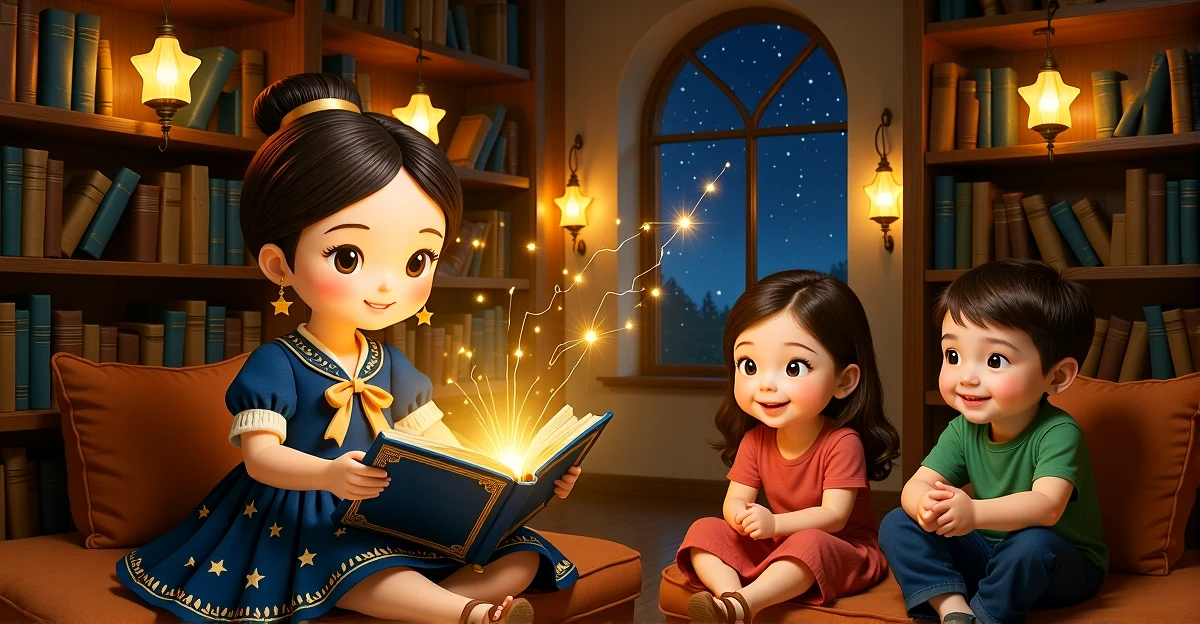
In The Book of Inara, we have a beautiful story that shows this concept in a way children can truly understand and feel:
The Learning Voyage
Perfect for: Ages 4-6
What makes it special: This story follows two friends, Ethan and Sofia, who discover a gentle cruise ship where every mistake becomes a wonderful learning experiment. When Ethan tries to tie his shoes and the laces tangle, the cabin glows warmer. When Sofia waters a plant and accidentally spills water, the spilled water makes beautiful sparkling patterns.
The ship celebrates every attempt, every try, every moment of learning, whether it leads to immediate success or not. This story helps children understand something profound: Learning isn't about getting everything right. Learning is about trying, exploring, discovering, and growing.
Key lesson: The ship doesn't celebrate Ethan when he finally ties his shoes perfectly. It celebrates him for TRYING. For engaging with the challenge. For being curious and brave enough to attempt something new. This teaches children that learning itself has intrinsic value.
How to use this story: After you read this story with your child, you can help them see their own life as a learning voyage. When they ask why they have to learn something, you can remind them of Ethan and Sofia's ship. You can say, "Remember how the ship glowed when they tried new things? Your brain does that too! Every time you learn something new, your brain actually grows new connections. You're building your amazing brain, just like Ethan and Sofia!"
You can also create little celebrations for learning moments in your daily life. Not rewards for getting things right, but acknowledgments of the learning process itself:
- "Oh, you're trying a new way to build that tower! Your brain is learning!"
- "I noticed you figured out how to sound out that word all by yourself. That's your learning brain at work!"
You're Doing Beautifully
The beautiful truth, my friend, is that children don't need to understand the distant future to value learning. They need to experience learning as joyful, meaningful, and connected to who they are right now.
When we give them that experience, when we help them see learning as their superpower, as the way they discover amazing things about themselves and the world, they don't ask why they have to learn. They ask what they get to learn next.
Your child's question about why learning matters isn't a problem to solve. It's an invitation to help them discover the joy, the power, and the wonder of their own growing mind. And you're doing that beautifully, my friend.
Every time you read with them, explore with them, wonder with them, you're showing them that learning is one of life's greatest adventures. Keep nurturing their curiosity, keep celebrating their efforts, and keep showing them that learning is not something they have to do, but something they GET to do.
With love and starlight,
Inara
Related Articles
- When Screen Time Ends in Meltdowns: Understanding Your Child's Brain and What Actually Helps (Ages 5-6)
- When Your Child Feels Invisible: Understanding Social Isolation and the Gentle Path to Friendship
- Teaching Financial Wisdom to Your 5-6 Year Old: A Gentle Guide to Money and Economics
- Supporting Your Child's Social Awareness Development: A Gentle Guide
- Helping Your Child Discover the Joy of Learning: A Guide for Parents
Show transcript
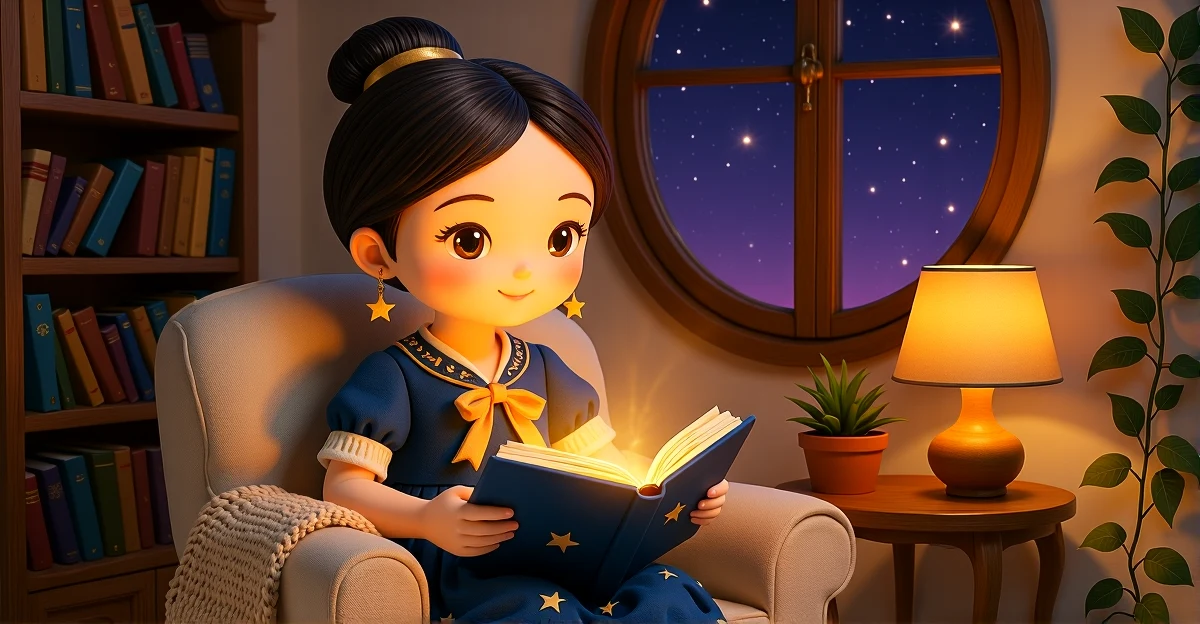
Hello, my wonderful friend! It's me, Inara, and I am SO happy you're here today!
You know, the Magic Book and I have been noticing something beautiful happening in homes all around the world. More and more parents are asking us about a question their kindergartners and first graders are starting to ask. Why do I have to learn things? Why does school matter? Why can't I just play all day?
And if your little one has asked you this, I want you to know something right away. This is not a problem. This is not defiance. This is actually a sign that your child's brain is growing in the most WONDERFUL way! They're starting to think about time, about the future, about cause and effect. This is huge developmental progress, my friend!
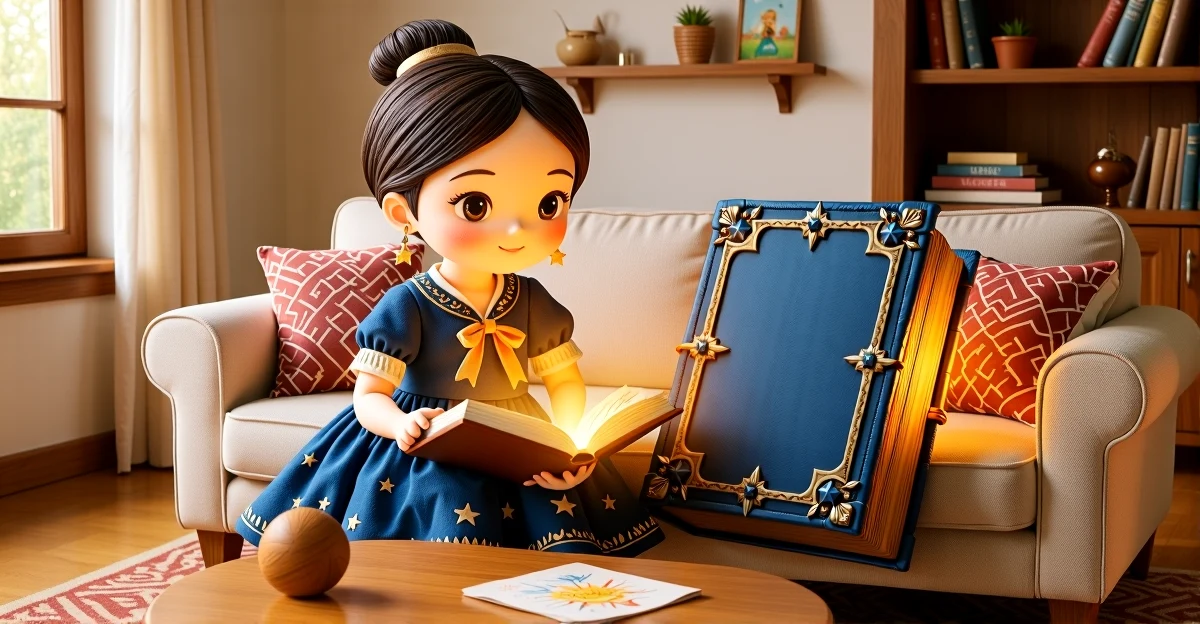
Let me share what the Magic Book has taught me about this beautiful stage of development.
When children are five, six, or seven years old, their brains are just beginning to understand the concept of future time. Before this age, most children live completely in the present moment. Tomorrow might as well be next year, and next year might as well be never. But around age five or six, something magical starts to happen. They begin to grasp that there IS a tomorrow, that actions today can affect what happens later.
And that's when the questions start. Why does this matter? What's this FOR? Where does this lead?
These aren't annoying questions, my friend. These are BRILLIANT questions! Your child is trying to build a mental map of how the world works, how learning fits into their life, and why any of this matters to them personally.
Now, here's what research tells us, and this is so important. Children at this age are incredibly motivated to learn, but their motivation works differently than ours. They're not motivated by distant future rewards like getting into college or having a good career. Those concepts are still too abstract, too far away. What motivates them is immediate meaning, personal connection, and joy in the present moment.
Dr. Kathy Hirsh-Pasek and her colleagues at the National Association for the Education of Young Children have found something beautiful. Children's motivation to learn increases dramatically when their learning environment fosters their sense of belonging, purpose, and agency. Not future rewards. Not gold stars or grades. But feeling like they belong, like what they're doing matters right now, and like they have some choice and control in the process.
Isn't that WONDERFUL? Your child doesn't need to understand that reading will help them get a job in twenty years. They need to understand that reading lets them discover amazing stories RIGHT NOW. They need to feel that learning is connected to who they are and what they care about TODAY.
The Magic Book has shown me that when we try to motivate children with distant future outcomes, we actually work against their natural development. But when we connect learning to their present interests, their curiosity, their relationships, and their sense of wonder, something magical happens. They don't just learn because they have to. They learn because they WANT to. Because learning becomes part of who they are.
So how do we help our children understand why learning matters? Let me share some gentle, research-backed approaches that the Magic Book and I have discovered.
First, connect learning to their current passions and interests. If your child loves dinosaurs, show them how reading helps them learn more dinosaur names. How counting helps them figure out how many dinosaurs they have. How science helps them understand what dinosaurs ate and where they lived. The learning isn't FOR some future job. The learning is FOR their dinosaur passion, right now, today.
Second, make learning feel like discovery, not duty. Children are natural scientists and explorers. They LOVE figuring things out, solving puzzles, making connections. When we frame learning as this amazing adventure of discovery, when we say things like, Let's see if we can figure this out together, or I wonder what would happen if, we tap into their intrinsic motivation. We make learning feel like play, like exploration, like the joyful adventure it truly is.
Third, celebrate the process, not just the outcome. When your child is working on something challenging, notice their effort. Notice their persistence. Notice their creative thinking. Say things like, I love how you kept trying different ways to solve that, or You're really thinking hard about this, I can see your brain growing! This helps them understand that learning itself is valuable, that the process of figuring things out matters, not just getting the right answer.
Fourth, share your own learning journey. Let your child see YOU learning new things. Let them see you make mistakes and try again. Let them hear you say, I don't know, let's find out together! When children see that learning is something everyone does, all the time, throughout life, it becomes normal and natural, not just something kids have to do before they can be done with it.
And fifth, this is so important, help them see how learning connects them to others and to the world. Learning to read means they can enjoy the same stories their friends love. Learning about different cultures means they can understand and appreciate people from all over the world. Learning about nature means they can take better care of our beautiful planet. Learning isn't isolated. It's how we connect, how we contribute, how we become part of something bigger than ourselves.
Now, the Magic Book has a story that shows this so beautifully. It's called The Learning Voyage, and it's about two friends named Ethan and Sofia who discover a gentle cruise ship where every mistake becomes a wonderful learning experiment.
In this story, when Ethan tries to tie his shoes and the laces tangle, the cabin glows warmer. When Sofia waters a plant and accidentally spills water, the spilled water makes beautiful sparkling patterns. The ship celebrates every attempt, every try, every moment of learning, whether it leads to immediate success or not.
This story helps children understand something profound. Learning isn't about getting everything right. Learning is about trying, exploring, discovering, and growing. The ship doesn't celebrate Ethan when he finally ties his shoes perfectly. It celebrates him for TRYING. For engaging with the challenge. For being curious and brave enough to attempt something new.
After you read this story with your child, you can help them see their own life as a learning voyage. When they ask why they have to learn something, you can remind them of Ethan and Sofia's ship. You can say, Remember how the ship glowed when they tried new things? Your brain does that too! Every time you learn something new, your brain actually grows new connections. You're building your amazing brain, just like Ethan and Sofia!
You can also create little celebrations for learning moments in your daily life. Not rewards for getting things right, but acknowledgments of the learning process itself. Oh, you're trying a new way to build that tower! Your brain is learning! or I noticed you figured out how to sound out that word all by yourself. That's your learning brain at work!
The beautiful truth, my friend, is that children don't need to understand the distant future to value learning. They need to experience learning as joyful, meaningful, and connected to who they are right now. When we give them that experience, when we help them see learning as their superpower, as the way they discover amazing things about themselves and the world, they don't ask why they have to learn. They ask what they get to learn next.
Your child's question about why learning matters isn't a problem to solve. It's an invitation to help them discover the joy, the power, and the wonder of their own growing mind. And you're doing that beautifully, my friend. Every time you read with them, explore with them, wonder with them, you're showing them that learning is one of life's greatest adventures.
The Magic Book and I are always here to help. You can find The Learning Voyage and so many other stories that celebrate curiosity, growth, and discovery in The Book of Inara. Each story is carefully chosen to help children see themselves as capable, curious, and constantly growing.
Thank you for being here, for caring so deeply about your child's relationship with learning. You're giving them such a beautiful gift. Keep nurturing their curiosity, keep celebrating their efforts, and keep showing them that learning is not something they have to do, but something they GET to do.
With love and starlight, Inara.