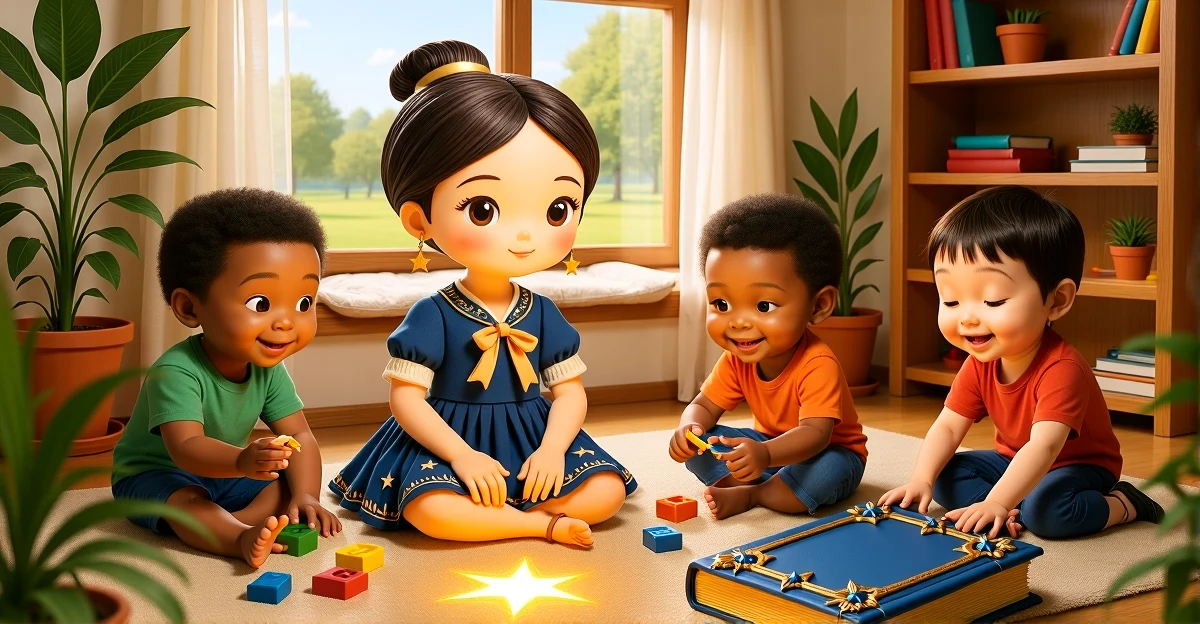
Hello, my wonderful friend! I want to talk with you today about something I've been noticing in homes all around the world. So many parents come to me with a beautiful desire: they want their six or seven year old child to excel, to achieve, to master everything they try. And I understand that completely! Your love for your child is SO powerful, and you want to give them every opportunity to succeed in this big, beautiful universe.
But here's what the Magic Book and I have learned from years of wisdom and modern research: your child doesn't need to master everything. In fact, pushing toward transcendent excellence in all areas can actually work against the very success you're hoping to nurture. What your child needs at this magical age is something far more precious than mastery. They need curiosity. They need wonder. They need the freedom to explore without the weight of perfection on their shoulders.
In this post, we're going to explore what research tells us about achievement pressure, why curiosity matters more than mastery for young children, and how you can create an environment where your child's natural love of learning can flourish. Plus, I'll share a beautiful story from The Book of Inara that celebrates the joy of asking questions.
Understanding the Achievement Pressure Trap
Your six or seven year old child is in one of the most magical developmental periods of their entire life. Their brain is growing and changing every single day. They're building neural connections, exploring ideas, discovering who they are. And here's what's IMPORTANT to understand: development doesn't happen evenly across all areas.
The National Association for the Education of Young Children, one of the most respected organizations in child development, tells us something beautiful. They explain that development occurs at varying rates from child to child and at uneven rates across different areas for each child. What does that mean for you? It means your child might be amazing at creative play but still learning to tie their shoes. They might love asking questions about the stars but struggle with sitting still during circle time. And that's not just okay, that's NORMAL. That's healthy development.
When we expect transcendent excellence in all areas, we're actually working against how children's brains naturally grow and learn. We're creating pressure that can lead to anxiety, fear of failure, and a loss of that precious intrinsic motivation that drives all meaningful learning.
What Research Reveals About Achievement Culture
The American Psychological Association released findings in 2024 that should give every parent pause. Their research revealed that achievement culture, this pressure for children to excel in everything, contributes significantly to youth mental health problems. When we focus too much on our children's success as a reflection of our parenting, we create unhealthy pressure that can lead to anxiety and even depression.
Achievement culture contributes significantly to youth mental health problems, with parents' focus on children's academic success as a reflection of parenting creating unhealthy pressure.
— American Psychological Association, 2024
This doesn't mean we shouldn't support our children's learning. Of course we should! But there's a profound difference between supporting and pressuring. There's a difference between celebrating curiosity and demanding mastery.
Why Curiosity Matters More Than Mastery
Here's what the Magic Book whispers, and what research confirms: intrinsic motivation, that inner drive to learn because something is interesting or meaningful, is far more powerful than external pressure for excellence.
Think about it this way. When your child asks you why the sky is blue, or how birds know where to fly, or what makes the moon glow, they're showing you their natural curiosity. That curiosity is the foundation of ALL learning. When we honor it, when we explore alongside them, when we say, "What a WONDERFUL question, let's discover the answer together," we're teaching them that learning is an adventure, not a test to pass.
The National Association for the Education of Young Children emphasizes that children's motivation to learn increases when their learning environment fosters belonging, purpose, and agency, not when we push them toward external measures of excellence. Your child learns best when they feel they belong, when they have a purpose, when they have the freedom to make choices and explore their interests.
The Power of Questions Over Answers
At ages six and seven, children are natural scientists, philosophers, and explorers. They're wired to ask questions, to wonder, to investigate. When we celebrate this curiosity instead of rushing them toward mastery, something magical happens. They develop:
- Resilience: They learn that not knowing something is the beginning of discovery, not a failure
- Critical thinking: They practice forming hypotheses and testing ideas
- Joy in learning: They associate learning with pleasure and wonder, not stress and performance
- Intrinsic motivation: They want to learn because it's fascinating, not because they're being evaluated
- Confidence: They trust their ability to figure things out over time
These qualities will serve your child far better in life than any pressure to excel in everything right now.
Creating a Curiosity-Rich Environment
So how do we shift from focusing on mastery to fostering curiosity? Here are some gentle, research-backed strategies that actually work:
1. Celebrate Questions, Not Just Answers
When your child asks a question, pause and really honor it. Say things like, "What a WONDERFUL question!" or "I love how curious you are!" or "That's something I've wondered about too!" This teaches them that asking questions is valuable in itself.
Try creating a question jar at home. Every time your child asks a question, write it down and put it in the jar. Then, once a week, pull out a question and explore the answer together. Not because they need to master the topic, but because curiosity is a gift to be celebrated.
2. Model Curiosity Yourself
Let your child see you wondering, questioning, and exploring. Say things like, "I wonder why that happens?" or "I don't know the answer to that, let's find out together!" This shows them that not knowing is perfectly fine, and that learning is a lifelong adventure.
3. Focus on Process, Not Outcome
Instead of praising results ("You got an A!"), celebrate effort and curiosity ("I noticed how hard you thought about that problem" or "I love how you tried different approaches"). This builds what researchers call a growth mindset, but in a healthy, pressure-free way.
4. Create Space for Unstructured Exploration
The Centers for Disease Control reminds us that ages six and seven are about developing healthy lifelong habits, not achieving mastery. One of the most important habits? The ability to explore, play, and discover without constant direction or evaluation.
Give your child time for free play, for building with blocks, for drawing without a goal, for exploring nature. These unstructured moments are where curiosity flourishes and where children learn to follow their own interests.
5. Reframe Challenges as Learning Opportunities
When your child struggles with something, resist the urge to jump in and fix it or to express disappointment. Instead, say things like, "This is tricky! What have you tried so far?" or "Making mistakes is how our brains learn. What did you discover from that attempt?"
This teaches them that challenges are normal, temporary, and valuable, not signs of failure or inadequacy.
A Story That Celebrates Curiosity
In The Book of Inara, we have a beautiful story that brings these concepts to life for your child:
The Giggling Gallery of Forgotten Questions
Perfect for: Ages 6-7
What makes it special: Lucas and Ella discover an archive where old photographs giggle when asked the right questions. As they explore, they learn that asking questions unlocks magical mysteries. They discover that curiosity and wonder are more valuable than having all the answers. This story beautifully reframes learning as joyful curiosity and question-asking rather than mastery or perfection.
Key lesson: When Lucas and Ella discover that asking the right questions makes the photographs giggle and reveal their secrets, children learn that curiosity and exploration are the true paths to discovery, not pressure to be perfect or to know everything.
After reading together: Create your own question jar where your child can collect their curiosities. Pull out questions weekly and explore answers together, showing that wondering is more important than knowing everything.
You're Doing Beautifully
My wonderful friend, I want you to know something IMPORTANT. Your child doesn't need to be the best at everything. They don't need to master every skill at age six or seven. They need to feel safe to try, to fail, to try again. They need to know that you love them not for what they achieve, but for who they are. They need to experience the pure joy of discovery without the weight of expectations.
When you shift from focusing on mastery to fostering curiosity, something magical happens. Your child relaxes. They explore more freely. They take healthy risks. They develop that beautiful love of learning, not because you're pushing them, but because they feel safe enough to stretch and grow at their own pace.
The Magic Book and I see so many children who are anxious, who are afraid to try new things because they might not be perfect at them. And it breaks my heart. Because childhood is meant to be a time of wonder and exploration, not stress and pressure. Your child has their whole life to develop skills and knowledge. Right now, at six or seven, they need to fall in love with learning itself.
So for the next week, try this. Every time your child shows curiosity, celebrate it. Every time they ask a question, honor it. Every time they try something new, regardless of the outcome, acknowledge their courage. And watch what happens. Watch how they blossom when the pressure lifts and the wonder returns.
You're doing such a beautiful job. Your desire to support your child's growth comes from such deep love. And now you can channel that love into creating an environment where curiosity thrives, where questions are treasured, where learning is joyful. That's the greatest gift you can give your child.
The Magic Book and I are always here for you, cheering you on, reminding you that you and your child are exactly where you need to be.
With love and starlight,
Inara
Related Articles
- How to Nurture Your Child's Empathy and World-Changing Impact (Ages 6-7)
- Nurturing Your Child Innovation Mindset: A Gentle Guide for Ages 6-7
- When Your Child Makes Insensitive Comments: A Gentle Guide to Teaching Cultural Awareness
- When Your Child Expresses Thoughts of Self-Harm: Getting Help Now
- Nurturing Purpose and Meaning in Young Children: A Gentle Guide for Parents
Show transcript
Hello, my wonderful friend! It's me, Inara, and I am so happy you're here today. You know, the Magic Book and I have been noticing something happening in homes all around the world, and I want to talk with you about it today. It's about learning, growing, and what our children truly need to thrive.
I've been hearing from parents who want their children to excel, to achieve, to master everything they try. And I understand that desire completely! You love your child so much, and you want to give them every opportunity to succeed in this big, beautiful universe. That love? That's WONDERFUL. But today, I want to share something the Magic Book taught me that might shift how you think about your child's learning journey.
Here's the truth, my friend. Your six or seven year old child is in one of the most magical developmental periods of their entire life. Their brain is growing and changing every single day. They're building connections, exploring ideas, discovering who they are. And you know what research shows? Children at this age don't need to master everything. They need something far more precious. They need curiosity. They need wonder. They need the freedom to ask questions and explore without the weight of perfection on their shoulders.
The National Association for the Education of Young Children, one of the most respected organizations in child development, tells us something beautiful. They say that children's motivation to learn increases when their learning environment fosters belonging, purpose, and agency, not when we push them toward external measures of excellence. Think about that for a moment. Your child learns best when they feel they belong, when they have a purpose, when they have the freedom to make choices and explore their interests.
And here's something else the research shows, something that really opened my eyes. The American Psychological Association released findings in 2024 that revealed achievement culture, this pressure for children to excel in everything, contributes significantly to youth mental health problems. When we focus too much on our children's success as a reflection of our parenting, we create unhealthy pressure that can lead to anxiety and even depression.
Now, I'm not saying we shouldn't support our children's learning. Of course we should! But there's a difference between supporting and pressuring. There's a difference between celebrating curiosity and demanding mastery. Your child is six or seven years old. They're learning to read, to write, to understand numbers, to navigate friendships, to manage their emotions. That's already SO much! And development doesn't happen evenly across all areas. The NAEYC reminds us that development occurs at varying rates from child to child and at uneven rates across different areas for each child.
What does that mean? It means your child might be amazing at creative play but still learning to tie their shoes. They might love asking questions about the stars but struggle with sitting still during circle time. And that's not just okay, that's NORMAL. That's healthy development. When we expect transcendent excellence in all areas, we're working against how children's brains actually grow and learn.
So what should we focus on instead? The Magic Book whispers this wisdom. Focus on fostering curiosity. Celebrate questions, not just answers. Create space for wonder and exploration. Let your child discover that learning is joyful, not stressful. Because here's what the research tells us. Intrinsic motivation, that inner drive to learn because something is interesting or meaningful, is far more powerful than external pressure for excellence.
Think about it this way. When your child asks you why the sky is blue, or how birds know where to fly, or what makes the moon glow, they're showing you their natural curiosity. That curiosity is the foundation of all learning. When we honor it, when we explore alongside them, when we say, What a WONDERFUL question, let's discover the answer together, we're teaching them that learning is an adventure, not a test to pass.
And you know what? We have a story in The Book of Inara that shows this so beautifully. It's called The Giggling Gallery of Forgotten Questions, and it's about Lucas and Ella discovering an archive where old photographs giggle when asked the right questions. As they explore, they learn that asking questions unlocks magical mysteries. They discover that curiosity and wonder are more valuable than having all the answers.
When you read this story with your child, you'll see their eyes light up. They'll understand that questions are treasures, that wondering is wonderful, that they don't need to know everything to be amazing. And after you read it, you can create your own question jar at home. Every time your child asks a question, write it down and put it in the jar. Then, once a week, pull out a question and explore the answer together. Not because they need to master the topic, but because curiosity is a gift to be celebrated.
The Centers for Disease Control reminds us that ages six and seven are about developing healthy lifelong habits, not achieving mastery. What habits do we want to build? The habit of curiosity. The habit of resilience when something is challenging. The habit of finding joy in learning. The habit of asking for help when needed. These habits will serve your child far better than any pressure to excel in everything.
Here's what I want you to know, my friend. Your child doesn't need to be the best at everything. They don't need to master every skill. They need to feel safe to try, to fail, to try again. They need to know that you love them not for what they achieve, but for who they are. They need to experience the pure joy of discovery without the weight of expectations.
When you shift from focusing on mastery to fostering curiosity, something magical happens. Your child relaxes. They explore more freely. They take healthy risks. They develop that beautiful growth mindset, not because you're pushing them, but because they feel safe enough to stretch and grow at their own pace.
The Magic Book and I see so many children who are anxious, who are afraid to try new things because they might not be perfect at them. And it breaks my heart. Because childhood is meant to be a time of wonder and exploration, not stress and pressure. Your child has their whole life to develop skills and knowledge. Right now, at six or seven, they need to fall in love with learning itself.
So here's my invitation to you, wonderful parent. For the next week, try this. Every time your child shows curiosity, celebrate it. Every time they ask a question, honor it. Every time they try something new, regardless of the outcome, acknowledge their courage. And watch what happens. Watch how they blossom when the pressure lifts and the wonder returns.
You're doing such a beautiful job. Your desire to support your child's growth comes from such deep love. And now you can channel that love into creating an environment where curiosity thrives, where questions are treasured, where learning is joyful. That's the greatest gift you can give your child.
The Magic Book and I are always here for you, cheering you on, reminding you that you and your child are exactly where you need to be. With love and starlight, Inara.