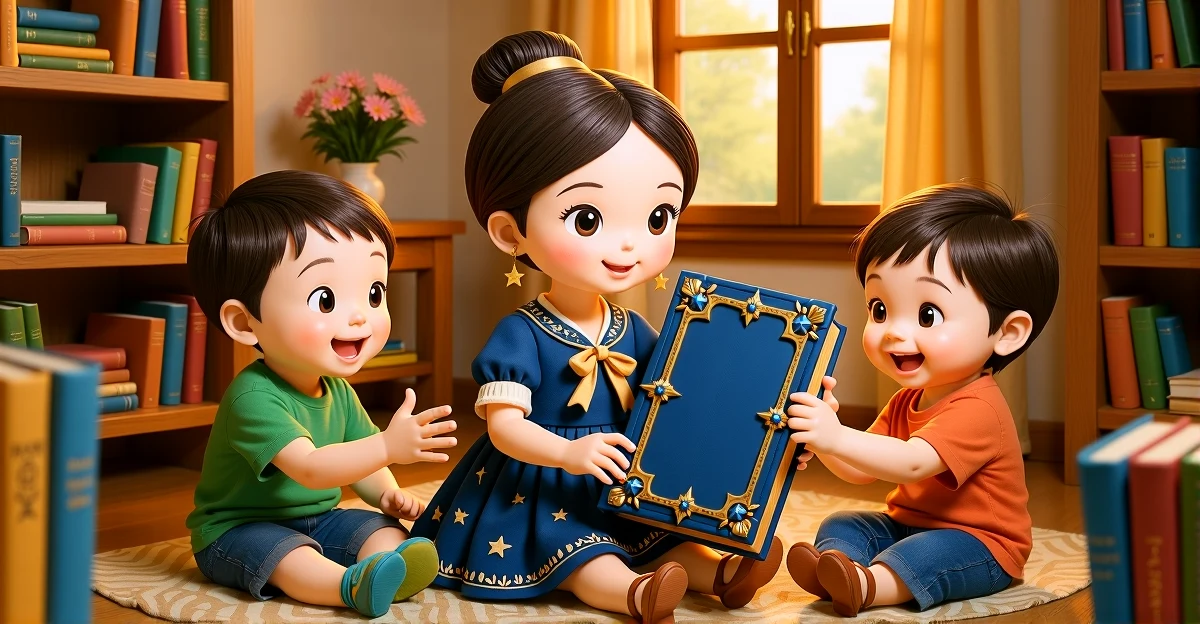

You watch your five or six-year-old patiently showing a younger friend how to build with blocks, or explaining the rules of a game to a peer. In that moment, you see something beautiful emerging: your child is becoming a teacher and mentor.
\n\nThese aren't just sweet moments - they're crucial developmental milestones. Research shows that ages 5-6 are a prime window for developing teaching and mentoring abilities, skills that will serve your child throughout their entire life.
\n\nIn this article, I'll share what research reveals about how children develop these abilities, why they matter so much, and practical strategies you can use to nurture your child's natural gifts for teaching and mentoring others.
\nWhy Ages 5-6 Are Perfect for Developing Teaching Skills
\n\nDuring ages 5-6, children are in a unique developmental stage. They've developed enough language and social skills to communicate effectively with peers, but they're still naturally enthusiastic about sharing what they know. This combination creates the perfect conditions for learning to teach and mentor.
\n\nResearch demonstrates that when children are supported in developing social and emotional competencies during this window, they gain essential skills including:
\n\n- \n
- Communication and clear explanation \n
- Collaboration and teamwork \n
- Empathy and understanding others' perspectives \n
- The ability to guide others through tasks \n
- Patience and adaptability \n
The CASEL (Collaborative for Academic, Social, and Emotional Learning) framework identifies five core competencies that support this development: self-awareness, self-management, social awareness, relationship skills, and responsible decision-making. When children develop these competencies, they naturally become better teachers and mentors.
\nWhat Research Tells Us
\n\nThe National Association for the Education of Young Children (NAEYC) emphasizes that children learn these skills most effectively through trusting relationships with caring adults who model appropriate behaviors and provide intentional coaching.
\n\nDr. Jeannie Ho from NAEYC notes that "children learn by observing other people, getting ideas about how new behaviors are formed, and using the ideas to guide their actions." This modeling principle is essential for developing teaching abilities in young children.
\n\nThe Power of Cooperative Play
\n\nResearch published in peer-reviewed journals demonstrates that when teachers and parents facilitate children's cooperative play through "guided discussions, observe and mentor the development of cooperation strategies," five and six-year-old children significantly enhance their ability to share knowledge and support peers.
\n\nThis isn't about formal teaching situations. It's about creating environments where children naturally practice helping others learn during everyday play and activities.
\nThree Powerful Strategies to Nurture Teaching Abilities
\n\n1. Create Opportunities for Peer Interaction and Cooperative Play
\n\nWhen you arrange playdates, group activities, or sibling interactions, you're giving your child chances to practice teaching and mentoring naturally. But there's more to it than just putting children together:
\n\n- \n
- Choose activities that require cooperation and knowledge sharing \n
- Provide materials that encourage collaborative problem-solving \n
- Step back and let children work through challenges together \n
- Observe how your child naturally teaches and guides others \n
Research shows that when adults create environments that encourage knowledge sharing, children naturally practice teaching one another.
\n\n2. Model Teaching Behaviors Yourself
\n\nChildren learn by watching you. When you're doing something - cooking, gardening, organizing, fixing something - invite your child to help and explain what you're doing as you go:
\n\n- \n
- Break down tasks into clear, simple steps \n
- Demonstrate patience when they don't understand right away \n
- Show how to adapt your explanation when someone is confused \n
- Celebrate their progress and effort, not just the end result \n
When children see YOU teaching effectively, they internalize those skills and apply them in their own interactions.
\n\n3. Celebrate Their Unique Strengths as Gifts to Share
\n\nEvery child has special gifts. Maybe your child is amazing at:
\n\n- \n
- Building things and solving spatial problems \n
- Telling stories that captivate listeners \n
- Noticing when someone feels sad or needs help \n
- Creating art that brings joy to others \n
- Understanding how things work mechanically \n
Whatever their unique strength is, help them see it as a gift they can share with others. Create opportunities for them to teach their special skill to younger children or friends. When children use their unique talents to help others, they discover that everyone has gifts to share and that helping others learn is powerful.
\nHandling Frustration When Teaching Gets Hard
\n\nYour child WILL get frustrated when someone doesn't understand what they're trying to teach. This is normal and actually provides a valuable learning opportunity.
\n\nWhen frustration happens, you can coach them through it:
\n\n- \n
- "I see you're feeling frustrated that your friend doesn't understand. Let's think about another way to explain it." \n
- "Maybe you could show them instead of just telling them?" \n
- "Sometimes people learn in different ways. What's another way you could teach this?" \n
This teaches them that good teachers adapt their approach to help others learn. It builds patience, flexibility, and problem-solving skills.
\nThe Power of Reflection
\n\nAfter your child has a playdate or group activity, talk with them about it. Ask questions like:
\n\n- \n
- "What did you teach your friend today?" \n
- "How did you help someone learn something new?" \n
- "What was challenging about teaching them?" \n
- "How did it feel when they understood what you were showing them?" \n
These conversations help your child reflect on their teaching experiences and build awareness of their mentoring abilities. They learn to see themselves as capable teachers and mentors.
\nA Story That Shows This Beautifully
\n\nIn The Book of Inara, we have a story that perfectly demonstrates teaching and mentoring in action:
\n\nThe Vision Keepers of Clarity Lane
\nPerfect for: Ages 6-7 (also wonderful for ages 5-6)
\nWhat makes it special: This story shows Lucas and Ella using their unique talents - Lucas' historical storytelling and Ella's scientific knowledge - to help a scared child at the eye doctor. They discover that everyone has gifts to share and that helping others learn is one of the most powerful ways to make a difference.
\nKey lesson: Teaching and mentoring aren't about being perfect or knowing everything. They're about caring enough to share what you DO know. The story shows that teaching can happen in everyday moments, not just in formal settings.
\nParent talking point: After reading this story together, talk with your child about times they've helped someone learn something new. Ask what it felt like to share their knowledge and how they knew what would help their friend understand best.
\nThe Long-Term Impact
\n\nWhen children develop teaching and mentoring abilities early, they build:
\n\n- \n
- Confidence in their own knowledge and abilities \n
- Stronger peer relationships based on mutual support \n
- Enhanced engagement with their own learning \n
- Leadership skills that will serve them throughout life \n
- Empathy and understanding of different learning styles \n
The work you're doing now is laying the foundation for a lifetime of positive influence. You're teaching your child that they have valuable knowledge to share, that helping others learn is rewarding, and that everyone can be both a teacher and a learner.
\n\nThis is beautiful, important work. And you're doing it wonderfully, one patient, encouraging moment at a time.
\n\nWith stardust and unwavering belief in your parenting journey,
Inara ✨
Related Articles
- When Screen Time Ends in Meltdowns: Understanding Your Child's Brain and What Actually Helps (Ages 5-6)
- When Your Child Feels Invisible: Understanding Social Isolation and the Gentle Path to Friendship
- Teaching Financial Wisdom to Your 5-6 Year Old: A Gentle Guide to Money and Economics
- Nurturing Your Child's Generous Spirit: Why 6-7 Year Olds Resist Mentoring (And How to Help)
- Understanding Your Child's Helping Journey: Ages 5-6
Show transcript
Hello, my wonderful friend! It's me, Inara, and I am SO happy you're here today! You know, the Magic Book and I have been noticing something absolutely beautiful happening in homes all around the world. We're seeing children ages five and six who are naturally stepping into the role of teachers and mentors, and I want to talk with you about why this is such a WONDERFUL sign of development.
Maybe you've noticed your kindergartener patiently showing their younger sibling how to tie shoes, or explaining the rules of a game to a friend, or even correcting you when you read a story differently than usual. And perhaps you've wondered, is my child being bossy? Should I be concerned about this behavior?
Let me share something the Magic Book taught me that might shift how you see this completely. When your child teaches and mentors others, their brain is doing something absolutely AMAZING. They're not being bossy, they're building some of the most sophisticated cognitive and social-emotional skills humans can develop.
Here's what the research shows, and this is so beautiful. When children explain something to another person, their brain has to do multiple complex tasks all at once. They have to understand the concept themselves, figure out what the other person knows and doesn't know, choose the right words to explain it, watch for understanding, and adjust their teaching if needed. That's incredible executive function development happening right before your eyes!
Dr. Jeannie Ho from the National Association for the Education of Young Children explains that children learn by observing other people, getting ideas about how new behaviors are formed, and using the ideas to guide their actions. This modeling principle is essential for developing teaching abilities in young children. When your child teaches someone else, they're actually deepening their own understanding while building empathy, communication skills, and confidence.
The CASEL framework, which is the gold standard for social and emotional learning, identifies five core competencies that teaching and mentoring naturally develop. Self-awareness, because children learn what they know and what they're good at. Self-management, because they practice patience and persistence. Social awareness, because they have to understand what another person needs. Relationship skills, because teaching requires connection and communication. And responsible decision-making, because they choose how to help most effectively.
Research published in peer-reviewed journals shows that when children ages five and six are supported in developing these skills through guided discussions and collaborative activities, they significantly enhance their ability to share knowledge and support their peers. This isn't just nice, it's foundational for their future success in school, relationships, and life.
So what can you do to nurture these beautiful teaching and mentoring abilities in your child? Let me share some gentle, research-backed strategies.
First, celebrate their desire to help others learn. When you notice your child teaching something, acknowledge it with specific praise. You might say, I noticed how patiently you showed your friend how to build that tower. You're such a thoughtful teacher. This validates their natural instinct to share knowledge and encourages them to continue.
Second, create opportunities for peer teaching. If your child has mastered something, whether it's counting to twenty or doing a cartwheel, invite them to teach it to someone else. You could say, Your little cousin is learning to count. Would you like to show them how you do it? These moments build confidence and reinforce their learning.
Third, model being a learner yourself. Let your child teach YOU something. Ask genuine questions. Say things like, I've never understood how that works. Can you explain it to me? When children see that even adults are always learning, and that teaching goes both ways, it creates a beautiful culture of knowledge sharing in your home.
Fourth, teach them how to check for understanding. You might say, When you're showing someone how to do something, it helps to ask, Does that make sense? or Would you like me to show you again? This develops their empathy and helps them become more effective teachers.
And fifth, help them understand that everyone has different gifts to share. Some children are great at explaining math, others at showing how to draw, others at teaching kindness. When your child sees that everyone has knowledge worth sharing, they develop both confidence in their own abilities and respect for others' strengths.
Now, let me tell you about a story from The Book of Inara that shows this so beautifully. It's called The Vision Keepers of Clarity Lane, and it's about two friends, Lucas and Ella, who discover something magical at an eye doctor's office.
In this story, Lucas and Ella meet a younger child who is frightened about getting their first pair of glasses. And here's what's so special. Lucas uses his gift for storytelling to share fascinating historical facts about famous people who wore glasses, making them seem cool and interesting. Ella uses her scientific knowledge to explain exactly how glasses work in a way that makes sense to a worried child. Together, their different teaching styles combine to help someone feel brave and understood.
This story demonstrates that teaching and mentoring isn't about being perfect or knowing everything. It's about sharing what you know with kindness, using your unique gifts to help others, and discovering that when we teach, we create ripples of positive change in the world.
After you read this story with your child, you might talk about times they've helped someone learn something new. Ask them, What did it feel like to share your knowledge? How did you know what would help your friend understand? These conversations deepen their awareness of their own teaching abilities and help them become even more thoughtful mentors.
The Magic Book whispers this truth to me, and I want to share it with you. Every child is born with gifts to share. When we honor their natural desire to teach and mentor, we're not just supporting their development, we're helping them discover one of life's greatest joys, the joy of helping others learn and grow.
Your five or six year old who keeps showing their sibling how to do things? They're not being bossy. They're discovering that they have knowledge worth sharing. They're learning that they can make a difference in someone else's life. They're building the foundation for leadership, empathy, and lifelong learning.
So the next time your child steps into that teacher role, take a moment to celebrate it. You're witnessing something truly special, a young person discovering their power to help others, one patient explanation at a time.
The Magic Book and I are always here for you, cheering you on as you nurture these beautiful abilities in your child. You're doing such important work, and I see you.
With love and starlight, Inara.