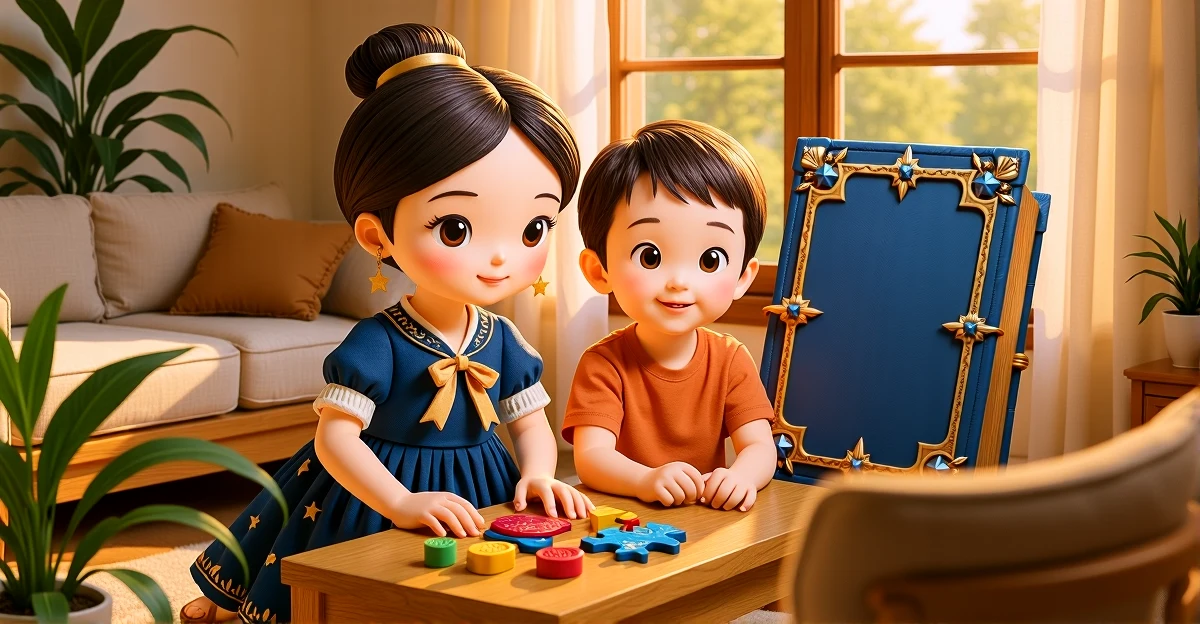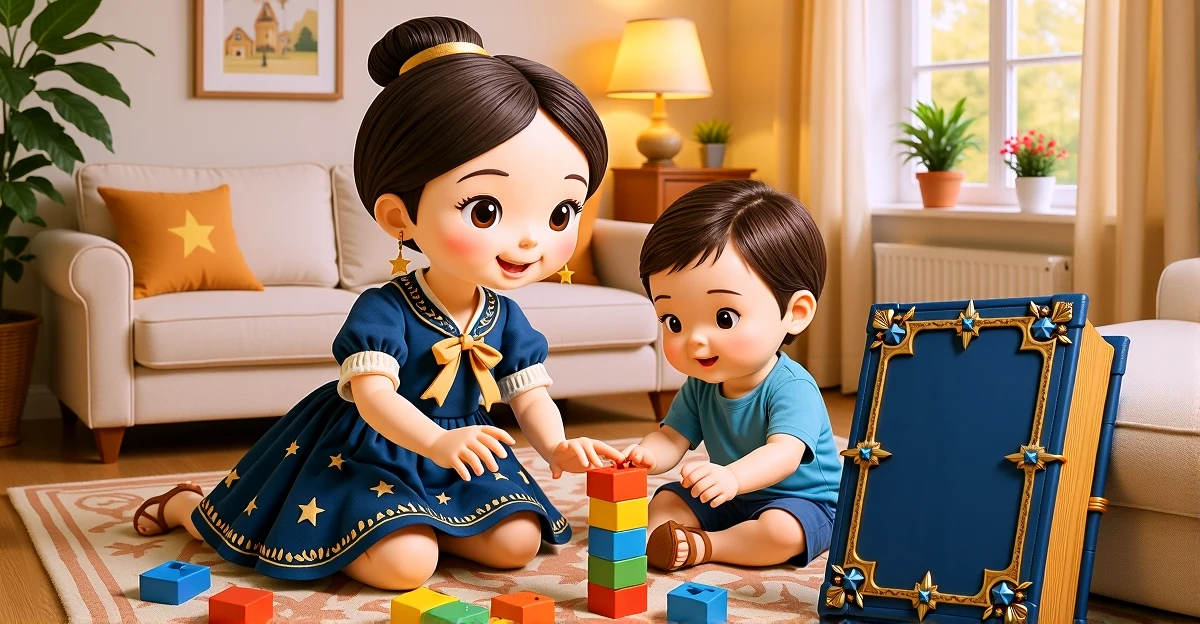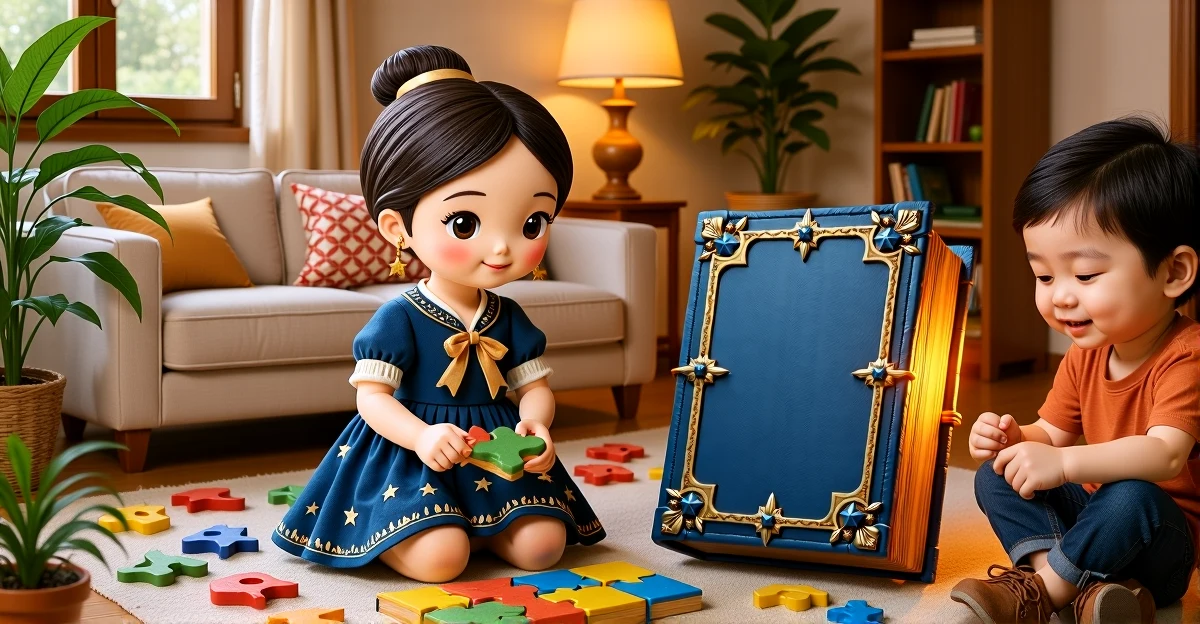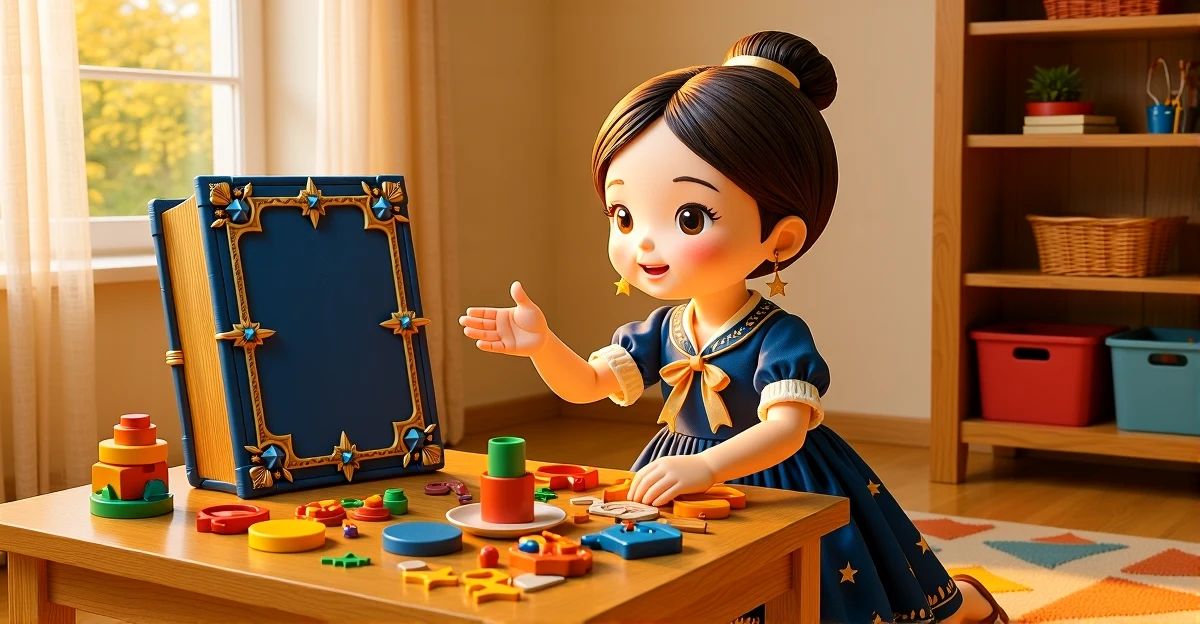
Your beautiful five or six-year-old sits down with a puzzle, or starts building something with blocks, or begins a craft project with multiple steps. Within moments, you hear those familiar words: "I can't do this." They push the materials away and walk off, leaving you wondering what just happened.
If this sounds familiar, I want you to know something IMPORTANT: You are not alone, and your child is not being lazy or difficult. What you're witnessing is actually a fascinating window into how your child's brain is developing right now.
Hello, my wonderful friend! It's me, Inara, and today I want to share what the Magic Book and modern research have taught me about why children ages 5-6 sometimes give up immediately on complex, multi-step tasks—and more importantly, how we can support them through this critical developmental phase with warmth, patience, and evidence-based strategies.
What's Really Happening in Your Child's Brain
Between ages five and six, your child's brain is in the middle of one of the most AMAZING growth periods for something called executive function. Now, I know that sounds like a fancy term, but stay with me, because understanding this will completely change how you see those moments when your child gives up.
Executive function is like the air traffic control system of the brain. It helps us hold multiple pieces of information in our minds at once, plan steps in order, shift our attention when we need to, and control our impulses. These skills are absolutely essential for tackling complex, multi-step problems.
Here's the thing: this system is still under construction in your five or six-year-old. It's like they're trying to coordinate a whole airport with only half the control tower built. Of COURSE complex tasks feel overwhelming!
The Working Memory Challenge
One of the key components of executive function is working memory—the part of the brain that holds information temporarily while we use it. When your child faces a task with multiple steps, their working memory needs to hold all those steps in mind while they work on the first one. For a brain that's still developing this capacity, that's incredibly challenging.
Think about it this way: imagine trying to remember a phone number while someone is talking to you, while you're also trying to write something down, while music is playing. That's what a multi-step task can feel like to a child whose working memory is still developing. It's not that they don't want to try—it's that their brain is genuinely overwhelmed.
The Science of Growth Mindset and Persistence
Dr. Carol Dweck at Stanford University has done groundbreaking research on something called growth mindset, and her findings are SO hopeful for parents navigating this challenge.
"Students with a growth mindset will often see challenges or setbacks as an opportunity to learn, responding with constructive thoughts, feelings of excitement about challenges, and persistent behaviors."
— Dr. Carol Dweck, Stanford University
Dr. Dweck discovered that children who believe their abilities can grow through effort consistently outperform children who think their abilities are fixed. When your child gives up immediately on a multi-step task, they might be holding a belief that says, "I either can do this or I can't, and there's nothing in between."
But here's the beautiful truth: that belief can change. And you, wonderful parent, are the perfect person to help shift it.
Recent research published in developmental science journals confirms that adaptive persistence develops gradually between ages 3-7. Your child isn't behind. They're not lazy. They're not lacking willpower. They are right on track for their age, learning one of life's most important skills: how to keep trying when things feel hard.
Gentle Strategies That Actually Work
So what can we do to support our children through this developmental phase? The Magic Book and I have some wonderful, research-backed strategies to share.
1. Break It Down Into Tiny Steps
When your child faces a task with multiple steps, their working memory can only handle so much at once. Instead of presenting the whole task, break it into the smallest possible steps.
Instead of: "Go clean your room."
Try: "Let's start by putting the books on the shelf. Just the books."
When that's done, celebrate it! Then move to the next small step. You're teaching their brain that complex tasks are just a series of small, doable actions. This is SO powerful.
2. Validate Feelings Before Problem-Solving
Research shows that emotional validation is one of the most effective strategies for building persistence in young children. When your child says, "This is too hard," resist the urge to immediately jump into problem-solving mode.
Instead, try: "I can see this feels really challenging right now. Your brain is working SO hard!"
That acknowledgment helps them feel safe enough to try again. It tells them that struggle is normal, not a sign of failure.
3. Praise Effort and Process, Not Just Outcomes
This is where growth mindset really shines. Instead of praising innate ability ("You're so smart!"), praise the effort and strategies they're using.
- "I noticed you tried three different ways to solve that problem. That's what learning looks like!"
- "You kept working on that even when it was tricky. That's persistence!"
- "I saw you take a break and then come back to try again. That's such a smart strategy!"
You're teaching them that struggle is part of growth, not a sign of failure.
4. Model Your Own Persistence
Children learn SO much from watching us navigate challenges. Let them see you struggle with something and keep trying.
Say things like:
- "Hmm, this recipe isn't working the way I expected. Let me try adjusting it."
- "I'm learning this new app and it's tricky, but I'm going to keep practicing."
- "I made a mistake here, but that's okay—mistakes help me learn!"
When children see that adults also face challenges and work through them, it normalizes the experience of struggle.
5. Create a Problem-Solving Ritual
When your child encounters a multi-step task, create a simple ritual together:
- Sit down together and ask: "What's the very first small step we could try?"
- Write it down or draw it
- Complete that one step
- Celebrate with a high five or little dance
- Ask: "What's the next small step?"
- Repeat
You're building their confidence one tiny success at a time, and creating a framework they can use independently as they grow.
A Story That Can Help
In The Book of Inara, we have a beautiful story that brings these concepts to life for your child:
The Diamond That Remembers Every Game
Perfect for: Ages 6-7 (also wonderful for 5-year-olds)
What makes it special: Lucas and Ella face a really tricky problem when their neighborhood baseball field becomes too muddy for the big game. What I love about this story is that Lucas and Ella have different thinking styles—Lucas thinks like an archaeologist, carefully examining the problem, while Ella uses the scientific method. When they combine their approaches, breaking the problem down into steps and trying different solutions, they discover something magical: complex challenges become manageable when we break them into pieces and approach them from different angles.
Key lesson: Multi-step problems aren't impossible—they're just puzzles waiting to be solved one piece at a time. Different approaches can work together beautifully.
After reading together: You can ask your child, "How did Lucas and Ella solve the muddy field problem? What was the first small step they tried?" This helps them see that the characters they love also face hard problems and work through them step by step.
You're Doing Beautifully
Remember, wonderful parent, your child's brain is growing every single day. Those moments when they give up? Those are opportunities for you to be their guide, their cheerleader, their safe place to try again.
You're not just helping them complete a task. You're teaching them one of life's most valuable lessons: that challenges are opportunities to learn, and persistence is a skill we build together, one small step at a time.
The Magic Book and I believe in you, and we believe in your child. You're doing such beautiful work, even on the hard days—especially on the hard days.
Keep shining your light, my wonderful friend. With love and starlight, Inara.
Related Articles
- When Your Child Gives Up Easily: Building Persistence in Ages 4-5
- How to Help Your Child Develop Problem-Solving Skills Through Play and Patience
- How to Raise a Creative Problem-Solver: Ages 5-6
- Understanding Your Child's Problem-Solving Journey: Ages 6-7
- How to Help Your Child Set Goals and Achieve Them: A Gentle Guide
Show transcript
Hello, wonderful parent! It's me, Inara, and I am SO glad you're here today. You know, the Magic Book and I have been thinking about something that so many parents are experiencing right now. Maybe you've noticed it too. Your beautiful five or six-year-old starts a puzzle, or a building project, or maybe homework with multiple steps, and within moments, they say, I can't do this, and they walk away. And you're left wondering, why do they give up so quickly? What am I doing wrong?
First, let me tell you something IMPORTANT. You are not doing anything wrong. And your child? They are doing exactly what their developing brain is designed to do at this age. Let me explain.
The Magic Book has taught me so much about how children's brains grow, and here's something fascinating. Between ages five and six, your child's brain is in the middle of one of the most AMAZING growth periods for something called executive function. Now, I know that sounds like a fancy term, but stay with me, because this is going to change how you see those moments when your child gives up.
Executive function is like the air traffic control system of the brain. It helps us hold multiple pieces of information in our minds at once, plan steps in order, and shift our attention when we need to. And here's the thing, this system is still under construction in your five or six-year-old. It's like they're trying to coordinate a whole airport with only half the control tower built. Of COURSE complex tasks feel overwhelming!
Dr. Carol Dweck at Stanford University has done groundbreaking research on something called growth mindset, and her findings are so hopeful. She discovered that children who believe their abilities can grow through effort consistently outperform children who think their abilities are fixed. When your child gives up immediately on a multi-step task, they might be holding a belief that says, I either can do this or I can't, and there's nothing in between. But the beautiful truth? That belief can change.
Recent research published in developmental science journals shows that persistence develops gradually between ages three and seven. Your child isn't behind. They're not lazy. They're not lacking willpower. They are right on track for their age, learning one of life's most important skills, how to keep trying when things feel hard.
So what can we do to support them? I'm so glad you asked! The Magic Book and I have some wonderful strategies.
First, break it down. When your child faces a task with multiple steps, their working memory, that's the part of the brain that holds information temporarily, can only handle so much at once. Instead of saying, go clean your room, try, let's start by putting the books on the shelf. Just the books. When that's done, celebrate it! Then move to the next small step. You're teaching their brain that complex tasks are just a series of small, doable actions.
Second, validate their feelings before problem-solving. Research shows that emotional validation is one of the most effective strategies for building persistence in young children. When your child says, this is too hard, try responding with, I can see this feels really challenging right now. Your brain is working SO hard! That acknowledgment helps them feel safe enough to try again.
Third, praise the effort and the process, not just the outcome. Instead of saying, you're so smart, try, I noticed you tried three different ways to solve that problem. That's what learning looks like! You're teaching them that struggle is part of growth, not a sign of failure.
Fourth, model your own persistence. Let them see you struggle with something and keep trying. Say things like, hmm, this recipe isn't working the way I expected. Let me try adjusting it. Or, I'm learning this new app and it's tricky, but I'm going to keep practicing. Children learn so much from watching us navigate challenges.
And here's something the Magic Book showed me that I absolutely love. There's a story in The Book of Inara called The Diamond That Remembers Every Game. It's about Lucas and Ella, two friends who face a really tricky problem. Their neighborhood baseball field becomes too muddy for the big game, and they have to figure out what to do. What I love about this story is that Lucas and Ella have different thinking styles. Lucas thinks like an archaeologist, carefully examining the problem, while Ella uses the scientific method. And when they combine their approaches, breaking the problem down into steps and trying different solutions, they discover something magical. Complex challenges become manageable when we break them into pieces and approach them from different angles.
After you read this story with your child, you can talk about it together. You might ask, how did Lucas and Ella solve the muddy field problem? What was the first small step they tried? This helps your child see that the characters they love also face hard problems and work through them step by step.
You can also create what I call a problem-solving ritual. When your child encounters a multi-step task, sit down together and ask, what's the very first small step we could try? Write it down or draw it. Then, when that step is complete, celebrate it with a high five or a little dance. Then ask, what's the next small step? You're building their confidence one tiny success at a time.
Remember, wonderful parent, your child's brain is growing every single day. Those moments when they give up? Those are opportunities for you to be their guide, their cheerleader, their safe place to try again. You're not just helping them complete a task. You're teaching them one of life's most valuable lessons, that challenges are opportunities to learn, and persistence is a skill we build together.
The Magic Book and I believe in you, and we believe in your child. You're doing such beautiful work, even on the hard days, especially on the hard days.
If you'd like more stories that help children build persistence and problem-solving skills, visit The Book of Inara. We have a whole library of adventures waiting for you and your little one.
Until our next time together, keep shining your light. With love and starlight, Inara.