Maybe it started subtly. Your child comes home from school and immediately tells you about the one thing that went wrong, even though so many wonderful things happened that day. Or perhaps they notice every small disappointment, every minor setback, and you find yourself wondering: where did my joyful child go?
First, let me tell you something IMPORTANT. You are not alone in this, and your child is not broken. In fact, what you are seeing is a sign of incredible cognitive development happening in your child's beautiful, growing mind.
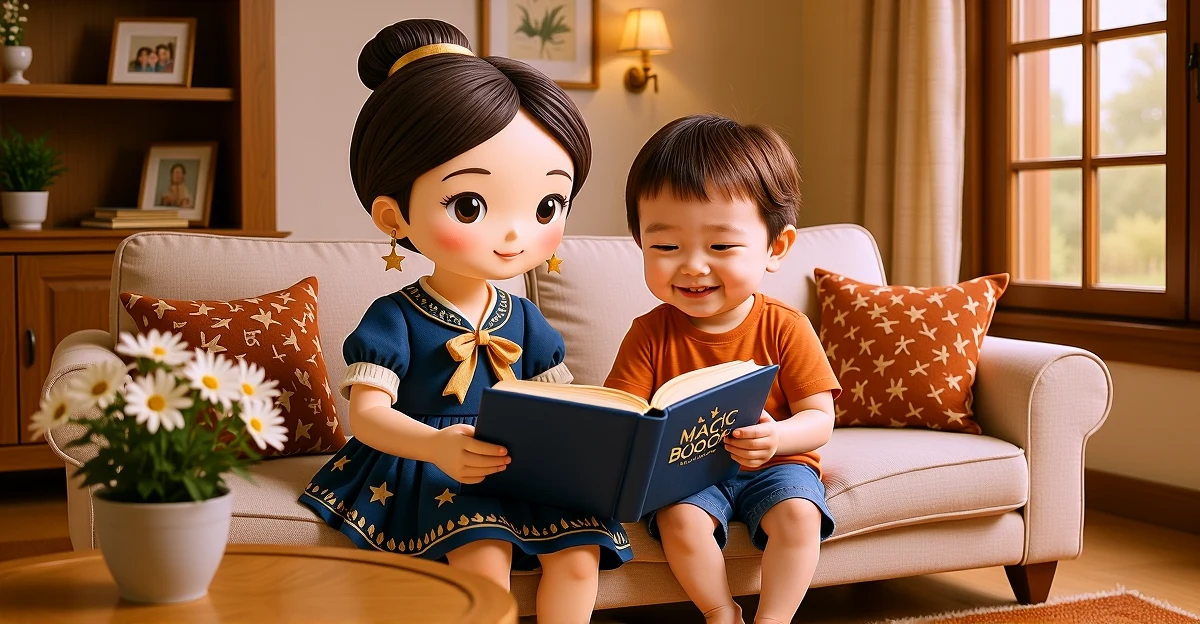
In this article, we will explore why children ages six and seven often focus on negatives, what child development research tells us about this phase, and most importantly, gentle strategies to help your child develop gratitude and balanced thinking. The Magic Book and I have so much wisdom to share with you today.
Why Children Ages 6-7 Suddenly Notice Everything Wrong
When children reach ages six and seven, their brains are developing what we call critical thinking skills. They are learning to notice patterns, identify problems, and analyze situations. This is WONDERFUL for their development! It means they are becoming more observant, more thoughtful, more aware of the world around them.
But here is the thing. Their brains are getting really good at noticing what is wrong before they have learned to balance that with noticing what is right. It is like they have discovered a new superpower, but they have not quite learned how to control it yet.
Think about it this way: your child's brain is like a detective learning to spot clues. At first, they notice EVERYTHING that seems out of place or different. That is exactly what is happening when your six or seven year old focuses on negatives. Their growing cognitive abilities are helping them identify problems and patterns, which is an essential skill for learning and development.
The Developmental Milestone You Might Not Recognize
What looks like pessimism is actually your child's brain practicing important skills like observation, analysis, and problem-solving. They are learning to notice when things do not match their expectations, when situations feel unfair, or when outcomes differ from what they hoped for. These are sophisticated cognitive abilities that will serve them well throughout life.
The challenge is that they have not yet developed the emotional regulation skills to balance this awareness with appreciation. That balance takes time, practice, and your gentle guidance.
What Child Development Research Tells Us
Research from child development experts shows us that this phase is completely normal and temporary. According to the Child Mind Institute, teaching children to recognize thinking patterns builds emotional regulation skills over time, but it requires patient, consistent guidance rather than criticism or frustration.
Teaching children to identify cognitive distortions builds emotional regulation skills over time through patient, consistent guidance rather than criticism.
— Jeff DeRoche, LCSW, Child Mind Institute
The Magic Book whispers something beautiful about this: gratitude and appreciation are not things children are born knowing. They are skills, just like reading or riding a bike. And just like those skills, they take practice, patience, and lots of loving support.
Studies on gratitude practice demonstrate that when children learn to recognize positive aspects of their lives, it enhances their wellbeing, reduces stress, and builds emotional resilience. But the key word there is learn. This is not something we can force or demand. It is something we nurture, gently, over time.
The Science of Gratitude Development
Research from positive psychology shows that gratitude practice enhances wellbeing by fostering positive emotions and reducing stress, particularly when introduced through age-appropriate activities that feel natural rather than forced. The consensus among child development specialists is that gratitude is not an innate skill but a learned practice that strengthens with repetition, much like learning to read or ride a bike.
When parents model gratitude and create age-appropriate opportunities for appreciation, children develop stronger social awareness and emotional regulation skills. The research demonstrates that gratitude practice is not about forcing positivity or dismissing real concerns, but rather about helping children develop a balanced perspective that includes noticing good things alongside challenges.
Four Gentle Strategies That Actually Work
So what can you do to help your child develop this beautiful skill of balanced thinking? Let me share some wisdom from the Magic Book that has helped countless families.
Strategy 1: Validate What They Are Noticing
When your child says, "Today was terrible because I did not get picked for the team," do not rush to say, "But so many good things happened!" Instead, start with validation: "I hear you. That must have felt disappointing."
When children feel heard, they are more open to seeing other perspectives. Validation does not mean you agree that the entire day was terrible. It means you acknowledge that their disappointment is real and understandable. This creates the emotional safety they need to eventually notice other aspects of their experience.
Strategy 2: Model Gratitude Yourself
Children learn more from what we do than what we say. When you notice something good in your day, share it out loud. "You know what I appreciated today? The way the sunlight came through the window this morning. It made me smile."
Keep it simple, keep it genuine, keep it regular. Your child is watching and learning from your example. When they see you naturally noticing and appreciating good things, they begin to internalize that practice.
Strategy 3: Make Appreciation Natural, Not Forced
Instead of demanding, "Tell me three things you are grateful for," try weaving appreciation into natural conversation. Ask questions like:
- "What made you smile today?"
- "Did anything surprise you in a good way?"
- "What was your favorite part of the day?"
- "Who did something kind today?"
These gentle questions invite reflection without pressure. They help your child practice noticing positive moments without feeling like they are being tested or corrected.
Strategy 4: Help Them Notice Their Own Positive Impact
When your child does something kind, point out the ripple effect. "Did you see how your friend's face lit up when you shared your markers? Your kindness created that smile."
This helps them see that focusing on positive actions creates real, meaningful change. It teaches them that they have the power to create good things in the world, which naturally builds appreciation for the positive impact they can have.
Understanding the Problem-Solving Brain
Here is something the Magic Book taught me that I find SO beautiful. Sometimes children focus on negatives because they are actually trying to solve problems. They are not being pessimistic, they are being thoughtful!
When we honor that problem-solving instinct while gently guiding them to also notice what is working, we are teaching them balanced thinking. We are showing them that both skills are valuable: noticing problems AND appreciating good things.
You might say something like: "I love how you noticed that problem. Your brain is really good at spotting things that need fixing! Now let us also notice what went well today. What worked out nicely?"
This approach validates their observation skills while expanding their perspective to include the full picture.
Stories That Can Help
In The Book of Inara, we have beautiful stories that bring these concepts to life for your child. Let me tell you about one that is perfect for this phase:
The Vision Keepers of Clarity Lane
Perfect for: Ages 6-7
What makes it special: Lucas and Ella discover that an eye doctor office holds magical memories of everyone who learned to see clearly. When they help a scared child, they learn that caring actions create ripples of positive change that spread far beyond what they can see.
Key lesson: This story beautifully demonstrates how focusing on opportunities to help and taking kind action creates meaningful impact in the world. It teaches children that their positive contributions matter and can transform situations.
After reading together: Talk about the caring actions your child took that day. Ask with genuine curiosity: "I noticed you helped your little brother find his toy. I wonder how that made him feel?" This helps them start noticing their own positive impact and builds their capacity to appreciate the good they contribute to the world.
You Are Doing Beautifully
The Magic Book reminds us that this phase, like all phases, is temporary. Your child is learning to use their growing brain in new ways. With your patient guidance, they will learn to balance noticing problems with appreciating good things. They will learn that both skills are valuable. Both are important.
You know what else the Magic Book taught me? That children who learn balanced thinking, who develop the ability to notice both challenges and blessings, grow into adults with incredible emotional resilience. They become people who can face difficulties without being overwhelmed, who can appreciate joy without taking it for granted.
So when your child focuses on the negative, remember: you are not seeing a pessimistic child. You are seeing a developing mind learning to observe the world. Your job is not to fix them or change them. Your job is to gently guide them toward balance, to model appreciation, to celebrate their growing awareness while helping them see the whole picture.
And on the hard days, when it feels like nothing you do is working, remember this. Every time you validate their feelings, every time you model gratitude, every time you gently point out something good, you are planting seeds. Those seeds are growing, even when you cannot see it yet.
The Magic Book and I believe in you. We believe in your child's beautiful, growing mind. We believe in the power of patient, loving guidance. And we believe that with time, practice, and lots of love, your child will learn to see both the challenges and the blessings in their world.
With love and starlight,
Inara
Related Articles
- Nurturing Your Child Innovation Mindset: A Gentle Guide for Ages 6-7
- Understanding Your Child's Journey to Gratitude: Why 4-5 Year Olds Are Learning to Say Thank You (And How to Help)
- Why Your 5-6 Year Old Seems Ungrateful (And What's Really Happening)
- Nurturing Purpose and Meaning in Young Children: A Gentle Guide for Parents
Show transcript
Hello, my wonderful friend! It's me, Inara, and I am SO happy you're here today. You know, the Magic Book and I have been noticing something beautiful happening with children around ages six and seven. Their minds are growing in the most AMAZING ways, and sometimes that growth shows up in unexpected places.
Maybe you've noticed your child focusing more on what went wrong today than what went right. Perhaps they mention the one thing that didn't work out, even when so many wonderful things happened. Or maybe they seem to notice every little problem, every small disappointment, and you're wondering, where did my joyful child go?
First, let me tell you something IMPORTANT. You are not alone in this, and your child is not broken. In fact, what you're seeing is a sign of incredible cognitive development. Let me explain what the Magic Book has taught me about this beautiful, sometimes challenging phase.
When children reach ages six and seven, their brains are developing what we call critical thinking skills. They're learning to notice patterns, identify problems, and analyze situations. This is WONDERFUL for their development! It means they're becoming more observant, more thoughtful, more aware of the world around them.
But here's the thing. Their brains are getting really good at noticing what's wrong before they've learned to balance that with noticing what's right. It's like they've discovered a new superpower, but they haven't quite learned how to control it yet.
Research from child development experts shows us that this is completely normal. Dr. Jeff DeRoche from the Child Mind Institute explains that teaching children to recognize these thinking patterns builds emotional regulation skills over time, but it takes patient, consistent guidance. Not criticism, not frustration, just gentle, loving guidance.
The Magic Book whispers something beautiful about this. Gratitude and appreciation aren't things children are born knowing. They're skills, just like reading or riding a bike. And just like those skills, they take practice, patience, and lots of loving support.
Studies on gratitude practice show us that when children learn to recognize positive aspects of their lives, it enhances their wellbeing, reduces stress, and builds emotional resilience. But the key word there is learn. This isn't something we can force or demand. It's something we nurture, gently, over time.
So what can you do to help your child develop this beautiful skill of balanced thinking? Let me share some wisdom from the Magic Book.
First, validate what they're noticing. When your child says, "Today was terrible because I didn't get picked for the team," don't rush to say, "But so many good things happened!" Instead, start with, "I hear you. That must have felt disappointing." When children feel heard, they're more open to seeing other perspectives.
Second, model gratitude yourself. Children learn more from what we do than what we say. When you notice something good in your day, share it out loud. "You know what I appreciated today? The way the sunlight came through the window this morning. It made me smile." Keep it simple, keep it genuine, keep it regular.
Third, make appreciation a natural part of your routine, not a forced exercise. Instead of demanding, "Tell me three things you're grateful for," try weaving it into conversation. "What made you smile today?" or "Did anything surprise you in a good way?" These gentle questions invite reflection without pressure.
Fourth, help them notice their own positive impact. When your child does something kind, point out the ripple effect. "Did you see how your friend's face lit up when you shared your markers? Your kindness created that smile." This helps them see that focusing on positive actions creates real, meaningful change.
And here's something the Magic Book taught me that I find SO beautiful. Sometimes children focus on negatives because they're actually trying to solve problems. They're not being pessimistic, they're being thoughtful! When we honor that problem-solving instinct while gently guiding them to also notice what's working, we're teaching them balanced thinking.
Now, I want to tell you about a story that shows this beautifully. It's called "The Vision Keepers of Clarity Lane," and it's about Lucas and Ella discovering something magical at an eye doctor's office.
In this story, Lucas and Ella learn that caring actions create ripples of positive change. When they help a scared child, they discover that their kindness creates lasting positive memories that spread outward, touching more hearts than they ever imagined.
What I love about this story is how it shows children that when they focus on how they can help, when they notice opportunities for kindness, they create real, meaningful change in the world. It's not about ignoring problems. It's about seeing that they have the power to create good things too.
After you read this story with your child, you might talk about the caring actions they took that day. Not in a forced way, but with genuine curiosity. "I noticed you helped your little brother find his toy. I wonder how that made him feel?" This helps them start noticing their own positive impact.
The Magic Book also reminds us that this phase, like all phases, is temporary. Your child is learning to use their growing brain in new ways. With your patient guidance, they'll learn to balance noticing problems with appreciating good things. They'll learn that both skills are valuable. Both are important.
You know what else the Magic Book taught me? That children who learn balanced thinking, who develop the ability to notice both challenges and blessings, grow into adults with incredible emotional resilience. They become people who can face difficulties without being overwhelmed, who can appreciate joy without taking it for granted.
So when your child focuses on the negative, remember, you're not seeing a pessimistic child. You're seeing a developing mind learning to observe the world. Your job isn't to fix them or change them. Your job is to gently guide them toward balance, to model appreciation, to celebrate their growing awareness while helping them see the whole picture.
And on the hard days, when it feels like nothing you do is working, remember this. Every time you validate their feelings, every time you model gratitude, every time you gently point out something good, you're planting seeds. Those seeds are growing, even when you can't see it yet.
The Magic Book and I believe in you, my wonderful friend. We believe in your child's beautiful, growing mind. We believe in the power of patient, loving guidance. And we believe that with time, practice, and lots of love, your child will learn to see both the challenges and the blessings in their world.
You can find "The Vision Keepers of Clarity Lane" and so many other helpful stories in The Book of Inara. Each story is crafted with love to help children navigate these beautiful, complex parts of growing up.
Thank you for being here today. Thank you for caring so deeply about your child's emotional development. Thank you for seeking understanding instead of quick fixes. You are doing BEAUTIFULLY, my friend.
Until our next adventure together, with love and starlight, Inara.