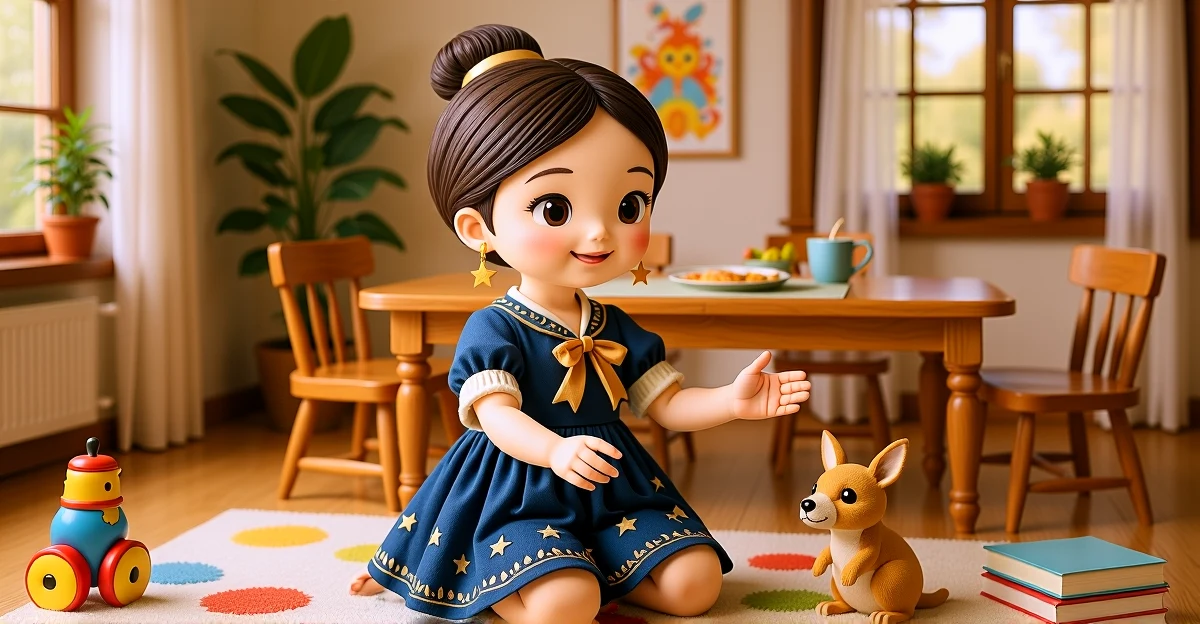

Hello, wonderful parent! It's me, Inara, and I want to start by saying something really important: if your three or four year old won't sit still during story time, you are not alone. In fact, the Magic Book and I have been hearing from SO many parents who feel frustrated, worried, or even a little defeated because their little one wiggles, moves, gets up, and seems unable to focus during quiet activities.
And here's what I want you to know right from the start: your child is not being difficult. Your child is not broken. Your child is not behind. What you're experiencing is completely, beautifully normal. In fact, that active, moving body during story time? It's actually showing you exactly how your child's amazing brain is designed to learn at this age.
In this post, we're going to explore what research tells us about attention spans in young children, why movement is actually a LEARNING tool (not a distraction), and gentle strategies you can use to work WITH your child's natural development instead of against it. Plus, I'll share a beautiful story from The Book of Inara that celebrates this truth in a way your child will love.
You're Not Alone: What the Numbers Tell Us
Let me share something that might surprise you. Research shows that up to 40% of preschoolers show attention-related behaviors that concern their parents and teachers by age four. Forty percent! That means if you gathered ten parents in a room, four of them would be worried about the exact same thing you're worried about right now.
But here's the beautiful truth the Magic Book taught me: most of these attention challenges are not disorders or problems. They're normal variations in typical child development. Dr. E. Mark Mahone, a neuropsychologist at Kennedy Krieger Institute and Johns Hopkins University, explains it perfectly in his research:
"Inattention among preschoolers is most often a normal variation observed in typical preschool child development, making identification of 'disordered' attention more problematic."
— Dr. E. Mark Mahone, Kennedy Krieger Institute
Did you hear that? Normal variation. Normal development. Your child's wiggly, active body during story time isn't a problem to fix. It's a sign that their brain is developing exactly as it should.
What Research Says About Attention Spans at Ages 3-4
Here's something EVERY parent of a three or four year old needs to know: the typical attention span for this age group is approximately six to twelve minutes for any given task. That's it! Not thirty minutes. Not even twenty minutes. Six to twelve minutes.
The Brain Balance Achievement Centers explain that the average attention span for children is about two to three minutes per year of age. So for your three year old, we're looking at six to nine minutes. For your four year old, eight to twelve minutes. And you know what? That's with IDEAL conditions - when the child is interested, well-rested, not hungry, and in a low-distraction environment.
Why Attention Spans Are So Short at This Age
The preschool years are a critical time when children are developing what experts call executive function skills. These include sustained attention, impulse control, and learning engagement. But here's the thing: these skills are still GROWING. Your child's prefrontal cortex - the part of the brain that helps with focus and self-control - is still developing. It will continue developing throughout their entire childhood and even into young adulthood.
Right now, at three or four years old, expecting your child to sit perfectly still for a long story is like expecting a seedling to produce fruit. The potential is there, but it needs time to grow. And that's not just okay - it's PERFECT.
The Beautiful Truth: Movement IS Learning
Here's where things get really interesting, and where the Magic Book showed me something that changed everything. Young children don't learn DESPITE their need to move. They learn THROUGH movement and active exploration. Their bodies and brains are wired to move, to touch, to explore. Sitting perfectly still during a passive activity like listening to a story? That actually goes against their natural developmental stage.
Research consistently demonstrates that young children naturally learn through movement and active exploration. When your child is wiggling during story time, their body is actually helping their brain stay engaged. For many children, movement doesn't distract from focus - it SUPPORTS focus.
What This Means for Story Time
The Brain Balance Achievement Centers put it beautifully when they explain that children's attention spans are naturally far shorter than adults because "they are more easily distracted and need frequent breaks to rest their minds and exercise their muscles before they can resume their concentration."
Rest their minds AND exercise their muscles. Both are equally important! Your child's need to move isn't getting in the way of learning. It's PART of learning.
Gentle Strategies That Work WITH Your Child's Development
So what does all this research mean for story time at your house? It means we can work WITH your child's natural development instead of against it. And that changes everything.
1. Adjust Your Expectations (This Is SO Important)
If your child can focus for six to ten minutes on a story, that's actually PERFECT for their age. If they need to stand up, or rock back and forth, or fidget with something in their hands while you read, that's not distraction. That's their body helping their brain stay engaged.
The goal of story time isn't perfect stillness. The goal is connection. The goal is building a love of stories. The goal is that warm, special time together. If your child is wiggling but they're engaged with the story - asking questions, making comments, acting out scenes - then story time is working beautifully.
2. Make Story Time Interactive
Instead of expecting passive listening, invite active participation:
- Let your child turn the pages. This gives them a physical role and helps them feel in control of the pace.
- Ask questions about the pictures. "What do you see here?" "How do you think the character feels?" This keeps their mind actively engaged.
- Let them act out parts of the story with their body. If the character is jumping, let your child jump! When they're moving WITH the story instead of sitting still FOR the story, their brain is actually more engaged, not less.
- Use different voices for characters. This adds variety and keeps attention fresh.
- Pause for predictions. "What do you think will happen next?" This makes them an active participant in the story.
3. Honor Their Natural Rhythm
Maybe story time works better in shorter bursts. Five minutes in the morning, five minutes before nap, five minutes at bedtime. Or maybe your child focuses better when they're snuggled up in a cozy spot, or when they're having a snack, or when they can hold a favorite stuffed animal.
Every child is different, and you get to discover what works for YOUR child. There's no one "right" way to do story time. The right way is the way that creates connection and joy for your family.
4. Create a Comfortable Environment
Some children focus better when they have:
- A cozy reading nook with soft cushions
- Dim lighting that feels calm
- A fidget toy to hold (yes, really!)
- The freedom to stand or move while listening
- A predictable routine so they know what to expect
5. Choose the Right Timing
Attention span is significantly influenced by hunger, fatigue, and stress. Story time right before dinner when your child is hungry? Probably not ideal. Story time when they're overtired? Also challenging. Find the times when your child is naturally more settled - maybe after a snack, or after some active play when they're ready for something calmer.
A Story That Celebrates Active Learning
In The Book of Inara, we have a beautiful story that shows this truth in a way children can understand and embrace:
The Learning Voyage
Perfect for: Ages 4-5 (and mature 3-year-olds)
What makes it special: This gentle story follows Ethan and Sofia as they discover a magical cruise ship where every mistake becomes a wonderful learning experiment. The ship has cozy spaces that remember and celebrate each attempt at trying something new. The ship cabins glow warmly when the children try new things, even if their attempts don't work perfectly.
Key lesson: The process of learning is more important than doing everything perfectly. Learning happens through exploration and movement, not through forced stillness. Every attempt at trying something new is valuable and worth celebrating.
Why it helps with this challenge: After reading this story, you can talk with your child about creating your own learning spaces at home - spaces where they feel safe to explore books and stories in their own way, whether that means standing, moving, or taking breaks. The goal is engagement, not stillness.
When to Seek Additional Support
While most attention challenges at ages 3-4 are completely normal, there are times when it might be helpful to talk with your pediatrician:
- If your child seems unable to focus on ANYTHING for even brief periods
- If attention challenges are accompanied by other developmental concerns
- If your child seems distressed by their inability to focus
- If you're feeling overwhelmed and need support
Remember, seeking support isn't admitting failure - it's being a thoughtful, caring parent who wants the best for their child.
You're Doing Beautifully
Here's what I want you to remember, wonderful parent: your child's wiggly, active body during story time is not a sign that something is wrong. It's a sign that they're three or four years old. It's a sign that their brain is developing exactly as it should. It's a sign that they're learning through movement and exploration, just like nature intended.
You don't need to fix your child. You need to honor where they are right now, in this moment, at this age. And when you do that - when you let go of the expectation of perfect stillness and embrace their natural way of learning - something magical happens. Story time becomes easier. Your child becomes more engaged. And that warm connection you're hoping for? It grows stronger.
Research shows us something really powerful: when parents respond to attention challenges with understanding rather than frustration, children develop better self-regulation skills and learning engagement over time. In other words, when you accept your child's need to move, when you work with their natural attention span instead of fighting it, you're actually helping them build the focus skills they'll need later. You're building a foundation for lifelong learning.
The Magic Book and I believe in you. We believe in your child. And we believe in the beautiful journey you're on together. Keep reading those stories. Keep offering that connection. Keep honoring your child's unique way of learning. You're doing such important work, and you're doing it beautifully.
Sweet dreams and happy stories, wonderful parent.
With love and starlight,
Inara ✨
Related Articles
Show transcript
Hello, wonderful parent! It's me, Inara, and I am so happy you're here today. You know, the Magic Book and I have been hearing from so many parents who are feeling frustrated because their three or four year old just won't sit still during story time. And I want you to know something really important right from the start. You are not alone in this, and your child is not being difficult. In fact, what you're experiencing is completely, beautifully normal.
Let me share something the Magic Book taught me that might change how you see this whole situation. When your little one wiggles and moves and gets up during story time, they're not refusing to listen. They're actually showing you exactly how their amazing brain is designed to learn at this age. Isn't that WONDERFUL?
Here's what the research tells us, and this is so important. The typical attention span for a three to four year old child is about six to twelve minutes for any given task. That's it! And you know what? Up to forty percent of preschoolers show attention-related behaviors that concern their parents. Forty percent! That means if you gathered ten parents in a room, four of them would be worried about the exact same thing you're worried about right now.
Dr. E. Mark Mahone, a neuropsychologist at Kennedy Krieger Institute and Johns Hopkins University, explains it this way. Inattention among preschoolers is most often a normal variation observed in typical preschool child development. Did you hear that? Normal variation. Normal development. Your child's active body during story time isn't a problem to fix. It's a sign that their brain is developing exactly as it should.
You see, the preschool years are this critical, magical time when children are developing what experts call executive function skills. These include sustained attention, impulse control, and learning engagement. And here's the thing that might surprise you. Young children naturally learn through movement and active exploration. Their bodies and brains are wired to move, to touch, to explore. Sitting perfectly still during a passive activity like listening to a story? That actually goes against their natural developmental stage.
Think about it this way. Your child's prefrontal cortex, the part of the brain that helps with focus and self-control, is still growing. It will continue developing throughout their entire childhood and even into young adulthood. Right now, at three or four years old, expecting them to sit perfectly still is like expecting a seedling to produce fruit. The potential is there, but it needs time to grow.
The Brain Balance Achievement Centers put it beautifully. They say that children's attention spans are naturally far shorter than adults, because they are more easily distracted and need frequent breaks to rest their minds and exercise their muscles before they can resume their concentration. Rest their minds and exercise their muscles. Both are equally important!
So what does this mean for story time at your house? It means we can work WITH your child's natural development instead of against it. And that changes everything.
First, let's adjust our expectations. If your child can focus for six to ten minutes on a story, that's actually PERFECT for their age. If they need to stand up, or rock back and forth, or fidget with something in their hands while you read, that's not distraction. That's their body helping their brain stay engaged. Movement actually helps many children focus better, not worse.
Second, we can make story time more interactive. Let your child turn the pages. Ask them questions about the pictures. Let them act out parts of the story with their body. When they're moving WITH the story instead of sitting still FOR the story, their brain is actually more engaged, not less.
Third, we can honor their natural rhythm. Maybe story time works better in shorter bursts. Five minutes in the morning, five minutes before nap, five minutes at bedtime. Or maybe your child focuses better when they're snuggled up in a cozy spot, or when they're having a snack, or when they can hold a favorite stuffed animal. Every child is different, and you get to discover what works for YOUR child.
And here's something else the Magic Book showed me. The goal of story time isn't perfect stillness. The goal is connection. The goal is building a love of stories. The goal is that warm, special time together. If your child is wiggling but they're engaged with the story, if they're asking questions or making comments or acting out the scenes, then story time is working beautifully. They're learning. They're connecting. They're growing.
Research shows us something really powerful here. When parents respond to attention challenges with understanding rather than frustration, children develop better self-regulation skills and learning engagement over time. In other words, when you accept your child's need to move, when you work with their natural attention span instead of fighting it, you're actually helping them build the focus skills they'll need later. You're building a foundation for lifelong learning.
Now, let me tell you about a story from The Book of Inara that shows this truth so beautifully. It's called The Learning Voyage, and it's about two friends named Ethan and Sofia who discover a gentle cruise ship where every mistake becomes a wonderful learning experiment. The ship has these cozy spaces that remember and celebrate each attempt at trying something new. And here's the magical part. The ship cabins glow warmly when the children try new things, even if their attempts don't work perfectly.
This story teaches children, and parents, that the process of learning is more important than doing everything perfectly. It shows that learning happens through exploration and movement, not through forced stillness. After you read this story with your child, you can talk about creating your own learning spaces at home. Spaces where your child feels safe to explore books and stories in their own way, whether that means standing, moving, or taking breaks. Because the goal is engagement, not stillness.
You can find The Learning Voyage in The Book of Inara, and I think it might become one of your favorites. It's designed for children ages four to five, but it works beautifully for three year olds too, especially when you read it together and let them engage with it in their own active way.
Here's what I want you to remember, wonderful parent. Your child's wiggly, active body during story time is not a sign that something is wrong. It's a sign that they're three or four years old. It's a sign that their brain is developing exactly as it should. It's a sign that they're learning through movement and exploration, just like nature intended.
You don't need to fix your child. You need to honor where they are right now, in this moment, at this age. And when you do that, when you let go of the expectation of perfect stillness and embrace their natural way of learning, something magical happens. Story time becomes easier. Your child becomes more engaged. And that warm connection you're hoping for? It grows stronger.
The Magic Book and I believe in you. We believe in your child. And we believe in the beautiful journey you're on together. Keep reading those stories. Keep offering that connection. Keep honoring your child's unique way of learning. You're doing such important work, and you're doing it beautifully.
Sweet dreams and happy stories, wonderful parent. With love and starlight, Inara.