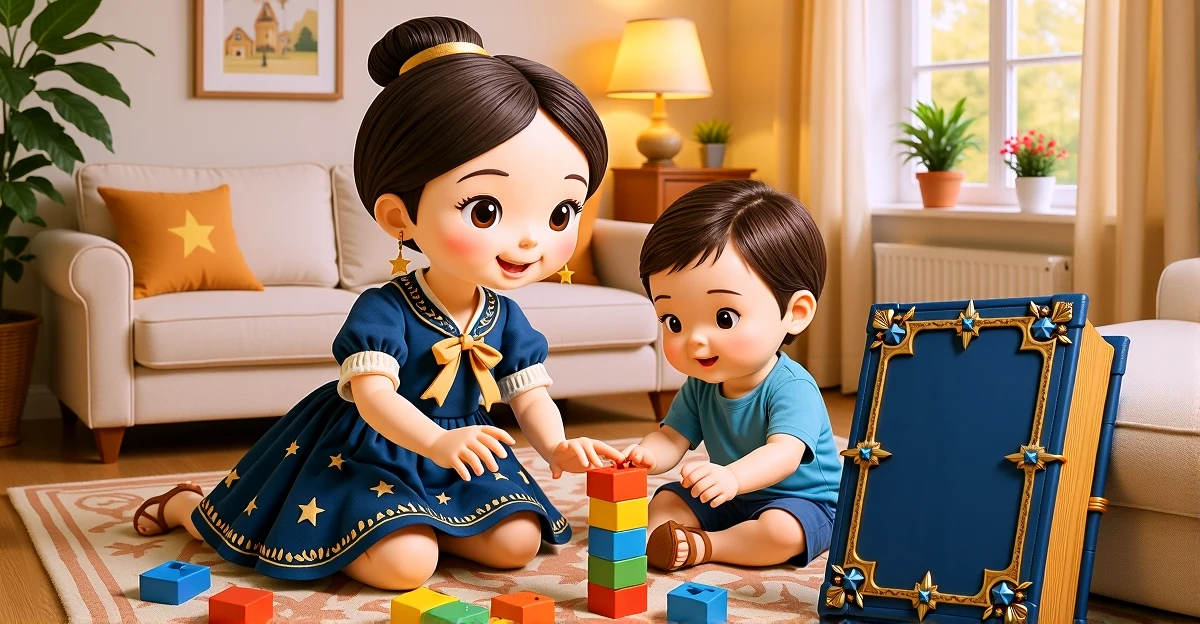
Hello, my wonderful friend! Have you ever watched your little one pause at the bottom of a slide, their tiny hand gripping yours just a bit tighter? Or maybe you have noticed them take a step back when faced with climbing something new, their eyes searching for your reassurance before they even consider trying?
If this sounds familiar, I want you to know something IMPORTANT: You are not alone, and your child is doing exactly what they are supposed to be doing. That hesitation you are witnessing is not a problem to fix. It is their brilliant, developing brain doing its job beautifully.
Today, I want to share what the Magic Book and I have learned about building physical confidence in toddlers. We will explore the science behind why your little one hesitates, what research tells us about motor development, and most importantly, gentle strategies that actually work. Plus, I will introduce you to a beautiful story that brings these concepts to life for your child.
Understanding Physical Hesitation: What Is Really Happening
When your toddler hesitates before trying something new, it is SO easy to worry. Are they falling behind? Should you be doing something differently? Are they too cautious?
Here is the beautiful truth: Between ages two and three, your child is going through AMAZING physical changes. They are learning to walk up and down stairs, kick balls, maybe even stand on one foot. These might seem like simple movements to us, but for their little bodies, these are incredible feats of coordination, balance, and courage.
And here is what is magical about that hesitation. When your toddler pauses before trying something new, their brain is actually doing complex risk assessment. They are learning to evaluate challenges, understand their own capabilities, and make decisions about what feels safe. This is not timidity. This is intelligence in action.
The Role of Parental Presence
Research from the Raising Children Network in Australia has discovered something wonderful. When you are around while your toddler explores, they feel reassured and safe. This helps your toddler build confidence to try new things and explore on their own.
Your presence is not just comforting. It is one of the most powerful tools you have to help your child develop physical confidence. You are their safe base, their encourager, their believer. And that matters SO much.
What Research Says About Physical Confidence
The Magic Book has taught me that physical confidence is not just about mastering skills. It is about developing a positive relationship with challenge and effort. It is about learning that trying is valuable, that practice matters, and that it is okay to need help along the way.
Physical confidence emerges when children feel emotionally safe to attempt challenging movements, knowing their caregivers support their exploration without pressure to perform perfectly.
— Child Development Research
Research published by the National Center for Biotechnology Information shows us that active, repetitive play is essential for building strong motor skills. And here is what makes this so hopeful: early intervention and support help children build strength, confidence, and independence through targeted activities.
That means the time you spend encouraging your little one, celebrating their brave attempts, being their safe place to return to—all of that matters tremendously. Every single attempt, whether they succeed or stumble, is building neural pathways that will serve them for their entire lives.
The Connection Between Emotional Safety and Physical Confidence
Here is something that changed everything for me. Physical confidence develops through a combination of motor skill development AND emotional support. You cannot separate the two.
When toddlers know their caregivers are present and responsive, they feel secure enough to take healthy risks. When they know that falling is okay, that trying matters more than succeeding, that their effort will be celebrated—that is when real confidence blooms.
Gentle Strategies That Actually Work
So how do we support our toddlers in building physical confidence without pushing them or making them feel pressured? I am so glad you asked! Here are four gentle strategies backed by research and the wisdom of the Magic Book:
1. Focus on Effort and Courage, Not Perfection
When your child tries to climb something new, resist the urge to say "good job" only when they reach the top. Instead, try saying something like:
- "You were so brave to try that!"
- "I saw how hard you worked to climb up there."
- "You are learning something new!"
This teaches them that the trying is what matters, not just the succeeding. And that is a lesson that will serve them for their entire lives.
2. Stay Close and Responsive
Your presence is their safety net. When they know you are there, ready to help if needed but not hovering or taking over, they feel secure enough to take healthy risks.
You are not being overprotective by staying close. You are being exactly what they need. Research consistently shows that when parents remain present and responsive during physical exploration, toddlers feel secure enough to take healthy risks and build genuine confidence.
3. Celebrate the Stumbles Along with the Successes
When your little one falls or does not quite make it, resist the urge to rush in with "Oh no, are you okay?" That response can actually teach them that falling is scary or shameful.
Instead, try a calm, matter-of-fact response:
- "You fell down. Do you want to try again?"
- "Oops! That was tricky. Want another turn?"
- "You are learning! Let me know if you need help."
This teaches them that falling is just part of learning, not something scary or shameful. It normalizes the process and keeps the focus on growth, not perfection.
4. Let Them Set the Pace
Some children are natural explorers who dive right into new physical challenges. Others are more cautious, preferring to watch and observe before trying. Both approaches are perfectly normal and healthy.
Your job is not to change who they are, but to support them in being their authentic selves. If your child wants to watch other kids on the playground for ten minutes before trying the slide, that is wonderful! They are learning through observation, building mental models, preparing themselves.
Trust their process. Trust their timeline. They will try when they are ready, and your patient presence makes that readiness possible.
A Story That Can Help
In The Book of Inara, we have a beautiful story that shows these concepts perfectly for your little one:
The Kangaroo Who Learned to Hop
Perfect for: Ages 2-3
What makes it special: This gentle tale follows Young Kangaroo as he learns to hop. It takes time, practice, and patience. With encouragement from his wise friend Wallaby, Young Kangaroo discovers that everyone needs practice to learn new things, and that it is okay to need help along the way.
Key lesson: Physical skills develop gradually. Stumbling and trying again is part of the journey. Having someone who believes in you makes all the difference.
Why it helps: This story normalizes the learning process. It shows children that physical confidence comes from practice and patience, not from being perfect right away. After reading this story with your little one, you can remind them that just like Young Kangaroo, everyone needs practice to learn new things. You can celebrate their brave attempts, not just their successes.
You Are Doing Beautifully
My wonderful friend, if your little one is hesitating before trying new physical activities, celebrate that caution. It means their brain is working beautifully, assessing risk and keeping them safe. Your job is simply to be their safe base, their encourager, their believer.
Stay close. Celebrate effort. Normalize stumbles. Let them set the pace. And watch as their confidence blooms in its own perfect time.
You are doing such important work. Every time you get down on their level and say "I believe in you," every time you stay close while they explore, every time you celebrate their courage to try—you are building their physical confidence in the most beautiful way.
The Magic Book and I are always here for you, with stories and wisdom and cosmic support. Until our next adventure together, remember: your presence is the greatest gift you can give your exploring little one.
With love and starlight,
Inara
Related Articles
- Understanding Your Toddler's Hesitation with New Experiences (And How to Gently Encourage Curiosity)
- Understanding Your Toddler's Need for Connection: The Journey from Attachment to Independence
- Nurturing Your Toddler's Curiosity: A Gentle Guide to Safe Exploration (Ages 2-3)
- Building Independence Through Play: A Gentle Guide for Ages 2-3
- Building Problem-Solving Skills in Toddlers: A Gentle Parenting Guide
Show transcript
Hello, my wonderful friend! It's me, Inara, and I am SO happy you're here today! You know, the Magic Book and I have been noticing something beautiful happening in homes all around the world. Parents like you are asking such thoughtful questions about helping their little ones build confidence as they explore new physical activities. And I want you to know, you're not alone in this journey.
If you've ever watched your toddler hesitate at the bottom of a slide, or take a step back when faced with climbing something new, or maybe hold your hand just a little tighter when trying to jump, I see you. I see the love in your heart wanting to encourage them, and maybe also that little worry wondering if they're falling behind or if you should be doing something differently. Let me tell you something WONDERFUL. You're doing beautifully, and your child is doing exactly what they're supposed to be doing.
The Magic Book has taught me so much about how little ones develop physical confidence, and today I want to share some of that cosmic wisdom with you. Because here's the truth, when your toddler hesitates before trying something new, that's not a problem to fix. That's their developing brain doing exactly what it should be doing, keeping them safe while they learn.
Let me share what the research tells us. Between ages two and three, your child's body and brain are going through AMAZING changes. They're learning to walk up and down stairs, kick balls, maybe even stand on one foot. These might seem like simple movements to us, but for their little bodies, these are incredible feats of coordination, balance, and courage. Every single attempt, whether they succeed or stumble, is building neural pathways that will serve them for their entire lives.
And here's something that the Raising Children Network, a really wonderful organization in Australia, discovered through their research. When you're around while your toddler explores, they feel reassured and safe. This helps your toddler build confidence to try new things and explore on their own. Isn't that BEAUTIFUL? Your presence, just being there, is one of the most powerful tools you have to help your child develop physical confidence.
The Magic Book whispers this truth to me all the time. Physical confidence isn't just about mastering skills. It's about developing a positive relationship with challenge and effort. It's about learning that trying is valuable, that practice matters, and that it's okay to need help along the way.
Research published by the National Center for Biotechnology Information shows us that active, repetitive play is essential for building strong motor skills. And here's what makes this so hopeful, early intervention and support help children build strength, confidence, and independence through targeted activities. That means the time you spend encouraging your little one, celebrating their brave attempts, being their safe place to return to, all of that matters SO much.
So what does this look like in real life? How do we support our toddlers in building physical confidence without pushing them or making them feel pressured? I'm so glad you asked!
First, focus on effort and courage rather than perfection. When your child tries to climb something new, instead of saying good job when they reach the top, try saying something like, you were so brave to try that, or I saw how hard you worked to climb up there. This teaches them that the trying is what matters, not just the succeeding.
Second, stay close and responsive. Your presence is their safety net. When they know you're there, ready to help if needed but not hovering or taking over, they feel secure enough to take healthy risks. You're not being overprotective by staying close. You're being exactly what they need.
Third, celebrate the stumbles along with the successes. When your little one falls or doesn't quite make it, resist the urge to rush in with oh no, are you okay? Instead, try a calm, you fell down, do you want to try again? This teaches them that falling is just part of learning, not something scary or shameful.
And fourth, let them set the pace. Some children are natural explorers who dive right into new physical challenges. Others are more cautious, preferring to watch and observe before trying. Both approaches are perfectly normal and healthy. Your job isn't to change who they are, but to support them in being their authentic selves.
The Magic Book and I have a story that shows this so beautifully. It's called The Kangaroo Who Learned to Hop, and it's perfect for ages two to three. In this gentle tale, Young Kangaroo is learning to hop, and it takes time and practice and patience. With encouragement from his wise friend Wallaby, Young Kangaroo discovers that everyone needs practice to learn new things, and that it's okay to need help along the way.
What I love about this story is how it normalizes the learning process. It shows children that physical skills develop gradually, that stumbling and trying again is part of the journey, and that having someone who believes in you makes all the difference. After you read this story with your little one, you can remind them that just like Young Kangaroo, everyone needs practice to learn new things. You can celebrate their brave attempts, not just their successes.
You know what the Magic Book taught me that changed everything? Physical confidence emerges when children feel emotionally safe to attempt challenging movements. When they know their caregivers support their exploration without pressure to perform perfectly, they're free to try, to fail, to try again, and to eventually succeed. And that process, that beautiful messy process of learning, builds not just physical skills but resilience, self-efficacy, and a lifelong love of movement.
So if your little one is hesitating before trying new physical activities, celebrate that caution. It means their brain is working beautifully, assessing risk and keeping them safe. Your job is simply to be their safe base, their encourager, their believer. Stay close, celebrate effort, normalize stumbles, and let them set the pace.
You're doing such important work, my wonderful friend. Every time you get down on their level and say I believe in you, every time you stay close while they explore, every time you celebrate their courage to try, you're building their physical confidence in the most beautiful way.
The Magic Book and I are always here for you, with stories and wisdom and cosmic support. Find The Kangaroo Who Learned to Hop in The Book of Inara, and watch how your little one lights up when they see themselves in Young Kangaroo's journey.
With love and starlight, Inara. Until our next adventure together!